![Revolution Arena [English Version]](https://revolutionarena.com/english/wp-content/uploads/sites/4/2024/07/Revolution-Arena-ISSN-2966-2117.png)
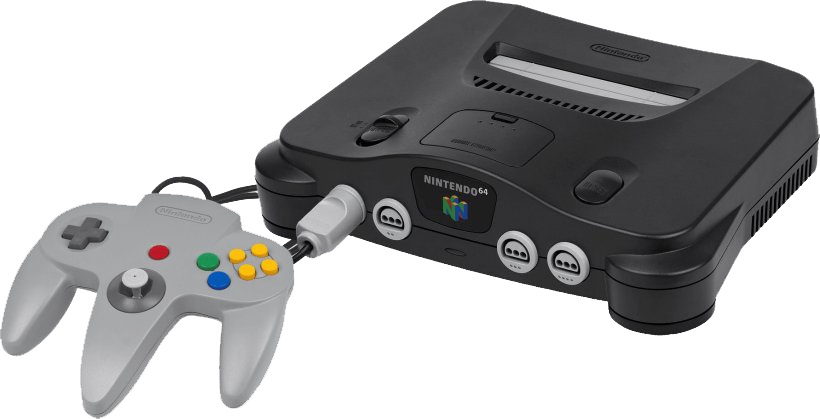
The best-selling Nintendo 64 games
March 30, 2025The Nintendo 64, a true legend in the world of video games, not only shaped the childhood of many, but also redefined electronic entertainment with its technological advancements and innovations in game design. This console, released in the mid-90s, was a milestone for Nintendo and the gaming industry as a whole, introducing three-dimensional graphics that provided an immersive experience unmatched at the time.
The N64, with its iconic three-pronged controller and graphics processing power, was the birthplace of several franchises that went on to become industry titans. Games like “Super Mario 64” and “The Legend of Zelda: Ocarina of Time” not only set the bar high for action-adventure games, but also showcased the potential of 3D virtual worlds, influencing future game development.
A console’s success is often measured by the impact of its best-selling games, and the Nintendo 64 is no exception. With games that have sold over a million units, it not only captured the imagination of its own generation, but also left a lasting legacy that is still celebrated today. These titles include masterpieces developed by both in-house Nintendo teams and external collaborators such as Rare. The diversity and quality of the N64’s best-selling games reflect the console’s robustness and enduring appeal.
Below, we present a detailed list of the 45 best-selling games for the Nintendo 64, each a testament to the creative and commercial splendor of this classic console. These numbers not only demonstrate commercial success, but also highlight the cultural influence of these titles.
List of best-selling games for the Nintendo 64:
1 – Super Mario 64 – 11,910,000 units
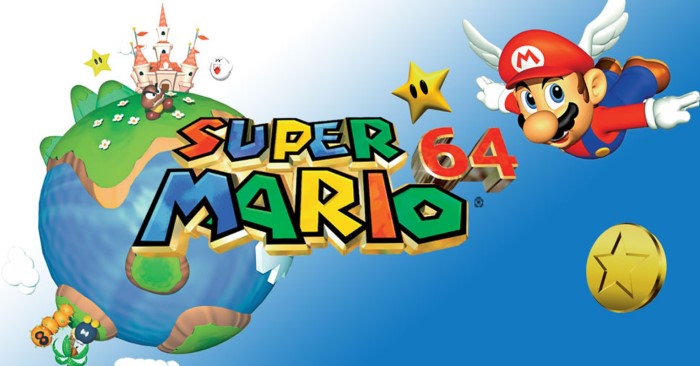
Super Mario 64, released in 1996 in Japan and 1997 in the West, is a landmark in the history of video games and one of the most influential titles of all time. Developed by Nintendo EAD under the direction of Shigeru Miyamoto, the game was the first in the Super Mario series to adopt three-dimensional gameplay, revolutionizing the platform genre and setting the standard for 3D games. As the launch title for the Nintendo 64, it took full advantage of the console’s potential, introducing fluid controls, a dynamic camera, and an open world structured in “worlds within frames” that served as portals to themed levels.
The plot follows Mario on his quest to rescue Princess Peach from the villain Bowser, who invades the Princess Castle and steals the 120 Power Stars , artifacts that keep the fortress floating. To defeat Bowser, Mario must recover these stars, hidden in magical paintings that act as portals to different worlds. Each level offers multiple objectives, from defeating enemies to solving puzzles, collecting coins or reaching secret areas. The progression is non-linear: the player can choose the order in which they explore the levels, as long as they have the necessary number of stars to unlock new areas of the castle.
Super Mario 64’s gameplay is praised for its precision and creativity. Mario has moves like the triple jump, somersault, kick, punch, and even the ability to climb walls and glide with his cape (in certain stages). The control system, which uses the N64’s analog stick, allows for unprecedented freedom of movement, although the camera—controlled by the C button—can be challenging at high speeds or in confined spaces. Each stage is filled with secrets, like red stars (to access the final battle) and red coins (which reveal stars when you collect eight of them), encouraging meticulous exploration.
The worlds are diverse and memorable, from the vibrant Bob-omb Battlefield with its cannons and mountains to the icy Cool, Cool Mountain where Mario sleds along, to the watery maze of Dire, Dire Docks and Bowser’s fortress in Lethal Lava Land . Each environment presents unique challenges, such as avoiding lava, swimming against rapids or facing giant versions of classic enemies such as Goombas and Koopas. Princess Peach’s castle, which serves as the central hub, also hides secrets, such as the Wing Cap , an item that grants temporary flight.
The fight against Bowser takes place in three stages, each in a different setting of the castle. To defeat him, Mario must use specific abilities, such as spinning his tail to hit him or taking advantage of the environment to knock him down. The game’s aesthetic combines vibrant colors, detailed textures (for the time) and an iconic soundtrack composed by Koji Kondo, which mixes orchestral melodies with electronic beats, reinforcing the playful atmosphere of each stage.
Super Mario 64 was a critical and commercial success, selling over 11 million units worldwide. Its influence is felt to this day, serving as inspiration for 3D games such as Banjo-Kazooie , Spyro , and even Dark Souls . It also popularized the concept of the 3D “sandbox”, where freedom of exploration is as important as narrative progression. Later re-released on formats such as the Nintendo DS (as Super Mario 64 DS ) and the Virtual Console , the game remains a symbol of the Nintendo 64’s golden age and an example of innovation that transcends generations.
2 – Mario Kart 64 – 9,870,000 units
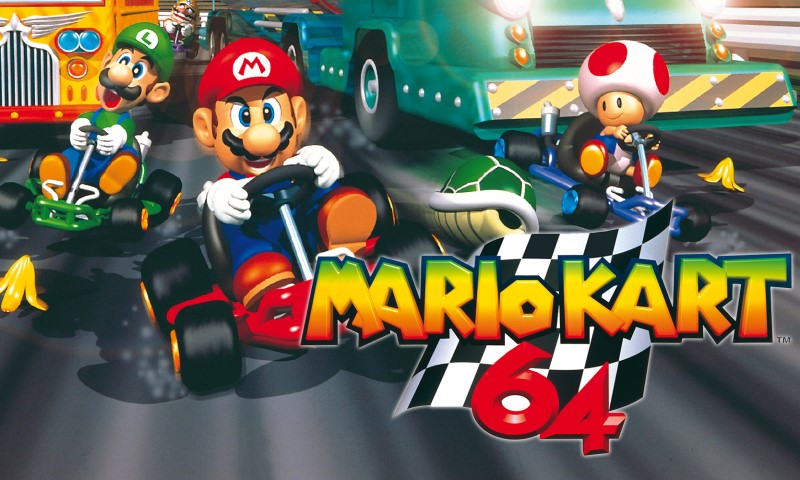
Mario Kart 64, released in 1996 in Japan and 1997 in the West, is one of the most iconic titles on the Nintendo 64 and a landmark in the history of arcade racing games. Developed by Nintendo EAD under the direction of Hideki Konno, the game is the sequel to Super Mario Kart (SNES) and brought the franchise into the 3D era, cementing itself as a cultural phenomenon and a symbol of casual multiplayer games. Combining speed, strategic items and characters from the Mario universe, the game defined the “kart racing” genre and influenced countless later works.
Mario Kart 64 gameplay features eight playable characters, including Mario, Luigi, Peach, Toad, Yoshi, Donkey Kong, Wario and Bowser, each with unique speed, weight and acceleration attributes. The game features 16 courses divided into four cups (Mushroom, Flower, Star and Special), with tracks ranging from classic environments such as the colorful Rainbow Road (a race in space with invisible rails) to themed locations such as Moo Moo Farm (a farm with cows and mud) and Koopa Troopa Beach (a beach with waves that sweep karts along). Each track is filled with shortcuts, interactive obstacles (such as turtles that shed shells) and traps, encouraging exploration and memorization of routes.
The item system is central to the game’s chaotic fun: green and red shells, bananas that skid opponents, mushrooms for turbo boosts, stars that grant invincibility, and the dreaded Spiny Shell (a blue shell that chases the race leader). The Grand Prix mode challenges players to accumulate points over four races per cup, while Time Trial lets them compete against ghosts of time-tracked races. Battle Mode , meanwhile, turns indoor arenas into battlefields for players to collect balloons or eliminate opponents, becoming a mainstay of game nights with friends.
The controls, although adapted to the N64’s analog stick, maintained the precision of arcade gameplay, with drifts that allow for tight turns and acceleration after skidding. The physics of the karts, which range from light to heavy, add strategic depth, as slower vehicles resist collisions better. The local multiplayer for up to four players, using split screens, was revolutionary for its time, promoting fierce competition and moments of unintentional humor, such as falls into chasms or chain collisions caused by items.
The soundtrack, composed by Koji Kondo and Hajime Wakai, is striking, with melodies ranging from electrifying themes, such as the theme of Toad’s Turnpike (a track full of trucks), to relaxing songs in Wario Stadium (a desert with dunes and hidden shortcuts). Sound effects, such as the roar of engines and the voices of the characters, reinforce the personality of the game.
Commercially, Mario Kart 64 sold over 9 million units, becoming one of the N64’s biggest hits. Its influence endures: tracks like Rainbow Road and DK’s Jungle Parkway have been revisited in modern games in the series, while its balance of accessibility and competitiveness has inspired titles like Mario Kart Wii and Mario Kart 8 Deluxe . Re-released on the Virtual Console for the Wii and Wii U, the game remains celebrated for its nostalgia and the legacy of friends bonding around a screen. Mario Kart 64 not only defined a genre, it also proved that casual games, when done well, can transcend generations and platforms.
3 – GoldenEye 007 – 8,090,000 units

GoldenEye 007, released in 1997 for the Nintendo 64, is a landmark first-person shooter (FPS) and one of the most influential titles in video game history. Developed by Rare, the game was based on the 1995 James Bond film GoldenEye , but expanded beyond the cinematic plot to create a unique experience that redefined the genre. At the time, FPS games were dominated by PC games such as Doom and Quake , but GoldenEye 007 proved that the genre could thrive on consoles, especially with its revolutionary multiplayer gameplay.
The game puts players in the role of secret agent James Bond, in missions involving espionage, sabotage and direct confrontations. The single-player campaign features 20 stages, each with specific objectives that go beyond simply eliminating enemies. For example, in stages such as Dam (the film’s iconic opening scene) and Facility , Bond must collect items, defuse bombs, rescue hostages or hack systems, encouraging strategy and use of the environment. The game also introduced elements of stealth: at certain moments, Bond must avoid detection, using silencers on weapons or distractions, while enemies react to sounds and movements, something innovative for the time.
The arsenal includes classic Bond weapons such as the Walther PPK, as well as gadgets such as the laser watch and grenade launcher. The game’s difficulty increases, with more intelligent enemies and additional objectives at higher levels. For example, in 00 Agent mode , the most challenging, the player must complete extra tasks, such as killing a specific number of enemies or using specific weapons.
However, GoldenEye 007 ‘s legacy lies primarily in its multiplayer mode. Up to four players could compete in local split-screen matches, choosing from characters like Bond, Xenia Onatopp, Oddjob, and others, each with different speeds and sizes. Maps like Temple , Complex , and Stack became classics, with layouts that encouraged strategy and ambushes. Modes like Deathmatch (free-for-all), Team Deathmatch , and You Only Live Twice (with limited lives) provided variety, while items scattered throughout the environment—such as weapons, ammo, and shields—added layers of unpredictability. The game also popularized mechanics like the damage system , where shots to limbs did less damage than shots to the torso or head, something rare in FPS games at the time.
Rare managed to overcome the N64’s technical limitations, such as its limited memory and lack of a hard drive, by using programming tricks to create detailed environments and fluid motion physics. The soundtrack, composed by Graeme Norgate and others, mixed orchestral themes with electronic beats, reinforcing the tension of the missions. Directional audio, which allowed the identification of the origin of footsteps or gunshots, was also a breakthrough.
Commercially, GoldenEye 007 sold over 8 million units, becoming one of the N64’s biggest hits. Its influence is undeniable: it paved the way for games like Perfect Dark (also from Rare), TimeSplitters , and the Call of Duty series , setting the standard for console multiplayer and realistic shooter mechanics. Even decades after its release, the game is celebrated by speedrunners and fan communities, with modified versions (such as GoldenEye: Source for PC) keeping its spirit alive. In 2022, a remastered version was released for modern consoles, but the original remains a symbol of the Nintendo 64’s golden era and a testament to the fact that innovation and fun can emerge from technical constraints.
4 – The Legend of Zelda: Ocarina of Time – 7,600,000 units
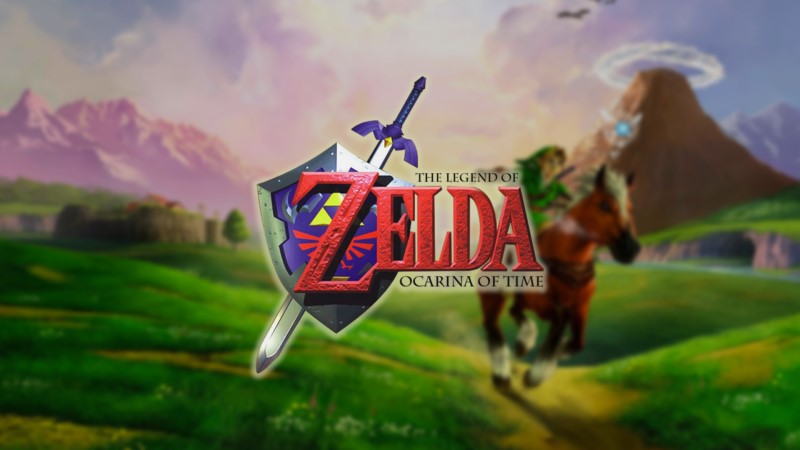
The Legend of Zelda: Ocarina of Time, released in 1998 for the Nintendo 64, is widely considered one of the greatest games of all time and a landmark in video game history. Developed by Nintendo EAD under the direction of Shigeru Miyamoto and produced by Eiji Aonuma, the game reinvented The Legend of Zelda series for the 3D era, setting the standard for action-adventure games. Its epic narrative, innovative gameplay, and immersive open world redefined player expectations and influenced generations of developers.
The story follows Link, a young Kokiri raised in the forest, who is summoned by Princess Zelda to stop the evil plans of Ganondorf, a desert thief who seeks the Triforce, a sacred artifact capable of granting divine powers. Throughout the journey, Link travels through time between his childhood and adulthood, using the Ocarina of Time, a magical instrument that allows him to alter the flow of time and solve puzzles. The narrative addresses themes of destiny, sacrifice and the importance of courage, culminating in an epic battle to save the kingdom of Hyrule.
Ocarina of Time’s gameplay introduced revolutionary mechanics such as Z-Targeting (aiming and locking onto enemies or objects), which became a standard in 3D games. The combat system requires strategy, with sword, bow, and shield attacks, and special abilities such as the power to control time with the Ocarina. The game also popularized the dungeon structure, each with environmental puzzles, unique bosses, and essential items such as the Hookshot, Bomb, and Fire Arrow.
Hyrule’s open world is vast and interconnected, with regions such as Kokiri Forest, Gerudo Desert, Lake Hylia, and the Death Mountain volcano. Each area has distinct ecosystems, enemies, and secrets, encouraging exploration. The day-night cycle affects the behavior of NPCs and the availability of certain quests, adding layers of immersion. Interaction with supporting characters, such as the mascot Navi and dungeon sages, enriches the narrative and progression.
The soundtrack, composed by Koji Kondo, is memorable, with melodies such as Zelda’s Lullaby , Song of Storms and Bolero of Fire , which not only lull the player, but also function as gameplay mechanics. The Ocarina allows you to play music to change the mood, summon horses or advance the storyline, integrating music and action in an organic way.
The game also pioneered technical elements such as an intelligent camera that adapts to the player’s movements and realistic object physics (such as interaction with water or wind). The Nintendo 64 edition pushed the limits of the hardware, using advanced rendering techniques to create detailed environments even with the memory constraints of the time.
Commercially, Ocarina of Time has sold over 7.6 million units, becoming the second best-selling Nintendo 64 game. Its critical reception was unanimous, with praise for its gameplay depth, emotional storytelling, and technical innovation. The game inspired numerous sequels and spin-offs, such as Majora’s Mask and the Breath of the Wild series , as well as being re-released on formats such as the GameCube , Wii Virtual Console , and a 3D remastered version for the Nintendo 3DS in 2011.
More than two decades after its release, Ocarina of Time remains a symbol of excellence in game design, influencing titles such as Dark Souls , Skyrim , and The Witcher 3. Its combination of exploration, storytelling, and mechanical innovation has established a lasting legacy, proving that games can be both works of art and transformative interactive experiences.
5 – Super Smash Bros. – 5,550,000 units
Super Smash Bros. , released in 1999 in Japan and in 2000 in the West, is a crossover fighting game developed by HAL Laboratory and published by Nintendo for the Nintendo 64. The first title in the iconic franchise, it brought together classic Nintendo characters in an epic battle, revolutionizing the fighting game genre by combining platform and strategy elements. The idea was simple, but innovative: instead of measuring strength with traditional blows, players had to throw opponents out of themed arenas, using special attacks, items and the environment.
The game featured a cast of 12 initial characters, including Mario, Donkey Kong, Link, Samus, Yoshi, Kirby, Fox, Pikachu, Luigi, Captain Falcon, Ness, and Jigglypuff, each with unique movesets inspired by their original franchises. A Character Disk was later released in Japan, adding characters such as Peach, Zelda, and Marth (the latter initially a secret). The arenas, based on classic Nintendo universes such as Hyrule Castle (The Legend of Zelda), Planet Zebes (Metroid), and Mushroom Kingdom (Super Mario), were filled with moving platforms, obstacles, and environmental hazards such as lava or wind.
Super Smash Bros.’ gameplay differed from traditional fighting games in that it did not have a health bar. Instead, attacks increased the characters’ “damage” (represented by a percentage), making them more vulnerable to being knocked off the screen. Recovery mechanics, such as the third jump and aerial attacks, allowed for strategies to return to the arena even after being knocked off. Classic items, such as the Poké Ball (which summons Pokémon), Mario’s Hammer, the Master Sword, and Invincibility, added chaos and unpredictability to matches.
Single-player modes included Classic Mode , where the player faced a series of opponents in sequence, and Adventure Mode , which mixed platforming challenges with boss battles, such as Metal Mario and Gigabowser. Versus Mode allowed local multiplayer matches for up to four players, becoming one of the game’s main attractions, especially for the casual fun between friends. The title also introduced the concept of Trophies , collectible items that detailed the history of Nintendo characters and elements, anticipating the collectible culture of modern games.
Technically, the game faced challenges due to the N64’s limited hardware, such as reduced resolution and simplified textures, but compensated with fluid animations and creative level designs. The soundtrack, composed of remixed arrangements of classic Nintendo themes (such as music from Super Mario Bros. and The Legend of Zelda ), reinforced the title’s nostalgia and unique identity.
Commercially, Super Smash Bros. has sold over 5 million units worldwide, establishing itself as a cult hit and paving the way for sequels such as Melee (GameCube) and Brawl (Wii). Its critical reception was enthusiastic, with praise for its creativity, balance between accessibility and depth, and celebration of Nintendo’s legacy. Later re-released on the Virtual Console for the Wii and Wii U, the game remains a symbol of the golden era of the N64 and a landmark in the history of fighting games, proving that the union of distinct universes could create a unique and lasting experience.
6 – Pokémon Stadium – 5,460,000 units
Pokémon Stadium, released in 1998 in Japan and 2000 in the West, was a landmark game in the Pokémon franchise, bringing the strategic battles of handheld gaming to home consoles for the first time. Developed by HAL Laboratory and published by Nintendo for the Nintendo 64, the game took advantage of the console’s graphical power to present Pokémon in detailed 3D models, offering a unique visual and competitive experience.
The title allowed players to transfer their Pokémon from the Game Boy versions ( Red , Blue , and Yellow ) to the N64 via the Transfer Pak , an accessory that connected the two consoles. This allowed players to use custom teams created during their journey in the handheld games, ensuring that strategies and emotional bonds with the Pokémon extended to the 3D environment. Additionally, the game included a Pokémon rental system for those who did not own a Game Boy or wanted to try out specific creatures.
Gameplay revolved around battles in themed arenas, such as Green Field (an open field with obstacles) and Magma Pool (a volcano with lava that dealt damage), each with interactive elements that affected strategy. Combat followed the classic rules of the main games, with mechanics like attack types, status conditions, and Pokémon swapping, but with the addition of a dynamic camera that highlighted the Pokémon’s movements in action. Iconic moves, like Blastoise’s Hydro Pump or Pikachu’s Thunderbolt , were represented with elaborate animations, something that portable games couldn’t offer at the time.
The main mode, Gym Leader Castle , challenged players to face 3D versions of the Kanto region’s Gym Leaders, such as Brock, Misty, and Giovanni, culminating in a battle against the champion Lance. Stadium Mode offered specific challenges, such as defeating all opponents without switching Pokémon or winning with level restrictions. The game also included mini-games, such as Sushi-Go-Round (a Magikarp race) and Snore War (a battle of sleeping Jigglypuff), which added casual fun between the battle series.
Multiplayer was one of the highlights: up to four players could compete in local matches, using their own or rented teams, in an era when competitive gaming was still in its infancy. The possibility of seeing Pokémon in action, with designs faithful to the originals and fluid animations, delighted fans and consolidated the game as a bridge between the Game Boy and the home console.
Technically, Pokémon Stadium impressed with its efficient use of the N64’s hardware. Despite limitations such as modest resolution and simplified textures, the 3D Pokémon models were expressive, and the colorful arenas reinforced the franchise’s identity. The soundtrack remixed classic Red/Blue themes , such as the gym leader battle music, adapting them to orchestral arrangements that enhanced immersion.
Commercially, the game was a success, especially in Japan, where it quickly sold over 1 million units. Its popularity led to the sequel Pokémon Stadium 2 (2000), which expanded the roster to include second-generation Pokémon ( Gold/Silver ). Pokémon Stadium’s legacy remains as a crucial step in the franchise’s evolution, paving the way for spin-offs such as Pokémon Colosseum and Pokémon Battle Revolution , as well as inspiring the 3D battle mode in later games. Re-released on the Wii U’s Virtual Console, the game remains celebrated as an experience that combined nostalgia and innovation, showing that Pokémon could shine on both consoles and handhelds.
7 – Donkey Kong 64 – 5,270,000 units
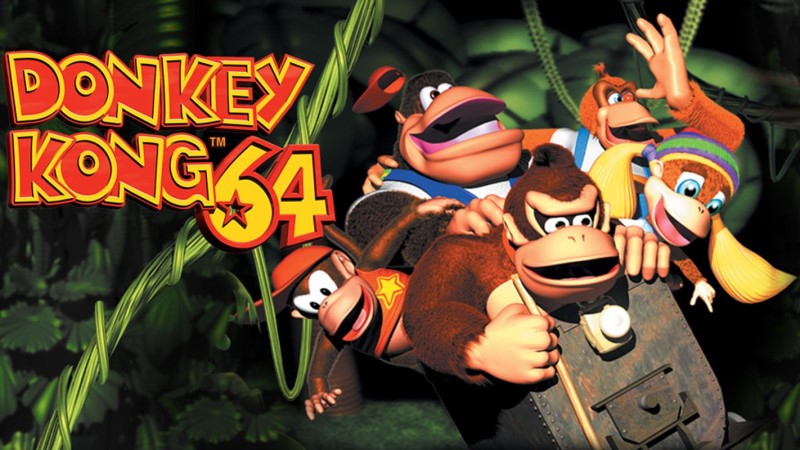
Donkey Kong 64, released in 1999 for the Nintendo 64, is a 3D platform game developed by Rare and published by Nintendo. Considered one of the console’s greatest classics, the title expanded the Donkey Kong universe by introducing a diverse cast of playable characters, a vast open world, and innovative mechanics that combined exploration, puzzles, and action. The game was a critical and commercial success, selling over 5 million units, and is remembered as one of the pinnacles of the Nintendo 64’s golden era.
The plot revolves around the villain King K. Rool, who returns to kidnap the Kong family and steal Donkey Kong’s banana hoard. To rescue his friends and recover the banana stash, Donkey Kong sets out on a journey across Kong Island, exploring areas such as jungles, factories, underground caves, ancient temples, and even a spaceship. Along the way, he is aided by other members of the Kong family: Diddy, Tiny, Lanky, and Chunky, each with unique abilities that allow them to access new areas and solve challenges.
Donkey Kong 64’s gameplay is marked by a variety of mechanics. Each Kong has specific attributes:
- Donkey Kong : Strength to carry heavy objects and hit enemies with powerful punches.
- Diddy Kong : Speed and agility, plus a jetpack to reach high areas.
- Tiny Kong : Ability to shrink and enter small spaces, as well as a quick jump attack.
- Lanky Kong : Extendable arms to reach distant platforms and a spinning motion to glide.
- Chunky Kong : Extreme strength to destroy obstacles and ability to become invisible in certain areas.
Additionally, the Kongs can collect Golden Bananas, items essential to progressing through the story. Each Golden Banana is obtained by completing specific challenges in each area, such as defeating enemies, solving puzzles, or collecting hidden objects. The game also includes Banana Coins, used to purchase items from Cranky Kong (the grumpy patriarch), and Blueprints, which unlock new rooms in K. Rool’s hideout after being collected.
One of Donkey Kong 64’s innovations was the integration of the Nintendo 64 Expansion Pak, an accessory that increased the console’s memory, allowing for more detailed graphics, larger areas, and effects such as translucent water and high-resolution textures. The game also introduced first-person shooter elements through the Coconut Shooter, a weapon that fires coconuts to activate targets or defeat enemies.
Kong Island’s open world is divided into eight main areas, each with distinct themes:
- Jungle Japes : A jungle with waterfalls and giant elephants.
- Angry Aztec : Desert ruins filled with puzzles with symbols and enemies like snakes.
- Frantic Factory : A toy factory with conveyor belts and dangerous machines.
- Gloomy Galleon : A sunken ship and underwater areas with mechanical sharks.
- Fungi Forest : A mystical forest with giant mushrooms and a sundial.
- Crystal Caves : Icy caves with bobsled tracks and light-reflecting crystals.
- Creepy Castle : A haunted castle with traps and ghosts.
- Hideout Helm : K. Rool’s stronghold, filled with final puzzles.
In addition to the single-player campaign, the game includes a multiplayer mode called Battle Arena, where up to four players compete in mini-games such as Capture the Flag and Blast ’em All , using weapons such as explosive bananas and watermelon grenades. Another highlight is the Monkey Smash mini-game , a stylized version of Street Fighter featuring the Kongs.
The soundtrack, composed by Grant Kirkhope, is memorable, combining tropical rhythms, mysterious melodies and epic themes that reinforce the atmosphere of each area. The directional audio was also innovative, with sounds of enemies or mechanisms that help in the location of hidden items.
Its rich gameplay, signature humor, and attention to detail (such as the interactions between the Kongs and Cranky’s dialogue) secure its place as one of the best 3D platformers ever created, influencing titles such as Super Mario Odyssey and Yooka-Laylee .
8 – Diddy Kong Racing – 4,880,000 units
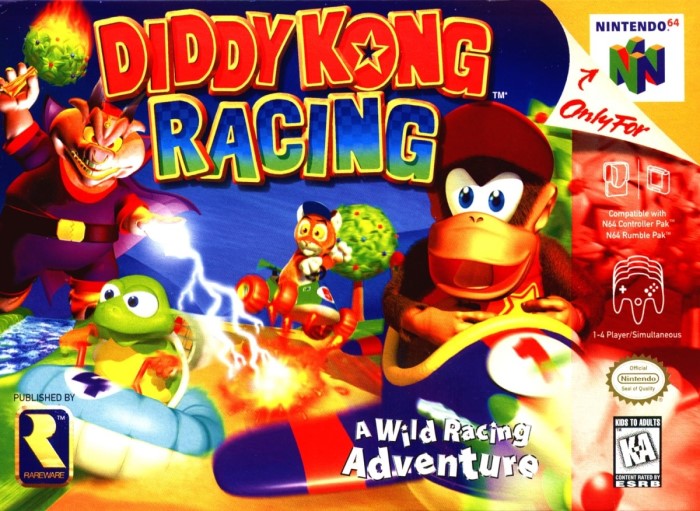
Diddy Kong Racing, released in 1997 for the Nintendo 64, is a racing game developed by Rare that stood out for its creativity, variety of modes, and engaging narrative. Although often compared to Mario Kart 64 , the title differentiates itself by offering not only traditional racing, but also a campaign structured around a cooperative adventure, with exploration and puzzle elements. The game was a commercial and critical success, selling over 4 million units, and is remembered as one of the console’s great classics.
The story takes place on Timber Island, a tropical paradise where Diddy Kong and his friends — including characters such as Timber (a young tiger), Banjo (the bear protagonist of his own series), Conker (the sarcastic squirrel), Tiptup (the musical turtle) and Krunch (a reformed kritter) — live in harmony. The villain King K. Rool, known for his rivalry with Donkey Kong, invades the island and steals the Kongs’ treasure, in addition to spreading traps and challenges to prevent the heroes from recovering what is theirs. To defeat him, players must collect Golden Balloons by winning races and completing challenges in different worlds.
Diddy Kong Racing’s gameplay is divided into three types of vehicles: cars (for solid terrain), planes (for aerial stages) and hovercrafts (for water areas). Each vehicle has unique attributes, such as speed, acceleration and maneuverability, and choosing the right one is essential to overcome the obstacles on each track. The game features 25 tracks spread across five themed worlds:
- Jungle Falls : A jungle with waterfalls, unstable bridges, and obstacles like sliding rocks.
- Ancient Lake : A lake with submerged ruins, geysers and narrow trails.
- Treasure Cove : An underwater cave filled with coral, explosive mines, and riptides.
- Windy Valley : A canyon with strong winds, tunnels and ramps for aerial jumps.
- Darkmoon Caverns : A dark cave with lava, moving platforms, and invisible obstacles.
In addition to traditional races, Adventure mode requires players to complete specific objectives in each stage, such as collecting items, defeating enemies, or reaching certain points in the fastest time. After completing the main races, players face off against bosses in epic battles, such as Sir Dudley, a knight on a tank, or King K. Rool himself in his fortress.
The progression system is based on collecting TT Tokens (coins that unlock new tracks) and Golden Balloons, which are delivered to the mystical frog TT to advance the story. The game also includes a Time Trial mode, where players compete against ghosts from pre-recorded times, and a Battle Mode for up to four players, with arenas designed for gun combat and modes such as Capture the Flag and Battle Race .
Power-ups are another highlight: in addition to classic items like bananas (to knock down opponents) and shields, there are unique objects like the Shockwave (which creates a shockwave) and the Zipper (which gives a speed boost). The vehicle physics are precise, with drifts that allow for tight turns and jumps that reward precision.
The soundtrack, composed by David Wise (of Donkey Kong Country fame ), combines tropical melodies, electronic beats and epic themes that reinforce the atmosphere of each world. The sound design is also noteworthy, with realistic effects for engines, collisions and environmental interactions.
Diddy Kong Racing was re-released on the Wii Virtual Console in 2008 and later on the Wii U, retaining its charm and accessible gameplay. Its influence is evident in games such as Mario Kart: Double Dash!! and Crash Team Racing , which adopted narrative elements and vehicle variety. Additionally, the title served as the basis for the creation of characters such as Banjo and Conker, who have gone on to earn their own franchises.
More than two decades after its release, Diddy Kong Racing is celebrated for its creativity, diverse modes, and balance of challenge and fun. It stands as an example of how a racing game can transcend its genre, offering a complete experience that combines narrative, exploration, and competitive multiplayer.
9 – Star Fox 64 – 4,000,000 units
Star Fox 64, released in 1997 in Japan and 1998 in the West, is a third-person shooter video game developed by Nintendo EAD and published by Nintendo for the Nintendo 64. A direct sequel to Star Fox (Super Nintendo), the title revitalized the franchise with advanced 3D graphics, a cinematic narrative and innovative mechanics, becoming one of the most influential games on the console. Combining aerial combat, missions in land and water vehicles, and an epic soundtrack, the game defined the 3D rail shooter genre and set a new standard for immersive experiences.
The story takes place in the Lylat star system, where the villainous Andross, a mad scientist, threatens to dominate the universe with his army of bioweapons. The protagonist, Fox McCloud, leader of the Star Fox squadron, is summoned by General Pepper to stop Andross and save the planet Corneria and other regions of the galaxy. The single-player campaign is full of missions that vary between space combat, planetary exploration and battles against gigantic bosses, such as the fearsome Gigawing and the colossal Andross . The narrative is presented through cutscenes with English voice acting (a rarity at the time) and dialogues that develop the camaraderie between the members of the squadron, including characters such as Falco Lombardi, Slippy Toad and Peppy Hare.
Star Fox 64’s gameplay mixes on-rails stages (where the player follows a predetermined path) with all-range sections (which allow free movement). The player controls the Arwing, a nimble ship equipped with lasers, bombs, and the ability to perform evasive maneuvers such as the Barrel Roll . In addition to the Arwing, the game introduces vehicles such as the Landmaster (a tank for land missions) and the Blue Marine (a submarine for water missions), expanding the diversity of missions.
The game features 16 missions spread across branching routes, where choices during the campaign (such as prioritizing secondary objectives or defeating specific enemies) unlock alternative endings. For example, saving the planet Katina guarantees a more optimistic ending, while failing certain missions can lead to a darker outcome. Each stage is filled with a variety of enemies, such as space fighters, giant robots, and biological creatures, requiring strategy and precision.
One of the technical highlights of Star Fox 64 is the use of the Rumble Pak , an accessory that adds vibrational feedback to the controller, immersing the player in explosions, collisions and impacts. The dynamic camera system, which automatically adjusts to highlight key moments, and the visual effects, such as speed distortions and energy particles, were revolutionary for the time.
The multiplayer mode, a first for the series, allows up to four players to compete in arenas such as Battle Fortress and Sector Alpha , using customized ships and power-ups such as shields and homing missiles. The game also includes a cooperative mode, where a second player can control Falco in certain missions, adding a social layer to the experience.
The soundtrack, composed by Hajime Wakai, Koji Kondo, and others, combines orchestral themes with electronic beats, reinforcing the tension of the battles and the grandeur of the adventure. The Star Fox 64 Main Theme and Corneria soundtrack are particularly memorable, as are the sound effects, such as enemy proximity alerts and squadron communications.
Commercially, the game has sold over 3 million units, receiving critical acclaim for its polished gameplay, engaging narrative, and technical innovations. It was re-released in 2011 for the Nintendo 3DS as Star Fox 64 3D , with improved graphics and gyroscope-adapted controls. Its influence is evident in games such as Star Fox Adventures and Star Fox Zero , as well as inspiring space shooters such as Panzer Dragoon and Ender Lilies .
More than two decades after its release, Star Fox 64 remains a symbol of the Nintendo 64’s golden era, celebrated for its combination of fast-paced action, gripping storytelling and creative level design. The game not only cemented the series’ identity, but also proved that cinematic experiences and accessible gameplay could coexist in harmony, leaving a legacy that continues to inspire developers to this day.
10 – Banjo-Kazooie – 3,650,000 units
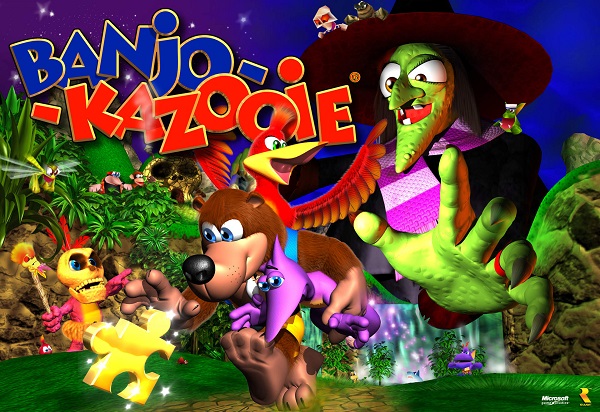
Banjo-Kazooie , released in 1998 for the Nintendo 64, is a 3D platform game developed by Rare and considered one of the console’s greatest classics. Combining humor, creative exploration and an engaging soundtrack, the title became a symbol of the golden age of platform games and influenced countless works of the genre. The adventure follows Banjo, a clumsy bear, and Kazooie, a sarcastic bird that lives in his backpack, on a mission to rescue Banjo’s sister, Tooty, from the clutches of the villain Gruntilda, a witch who wants to steal the young girl’s beauty.
Banjo-Kazooie ‘s gameplay centers around exploring nine themed worlds, each accessible through magical paintings in the witch’s hideout. To progress, players must collect key items:
- Jiggies : Puzzles that unlock new worlds when fitted into screens within the game.
- Musical Notes : Necessary to open paths blocked by Mumbo Jumbo, a shaman who transforms heroes into animals or objects to access secret areas.
- Jinjos : Colorful little creatures that must be rescued to receive a reward from their patriarch, King Jingaling.
- Honeycombs : Items that increase the player’s energy.
Each world presents unique challenges and specific mechanics. For example:
- Mumbo’s Mountain : Introduces thermite transformations and requires collecting eggs for Mumbo.
- Bubblegloop Swamp : Floods and dangerous creatures like crocodiles and piranhas.
- Freezeezy Peak : A frozen winter with sledding tracks and a snow giant named Wozza.
- Click Clock Wood : An ecosystem that changes with the seasons, requiring multiple visits.
Banjo and Kazooie’s moves evolve throughout the adventure, taught by Bottles the Mole. Skills like the Rat-a-tat Rap (a quick attack), Flight (a short flight) and Beak Bomb (a high-speed dive) are essential for overcoming obstacles and defeating enemies. The game also encourages meticulous exploration, with secrets hidden in remote corners or behind complex puzzles.
The narrative is driven by absurd humor and the interactions between the characters. Gruntilda, the villain, communicates in rhymes and is always accompanied by her minions, such as the skeletal skull Dingpot. Kazooie, with his ironic comments, and Mumbo Jumbo, with his speeches full of puns, add personality to the adventure.
Technically, Banjo-Kazooie impressed with its use of the N64’s hardware: colorful textures, fluid animations, and creative level designs, such as the pyramid in Gobi’s Valley or the spaceship in Rusty Bucket Bay . The soundtrack, composed by Grant Kirkhope, is iconic, with themes ranging from the relaxing melodies in Mad Monster Mansion to the frenetic beats in Grunty’s Furnace Fun , the final battle against the witch.
The game was a commercial success, selling over 3.6 million units, and received critical acclaim for its polished gameplay, creativity, and fun factor. Its direct sequel, Banjo-Tooie (2000), further expanded the universe, while the legacy of the original lives on in re-releases such as the Xbox Live Arcade (2008) and the Rare Replay compilation (2015).
More than two decades after its release, Banjo-Kazooie is celebrated as a landmark in 3D platforming, influencing titles such as Super Mario Odyssey and Yooka-Laylee . Its blend of challenge, humor, and charisma secures its place as a timeless masterpiece, remembered by gamers of all ages.
11 – Pokémon Snap – 3,630,000 units
Pokémon Snap is an innovative game for the Nintendo 64, initially released in 1999, that offers a unique experience within the Pokémon universe. Unlike traditional Pokémon games, which focus on capturing and battling creatures, “Pokémon Snap” is an adventure and photography game, where the main objective is to take photos of Pokémon in their natural habitat.
The game casts the player as Todd Snap, a Pokémon photographer who is hired by Professor Oak. Todd’s mission is to travel across Pokémon Island, an isolated island with a variety of ecosystems, to photograph Pokémon for the Professor’s research. The player automatically navigates several routes on the island, each in a vehicle called the ZERO-ONE, which is weatherproof and can float on water, allowing the player to explore a variety of environments, including beaches, volcanoes, rivers, and caves.
The gameplay of “Pokémon Snap” is simple but engaging. As ZERO-ONE moves along a fixed path, players can rotate the camera 360 degrees to observe and photograph Pokémon. Players have a limited number of photos they can take on each course, requiring them to carefully choose their moments to capture the best images. The photos are then evaluated by Professor Oak at the end of each course. The evaluation is based on several criteria, such as the size of the Pokémon in the photo, the pose, the technique (if the Pokémon is in the center of the photo), and whether multiple Pokémon of the same species appear in the image.
In addition to simply taking photos, “Pokémon Snap” also features interactive elements. Players can use items like apples to attract Pokémon or “Pester Balls” to provoke them, which can lead to reactions that can lead to more valuable photos. Later in the game, players can use a flute to make Pokémon dance, which also provides unique photo opportunities.
The challenge of “Pokémon Snap” isn’t just about taking photos, but also about discovering and recording rare and secret Pokémon behaviors that can often only be captured through specific interactions or at certain times. Additionally, there are “Pokémon Signs” hidden throughout each area—silhouettes or natural formations that resemble Pokémon—that the player must photograph to unlock the path to the final stage of the game.
Visually, “Pokémon Snap” was one of the first games to feature Pokémon in a 3D environment. The graphics, while simple by today’s standards, were revolutionary at the time, providing a vivid and colorful representation of Pokémon and their natural environments. The music and sound effects complement the experience well, capturing the playful and adventurous essence of the Pokémon world.
12 – The Legend of Zelda: Majora’s Mask – 3,360,000 units
The Legend of Zelda: Majora’s Mask , released in 2000 for the Nintendo 64, is an action-adventure game developed by Nintendo EAD, directed by Eiji Aonuma and supervised by Shigeru Miyamoto. A direct sequel to Ocarina of Time , the title is considered one of the most daring and emotionally profound in the series, exploring themes of grief, redemption, and the passage of time in a world on the brink of apocalypse. With a non-linear narrative, innovative transformation mechanics, and an environment full of symbolism, Majora’s Mask has become a cult classic, influencing works both inside and outside the Zelda franchise.
The story begins with Link, still a child, lost in a mysterious forest after the conclusion of his adventures in Ocarina of Time . He is attacked by the Skull Kid , a cursed boy who steals his sword and shield, as well as a strange mask called Majora’s Mask , an evil artifact that grants powers at the cost of corrupting its wearer. The Skull Kid, controlled by the mask, threatens to destroy the world of Termina by summoning the moon to crash into the planet in three days. It is up to Link, using magical masks that allow him to transform into creatures such as a Deku Scrub , a Goron , and a Zora , to prevent the cataclysm and save the inhabitants of Termina.
Majora’s Mask ‘s gameplay revolves around the three-day cycle , a real-time system that lasts approximately 54 in-game minutes (accelerated to 1 real second = 1 in-game hour). Each mask grants unique abilities:
- Deku Mask : Allows you to glide using leaves, throw nuts, and hide in flowers.
- Goron Mask : Offers immense strength, high-speed rolling, and heat resistance.
- Zora Mask : Gives Link the ability to swim quickly, throw bone boomerangs, and breathe underwater.
In addition to transformations, the game features over 20 optional masks , such as the Mask of Scents (for detecting odors) and the Bremen Mask (for attracting animals), each with specific uses in puzzles and side quests. Progression is dependent on time management: key events, such as festivals or natural disasters, occur at fixed times, requiring the player to plan their actions. To restart the cycle, Link uses the Song of Time , which transports him back to the first day, retaining collected items but resetting most progress in the world.
The world of Termina is a distorted mirror of Hyrule, with regions such as Clock Town (the central city, ruled by a mayor in crisis), Woodfall (a marshland ruled by a curse), Snowhead (a mountain frozen in eternal winter), Great Bay (a coastline with environmental problems) and Ikana Canyon (a desert haunted by spirits). Each area houses a themed dungeon, such as the Woodfall Temple (for purifying water) and the Stone Tower Temple (an inverted maze that defies gravity).
One of the biggest innovations in Majora’s Mask is its emphasis on side quests that involve characters with deep personal stories. For example:
- Anju and Kafei : A couple who need to reconcile before marriage, involving a series of missions that address themes such as betrayal and forgiveness.
- The Siblings Rosa and Mikau : The story of the Zora Mikau, who dies protecting eggs, leads Link to assume his identity to help his beloved.
- The Ghosts of Ikana : Spirits trapped between life and death, like Dampé and Pamela , who reflect on guilt and memory.
Combat is similar to that of Ocarina of Time , but with improved mechanics: the targeting system (Z-Targeting) is more precise, and the physics of objects, such as blocks and levers, are more interactive. The game also introduces item fusions , such as the Fierce Deity’s Mask , which transforms Link into a godlike entity for the final battle against Majora’s Wrath , the evil mask’s final form.
Technically, Majora’s Mask took advantage of the N64’s hardware to create detailed environments, with darker textures that contrasted with the colorful aesthetic of Ocarina of Time . The soundtrack, composed by Koji Kondo, Toru Minegishi and others, is striking: the theme song “Oath to Order” , played on the third day, is a desperate choral song that accompanies the approaching moon, while the “Song of Healing” is a melancholic anthem that symbolizes the characters’ redemption.
Commercially, the game has sold over 3 million units, receiving praise for its complex narrative and innovation, although it was considered darker and more challenging than its predecessors. In 2015, a 3D remastered version was released for the Nintendo 3DS, featuring improved graphics and new dungeons.
Majora’s Mask is often cited as one of the greatest games in history, not just for its gameplay, but for the way it addresses universal themes like mortality, human connection, and the urgency of time. Its structure of repetition and reinvention of the three-day cycle creates a unique experience, where every choice and interaction carries emotional weight. More than two decades after its release, the game remains a testament to the ability of video games to tell profound and transformative stories.
13 – Star Wars Episode I: Racer – 3,100,000 units
Star Wars Episode I: Racer is an exciting racing game based on the famous pod-racing sequence from the film “Star Wars: Episode I – The Phantom Menace”. Released in 1999 for the Nintendo 64, the game was developed by LucasArts and quickly became one of the most popular titles on the console, capitalizing on the huge success of the film and the fans’ fascination with this racing modality seen in the movies.
The game allows players to take on the role of a variety of podracers, including young Anakin Skywalker, Sebulba (the main antagonist in the film’s races), and many other characters, each with their own customized pod. Each podracer has unique acceleration, top speed, and endurance characteristics, which adds a strategic layer to the game as players must choose the pods that best suit their racing style and specific tracks.
“Star Wars Episode I: Racer” is notable for its intense and exhilarating speed. The pods can reach breakneck speeds, making the racing experience frantic and thrilling. The sense of speed is amplified by the excellent graphics and animations, which transport players to the world of “Star Wars” with stunning visuals that explore a variety of environments, from arid deserts and canyons to industrial landscapes and futuristic cities.
Gameplay centers around the ability to control the pod as it navigates tracks filled with obstacles, jumps, sharp turns, and other competitors trying to overtake and sabotage each other. Players must use their skills to avoid crashes, manage turbo usage to get the most out of their speed, and repair their pods in real time during the race, adding an element of management that is crucial to maintaining performance during races.
In addition to the single race mode, the game also includes a tournament mode, where players compete in a series of races, accumulating points and upgrades for their pods. These upgrades allow players to improve various aspects of the pod racer, such as the engine, wings and turbo, allowing players to tune their vehicles according to the specific needs of each track and competition.
Another standout feature is the “Star Wars” atmosphere that permeates the entire game. The music, sound effects and visuals are faithful to the film’s universe, creating a deep immersion. “Star Wars” fans will particularly appreciate the authentic details, such as the sounds of the pod engines, the dialogue of the characters and the iconic landscapes that are instantly recognizable.
14 – Wave Race 64 – 2,940,000 units
Wave Race 64 is one of the most iconic titles for the Nintendo 64, initially released in 1996. This water racing game developed by Nintendo not only demonstrated the graphical capabilities of the console at the time, but also offered a unique and exciting gaming experience that set itself apart from other traditional racing games due to its dynamic aquatic environment.
The game puts players in control of jet skis on a variety of water tracks, where they must compete against other computer-controlled racers or against the clock in Time Trials mode. One of the most impressive features of “Wave Race 64” is the water physics, which not only realistically impacts gameplay, but was also revolutionary for its time. Waves and water movement directly influence the maneuverability of jet skis, requiring players to constantly navigate and adapt to changing sea conditions.
The game offers four playable characters, each with their own attributes in terms of acceleration, top speed, handling, and stability. Players can choose between these characters based on their preferred playstyle, whether it is focused on high speed or better control in corners.
“Wave Race 64” features a variety of tracks, each with its own unique challenges and environmental characteristics. From gentle courses with relatively calm waters to rough courses with high waves and dangerous obstacles such as buoys that players must maneuver to avoid time penalties. Additionally, weather conditions vary between races, adding another level of difficulty and variability. Racing under a clear sunset or in the middle of a fierce storm can drastically change how players approach each race.
In addition to the standard racing and time trial modes, “Wave Race 64” also includes a stunt mode called “Stunt Mode,” where players can perform tricks and jumps to rack up points. This mode not only provides a break from the intense competitive racing, but also allows players to explore the game’s physics in a more creative and uncompromising way.
Visually, “Wave Race 64” was a sight to behold upon its release, with stunningly realistic and detailed water and beautiful backdrops. The game also stands out for its energetic soundtrack and convincing sound effects, which include the realistic sound of jet ski engines cutting through the waves.
Gameplay-wise, the game is accessible yet challenging to master, a combination that ensures it’s fun for both newcomers and experienced players alike. The controls are responsive and precise, allowing players to feel like they have real control over their jet skis, an absolute must given the unpredictable nature of the water.
15 – Yoshi’s Story – 2,850,000 units
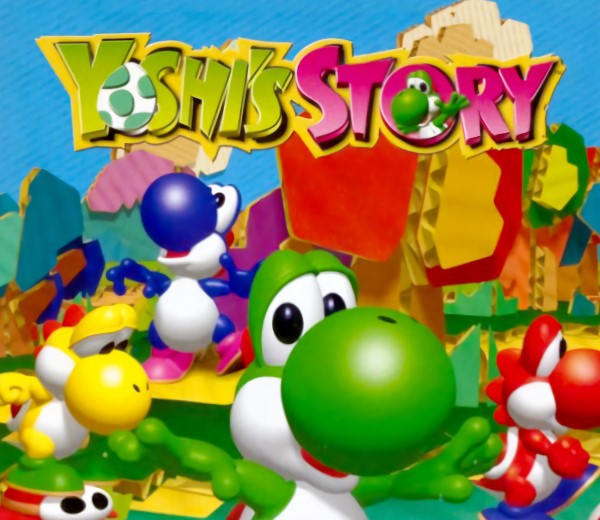
Yoshi’s Story is a platform game developed and published by Nintendo, released for the Nintendo 64 in 1997. This title is the direct sequel to Yoshi’s Island for the Super Nintendo, but features a completely different approach and art style, characterized by graphics that resemble a world made of handmade materials such as paper and fabric. This innovative visual aesthetic not only sets Yoshi’s Story apart from other platform games of the time, but also creates a charming atmosphere that is immediately appealing to players of all ages.
The premise of the game is simple yet captivating. Yoshi Island has been transformed into a storybook by the evil Baby Bowser, and the island’s happiness has been stolen. The goal of the player is to guide the Yoshis through various pages of the book to defeat Baby Bowser and restore joy to the island. The game unfolds as a series of levels, each representing a page of the book, with different themes and challenges.
In “Yoshi’s Story,” players choose one of several colorful Yoshis, each with their own voices and slight gameplay variations, to navigate levels. The game’s core mechanics revolve around eating fruit, which is collected to fill a happiness meter. Once the meter is filled, the level is completed. However, the path is not as straightforward as it seems; players must choose which fruit to collect and find hidden secrets to maximize their score and discover new paths and hidden areas.
The game also incorporates several traditional platforming elements, such as jumping on platforms, solving simple puzzles, and battling enemies. Yoshi has several abilities, including a floating jump, a tongue attack to swallow enemies, and the ability to throw eggs, which are used both to attack enemies and to activate mechanisms or reveal hidden items.
“Yoshi’s Story” is notable for its non-linear approach to progression. Players can choose which levels to play through a selection in the “Table of Contents”, allowing them to customize their gameplay experience and explore different routes to complete the book. Additionally, the game boasts a high degree of replayability due to the variety of Yoshis available and the need to fully explore each level to discover all the secrets and maximize the score.
Visually and sonically, the game is a work of art. The graphics are vibrant and colorful, with textures that truly make the world feel like it’s made of handcrafted materials. The soundtrack is equally enchanting, with songs that perfectly complement the game’s playful and cheerful atmosphere.
16 – Mario Party – 2,700,000 units
Mario Party , released in 1998 in Japan and 1999 in the West, is a multiplayer board game developed by Hudson Soft in partnership with Nintendo for the Nintendo 64. Combining luck, strategy and frenetic mini-games, the title became a cultural phenomenon, defining the party game genre and becoming a mainstay of the console. Conceived as a social experience, Mario Party brought families and friends together around chaotic competitions, consolidating itself as one of the best-selling games on the N64, with over 7 million units sold.
Gameplay revolves around matches on themed boards, where up to four players (controlling characters such as Mario, Luigi, Peach, and Yoshi) compete to collect stars and coins . Each match is divided into turns, during which players roll a virtual die (each character has a specific die, like Mario’s, which ranges from 1 to 10) to move around the board. The main objective is to buy stars, which cost 20 coins each, but the location of Bowser , the villain who sells stars, changes each turn, requiring planning to reach him.
The boards are colorful and full of interactive spaces:
- Blue Spaces : Give coins when you land on them.
- Red Spaces : Steal coins.
- Happening Spaces : Trigger random events, such as falling into lakes or battling enemies.
- Item Slots : Allows you to buy items like Mushroom (to move further) or Shell (to steal coins).
- Bowser Spaces : Activate challenges or penalties imposed by the villain.
Each turn, players participate in mini-games that determine how many coins they earn. These mini-games range from precision challenges (such as Hot Rope Jump , where players jump over ropes) to cooperative contests (such as Piranha’s Pursuit , where players run on treadmills to escape carnivorous plants). Some are competitive, while others require cooperation and then randomly distribute rewards.
The game includes eight unique boards, each with specific mechanics:
- Peach’s Birthday Cake : A classic board game with paths leading to a giant cake.
- Yoshi’s Tropical Island : An island divided into two areas, with an active volcano.
- Wario’s Battle Canyon : A canyon with moving platforms and dangerous drops.
- Luigi’s Engine Room : An industrial setting with conveyor belts and machines that push players around.
- Mario’s Rainbow Castle : A castle with paths that change color and direction.
- DK’s Jungle Adventure : A jungle with elephants and unstable platforms.
- Bowser’s Magma Mountain : A volcano where the heat drains coins.
- Eternal Star : A space board unlockable after completing all others.
In addition to Classic Mode, the game offers modes such as Mini-Game Stadium (for playing individual mini-games) and Extra Mode , which unlocks new challenges after completing the main game. Duel Mode allows 1v1 battles on simplified boards, while Challenge Mode tests skill in sequences of mini-games with increasing difficulty.
Technically, Mario Party impressed with its use of the N64’s hardware: the 3D boards were vibrant, with charismatic character animations and sound effects that reinforced the festive atmosphere. The soundtrack, composed by Kazumi Totaka and others, includes memorable themes such as the Peach’s Birthday Cake song and the fanfare that announces the start of each mini-game.
The success of Mario Party spawned a franchise with over 10 sequels, including Mario Party 2 (1999) and Mario Party 3 (2000), as well as inspiring spin-offs such as Mario Party: The Top 100. Its critical reception was enthusiastic, with praise for its variety of mini-games, its balance of luck and strategy, and its ability to unite players of all ages.
More than two decades after its release, Mario Party remains a symbol of the Nintendo 64’s golden era, remembered as a game that turned nights of fun into lasting memories. Its simple yet effective formula proves that the combination of healthy competition, humor and interactivity can transcend generations, remaining relevant even in an era of online gaming.
17 – Star Wars: Shadows of the Empire – 2,600,000 units
Star Wars: Shadows of the Empire is a video game released for the Nintendo 64 in 1996, during the console’s early days. The title is one of the first forays into an expansive narrative that bridges the gap between the films “The Empire Strikes Back” and “Return of the Jedi”. Developed by LucasArts, the game offers a combination of different gameplay styles, including aerial combat, third-person shooters, and racing sequences.
The protagonist of “Shadows of the Empire” is Dash Rendar, a mercenary and smuggler who assists the main heroes of the Rebel Alliance in their fight against the Galactic Empire. The story explores several subplots intertwined with events and characters from the films, enriching the “Star Wars” universe with new details and adventures. The plot mainly focuses on Dash’s attempt to help rescue Princess Leia from the clutches of a nefarious villain known as Prince Xizor, leader of the powerful criminal organization Black Sun.
The gameplay is varied, which is one of the things that makes Shadows of the Empire stand out. The game begins with a famous battle on the icy surface of Hoth, where players pilot a snowspeeder to defend the Rebel base against Imperial AT-ATs. This sequence has been widely praised for its intense action and authenticity to the Star Wars universe.
After the opening on Hoth, the game shifts to a third-person perspective, where Dash Rendar battles enemies with a variety of weapons and gadgets. These stages are more exploratory, with platforming and combat elements, where precision and strategy are essential to progress. The player must navigate complex environments, facing off against both Imperial forces and alien creatures and mercenaries.
In addition to the gunplay and exploration sequences, there are moments in “Shadows of the Empire” that include piloting vehicles other than the snowspeeder, such as a speeder bike and Dash’s personal ship, the Outrider. These stages alternate between high-speed racing and aerial combat, adding a diverse dynamic to the game.
Visually, “Shadows of the Empire” was one of the first games to take full advantage of the Nintendo 64’s graphical capabilities, offering immersive 3D environments and detailed character models for the time. While some of the visuals may seem dated today, at the time they represented a major technological advancement.
The soundtrack and sound effects of “Shadows of the Empire” are also noteworthy elements. Composed to closely align with the sonic aesthetic of the “Star Wars” saga, the musical themes and effects contribute significantly to the atmosphere of the game, immersing players in the drama and excitement that is typical of “Star Wars”.
18 – Pokémon Stadium 2 – 2,540,000 units
Pokémon Stadium 2 , released in 2000 in Japan and 2001 in the West, is a strategic battle game developed by HAL Laboratory and published by Nintendo for the Nintendo 64. The sequel to Pokémon Stadium , the title expanded the 3D battle experience by integrating the 251 Pokémon from the second generation (including the legendary Celebi and the Gold/Silver starters ), as well as improving combat mechanics and offering full compatibility with the Game Boy Color games. Considered a milestone in the franchise, it solidified the transition of Pokémon from handhelds to home consoles, combining nostalgia with innovation.
The main new feature of Pokémon Stadium 2 was the inclusion of Pokémon from Gold , Silver , and Crystal , allowing players to transfer their teams directly from the Game Boy via the Transfer Pak , an accessory that connects the two consoles. This not only expanded the roster of available creatures, but also allowed for evolving battle strategies with new abilities, types (such as Dark and Steel ), and items (such as Leftovers and Choice Band ). The game also introduced the Time Capsule , a system that made it easier to trade Pokémon between the first and second generations, although with some restrictions due to differences in mechanics.
Gameplay revolves around modes that test players’ ability to create balanced teams:
- Gym Leader Castle : A series of challenges against Gym Leaders from the Johto and Kanto regions, including new characters like Falkner and Whitney, as well as veterans like Brock and Misty. Each battle requires the player to adapt their strategies to the leaders’ weaknesses.
- Stadium Mode : Divided into cups such as Poké Cup (for teams of Pokémon of specific levels), Prime Cup (battles without restrictions) and Little Cup (exclusive to first evolution Pokémon), this mode requires mastery of types, items and moves.
- Final Trainer Battle : After beating all modes, players face Red, the silent champion from Pokémon Red/Blue , in an epic battle that includes his level 88 Pikachu.
- Kids’ Club : A simplified mode for younger players, with relaxed rules and pre-selected Pokémon.
The game also includes mini-games ranging from catching challenges (such as Catching Contest ) to Pokémon races ( Pokémon Race ), as well as a Battle Simulator to test strategies against the AI. The multiplayer mode supports up to four players, allowing for chaotic battles with custom or rented teams if someone does not have a Game Boy.
Technically, Pokémon Stadium 2 improves upon the original’s graphics, with more detailed 3D models, smooth textures, and effects like energy particles during attacks. Arenas, such as Bluesky Stadium (an open field with a dynamic sky) and Dragon’s Den (a shadowy cave), are themed and interactive, with changing weather conditions that affect combat (such as rain intensifying electric attacks). The soundtrack, composed by Junichi Masuda and Go Ichinose, reimagines classics from Gold/Silver with orchestral arrangements, such as the Battle Tower music and the New Bark Town theme .
One of the game’s greatest contributions was to popularize the Double Battle and Triple Battle formats (unheard of at the time), as well as introducing rules such as the Self-KO Clause (which penalizes sacrifice strategies) and the Sleep Clause (limiting the number of Pokémon that can sleep). These mechanics directly influenced the franchise’s competitive scene, serving as the basis for future games such as Pokémon Colosseum and Pokémon Battle Revolution .
Commercially, Pokémon Stadium 2 was a success, selling over 3 million units worldwide. Critical reception praised its strategic depth, faithfulness to handheld gaming, and ability to bring players together in multiplayer experiences. In 2020, the game was re-released on the Wii U Virtual Console, allowing new generations to experience its timeless gameplay.
More than two decades after its release, Pokémon Stadium 2 remains a symbol of the golden age of Pokémon battle games. Its combination of strategy, nostalgia, and innovation cemented it as one of the franchise’s most important titles, paving the way for spin-offs like Pokémon Unite and remaining a benchmark for fans of competitive strategy.
19 – Perfect Dark – 2,520,000 units
Perfect Dark is a first-person shooter developed by Rare and released for the Nintendo 64 in 2000. This title is often remembered as one of the best games of the genre for the console, being a spiritual sequel to the acclaimed “GoldenEye 007”. “Perfect Dark” brings a rich science fiction narrative, innovative gameplay and advanced graphics for the time, establishing itself as a milestone in the development of shooter games.
The story of “Perfect Dark” is set in a dystopian future in the year 2023 and follows the protagonist Joanna Dark, an agent of the Carrington Institute, an organization that fights against corporate conspiracies and alien threats. Joanna is sent on several missions to unravel and stop the plans of the dataDyne Corporation, a powerful company that is involved in nefarious activities, including conspiracies with an alien race known as the Skedar.
The gameplay of “Perfect Dark” is rich and varied, offering players a wide range of weapons and technological gadgets. Unlike many shooters of the time, the game features elements of stealth and strategy, allowing for more cautious approaches in addition to direct confrontation. The weapons in the game are a highlight, with each weapon having a secondary mode of operation that offers players additional tactical options during combat.
Visually, “Perfect Dark” was one of the most advanced games on the Nintendo 64, requiring the use of the Expansion Pak to access its full graphical capabilities, including more detailed textures and improved lighting effects. The game’s environments are varied and well-crafted, ranging from futuristic corporate facilities to underground alien bases.
One of the game’s main draws is its robust multiplayer mode, which can be played both locally and through a combat simulator called Combat Simulator. This mode allows players to set up matches against friends or against AI-controlled bots, with a wide variety of customizations, making each match unique. The multiplayer mode is also notable for its complexity and depth, offering numerous game modes, weapons, and maps.
Additionally, “Perfect Dark” introduced an innovative element called “counter-operative mode,” where one player controls Joanna while another takes on the role of an enemy guard trying to impede her progression. This game mode offers an interesting and challenging dynamic, significantly increasing the game’s replay value.
The soundtrack of “Perfect Dark” perfectly complements its sci-fi and suspenseful atmosphere. Composed by Grant Kirkhope, the music is immersive and intensifies the action scenes, while realistic sound effects help immerse players in the game’s futuristic world.
20 – Mario Party 2 – 2,480,000 units
Mario Party 2 is a vibrant and engaging party game developed by Hudson Soft and published by Nintendo, released in 1999 for the Nintendo 64. This title is the second entry in the popular party game series that began with the original “Mario Party.” Widely considered one of the best in the series, “Mario Party 2” features new themed boards, mini-games, and gameplay mechanics that improve upon what was introduced in the first game, making it a timeless classic for players of all ages.
The essence of “Mario Party 2” revolves around the concept of game boards, where up to four players roll dice to move their characters (chosen from Mario universe favorites such as Mario, Luigi, Princess Peach, Yoshi, Wario, and Donkey Kong) around a virtual board. Each board has a specific theme, such as pirates, the Wild West, space, mystical, among others, each with its own traps and surprises, as well as a unique look that helps immerse players in the proposed environment.
Throughout the game, players compete to collect the most stars. These can be purchased at specific locations on the board for coins, which are earned primarily through mini-games. These mini-games are initiated at the end of each round (when all players have rolled the dice) and vary in style and type, including free-for-all, one-on-three, two-on-two, and free-for-all battles. “Mario Party 2” introduced more refined and balanced mini-games compared to its predecessor, creating a fairer and more entertaining competition.
A notable aspect of “Mario Party 2” is its focus on strategy and luck, with players having to decide the best route around the board, when to use special items that can turn the tide of the game, and how to interact with other players — whether by forming temporary alliances or outright sabotaging them. This adds a layer of tactical depth that is rarely seen in party games.
Visually, the game makes excellent use of the Nintendo 64’s capabilities, with colorful, lively graphics that are both cheerful and inviting. The boards and characters are rendered with detail that perfectly captures the charm of the Mario franchise. The soundtrack and sound effects complement the experience, with catchy tunes and distinctive sounds that intensify the exciting moments of the mini-games and twists and turns of the boards.
In addition to the main game mode, “Mario Party 2” also includes a “Mini-Game Land,” where players can practice mini-games they have unlocked or compete in mini-game series to test their skills. This not only extends the game’s longevity, but also allows players to hone their skills in specific mini-games outside of the competitive context of the boards.
21 – Mario Tennis – 2,320,000 units
Mario Tennis, released for the Nintendo 64 in 2000, is a tennis game developed by Camelot Software Planning and published by Nintendo. The title is credited with revitalizing the tennis game genre by introducing accessible yet deeply strategic gameplay and a vibrant mix of characters from the Mario universe.
In the game, players can choose from a variety of iconic characters from the Mario franchise, including Mario, Luigi, Princess Peach, Bowser, and many others, each with their own unique attributes that influence their performance on the court. For example, some characters are faster, while others may have stronger hits or greater range. In addition to the familiar characters, “Mario Tennis” also introduced new characters to the Mario universe, such as Waluigi, who made his first appearance in this game.
“Mario Tennis” gameplay is intuitive, making it accessible to newcomers, but it also has layers of tactical depth that appeal to more experienced players. The game uses a simple control system in which buttons are used to perform different types of shots, such as lobs, slices and smashes, which can be combined with directional pads for variation and strategy during matches.
One of the most appealing features of “Mario Tennis” is the variety of game modes available. Players can participate in singles or doubles matches, competing against AI on various difficulty levels or against other players in a multiplayer mode. The game also includes a tournament mode, where players must win a series of matches to earn trophies and unlock extra content, such as additional courts and secret characters.
In addition to the traditional modes, “Mario Tennis” offers “Ring Shot,” a game mode where players must hit the ball through rings that appear on the court to rack up points. This mode not only adds an extra layer of fun and challenge, but also helps players hone their aiming skills and reaction time.
Visually, “Mario Tennis” is colorful and vibrant, with graphics that take full advantage of the Nintendo 64’s hardware. Characters and courts are rendered with detail and fluid animations, which contribute to an enjoyable viewing experience. The characters’ expressions and celebrations during the games add a special charm, maintaining the playful and fun spirit characteristic of Nintendo games.
The soundtrack and sound effects of “Mario Tennis” are also highlights, with lively music and effects that complement the action on the court. The sound of rackets hitting the ball, the celebratory shouts and the interaction between the characters enrich the atmosphere of the game, making each match engaging and exciting.
22 – Star Wars: Rogue Squadron – 2,170,000 units
Star Wars: Rogue Squadron, released for the Nintendo 64 in 1998, is an acclaimed aerial combat game developed by Factor 5 and LucasArts. The game is set in the “Star Wars” universe, specifically between the events of the films “A New Hope” and “The Empire Strikes Back”. This title is notable for its dynamic and engaging approach to aerial combat, offering players the chance to pilot several iconic ships from the Star Wars franchise.
The game follows the adventures of Rogue Squadron, an elite unit of fighter pilots led by Commander Luke Skywalker. The squadron is renowned for its exceptional skills and dangerous missions, which is reflected in the many combat operations that players must undertake throughout the game. Each mission presents specific objectives, ranging from rescuing allies, to securing important locations, to attacking enemy bases that are critical to the Empire’s strategy.
“Star Wars: Rogue Squadron” features a collection of 16 missions, each with its own unique scenarios and challenges. Players will have the opportunity to pilot a variety of iconic starships, including the X-wing, A-wing, Y-wing and snowspeeder. Each ship has unique characteristics in terms of speed, firepower and maneuverability, requiring players to adapt their tactics to meet the specific needs of each ship in order to complete mission objectives.
One of the game’s biggest draws is its medal system. After completing each mission, players are awarded a medal based on their performance, taking into account factors such as accuracy, time taken to complete the mission, and amount of damage taken. Earning gold medals on every mission is a significant challenge and offers great replayability for those who want to fully master the game.
Visually, “Star Wars: Rogue Squadron” was one of the first Nintendo 64 games to utilize the Expansion Pak, allowing for higher-resolution graphics. The depictions of ships and environments are detailed and vibrant, faithfully capturing the “Star Wars” aesthetic. The planets and battlefields are varied, ranging from arid deserts to densely populated cities, each packed with detail that enhances immersion.
The game’s soundtrack is also a highlight, with music composed by John Williams that is adapted from the original film soundtracks. The sound effects, from the hum of ship engines to the sound of blasters, are authentic and add an extra layer of realism to the gameplay experience.
The game also includes several codes and secrets, which can unlock special ships and bonus missions, providing players with additional content to explore after completing the main missions.
23 – 1080° Snowboarding – 2,030,000 units
1080° Snowboarding, released in 1998 for the Nintendo 64, is a winter sports game that quickly established itself as one of the most iconic snowboarding titles for the console. Developed by Nintendo EAD, “1080° Snowboarding” stands out for its innovative gameplay, realistic graphics for the time and game physics that effectively capture the essence of snowboarding.
The game allows players to choose from five different characters, each with their own unique skills and snowboarding styles. Additionally, players can choose from several board types, which vary in speed, control, and flexibility, allowing for additional customization that can be tailored to each player’s playstyle.
“1080° Snowboarding” is known for its technical detail and precision. The game’s physics are one of its most praised features, offering a realistic experience where factors such as the snowboarder’s weight, air resistance and snow characteristics affect maneuverability and speed. The game uses a combination of analog and digital controls that allow players to perform a wide range of maneuvers, from simple turns to complex jumps and tricks like the “1080°” itself, which gives the game its name.
The game features several modes, including “Match Race”, where two competitors race around a circuit with the goal of reaching the finish line first; “Time Attack”, which challenges players to complete a course in the shortest time possible; “Trick Attack”, which focuses on accumulating points through tricks and maneuvers; “Contest”, which combines racing and tricks in a competition; and “Training”, which allows players to practice and perfect their skills.
Visually, “1080° Snowboarding” impresses with the quality of its graphics. The environments are well detailed and varied, including slopes with different weather conditions ranging from clear, sunny skies to dense snowfalls, each affecting visibility and terrain physics. Character animations are fluid, and boards leave realistic marks in the snow, increasing immersion in the game.
The soundtrack for “1080° Snowboarding” is also impressive, offering a mix of rock and electronic music that complements the adrenaline rush of racing and trick competitions. The sound effects, such as the sound of the board sliding over different types of snow, are realistic and well implemented, contributing to the atmosphere of the game.
Additionally, “1080° Snowboarding” includes a multiplayer mode, where two players can compete against each other in races or trick competitions, adding a competitive element that significantly increases the game’s replayability.
24 – Excitebike 64 – 2,000,000 units
Excitebike 64, released in 2000 for the Nintendo 64, is a modernization of the classic motocross racing game “Excitebike”, originally released for the NES in 1984. Developed by Left Field Productions and published by Nintendo, this title brought the thrilling action of motorcycle racing to a new generation, with realistic 3D graphics, detailed physics and a variety of game modes that significantly expand on the original formula.
The game maintains the spirit of the original Excitebike, focusing on high-speed racing and players’ ability to control the balance and speed of the bike as they tackle ramps, jumps and other challenges typical of motocross tracks. However, “Excitebike 64” enhances the experience by introducing more complex physics and control options that allow players to perform a wider range of maneuvers, including wheelies, stoppies and various aerial tricks.
The graphics in “Excitebike 64” are a highlight, with intricately modeled tracks ranging from indoor environments to vast outdoor landscapes. Dynamic lighting conditions and weather effects add a level of realism and immersion that was rare in racing games of the time. The motorcycles and riders are also rendered in great detail, and the animations convincingly capture the intense action of motocross racing.
The game offers several game modes, including a season mode, where players compete in a series of events to accumulate points and win the championship. There is also a practice mode, which allows players to familiarize themselves with the different tracks and hone their skills without the pressures of competition. Additionally, “Excitebike 64” includes a track creation mode, where players can design and build their own custom tracks, an innovative feature that significantly increases the game’s replay value.
“Excitebike 64” multiplayer is another significant addition, allowing up to four players to compete simultaneously in split-screen mode. This feature transforms the game into an exciting social experience where friends can compete against each other in intense, action-packed races.
The soundtrack of “Excitebike 64” perfectly complements the atmosphere of the game, with music ranging from energetic rock to more electronic rhythms, suitable for the adrenaline of motocross racing. The sound effects of the motorcycles, from the roar of the engines to the sound of the tires tearing through the mud, are authentic and well implemented, reinforcing the authenticity of the racing experience.
25 – Mario Party 3 – 1,910,000 units
Mario Party 3 , released in 2000 in Japan and 2001 in the West, is the third title in the Mario Party series developed by Hudson Soft in collaboration with Nintendo for the Nintendo 64. Retaining the winning formula of its predecessors, the game enhanced the multiplayer experience with new boards, creative mini-games, and the introduction of mechanics such as the Stamp System , which rewards players for completing challenges. Combining competition, luck, and strategy, the title established itself as one of the most popular in the franchise, selling over 5 million units worldwide.
The core gameplay of Mario Party 3 revolves around Party Mode , where up to four players (controlling characters such as Mario, Luigi, Peach, Yoshi, Waluigi, and others) compete on themed boards to collect stars and coins . Each match is divided into turns, with players rolling a die to move around the board, purchasing stars from the Millennium Star , and facing random events. New to this title is the stamp system : by completing specific objectives (such as winning mini-games or collecting coins), players receive stamps that unlock rewards, such as new boards and mini-games in the Extra Games mode .
The game includes six unique boards, each with distinct mechanics:
- Chilly Waters : An icy region with frozen lakes and crumbling platforms.
- Woody Woods : A magical forest with mushrooms that alter the players’ path.
- Creepy Steeple : A haunted castle where players face supernatural challenges.
- Waluigi’s Island : A tropical island with active volcanoes and flowing water.
- Shroom City : A futuristic city with elevators and moving walkways.
- Horror Land : An abandoned amusement park with scary attractions and treacherous paths.
In addition to Classic Mode, Mario Party 3 features:
- Story Mode : A single-player mode where the player faces CPUs to collect stamps and become the Super Star .
- Duel Mode : 1v1 battles on simplified boards, with rules such as coin betting.
- Mini-Game Stadium : Allows you to play individual mini-games in themed sequences.
- Battle Royal : Chaotic multiplayer mode focused on competitive mini-games.
Mini-games are the heart of the title, ranging from challenges of skill, luck and teamwork:
- 4-Player Games : Competitions like Balloon Burst (popping balloons with needles) and Dungeon Bash (destroying boxes in a dungeon).
- 1-Player Games : Solo challenges, such as Slot Machine (hitting combinations) and Bowl Over (knocking down pins with a ball).
- Duel Games : Direct disputes, such as Hammer Drop (crushing the opponent with hammers) and Pipe Maze (navigating through mazes).
Technically, the game improved upon the N64’s graphics, with more detailed boards and visual effects such as snow, lava, and flashing lights. The soundtrack, composed by Kazumi Totaka, includes memorable themes such as the music of Chilly Waters and the fanfare of the Millennium Star .
Mario Party 3 was praised by critics for its diversity of minigames, balance between luck and strategy, and the inclusion of Waluigi as a playable character.
26 – WCW/nWo Revenge – 1,880,000 units
WCW/nWo Revenge is a professional wrestling video game developed by AKI Corporation and Asmik Ace Entertainment, released for the Nintendo 64 in 1998. This title is the sequel to “WCW vs. nWo: World Tour” and is widely recognized for its improved gameplay, larger roster of wrestlers and improved graphics, consolidating itself as one of the best wrestling games of the time.
The game features a large roster of wrestlers from World Championship Wrestling (WCW) and the New World Order (nWo), two of the most famous professional wrestling factions of the 1990s. “WCW/nWo Revenge” includes icons such as Hulk Hogan, Sting, Kevin Nash, and Goldberg, among many others, for a total of over 60 playable characters. Each wrestler is meticulously modeled with their signature moves, special moves, and signature entrances, adding a great level of authenticity and variety to the game.
The gameplay of “WCW/nWo Revenge” is notable for its balance between accessibility and technical depth. The control system is intuitive, allowing players of all skill levels to perform complex moves with relative ease. The game utilizes a modified and improved grappling system over its predecessor, with a greater focus on reversals and counterattacks, allowing for more strategic and exciting duels.
Visually, the game represents a significant improvement over its predecessor. The graphics are more refined, with more detailed character models and smoother animations. The rings and arenas are also well recreated, reflecting the look and feel of WCW and nWo wrestling television events.
One of the most praised aspects of “WCW/nWo Revenge” is its wide range of game modes. In addition to traditional one-on-one matches, the game offers tag team matches, cage matches, and tournaments, among other formats. The title also introduces a more elaborate championship system in which players can compete for different titles, adding an additional layer of goals and accomplishment to their progress in the game.
“WCW/nWo Revenge”’s multiplayer mode is another strong feature, supporting up to four players in simultaneous combat. This feature not only makes the game a great option for playing with friends, but also significantly increases the replay value by providing countless hours of fun and competition.
The game’s soundtrack and sound effects complement the experience, with music that evokes the intensity and drama of wrestling events, and impact sounds that give weight to the fighters’ strikes and movements.
27 – Hey You, Pikachu! – 1,830,000 units
Hey You, Pikachu! is a groundbreaking game for the Nintendo 64 released in 1998 that explores a unique interaction between the player and Pikachu, one of the most iconic characters in the Pokémon universe. Developed by Ambrella and published by Nintendo, the game was one of the first to utilize the Voice Recognition Unit (VRU), a voice recognition accessory that allowed players to communicate directly with Pikachu using voice commands.
In the game, the player takes on the role of a Pokémon Trainer who befriends a wild Pikachu. The goal is to develop a relationship with Pikachu over several days of interactive activities. The game does not follow a traditional narrative line with battles or competitions like other Pokémon games. Instead, it focuses on communication and interaction with Pikachu, providing a more personal and immersive experience.
Hey You, Pikachu! offers a variety of daily activities that the player can do together with Pikachu. These activities include fishing, collecting ingredients for cooking, hunting for treasure, tending to a garden, and participating in various mini-games. Each activity is designed to strengthen the bond between the player and Pikachu, with the Pokémon responding in different ways based on the voice commands given.
The use of the VRU is a distinctive feature of the game. The device allows the player to give verbal commands to Pikachu, who recognizes and reacts to over 200 different words. Pikachu’s ability to understand and respond to the player’s commands was a remarkable technical achievement for its time, offering one of the first experiences of direct interaction between a human and a game character through voice.
Visually, the game is colorful and lively, with graphics that capture the charm and joy of the Pokémon world well. Pikachu, in particular, is animated with a wide range of expressions and reactions, making each interaction unique. The game’s environments are varied and well-designed, providing a vibrant backdrop for daily activities with Pikachu.
The game’s soundtrack is upbeat and fits the game’s lighthearted and fun tone. Sound effects, especially Pikachu’s sounds, are crucial to the gameplay, as they help convey the Pokémon’s emotions and responses to the player’s actions.
While Hey You, Pikachu! was a technical innovation and offered a unique gameplay experience, it also faced criticism regarding the accuracy and reliability of its voice recognition. Some players encountered difficulties with voice commands not being recognized correctly, which could frustrate the intended interaction.
28 – Kirby 64: The Crystal Shards – 1,770,000 units
Kirby 64: The Crystal Shards is a platform game released for the Nintendo 64 in 2000, developed by HAL Laboratory. This title is notable for being the first and only game in the Kirby franchise developed specifically for the Nintendo 64, combining classic Kirby gameplay with three-dimensional graphics, although the gameplay remains on a two-dimensional plane.
The game’s story follows Kirby on an adventure to gather the shards of a magical crystal that has been destroyed, scattering its pieces across different planets. Each shard is guarded by nefarious forces, and Kirby must travel across six worlds to collect them all and defeat an evil entity known as Dark Matter, who has returned after his defeat in previous Kirby games.
One of the distinguishing features of “Kirby 64: The Crystal Shards” is Kirby’s ability to combine powers copied from defeated enemies. Kirby can inhale enemies to gain their abilities, a classic mechanic in the series, but in this game, he can combine two abilities to create an entirely new power. For example, combining the fire ability with the sword ability allows Kirby to wield a flaming sword. This ability fusion mechanic offers a variety of combinations and strategies, significantly increasing the game’s replayability.
The game is divided into levels spread across different planets, each with their own themes and challenges. Worlds range from grass and water-themed locations to more exotic environments like a sand planet and a lava planet. Each world culminates in a boss battle, where Kirby must use both his copied abilities and platforming tactics to win.
Visually, “Kirby 64: The Crystal Shards” takes full advantage of the Nintendo 64’s hardware to create colorful environments and charming 3D characters. Although the action unfolds on a 2D plane, the game’s environments and elements are rendered in three dimensions, giving Kirby’s universe depth and immersion.
The game’s soundtrack maintains the upbeat, playful tone that is characteristic of the Kirby series, with catchy tunes that complement the on-screen action. The sound effects, from ability absorption to special attacks, are equally charming and effective in reinforcing the game’s atmosphere.
“Kirby 64: The Crystal Shards” also includes a number of multiplayer mini-games, where up to four players can compete in a variety of activities, such as a food-eating race and an action-reaction game. These mini-games add a social dimension to the game, offering quick and accessible fun for friends and family.
29 – Cruis’n USA – 1,720,000 units
Cruis’n USA is an arcade racing game that was released for the Nintendo 64 in 1996. Originally developed by Midway Games for arcade machines, the game was later ported to Nintendo’s console, offering a fast and fun racing experience that captures the essence of road racing across the United States.
The game’s concept is simple and straightforward: players take part in coast-to-coast races across the United States, starting in San Francisco and ending in Washington, D.C. Along the way, players will traverse a variety of iconic U.S. locations, including the bustling streets of Los Angeles, the vast plains of the Grand Canyon, and the boulevards of Chicago. The goal is to outrun your opponents and avoid traffic to come in first place.
The gameplay of “Cruis’n USA” is marked by its arcade style, with simple controls and exaggerated game physics that prioritize fun and speed over reality. Players can choose between different cars, each with their own speed and handling characteristics. As they progress through the game, new vehicles can be unlocked, offering even more options and variety.
One of the highlights of “Cruis’n USA” is its visual presentation. For its time, the game offered relatively advanced 3D graphics, with colorful and detailed scenarios that provided a good sense of speed and movement. The varied landscapes along the way not only provide a visually appealing panorama, but also keep the gameplay interesting and dynamic, with different challenges and obstacles in each location.
The soundtrack of “Cruis’n USA” also complements the gaming experience well, with music ranging from rock to electronic, capturing the adventurous and carefree spirit of racing. The sound effects of the cars and the environment increase the immersion, reinforcing the feeling of being in a real race on American roads.
In addition to the main game mode, “Cruis’n USA” also includes options for single-player races on specific tracks and a two-player mode where competitors can race side-by-side on a split-screen. This adds a competitive element to the game, allowing friends and family to enjoy the thrill of racing together.
While “Cruis’n USA” may not offer the depth or realism of other, more sophisticated racing sims, its charm lies in its accessible and cheerfully simplistic approach. The game has been well-received for its fun style and ability to capture the freedom and adventure of an epic road trip across the United States.
30 – Tony Hawk’s Pro Skater – 1,610,000 units
Tony Hawk’s Pro Skater, released for the Nintendo 64 in 2000, is one of the most influential and revolutionary games in the history of sports video games. Developed by Neversoft and published by Activision, this game not only catapulted skateboarding into the mainstream of gaming, but also set a new standard for gameplay and authenticity in extreme sports games.
The game allows players to take on the role of Tony Hawk, as well as other renowned professional skateboarders, including Bob Burnquist, Chad Muska, and Elissa Steamer, among others. Each skateboarder has their own unique skills and skateboarding preferences, which affect how they perform tricks and maneuvers. The main goal of the game is to complete a series of objectives on different skateboarding tracks, ranging from skate parks and urban ramps to iconic locations in famous cities.
The gameplay of “Tony Hawk’s Pro Skater” centers around performing combinations of tricks to rack up points. Players can perform a wide range of tricks, including ollies, grinds, flips and grabs. The key to achieving high scores is to combine these tricks into fluid and creative sequences while maintaining balance and rhythm. The game introduced the concept of a “combo,” which encourages players to string together multiple tricks without falling to maximize their score.
Visually, “Tony Hawk’s Pro Skater” on the Nintendo 64 stands out for its crisp graphics and fluid skater animations. Despite the hardware limitations of the time, the game managed to capture the essence and energy of skateboarding with detailed environments and well-modeled characters. The Nintendo 64 port also made effective use of the console’s controller, delivering a responsive and immersive gameplay experience.
The game is known for its iconic soundtrack, which features a mix of punk rock, hip-hop and ska. These tracks not only perfectly complement the adrenaline-pumping atmosphere of skateboarding, but have also become emblematic of the skateboarding culture of the 90s and early 2000s. The music and sound effects of “Tony Hawk’s Pro Skater” are key elements that enhance the immersion and dynamism of the game.
“Tony Hawk’s Pro Skater” offers several game modes, including Career mode, where players progress through levels by completing specific objectives to unlock new skaters and areas. There is also a free practice session mode and a multiplayer mode, which allows players to compete against friends in various game modes, such as HORSE and high score competitions.
31 – F-1 World Grand Prix – 1,600,000 units
F-1 World Grand Prix is a Formula One racing simulation game released for the Nintendo 64 in 1998. Developed by Paradigm Entertainment and published by Video System, the game is based on the 1997 Formula One season, offering motorsport fans the chance to relive some of the most exciting and controversial races of that year. “F-1 World Grand Prix” stood out for its realistic and technical approach to the sport, making it one of the most authentic racing simulators available on the console.
The game features all the official drivers, teams and circuits from the 1997 Formula 1 season, including big names such as Michael Schumacher, Damon Hill, and Jacques Villeneuve, as well as famous teams such as Ferrari, Williams and McLaren. This allows players to experience the thrill of racing in iconic locations around the world, such as the Monaco Grand Prix and the Japanese Grand Prix.
The gameplay of “F-1 World Grand Prix” is notable for its high level of precision and technical detail. The game offers a deep simulation of racing, with a physics model that takes into account factors such as tire grip, tire wear, and fuel consumption. Players can adjust a variety of car settings before each race, including wing configuration, tire pressure, and suspension, allowing for detailed customization that can significantly affect on-track performance.
One of the most innovative aspects of “F-1 World Grand Prix” is the inclusion of realistic events during races. Incidents such as accidents, mechanical failures, and weather changes are all present in the game, requiring players to adapt their strategies in real time. For example, a sudden downpour may force players to switch to wet tires, adding a layer of strategy and unpredictability that mirrors real Formula 1 racing.
Visually, the game makes good use of the Nintendo 64’s graphical capabilities. The cars and circuits are depicted with a high degree of detail, and the lighting effects and weather conditions are well simulated, creating an immersive racing experience. The user interface is clear and provides all the necessary information, such as race position, current lap and tire condition, efficiently and without distracting the player.
The career mode in “F-1 World Grand Prix” allows players to take part in a full season, facing increasing challenges as they compete against the world’s best drivers. Additionally, a challenge mode offers specific scenarios based on real events from the 1997 season, where players can attempt to recreate or change the historical results of famous races.
32 – Turok: Dinosaur Hunter – 1,500,000 units
Turok: Dinosaur Hunter is a revolutionary first-person shooter released for the Nintendo 64 in 1997. Developed by Iguana Entertainment and published by Acclaim Entertainment, the game is based on the comic book series “Turok,” which revolves around a Native American warrior tasked with protecting the Earth and preventing evil forces from escaping from the Lost World, a universe filled with dangerous creatures and hostile environments.
The game’s protagonist, Tal’Set (Turok), navigates a series of open-ended levels that are not only sprawling but also filled with enemies, including dinosaurs, mercenaries, and other grotesque creatures. The narrative, while simple, is effective, centering on Turok’s quest to collect pieces of an artifact known as the Chronoscepter, which is powerful enough to destroy the universe. Each piece of the artifact is hidden throughout different levels, encouraging extensive exploration.
One of the most notable features of “Turok: Dinosaur Hunter” is its gameplay. The game combines intense action with exploration of vast, richly detailed environments that were revolutionary for its time. Turok can run, jump, and swim, requiring players to master a variety of physical skills in addition to shooting accuracy. The arsenal available to the player includes everything from primitive weapons like a bow and arrows to futuristic heavy weaponry like grenade launchers and a particle cannon.
The graphics of “Turok: Dinosaur Hunter” are another area where the game really shined upon release. With its extensive use of fog to mask the technical limitations of the N64 and create an eerie atmosphere, and detailed creature models, the game delivered a visually stunning experience that was widely praised. Environments range from dense jungles to shadowy caves and military installations, each with its own set of challenges and enemies.
The game’s soundtrack and sound effects are also noteworthy, with music that evokes a sense of adventure and impending danger, while the sounds of dinosaurs and weapons are convincing and immersive. The sound interaction helps establish a constant tension throughout the game, keeping players alert and engaged.
“Turok: Dinosaur Hunter” is also known for its high level of challenge. The enemies are relentless, and the puzzles and terrain require careful attention to detail and platforming skills. Additionally, the game features a checkpoint-based save system, which can be quite punishing as players need to find hidden access cards to use those points.
33 – Banjo-Tooie – 1,490,000 units
Banjo-Tooie , released in 2000 for the Nintendo 64, is a 3D platform game developed by Rare, a direct sequel to Banjo-Kazooie . Expanding on the universe, mechanics and humor of the original, the title is considered one of the best games on the console, combining creative exploration, intricate puzzles and a narrative full of metalinguistic references. With an interconnected open world, new transformations and a more complex progression system, Banjo-Tooie raised the standards of the genre and remains a landmark of the golden era of the Nintendo 64.
The plot continues after the events of the first game: Gruntilda, the villain defeated in Banjo-Kazooie , is resurrected by her sisters Mingella and Blobbelda using a machine called the Big-O-Blaster (BOB). Now, the trio of witches plan to suck the beauty and youth from around the world to rejuvenate Gruntilda. To stop the plan, Banjo, Kazooie and their friend Bottles (the mole who taught them skills in the first game) set off for the Isle of Hags , a vast continent that is home to new worlds and challenges. However, Bottles is tragically killed early on, adding a vengeance tone to the journey.
Banjo-Tooie ‘s gameplay expands on the original’s mechanics, introducing new abilities and freedom of exploration:
- Split-Up : Banjo and Kazooie can split up, allowing them to solve puzzles that require simultaneous actions. For example, Banjo can use his strength to carry objects while Kazooie flies to activate distant switches.
- New Transformations : Learned from members of Bottles’ family, such as Jamjars (his brother) and Humba Wumba (a rival shaman of Mumbo Jumbo). Transformations include:
- T-Rex : To destroy obstacles and face heavy enemies.
- Submarine : To explore deep water areas.
- Baby T-Rex : To access narrow tunnels.
- Mining Cart : For running on tracks and defeating enemies.
- Expanded Abilities : Moves like Talon Trot (Kazooie runs using his claws), Wonderwing (invincibility with a magical feather), and Grip Grab (grabbing onto ledges) add layers of complexity to exploration.
The game is structured into eight main worlds, each accessible through portals on the Isle of Wizards , which serves as the central hub:
- Jinjo Village : A village inhabited by colorful creatures, the Jinjos, who need to be rescued to obtain rewards.
- Mayahem Temple : An area inspired by Aztec culture, with pyramids, statues and light and shadow puzzles.
- Glitter Gulch Mine : An abandoned mine with trains, elevators, and hazards like poison gas.
- Witchyworld : An abandoned amusement park, full of bizarre games and dangerous attractions.
- Jolly Roger’s Lagoon : A tropical ocean with underwater caves, sunken ships, and the fearsome Lord Woo Fak Fak .
- Terrydactyland : A prehistoric jungle with dinosaurs, volcanoes and the giant Terry , a friendly T-Rex.
- Hailfire Peaks : A mountain range with areas of fire and ice, where dangerous trains run.
- Cloud Capped : A cloud realm with mazes and the final boss, Gruntilda , in her mechanized form, Hag 1 .
In addition to the main worlds, the game includes elaborate side quests , such as:
- Save the Jinjos : Each world has five hidden Jinjos, and rescuing them all grants special powers.
- Collect Jiggies : Puzzles that unlock new worlds, obtained through varied challenges, such as races, puzzles and battles.
- Mumbo and Humba’s Challenges : Shamans offer quests to transform Banjo and Kazooie into useful creatures, such as a frog or a farmhand.
Combat is more strategic than in the first game, with enemies requiring specific attacks. For example, Klungo can only be defeated with eggs fired by Kazooie, while Zubbas require melee attacks. The game also features a system of magic and items that can be combined to solve puzzles, such as using the Springy Step Shoes to jump across spiky surfaces.
Technically, Banjo-Tooie impresses with the size of its worlds and the visual variety. Each area has a distinct theme, with details such as the Kickball Stadium in Witchyworld (a bizarre American football stadium) or Dippy’s Igloo in Hailfire Peaks (an ice house inhabited by a mammoth). The soundtrack, again composed by Grant Kirkhope , is epic and diverse, with themes such as Mayahem Temple (inspired by tribal music) and Gruntilda’s Lair (an ominous march).
Multiplayer includes Bottles’ Revenge mode , where a second player controls a squirrel to help or hinder, and mini-games such as Banjo’s Speedway (kart racing) and Kazooie’s Egg-Splat (target shooting).
Commercially, the game sold over 3 million units and received critical acclaim, with critics praising its creativity, humor, and depth. In 2015, it was included in the Rare Replay compilation for Xbox One.
Banjo-Tooie is remembered not only as a superior sequel to the original, but as an example of ambition and polish in 3D platforming. Its mix of exploration, puzzles, and self-referential storytelling (such as the final dialogue that teases the cancellation of a sequel) cemented its place in gaming history.
34 – Mario Golf – 1,470,000 units
Mario Golf, released for the Nintendo 64 in 1999, is one of the most iconic and entertaining games in the Mario sports franchise, developed by Camelot Software Planning. This title not only introduced many fans to the world of virtual golf, but it also did so with a characteristic Mario twist, combining traditional golf elements with the magic and charm of Nintendo characters.
The game features a balanced mix of realism and fantasy elements. Players can choose from a variety of characters from the Mario universe, including Mario, Luigi, Peach, Yoshi, and more, each with their own unique golf skills that influence aspects such as power, control and ball spin. In addition to the familiar characters, “Mario Golf” also introduces new faces specially created for the game, offering a wide variety of playing styles to suit all types of players.
The gameplay of “Mario Golf” is accessible but offers surprising depth, making it appealing to golfing newcomers and enthusiasts alike. The control system uses a traditional power bar system, where players must press a button to start a swing meter and press it again to determine the force of their swing. A third press is required for precision hitting, which affects the direction and curvature of the ball. This simple but effective method allows for a good deal of precision and strategy in putting.
“Mario Golf” offers several game modes, including tournaments, stroke play (playing all holes in the fewest strokes), and match play (competing hole by hole against an opponent). Additionally, the game includes a practice mode, where players can practice their skills in different scenarios, and a ‘get character’ mode, where playing against and defeating computer-controlled characters unlocks those characters for use in the game.
One of the most praised aspects of the game is its courses. “Mario Golf” features a variety of courses, each with its own theme and unique challenges. Some courses are based on traditional golf settings, while others incorporate fantastical elements and obstacles typical of Mario games, such as Chain Chomps or warp pipes, which can drastically alter the course of play.
Visually, the game is colorful and vibrant, with graphics that make good use of the Nintendo 64’s hardware. Courses are intricately rendered, and characters are expressive and vibrant, each celebrating in characteristic fashion after a good shot or showing frustration after a mistake.
The soundtrack for “Mario Golf” is also noteworthy, with songs that capture the relaxing atmosphere of golf while still incorporating the upbeat, cheerful style characteristic of Mario games.
35 – Turok 2: Seeds of Evil – 1,400,000 units
Turok 2: Seeds of Evil is a first-person shooter video game released for the Nintendo 64 in 1998, developed by Iguana Entertainment and published by Acclaim Entertainment. This game is the sequel to the popular “Turok: Dinosaur Hunter” and is notable for its significant improvements in graphics, gameplay, and narrative complexity compared to its predecessor.
The plot of “Turok 2: Seeds of Evil” follows the new Guardian Turok, a warrior tasked with protecting the barrier between Earth and the Lost World, a land filled with dangerous creatures and hostile environments. The game begins with the resurrection of an ancient evil called Primagen, who threatens to destroy the universe. Turok must travel across multiple worlds to find and destroy Primagen, facing a series of fierce enemies and solving puzzles along the way.
In terms of gameplay, “Turok 2: Seeds of Evil” expands considerably on the formula of the first game, introducing a wider variety of weapons, enemies and environments. The arsenal available to the player includes everything from basic weapons like knives and bows to futuristic explosive weapons like the “Cerebral Bore,” a weapon that fires a projectile that attaches itself to the enemy’s head and destroys them from the inside out. Each weapon in the game has a secondary firing mode, adding an extra layer of strategy to combat.
The game’s environments are vast and varied, ranging from dense jungles and ancient cities to underwater bases and spaceships. Not only are these levels large, but they’re also full of secrets and hidden areas that encourage exploration. Additionally, the game features a significant number of puzzles and platforming challenges that the player must solve in order to progress, which adds depth and variety to the core shooter action.
One of the most impressive features of “Turok 2: Seeds of Evil” is its graphical presentation. For its time, the graphics were exceptionally detailed and advanced, with rich textures and complex character models. The game also made use of the Nintendo 64’s Expansion Pak, which allowed for higher resolution and more detailed graphics. The lighting and special effects, such as fog and reflections on water, were particularly notable, contributing to an immersive and engaging atmosphere.
The game’s sound is also a standout, with a soundtrack that combines epic and atmospheric tones to complement the intensity of the battles and the exploration of the mysterious environments. The sound effects of enemies, weapons, and environments are all well-executed, heightening the tension and immersion in the game’s world.
36 – Paper Mario – 1,370,000 units
Paper Mario , released in 2000 in Japan and 2001 in the West, is a role-playing game developed by Intelligent Systems and published by Nintendo for the Nintendo 64. Combining humor, engaging storytelling, and innovative combat mechanics, the title reinvented the Mario franchise in a paper universe, where all characters and settings are two-dimensional in a 3D world. The game is considered a cult classic, praised for its creativity, strategic depth, and charisma, influencing future Nintendo RPGs.
The plot begins when Bowser invades Princess Peach’s castle, stealing the Power Star , an artifact that maintains the balance of the Mushroom Kingdom. Using the star, Bowser transforms himself and his henchmen into gigantic, flat versions of himself, imprisoning Peach in his new castle. Mario, aided by a mysterious creature named Twink and the Power Star itself (which takes the form of a talking star named Merlon ), sets out on a journey to rescue the princess and restore peace.
Paper Mario ‘s gameplay is divided into exploration and turn-based combat. During exploration, Mario travels between different areas, such as Toad Town (the central city), Koopa Village , Dry Dry Desert , and Forever Forest , solving puzzles, collecting items, and recruiting partners to aid him in battle. Each partner, such as Goombario (a studious Goomba), Kooper (an inventive Koopa), and Bombette (an explosive Bob-omb), has unique abilities that allow him to access new areas and overcome obstacles. For example, Bombette can destroy fragile walls, while Parakarry (a Bird Mail) allows him to cross chasms.
The combat system is an evolution of the traditional turn-based RPG. In addition to choosing attacks, defenses, and magic, players must time button presses to maximize damage or reduce the impact of blows. For example, pressing the button at the right time during a jump makes Mario stomp harder on the enemy, while precise timing when defending reduces the damage taken. The game also introduces the audience system : by impressing the audience (with critical hits or jokes), Mario earns Star Points , used to improve attributes such as HP, FP (magic points), and the Power Bounce (a repeated attack that can be chained).
Another highlight is the badge system , which allows you to customize Mario’s abilities. Badges such as Power Jump (increases jump damage) or Sleepy Time (allows you to put enemies to sleep) are acquired throughout the adventure and equipped using BP (Badge Points) , a limited resource that requires strategic choices.
The story is divided into eight chapters , each focusing on a specific location and a unique boss. For example:
- Chapter 1 : Mario helps the Goombas of Goomba Village resolve a conflict with the Koopas.
- Chapter 3 : In Dry Dry Desert , Mario faces the Bandits’ leader, Tutankoopa , in a pyramid full of traps.
- Chapter 6 : In Flower Fields , Mario challenges Huff N. Puff , a giant creature who controls the weather.
In addition to the main campaign, the game includes side quests that reward the player with rare items, such as the Ultra Shroom , and the possibility of collecting Star Pieces , fragments of the Power Star that allow access to secret areas.
Technically, Paper Mario impresses with its stylized visuals, with 2D characters interacting in 3D environments, creating a “paper theater” effect. The soundtrack, composed by Yuka Tsujiyoko and Kazumi Totaka, combines cheerful melodies (like the Toad Town theme ) with darker themes (like the Shy Guy’s Toy Box music ). Sound effects, such as the sound of crumpling paper as Mario curls himself into a ball, reinforce the unique theme.
Commercially, the game has sold over 1.3 million units, receiving critical acclaim for its narrative, humor, and depth. Its direct sequel, Paper Mario: The Thousand-Year Door (GameCube), further expanded on the mechanics, while the original’s legacy lives on in re-releases such as the Wii Virtual Console and New Nintendo 3DS .
More than two decades after its release, Paper Mario is celebrated as one of the best RPGs on the Nintendo 64, combining the magic of the Mario universe with accessible yet challenging gameplay.
37 – WCW vs. nWo: World Tour – 1,300,000 units
WCW vs. nWo: World Tour is a professional wrestling video game released for the Nintendo 64 in 1997. Developed by Asmik Ace Entertainment and AKI Corporation, this title is one of the first to offer a robust and attractive professional wrestling simulation on the console, marking a turning point in the wrestling video game genre.
The game is based on the rivalries and characters of World Championship Wrestling (WCW) and the New World Order (nWo), two of the biggest wrestling factions of the time. The title stands out for its deep gameplay, which incorporates a grappling system that would be the basis for many future wrestling games developed by AKI.
“WCW vs. nWo: World Tour” offers players a wide array of iconic wrestlers, including icons such as Hulk Hogan, Sting, Lex Luger, and many more. Each wrestler in the game has a unique set of moves that mimic their real-life in-ring maneuvers, providing an authentic and varied experience. In addition to licensed characters, the game also includes fictional wrestlers, expanding the roster and adding an element of surprise and diversity.
Gameplay is centered around the grappling system, where players must execute a series of commands to perform moves. This system requires timing and strategy, as players must choose between weak, medium, and strong moves, each with their own risks and rewards. Additionally, the game features a stamina meter that depletes as fighters perform moves or take damage, adding a layer of resource management to fights.
“WCW vs. nWo: World Tour” is notable for its multiple game modes. The main one is “Championship Mode,” where players choose a league (WCW, nWo, Independent Union, or Dead or Alive Wrestling) and compete in a series of matches to win the title. Additionally, there is “Exhibition Mode,” which allows for quick, custom matches, and “League Challenge,” where players can fight against all other wrestlers in the chosen league.
Visually, the game makes competent use of the Nintendo 64’s capabilities, featuring polygonal character models that, while simple, are effective in capturing the look and movements of real fighters. The rings and arenas are varied and reflect the different themes and styles of the leagues represented in the game.
The sound effects and soundtrack of “WCW vs. nWo: World Tour” complement the action in the ring, with impact sounds that add weight to strikes and maneuvers, and music that heightens the tension and drama of the matches.
38 – Kobe Bryant in NBA Courtside – 1,190,000 units
Kobe Bryant in NBA Courtside is a basketball game released exclusively for the Nintendo 64 in 1998, developed by Left Field Productions. The game marked the debut of Kobe Bryant, one of the NBA’s biggest stars, as the face of a video game title, standing out in an era dominated by other sports franchises. The game is notable for its innovative and realistic gameplay, as well as its effective use of the N64’s hardware to create an immersive and dynamic basketball experience.
“Kobe Bryant in NBA Courtside” gameplay combines intuitive controls with a detailed simulation of NBA basketball. Players have the option to control Kobe Bryant or any other NBA player from the 1997-1998 season, as the game features full NBA licenses. This includes real teams, players and stats, adding a layer of authenticity and depth to the game. Each player in the game has attributes that reflect their real-world abilities on the court, from shooting and dribbling to defense and passing.
The game features several modes, including Season Mode, where players can take a team through a full NBA season, facing the challenge of managing player fatigue and other variables. There is also an Exhibition Mode, which allows for quick matches against AI or friends, and a Playoff Mode for those who want to jump straight into the intensity of the NBA playoffs.
One of the most praised aspects of “Kobe Bryant in NBA Courtside” is its realistic depiction of basketball. The game uses sophisticated ball physics and detailed animations for players to perform a variety of moves, from spectacular dunks to game-changing blocks. The AI of the opponents is also advanced for its time, providing a good challenge for even experienced players, who must employ real-world strategies and basketball plays to win.
Visually, the game was one of the first on the N64 to utilize 3D character models at a high frame rate, providing smooth movement and a more fluid viewing experience. Stadiums are recreated with a reasonable level of detail, and player animations attempt to mimic the real-life actions seen on the NBA court.
The soundtrack and sound effects of “Kobe Bryant in NBA Courtside” complement the action on the court, with the sound of the ball bouncing, the popping of the net and the crowd’s reactions adding to the atmosphere of the game. Commentary during the games is limited but effective in conveying the excitement of the games.
39 – WWF No Mercy – 1,190,000 units
WWF No Mercy is a professional wrestling video game developed by AKI Corporation and Asmik Ace Entertainment, released for the Nintendo 64 in 2000. This title is often remembered as one of the best wrestling games of all time, thanks to its deep gameplay, wide variety of game modes and fidelity to the details of the world of the World Wrestling Federation (WWF), now WWE.
The gameplay of “WWF No Mercy” is refined and based on a grappling system that allows players to use a wide range of moves and techniques. Unlike many wrestling games of the time, “No Mercy” offers a more technical and strategic experience, where positioning, timing and knowledge of each wrestler’s moves are crucial to success. The game also incorporates a stamina system, which decreases as you perform moves, adding an element of resource management to matches.
The game features a large roster of popular WWF wrestlers including The Rock, Stone Cold Steve Austin, Triple H, The Undertaker and many more. Each wrestler is meticulously represented with their signature moves, entrances and music, capturing the essence of their personalities and fighting styles. Additionally, players have the option to create their own wrestlers by customizing their appearance, moves and attributes, which significantly expands the replayability of “No Mercy.”
One of the highlights of “WWF No Mercy” is its extensive career mode, called “Championship Mode.” In this mode, players choose a wrestler and follow a specific narrative for that character, with the goal of winning WWF titles. This mode is full of branching storylines, depending on the player’s victories or defeats, and includes interactions and alliances with other wrestlers, as well as twists and turns that reflect the typical drama and unpredictability of WWF events.
In addition to the career mode, the game offers a variety of other modes, including exhibition matches, tournaments, and “Survival Mode,” where the player faces a series of opponents in sequence with a single life bar. There are also a variety of match types, such as “Ladder Matches,” “Table Matches,” and the infamous “Hell in a Cell,” each with unique rules and challenges.
Visually, “WWF No Mercy” is robust by Nintendo 64 standards, with well-animated character models and intricately recreated arenas. The sound effects and entrance music are taken directly from WWF broadcasts, creating an authentic atmosphere that transports players right into the ring.
The multiplayer aspect of “WWF No Mercy” is also notably strong, supporting up to four players in simultaneous combat, making it a favorite at friend gatherings and parties.
40 – Jet Force Gemini – 1,160,000 units
Jet Force Gemini , released in 1999 for the Nintendo 64, is a third-person shooter developed by Rare that combines elements of action, exploration, and science fiction into an epic adventure. Known for its innovative gameplay, non-linear open world, and narrative depth, the title challenged the conventions of the genre at the time and became a cult favorite among fans of the console. With a cast of charismatic characters, unique transformation mechanics, and a pulsating electronic soundtrack, the game is remembered as one of Rare’s most ambitious projects on the Nintendo 64.
The story takes place in a dystopian future where the villain Mizar , leader of an insectoid alien race called the Mizar Army , threatens the galaxy with his army of drones and mutant creatures. The protagonists are Juniper (Juno) and Vela , twin brothers who are members of the special force Jet Force Gemini , equipped with armor capable of transforming into vehicles such as jets and tanks. After being defeated by Mizar in an initial battle, the brothers set out on a mission to rescue the Tribals (humans captured and turned into slaves) and destroy the core of the alien threat. The robotic dog Lupus also becomes playable, adding variety to the combat and exploration mechanics.
Jet Force Gemini ‘s gameplay is divided into three pillars:
- Combat : Players use weapons such as plasma rifles, rocket launchers, and grenades, as well as special abilities such as the Black Hole Grenade (which sucks in enemies) and the Antimatter Bomb (which explodes in a chain reaction). Each character has advantages: Juno is balanced, Vela is agile, and Lupus can detect hidden items.
- Exploration : The game features vast, interconnected planets, such as Goldwood (a jungle with ancient temples), Tomba (a desert with pyramids), and Mizar’s Palace (a space fortress). Each area hides Tribals to rescue, Eclipse Coins (coins to purchase upgrades), and E-Tanks (energy boosters).
- Transformation : The protagonists’ armor can transform into vehicles: the Jet Force (default mode), the Hovercraft (for aquatic terrain) and the Wheeled (for high speed on solid terrain). This mechanic allows them to adapt to different challenges, such as crossing rivers or escaping from pursuits.
The game also includes metroidvania elements , where acquired abilities (such as the double jump or the anti-gravity shield) allow access to previously blocked areas. Additionally, the Z-Targeting system (inherited from Ocarina of Time ) facilitates combat against fast or multiple enemies.
The single-player campaign is divided into missions that involve rescuing Tribals, defeating bosses, and collecting key items. One of the highlights is the Mizar’s Arena stage , where players face the villain in a multi-stage battle aboard a giant tank. The game also includes a two-player co-op mode , where one player controls the main character and the other takes over as the Drill Sergeant , a drone that assists in combat.
Technically, Jet Force Gemini impressed with its use of the N64’s hardware: detailed textures, 3D models of various enemies (such as giant beetles and robots), and lighting and particle effects. The soundtrack, composed by Robin Beanland and others, mixes electronic beats, epic themes, and even vocal tracks, such as the Jet Force Gemini theme song .
Despite being critically acclaimed for its creativity and depth, the game was criticized for its high difficulty and excessive complexity for casual players. It nevertheless sold over 1.2 million units and influenced titles such as Metroid Prime and Star Fox Adventures .
Jet Force Gemini was re-released on Xbox Live Arcade in 2003 and is part of the Rare Replay (2015) collection for Xbox One. More than two decades after its release, the game is celebrated as a bold work that pushed the boundaries of the 3D shooter genre, combining narrative, exploration, and mechanical innovation into a unique experience. Its legacy endures as a testament to the golden age of Rare and the Nintendo 64.
41 – WWF WrestleMania 2000 – 1,140,000 units
WWF WrestleMania 2000 is a professional wrestling video game developed by Asmik Ace Entertainment and AKI Corporation, released for the Nintendo 64 in 1999. Based on the World Wrestling Federation (WWF), now WWE, this title stands as one of the most influential and appreciated wrestling games of the Nintendo 64 era. It introduces refined gameplay, a vast selection of WWF wrestlers, and multiple game modes that capture the essence and drama of professional wrestling.
The game features a robust roster of wrestlers, including icons such as The Rock, Stone Cold Steve Austin, The Undertaker, Triple H, Mankind, and more. Each wrestler is meticulously modeled with their signature moves, entrance music, and wrestling styles, providing an authentic and varied experience. Authenticity is one of “WWF WrestleMania 2000’s” greatest strengths, as each wrestler feels unique, with abilities that mirror their real-life counterparts.
Gameplay is based around the intuitive yet deep grapple system, allowing for a variety of moves and combinations. Players can perform a variety of strikes, kicks, grabs and special moves, which can be chained together into devastating combinations. The game also features a reversal mechanic, where players can counter their opponents’ moves, adding a strategic layer to combat.
One of the most notable modes in “WWF WrestleMania 2000” is the “Road to WrestleMania” mode, where players select a wrestler and go through a series of matches, with the goal of winning the WWF title at the WrestleMania event. This career mode is both engaging and challenging, as players must manage rivalries, alliances and maintain their wrestler’s physical condition to ensure success in the ring.
In addition to the career mode, the game offers other modes, including exhibition matches, tournaments and the popular “Royal Rumble”, where several wrestlers enter the ring at intervals of time, and the objective is to be the last one standing after eliminating opponents by throwing them out of the ring. “WWF WrestleMania 2000” also introduces specific fighting modes such as Cage Match, Ladder Match and Hardcore Match, each with its own rules and gameplay styles.
Visually, “WWF WrestleMania 2000” features solid graphics for its time, with well-animated character models and detailed arenas that reflect the locations where WWF events take place. The sound effects and wrestler entrance music are directly taken from WWF television events, enhancing the game’s immersion and authenticity.
In terms of multiplayer, the game especially shines, offering the possibility for up to four players to compete simultaneously in exciting and chaotic matches, making “WWF WrestleMania 2000” a favorite for gaming sessions with friends.
42 – Pilotwings 64 – 1,120,000 units
Pilotwings 64 is a flight simulation game released as one of the launch titles for the Nintendo 64 in 1996. Developed by Paradigm Simulation in conjunction with Nintendo, this game is the sequel to the original Pilotwings title for the Super Nintendo. The game is notable for its innovative approach in utilizing the advanced graphical capabilities of the Nintendo 64 to create an immersive and detailed flying experience that was impressive for its time.
In this game, players take on the role of trainee pilots who must complete a variety of missions to advance through progressively more difficult levels, each offering different types of aircraft and challenges. Available vehicles include hang gliders, jet packs (called “Rocket Belt” in the game), and a small plane known as a “Gyrocopter”. Each vehicle has its own control mechanics and physics, providing a diverse and challenging gameplay experience.
The main objective of the game is to complete different types of missions that involve tasks such as flying through rings in the air, performing specific maneuvers, taking photographs of landmarks, or even participating in precision events such as landings. These missions are scored based on accuracy, timing, and technique, and players must achieve a minimum score to advance to the next set of challenges.
One of the most praised aspects of “Pilotwings 64” is its graphical presentation. The game takes advantage of the Nintendo 64’s hardware to render highly detailed 3D environments, offering panoramic views that include mountains, cities, fields and islands. The sense of altitude and depth was a novelty at the time, providing a true feeling of flying. In addition, the game features changing weather and climate conditions, adding an extra layer of realism and challenge.
The soundtrack and sound effects of “Pilotwings 64” are also notable. The music is relaxing and fits the flight, providing a calm atmosphere that contrasts with the potential stress of completing difficult missions. The sound effects, on the other hand, reinforce the authenticity of the flying experiences, with the sound of the wind passing through the wings of the hang glider or the technological hum of the Rocket Belt.
The game not only offers a rich and immersive solo experience, but also includes challenge modes such as “Birdman” that allows players to fly freely through the environment without specific missions, simply to explore and enjoy the visuals and sensation of flight.
43 – F-Zero X – 1,100,000 units
F-Zero X , released in 1998 for the Nintendo 64, is a futuristic racing game developed by Nintendo EAD that pushed the boundaries of speed and adrenaline in the racing game genre . A sequel to F-Zero (Super Nintendo), the title raised the intensity of anti-gravity racing with dynamic 3D graphics, dizzying tracks and a pulsating electronic soundtrack. Considered a console classic, the game set the standard for high-speed racing and influenced titles such as Wipeout and F-Zero GX .
The plot, although minimalist, places players in the 26th century, where pilots from around the world compete in the F-Zero Grand Prix , a tournament of dangerous races in anti-gravity ships called F-Zero Machines . The objective is to win the races and defeat rivals such as Black Shadow, a mysterious pilot who threatens to sabotage the event. The narrative is secondary, focusing on action and pure competition.
F-Zero X ‘s gameplay centers on racing on closed circuits with up to 30 pilots simultaneously, something innovative for the time. Each ship has distinct attributes of speed, acceleration, weight and maneuverability, divided into classes such as Knight (balanced), Lord (fast but fragile) and Master (robust but slow). The game includes 30 different pilots, such as the iconic Captain Falcon , Dr. Stewart , Pico and Jody Summer , each with unique designs and motivations.
The tracks are divided into four leagues of increasing difficulty:
- Knight League : Introductory races on tracks such as Mute City and Big Blue .
- Queen League : More complex challenges, such as Port Town and Red Canyon .
- King League : Technical circuits, such as Death Wind and Silence .
- Master League : The maximum difficulty, with tracks like Rainbow Road (a more challenging version of the classic Mario Kart track ) and Fire Field , where the heat of the lava affects the ship.
In addition to Grand Prix mode , where players compete in sequences of races, the game includes:
- Time Trial : To beat personal records.
- Death Race : A survival mode where the objective is to eliminate all opponents.
- Practice : To train on specific sections of tracks.
Local multiplayer for up to four players was a highlight, allowing for chaotic split-screen matches. The ship physics are challenging, with precision-driven drifts and sharp turns that test reflexes. Obstacles like mines, lasers, and electric walls add layers of danger, while hidden shortcuts reward exploration.
Technically, F-Zero X impressed with its efficient use of the N64’s hardware. Despite its modest resolution, the game maintained a stable frame rate even with dozens of ships on screen, something revolutionary for the time. The use of the Expansion Pak allowed for improvements such as increased resolution and more visual detail, although the accessory was not mandatory.
The soundtrack, composed by Tadashi Ikegami and Hajime Wakai, is striking, with electronic themes that range from frenetic beats in Big Blue to atmospheric melodies in Green Plant . The sound design is also noteworthy, with engine effects, collisions and damage warnings that amplify the tension.
Commercially, the game sold over 2 million units, receiving critical acclaim for its blistering speed and competitive depth. Its high difficulty, however, divided opinions, especially in the Master League, where races required memorization of tracks and absolute mastery of the controls.
F-Zero X was re-released on the Virtual Console for the Wii and Wii U, retaining its cult status. Its influence is evident in games such as F-Zero GX (GameCube) and Mario Kart 8 Deluxe , which adopted elements of speed and track design. More than two decades after its release, the game remains a symbol of the golden era of the Nintendo 64, celebrated by fans of challenging racing and its ability to transform speed into art.
44 – 007: The World Is Not Enough – 1,080,000 units
007: The World Is Not Enough, released for the Nintendo 64 in 2000, is a first-person shooter developed by Eurocom and based on the James Bond film of the same name starring Pierce Brosnan. The game follows the trend set by its predecessor, GoldenEye 007, also for the Nintendo 64, by offering an action-packed espionage experience with an approach that combines objective-based missions with intense gunfights.
The plot of “The World Is Not Enough” revolves around James Bond trying to protect Elektra King, an heiress to a large oil fortune, from a series of terrorist attacks led by Renard, a terrorist who cannot feel pain due to a bullet lodged in his brain. The narrative closely follows that of the film, taking Bond through several international locations, such as the Swiss Alps, a nuclear submarine in the Baltic Sea and the city of Istanbul.
The game is notable for its high level of graphical detail for its time, especially on the Nintendo 64. The environments are rich and varied, each offering different challenges and strategies. The non-playable characters (NPCs) are intelligent, responding realistically to the player’s movements and actions, increasing immersion and challenge.
The gameplay is diverse, involving not only gunfights, but also puzzle-solving, using spy equipment, and interacting with various characters to progress through missions. Weapons and gadgets are a big part of the experience, with Bond having access to a variety of typical secret agent equipment, including a laser watch, spy cameras, and explosive pens, as well as an arsenal of firearms.
The game’s control system is robust, offering good response to commands, which is crucial in a game that requires precision and quick reactions during combat. The enemy’s artificial intelligence provides a good level of challenge, forcing players to use smart tactics and good aim to overcome them.
One of the most praised features of “The World Is Not Enough” is its multiplayer mode, which allows up to four players to compete against each other in various game modes, including deathmatch and capture the flag. This mode utilizes several arenas based on locations from the main game, allowing for intense and strategic battles between players.
This Nintendo 64 game was a solid addition to the first-person shooter genre and a worthy successor to “GoldenEye 007.” With its engaging blend of action, strategy, and espionage elements, along with stunning graphics for the time and an addictive multiplayer mode, the game successfully captures the essence of the film it’s based on and delivers a deep and rewarding gaming experience.
45 – Namco Museum 64 – 1,040,000 units
Namco Museum 64 is a nostalgic compilation that takes players back to the heyday of arcade gaming, available for the Nintendo 64. Released in 1999, this title is a collection that brings together six classic arcade games from Namco, offering a unique opportunity for new generations to experience games that defined the early days of video games, as well as for veterans to reminisce about their youth.
The package includes the following games: Pac-Man , Ms. Pac-Man , Galaga , Galaxian , Dig Dug , and Pole Position . Each of these games were groundbreaking and genre-defining in their time, and are presented in Namco Museum 64 with great fidelity to their original arcade versions.
Pac-Man , originally released in 1980, is perhaps the most iconic of these. The game features simple gameplay in which the player navigates a maze eating dots and fruit while evading ghosts. The sequel, Ms. Pac-Man , follows a similar premise but features more complex mazes and faster ghost movements, offering a greater challenge.
Galaga , the successor to Galaxian , is a space shooter in which the player controls a ship at the bottom of the screen and must destroy waves of enemies that attack in complex formations. Galaga is notable for allowing the player to be “captured” by an enemy, and then rescue them for double the firepower. Galaxian , its predecessor, introduced the concept of enemies diving to attack the player, an innovation at the time of its release in 1979.
Dig Dug is a game in which the player must inflate and pop underground monsters or crush them with rocks, while digging tunnels underground. This game combines elements of strategy with fast-paced action and was very popular in arcades.
Pole Position , the final game in the compilation, is a pioneer of racing games. Released in 1982, it featured 3D graphics for its time and a realism in driving that set the standard for future racing games. The player must complete a qualifying lap before competing against other cars in a race.
In addition to the games themselves, Namco Museum 64 also includes a high score screen option and a brief history of each game, providing context and increasing the value of the experience for the player. The compilation format not only preserves the essence of each game, but also provides convenience by allowing players to experience a variety of classic genres on a single cartridge.
This title is a trip back in time to the days of the arcade and a celebration of the history of video games. Although simple by today’s standards, the games included feature timeless gameplay that still challenges and entertains players of all ages. Namco Museum 64 proves to be a worthy addition to any Nintendo 64 collection, keeping alive the memories of the games that many of us knew and loved from our first forays into the world of video games.