![Revolution Arena [English Version]](https://revolutionarena.com/english/wp-content/uploads/sites/4/2024/07/Revolution-Arena-ISSN-2966-2117.png)
Why did the PlayStation 2 become the best-selling console of all time? Discover the story behind the 160 million units sold.
November 30, 2025Few phenomena in the history of video games have managed to transcend generations, conquer different cultures, and become as commonplace in homes around the world as the simple act of turning on the television. The PlayStation 2 was not just a successful console. It became a landmark that shook up the industry, the way we play, and even the world of home entertainment. When we talk about more than one hundred and sixty million units sold, we are not dealing with a number. We are talking about a true revolution that marked an era.
But why exactly did this machine captivate so many people? How can a console released so many years ago still evoke nostalgia, curiosity, and admiration? To understand this, we need to go back in time a little, to revisit a period when video games were undergoing profound changes and companies were waging fierce battles, each trying to become the new centerpiece of the living room.
It is in this blend of advanced technology, strategic vision, and a library of unforgettable games that the secret to the resounding success of the PlayStation 2 lies. Prepare to revisit a fascinating chapter in gaming history and discover what made the PS2 the undisputed sales champion.
The beginning of a new era.
When the original PlayStation emerged, it had already put Sony on the radar of the industry’s big names. However, what came next surpassed all expectations. The Japanese company knew it needed to present something impressive to maintain its position in the competitive console market. And that’s exactly what it did. The PlayStation 2 arrived at a time when the audience was mature, technology was beginning to make remarkable leaps, and curiosity about the future of video games was growing every year.
What few people imagined was that that black box, with its straight lines and simple appearance, held within it a power that would change how the public understood the role of a video game console. It wasn’t just a device for playing games. It was a device that became integrated into people’s lives.
The DVD effect
If there’s one point that can’t be ignored, it’s the gigantic impact that DVDs had on the popularity of the PlayStation 2. In the early 2000s, having a DVD player at home was a symbol of modernity. However, these devices were expensive and beyond the reach of many families. Sony saw an opportunity that many underestimated. Introducing a console capable of running games and, at the same time, playing DVD movies was a simple but brilliant idea.
The consumer who would previously have bought two separate consoles now had the opportunity to take home a single machine that did everything. The competitive price of the PlayStation 2 ended up being more attractive than acquiring a dedicated player. In this way, the public who had never considered buying a video game console began to see the PS2 as an entry point into home cinema. It was the first time a video game console had become such a desirable multifunctional item.
The architecture that surprised developers.
The PlayStation 2 brought a curious concept to its hardware. Its CPU, popularly known as the Emotion Engine, wasn’t just fast. It possessed a peculiar structure composed of specialized cores that offered impressive graphical potential for the time. Although developers faced initial difficulties in mastering it, the studios that persevered discovered an extremely powerful graphical and sound capability.
This complexity was both a technical challenge and a fertile ground for creativity. As the years passed, studios mastered the machine’s potential and delivered increasingly impactful results. This is how visually stunning and mechanically ambitious titles began to emerge, reinforcing the console’s reputation as a robust platform.
Backward compatibility as a starting point
Another decisive factor was the ability to play titles from the original PlayStation. This meant that consumers didn’t have to abandon their collection to migrate to the new console. It was as if the PS2 welcomed them with open arms, allowing thousands of players to restart their journey without losing anything they had. Furthermore, many games from the first PlayStation were already extremely popular, which helped boost initial sales of its successor.
Few consoles, until then, offered this real advantage of transition. The PS2 didn’t force anyone to let go of the past. It brought it into the present.
The most comprehensive game library of its time.
Talking about the PlayStation 2 without mentioning its gigantic library is impossible. Thousands of games were released, covering every imaginable genre. The machine was the stage for memorable adventures, experimental titles, action classics, unforgettable RPGs, musical games, exciting stories, and experiences that became benchmarks echoing in other console generations.
The variety was so great that practically anyone could find something to their liking. New fans were drawn to brand-new titles, while veteran players enjoyed sequels to established franchises. This combination ensured an extremely diverse audience. From the person who wanted to play occasionally to the fan who consumed everything that came out, the PS2 managed to please everyone.
In an increasingly connected world, it has become a platform for discovery. It didn’t matter if you preferred racing, strategy, adventure, horror, open-world, or rhythm games. There was always something that caught your attention.
The arrival of online gaming
In the early 2000s, online gaming was still largely unexplored territory for consoles. Sony, recognizing the growing trend of consumers towards connected experiences, introduced online multiplayer to the PS2. Although the infrastructure wasn’t as advanced as that of later consoles, this innovation allowed distant friends to connect, competitors to face strangers, and entire communities to form around specific titles.
This element led many gamers to see the PS2 as more than just a video game console. It became a gateway to new relationships, a meeting point, and even a space for healthy rivalries.
A console that molded itself to the player.
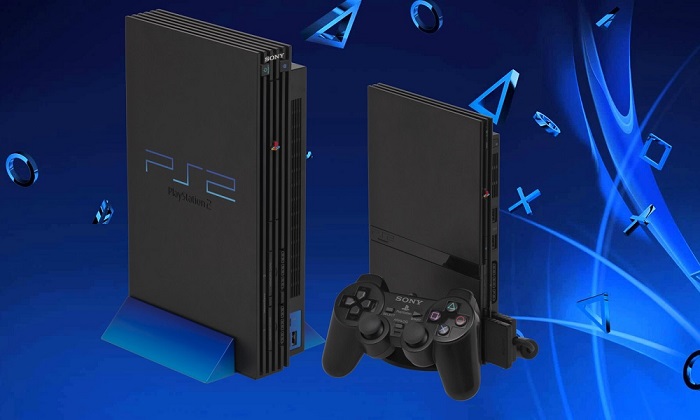
Another factor that helped propel the PlayStation 2 was how well it adapted to people’s lifestyles. Sony released different models over the years, including compact versions that took up less space, as well as colorful editions that stood out on shelves. The console ceased to be just an electronic device and became an aesthetic choice. The Slim, especially, won over the public with its lightness and modern look.
Each new version brought significant improvements in design, reducing weight, volume, and even energy consumption. This prolonged its presence in the market, keeping people interested for much longer.
The longevity that seemed endless
The PlayStation 2 continued to be produced even after the arrival of new consoles. Year after year, it remained in stores, still receiving games and remaining accessible to those who couldn’t afford to keep up with the fast pace of new generations. This made it a natural choice for millions of consumers seeking an economical and efficient way to enter the world of video games.
Its extraordinarily long lifespan meant the console remained relevant for over a decade, something extremely rare in the industry. While many devices disappeared with the arrival of their successors, the PS2 endured, showing that there was still a large enough audience to keep it active.
The social phenomenon in emerging countries
In countries across Latin America, Asia, and other developing regions, the PlayStation 2 conquered a huge space. Rental stores, internet cafes, bars, nightclubs, and even community events featured the console as a main attraction. In places where acquiring imported technological products was difficult, the PS2 became a constant presence, often serving as the gateway for millions of people into the world of modern video games.
The phenomenon was so strong that the console crossed different social classes. It was present in both simple homes and sophisticated environments. It became a cultural element, a meeting point for friends, a reason for gatherings and celebrations.
A symbol of innovation, fun, and accessibility.
Ultimately, the PlayStation 2 sold so well because it wasn’t just a video game console. It was the perfect combination of price, accessibility, variety of games, technological innovation, and integration with everyday life. It was cinema, it was music, it was competition, it was discovery, it was emotion. It was the opportunity to explore new worlds with a simple click of the power button.
The consumer wasn’t just buying a device. They were taking home a complete experience that could be shared with the whole family. And that’s why it remained relevant for so long. Because every person who got their hands on it discovered something they liked.
The console that defined an entire generation.
Today, looking back, it’s easy to understand how the PlayStation 2 managed to conquer the world. It was in the right place, at the right time, with the right proposition. It combined functionality, power, and fun in a way that no other company had attempted before. It became a phenomenon that transcended linguistic, economic, and geographical barriers.
More than innovation, the PS2 delivered moments. It delivered stories, friendships, challenges, and victories. Every disc played, every online match, every movie watched, and every afternoon with friends contributed to making it one of the greatest icons ever created by the video game industry.
And that’s why, even so many years later, when someone hears the name PlayStation 2, something special happens. A feeling of familiarity, of warmth, of recognition. As if that console continues to live not only on the shelves, but in the memory of everyone who had the chance to experience its golden age.
Ultimately, it’s clear that the PlayStation 2 has become an important part of people’s lives. And this, above all, explains why it remains the undisputed king when it comes to conquering audiences on a global scale.