![Revolution Arena [English Version]](https://revolutionarena.com/english/wp-content/uploads/sites/4/2024/07/Revolution-Arena-ISSN-2966-2117.png)
Did the PS2 really run Linux? Yes! See here what it was like to use the console as a computer
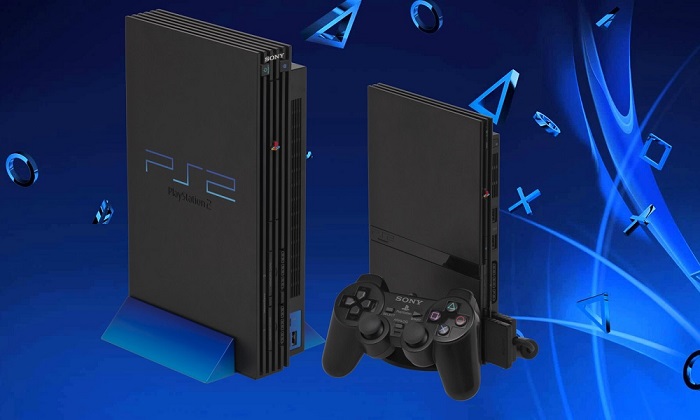
November 30, 2025When we hear about the PlayStation 2, the first image that comes to mind is usually the classic one: the black console with straight lines, the DualShock 2 controller beside it, and a stack of silver discs ready for long gaming sessions. That’s natural. The PS2 marked generations as one of the most beloved and influential machines in video game history. But what many people are still surprised to discover is that it hid an unexpected potential, almost secret to the general public. Something that nobody would have imagined a video game console of that era could do.
Yes, the PlayStation 2 ran Linux. And not just in theory. It could actually transform into a functional computer, complete with a graphical interface, keyboard, mouse, internet, and programs. It was a curious and fascinating experience that was part of a bold period when Sony was experimenting with possibilities far beyond traditional entertainment.
In this special feature, we’ll revisit this amazing chapter in PS2 history. Get ready to embark on a journey through time and discover what it was like to transform the console into a mini workstation.
When video games and computers met
To understand the impact of this feature, we need to go back to the early 2000s, when the concept of video games was expanding, but there was still a clear division between consoles and computers. PCs were complex, expensive machines dedicated to various tasks. Consoles were essentially gaming platforms.
Sony, however, envisioned a different future. For them, the PlayStation 2 was not just an entertainment device, but a technological piece with the potential to go further. And it is in this context that the Linux Kit for PS2 was born.
At first glance, it seemed surreal. Who would imagine installing a complete operating system on a desktop console? But the idea was real and it actually worked.
What was included in the Linux Kit for PS2?
To transform the console into a computer, it was necessary to purchase an official kit that came with a series of accessories. The package included:
- A special hard drive
- A DVD containing the Linux system.
- A network adapter
- A video cable for monitors
- A USB keyboard
- A USB mouse
All of this connected to the PS2, allowing the user to access a complete system installation. It wasn’t a simplified or limited version. It was real Linux, with development tools, a graphical interface, and multitasking capabilities.
Installing the system required patience and some familiarity with technical operations, but seeing that console transform before your eyes was impressive, even by today’s standards.
The interface that changed everything
After installing the system, the PS2 stopped displaying familiar menus and took on the appearance of a computer. Users had access to a desktop and all the typical functionalities of a Linux distribution of that time. It was possible to:
- Writing texts
- Navigating in graphical environments
- Create programs
- Edit files
- Running productivity software
- Programming experiences
The console essentially underwent a leap in identity. It remained a video game console, but transformed into a development environment capable of teaching computer science concepts to beginners and even allowing serious projects for experienced users.
The curious experience of using a PS2 as a PC
Using the PS2 as a computer was a completely different experience from today. It ran slower, since the hardware was designed primarily for games, but the system operated with surprising stability.
The console’s CPU was capable of running programs, compiling code, and performing basic tasks without difficulty, even with its unusual architecture. For many young people at the time, it was their first experience with a Linux environment, opening doors to worlds such as programming, editing, and technological experimentation.
Navigation, of course, wasn’t as fast as conventional PCs. Menus took a little longer to load, and some applications were limited by memory size. But even so, the PS2 could perform tasks that many simple computers could do at the time. It was amazing to see a video game console handle files, windows, and applications like a small digital laboratory.
Opportunities for developers
One of the reasons for creating the Linux Kit was to turn the PS2 into a learning machine. The console had advanced graphics and computing capabilities for its time, and Linux offered a perfect environment for independent developers to learn how to work with this architecture.
With the system installed, it was possible to:
- Create experimental games
- Testing simple engines
- To conduct computer graphics studies.
- Generate simulations
- Create custom tools
The PS2 became a field where students and enthusiasts could play with graphics algorithms and hardware functions that would normally be inaccessible on traditional consoles.
This initiative opened doors for many people who had never had direct contact with console hardware before.
Limitations that did not overshadow the innovation
Even with so many advantages, there were obstacles. The lack of native graphics acceleration for Linux limited more advanced visual applications. The USB ports were slow, making it difficult to connect certain peripherals. Installation was demanding and somewhat intimidating for those unfamiliar with command lines.
Still, none of that diminished the experience. The very fact that a home console could function as a computer was enough to create a huge impact on the tech community.
Many people used the Linux Kit as a way to start studying, learn programming, or simply experiment. It showed that the PlayStation 2 was a much more versatile machine than most people imagined.
The PS2 as a learning center
In several countries, universities and research groups explored the console as a study tool. Due to its affordable price for the time, the PS2 represented an economical way to distribute computing machines on a large scale.
Some laboratories assembled clusters with multiple consoles working together, creating processing networks that sparked scientific interest. The fact that the PS2 was mass-produced and had good performance for its time made it a curious, yet efficient, choice.
This shows how the console was not only a commercial success, but also a platform that inspired technical and scientific creativity.
The end of a technological adventure
Over the years, the Linux Kit ceased production. The market changed, computers became more accessible, new consoles emerged, and the function of transforming a video game console into a computer lost relevance. However, the memory of that era remains alive for those who experienced it.
Today, many enthusiasts still search for complete kits, whether out of nostalgia, curiosity, or a desire to experience something unique. And whenever someone rediscovers that the PS2 could run Linux, the reaction is always the same: surprise, admiration, and a touch of disbelief.
After all, it’s hard to imagine that a console so focused on games and entertainment would have such an advanced side hidden within its structure.
The PS2 as a window to possibilities
Transforming the PlayStation 2 into a computer was more than just a technical maneuver. It was a demonstration of ambition. Sony dared to go beyond the conventional, showing that a console could be an open, experimental, and multifunctional platform.
For those who lived through that era, there was something magical about turning on the PS2 and seeing a Linux system appear on the screen. It was as if the console revealed a second world, a different personality, something secret and powerful that not everyone knew about.
And today, looking back, the Linux Kit for PS2 is remembered as a rare, curious, and innovative experience. It wasn’t a widely used feature, but it marked a moment when the future seemed full of possibilities, when each new release sparked the feeling that any home appliance could be transformed into something completely different.
The PlayStation 2, once again, demonstrated its unique ability to surprise. And few things symbolize this as well as its unexpected ability to behave like a real computer.
Ultimately, yes, the PS2 ran Linux. And those who had the chance to experience it know it was like opening a secret door inside a console that was already incredible in itself. An unlikely, fascinating, and daring combination that still sparks curiosity among fans, collectors, and technology enthusiasts.