![Revolution Arena [English Version]](https://revolutionarena.com/english/wp-content/uploads/sites/4/2024/07/Revolution-Arena-ISSN-2966-2117.png)
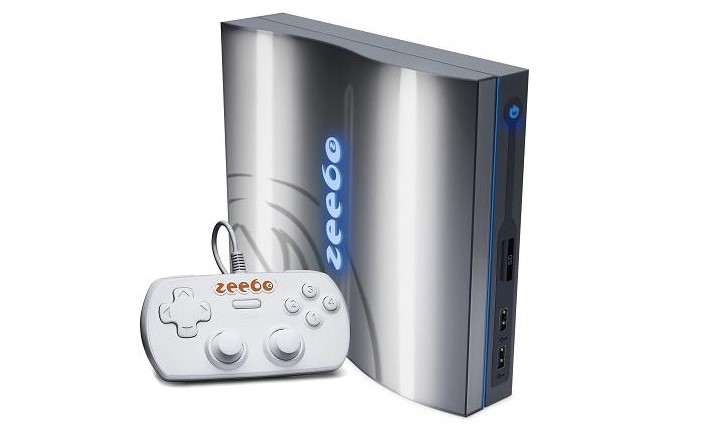
Zeebo Dossier: The complete story of the Brazilian console that tried to defeat piracy with 3G and ended up becoming a legend
January 2, 2026Brazil, with its expensive consoles and pirated games: why the Zeebo seemed like the perfect idea.
In the late 2000s, talking about video games in Brazil meant talking about contrasts. On one hand, the seventh generation shone abroad with the Xbox 360, PlayStation 3, and Wii driving the market and defining the global conversation. On the other hand, here at home, the official price of hardware and games was too high a barrier for many people, while the gray market and piracy became the “practical solution” that put consoles and huge libraries in the hands of the public. This created a difficult paradox for any company that wanted to operate in a traditional way: consoles usually depend on an ecosystem where hardware is aggressively priced and profit comes from games, but if the software is copied in large quantities, the model collapses.
It is in this scenario that Zeebo was born with a seductive discourse: instead of fighting piracy in the classic way, with discs, media, and blocking, the proposal was to change the game board. If the game didn’t exist on physical media, there would be nothing to press, record, sell at newsstands, or “lend” indefinitely. Distribution would be digital from day one, with its own store and a purchasing process that, in theory, was simple and cheap. Today this seems obvious, but in 2009 it was almost a provocation. And that’s why the Zeebo story still attracts so much attention: it tried to anticipate a future that the major manufacturers would only normalize over time.
The origin of the project: TecToy, experience with Brazil, and the ambition to create a new platform.
TecToy had a very particular history with video games in the country. It wasn’t a newcomer that appeared out of nowhere with an exotic prototype. On the contrary, the brand was already part of Brazilian collective memory because of its strong performance with classic platforms, localization, distribution, and understanding of the local market. But representing and manufacturing established products is one thing; creating a platform from scratch, with architecture, tools, store, catalog, support, and a proposition capable of sustaining itself for years, is quite another.
The central idea behind Zeebo emerged as a direct response to a real problem in the Brazilian market: playing games legally was expensive and complicated for a huge segment of the public. The plan, then, was to build a console that was more accessible than popular options and, at the same time, resistant to piracy. However, to turn this into a product, TecToy needed something it didn’t have in abundance at that scale: capital, integrated connectivity technology, and a platform “engine” that guaranteed digital sales, security, and distribution.
Why Qualcomm entered the story and how this partnership defined the fate of the console.
Qualcomm’s involvement is the turning point that transforms an intention into a feasible project. The company saw in Zeebo a chance to put its technology into a new type of device and boost an ecosystem that, at that time, was still vying for space in the mobile world. For TecToy, the partnership meant having access to chips, connectivity, know-how, and investment to create a console born with the DNA of a connected product.
This alignment, however, had inherent tension from the start. TecToy needed the Zeebo to be perceived as a video game console, with desirable games, a solid experience, a competitive price, and a clear proposition. Qualcomm, by its nature, was interested in what such a project could represent in terms of technological platform and adoption of the company’s solutions. When partners’ objectives are not identical, the project needs time and room for adjustment. And time was precisely what the Zeebo lacked, especially when the race to bring the product to market began.
ZeeboNet and the “always connected” concept: the promise of a digital store via 3G before the world is ready.
The heart of the Zeebo wasn’t just a processor or a controller. It was ZeeboNet, a cellular-based network that put the store inside the console. The vision was bold: you turned on the console and it connected, without needing a fixed broadband connection, external modem, or complicated configurations. In theory, this would make acquiring games simpler for many people and allow for a console that functioned as a permanent storefront, with updates, promotions, a rotating catalog, and direct distribution.
The problem is that an idea can be right and still fail because of the surrounding environment. In 2009, 3G coverage was uneven, quality varied greatly by neighborhood and city, and practical speed was far from consistent. Downloading games, which should have been an advantage, became a test of patience when the network dropped, fluctuated, or simply didn’t deliver the expected stability. Add to that a crucial domestic detail: the “always connected” concept presupposes the console being on, in standby, or available all the time, and the reality of home infrastructure, with few outlets and multiple devices competing for space, didn’t help. The Zeebo attempted to operate as a permanently connected device in a country where this was not yet a consolidated habit.
A “cell phone in the form of a console”: hardware, system, and the difference between theoretical power and real-world experience.
The Zeebo was built on a logic closer to mobile devices than to traditional consoles. This was part of the plan: efficient, integrated hardware with cellular connectivity included. However, this decision comes at a technical cost. A traditional home console focuses resources on games and works with a software environment optimized for gaming. A mobile stack, on the other hand, usually carries layers, services, and routines that make sense for phones, connectivity, and platforms, but can become a burden when the main objective is to run games with stable performance.
This difference became evident in practice. Even when the technical specifications seem interesting on paper, the final experience depends on how much processing power is left for the game after the system, network, store, and service management do their job. And, in the case of the Zeebo, there was another determining factor: changes and limitations in the chipset and hardware composition affected the final result, generating performance losses and, mainly, restricting the type of game that would make the public “understand” the console on first contact.
The unexpected setback: when the ideal chip didn’t arrive and the project had to adapt.
A console project is like a domino effect. You define the chip, the board, the tools, the performance goals, and this guides the strategy for games, ports, partnerships, and marketing. If the foundation changes close to launch, everything falters. That’s what happened with the Zeebo: the original plan depended on a hardware path that didn’t materialize in the necessary timeframe. The alternative was to proceed with another solution, requiring engineering adaptations and compromising the performance that would be most important to convince the public and developers.
The result isn’t just “running worse.” It affects the entire ecosystem. Developers become more cautious because the cost of adaptation increases. Games that were meant to be showcases may need cuts. Deadlines tighten. And the public, which doesn’t follow the behind-the-scenes aspects, only sees the surface: modest graphics, inconsistent performance in more ambitious ports, and a large gap between the expectation created and what appears on the screen. In video games, perception is everything. And Zeebo started the competition needing to explain too much.
Catalog and perception: when the demo game tells a story you didn’t want to tell.
For any console, the public’s first contact with it is usually defined by a simple combination: price, promise, and games displayed in the storefront. With the Zeebo, the promise of digital distribution and anti-piracy was a strong headline, but headlines don’t replace desire. What drives console purchases is the feeling that there’s a library there worth the investment, whether it’s for exclusives, compelling versions of major franchises, or aggressive value for money.
When it came time to showcase the Zeebo, choosing an older title as a showcase helped solidify a negative narrative: that the console was “outdated.” Even if the intention was to demonstrate technology, stability, or familiarity, the lasting image is a direct comparison to what the public had already seen on other platforms. And, in that context, the Brazilian consumer was already exposed to a lot, even if through unofficial means. This makes the perception more demanding, not more naive. Without a consistent sequence of desired releases, the conversation surrounding the console quickly slips from “promising idea” to “no games.”
Launch in Brazil: price, proposition, and the challenge of competing with the real-world PS2.
The Zeebo arrived on the Brazilian market in 2009 with a discourse of accessibility and the promise of a modern experience due to its digital and connected nature. However, accessibility in video games is not an abstract concept; it’s measured on the shelf. And, at that time, the major indirect competitor wasn’t the official PlayStation 3, nor the imported Xbox 360. It was the PlayStation 2 from the grey market, with a gigantic library, a competitive price, and an already established buying culture.
When a new console appears costing close to, the same as, or more than alternatives with an infinitely larger library, it needs to compensate with something very strong. The Zeebo tried to compensate with lower game prices, easy distribution, and an anti-piracy proposition. But these advantages only materialize when the network works well, when the store is simple, when the catalog grows quickly, and when the “leading” franchises arrive with quality. Without that, the public makes the most basic calculation possible: “I pay this much, and what can I play today?”
There have been price cuts and strategy changes over time, but the video game market is cruel when it comes to first impressions. If a product launches too expensive for what it delivers and still suffers from noticeable limitations, it loses its initial momentum, and regaining momentum costs much more than launching strong.
Zeebo in the world: the attempt to go beyond Brazil and the search for a positioning that would work.
An important detail to understand about Zeebo is that it didn’t want to be “just Brazilian” in the sense of being restricted to the country. The ambition included other emerging markets, where piracy was also relevant and where mobile connectivity could be a differentiator. This vision helps explain why the console was conceived as a 3G-connected product and why the company behind the project sought an international identity.
In practice, expansion and repositioning reveal another typical difficulty for new platforms: when the product doesn’t find traction with the audience that should be buying it willingly, they start looking for justifications for purchase based on function, such as educational, family, social, or casual. These approaches can work, but they need to be part of a plan from the beginning, with the right content and precise communication. When they seem like a change of course, the market interprets them as a sign of weakness, and developers become even less willing to take the risk.
Price cuts, the “distrust effect,” and the struggle to become cost-effective.
After its launch, the Zeebo quickly entered a cycle that is often fatal for new consoles: the need to adjust the price even before consolidating its proposition. The price drop helped bring it closer to what it had always promised to be—a cheaper gateway to legal gaming—but it also created dangerous noise. When a console cuts its price early and more than once, part of the public interprets it as a course correction, and another part interprets it as a warning that the platform may not have a long lifespan. In an ecosystem based on digital purchases, this perception weighs even more heavily, because the consumer is not just buying hardware; they are betting on a library that is locked into that system.
Zeebo needed users to trust the store’s continuity, network maintenance, and the constant arrival of games to justify each digital purchase. At the same time, the Brazilian market itself fueled cruel comparisons: with similar prices, it was inevitable to weigh consoles with a gigantic real-world library against each other, regardless of whether they were official or not. And when the comparison becomes “the number of games I want to play now,” the promise of a better future loses its power.
The business model of games: Z-Credits, digital store and the challenge of selling software in Brazil.
Zeebo’s operation depended on making the software circulate. The logic was clear: games priced lower than those offered by traditional platforms, simple purchase through the console’s store, and a credit-based payment model that transformed the buying experience into something more controlled. In theory, this brought Zeebo closer to a closed and secure ecosystem, with centralized distribution and less room for direct copying.
In practice, there were typical frictions in a country that was still maturing in terms of digital payments and online shopping habits. Converting money into credits, depending on specific methods, and tying the library to an always-on service works well when convenience is perfect. When the network fluctuates, when downloads take a long time, when the catalog doesn’t have what the person wants, any extra step becomes a reason to give up. And Zeebo needed to overcome the inertia of an audience accustomed to solving problems in a more immediate, not always legal, but extremely simple way.
The Zeebo catalog and the “showcase problem”: between familiar names, adaptations, and misplaced expectations.
Zeebo did manage to gather names that garnered headline attention, especially for those who followed the industry and were surprised to see certain franchises associated with the console. The problem is that a catalog isn’t just a list; it’s about perceived delivery. Many versions were adapted from portable consoles or reinterpretations that carried technical limitations, and this directly affected the perceived value. When a famous game arrives in a simplified format, with fragile performance or an appearance far removed from what the public associates with that brand, the franchise doesn’t pull the console along; it becomes an unfavorable comparison.
Furthermore, the Zeebo faced an identity dilemma. If it were marketed as a casual and inexpensive console, the ideal showcase would consist of quick, fun, broadly appealing experiences with a strong sense of “this works well and is enjoyable to play.” If it were marketed as an alternative to the PS2, the showcase would need to support that comparison with compelling ports and a library that seemed to be growing towards that level. At various times, the communication and the choice of what to highlight caused the console to fall short, and consoles that get stuck in the middle tend to suffer from both sides.
Developing for Zeebo: when “porting” became “rebuilding” and the cost went too high.
One of the most important behind-the-scenes aspects of Zeebo is the reality of development. Bringing games from other platforms seemed, from the outside, a straightforward task: take an existing version, adapt controls and resolution, and publish. However, on Zeebo, the technological base and software environment demanded much more work than expected. Hardware limitations, system overload, memory restrictions, and peculiarities of a platform with mobile DNA transformed ports into lengthy projects. This meant more time, more team, more QA, and more cost.
When the real cost skyrockets, the catalog is affected in a chain reaction. Third-party publishers become apprehensive because the numbers don’t add up for a still-small market. Large publishers don’t want to risk their teams on a platform without an installed base. And the platform’s owner itself is pressured to produce content internally to fill gaps. But producing first-party content is expensive, and expensive doesn’t suit a console that was born trying to be accessible.
Cold third parties and the trap of the “catalog that never takes off”
For a new console, external support isn’t a luxury, it’s essential. And Zeebo faced a classic hurdle: convincing studios and publishers that it was worthwhile to dedicate resources to a platform that still needed to prove traction. The promise of reaching an underexplored audience is appealing, but publishers consider risk, cost, and predictability. If adaptation is difficult, if the hardware is limiting, if the installed base is uncertain, and if the positioning changes mid-way, the response tends to be cautious.
As a result, Zeebo found itself in an unfortunate situation: without a flood of desired games, it sold less; selling less meant attracting fewer players. The natural solution would have been to invest heavily in exclusives and in-house production, but this required cash, time, and consistent management. And, at Zeebo, the strategic direction shifted as the market responded coldly.
The controls, accessories, and the push to get the party started: when the platform tries to overcome its own limitations.
At some point, it became clear that competing on graphics and big franchises, in the way the public imagined when they heard “home console,” was an unfair game. The reaction was to seek differentiation through interaction, control, and experience format. Hence the changes in controller design, the introduction of accessories like keyboards for navigation, and the attempt to create a more family-friendly appeal, with group games and simpler concepts.
This type of move makes sense when it’s Plan A. When it seems like Plan B, the market interprets it as an attempt to salvage the original proposition. The Wii, for example, transformed “different” into identity from the start. The Zeebo tried to enter this space after already being compared to the PS2 and after already creating expectations around traditional franchises. The result is noise: the console starts speaking to an audience, but part of that audience is already frustrated by expecting something else.
Repositioning for education and family: a logical solution that doesn’t guarantee traction.
The idea of using video games as an educational tool always comes back in waves, especially when a platform needs to justify its place without relying on blockbusters. In the case of Zeebo, this repositioning appeared as an attempt to open doors in markets and institutions where price and simplicity weigh more than graphical performance. Keyboard, navigation, and content geared towards study and family are part of this package.
The problem is that “educational” content rarely sustains a console on its own in traditional retail. To become a phenomenon, it needs huge partnerships, strong institutional distribution, truly indispensable content, and a clear proposition for parents and schools. And even when that exists, the video game continues to be desired primarily as entertainment. If the console doesn’t have the type of game the child asks for and the type of franchise the teenager talks about, the educational appeal becomes supplementary, not central. Zeebo tried to use this approach to gain a longer lifespan, but the shift in focus wasn’t enough to reverse the trend.
Mexico and the attempt to adjust the message: kit changes and a clearer focus.
In other markets, Zeebo sought to adjust its presentation. The strategy included changes to the packaging, the controller, and the type of use highlighted, with communication more aligned with the console as a simple, connected platform with uses beyond traditional gaming. This effort shows that the team understood that the problem wasn’t just technology, but also narrative. But narrative needs support. If the user buys based on the concept and then encounters catalog limitations, lengthy downloads, or unattractive game versions, the narrative collapses again.
Even with adjustments, the platform remained stuck with the same structural challenge: it needed scale to attract content, and it needed content to gain scale. And this is especially difficult when you face competitors with established libraries and when consumers have easy access to alternatives, legal or not.
China and the shift in focus: from popular video game to content and interactivity hub.
The expansion into China represented an even clearer shift from a “game console” to something broader, linked to digital content, applications, and uses connected to the TV. This vision aligns with a path where the hardware becomes a hybrid set-top box, offering games, education, and services. It’s an interesting direction because it attempts to leverage what was most unique about the Zeebo: integrated connectivity and a distribution platform.
The critical point is that, by trying to be too many things at once, a product risks not excelling at anything. The Zeebo already struggled to be desired as a primary console. If it also becomes a content device, it starts competing with devices and services that do that job better, often with more mature ecosystems. The platform was trying to find a space where it could breathe, but the market was already hostile and time was running out.
The shutdown: when investment stops and the ecosystem shuts down.
Platform projects are funded marathons. When the major investment engine decides it’s no longer worth continuing, the end is usually swift, even if a loyal user base remains. Zeebo reached a point where funding dwindled, and without the cash to sustain operations, studio, agreements, and expansion, its trajectory became a countdown.
The hardest impact of this phase isn’t just stopping console manufacturing. It’s the inherent fragility of 100% digital hardware in a closed system. When the store ceases operations and the network stops providing active support, the user’s library becomes dependent on what’s already installed and what the console can store locally. The Zeebo, which was born as a promise of a connected future, ends up reminding us of a truth that the market only began to discuss forcefully years later: preservation and access are serious problems when everything depends on servers and authentication.
What happens to those who bought it: the weight of the library trapped in the device.
For those who invested in Zeebo, the end of the service always left a bitter taste because of the format. With consoles that use physical media, the user still has cartridges or discs to exchange, resell, lend, and keep functioning independently of an online store. In a purely digital console, the library is a collection of licenses and downloads that depend on infrastructure. When that infrastructure disappears, the consumer is stuck with what they already have, with little room to recover purchases, expand their collection, or simply rediscover games later.
This is one of the points that makes Zeebo a case study. It tried to go digital before the public fully trusted digital. And, in the end, the main anxiety of the digital consumer materialized: “what if they shut everything down?”
He made many mistakes, got things right early on, and left behind lessons that are still valuable today.
The Zeebo failed commercially, but it was right in its vision. It anticipated the normalization of integrated stores, standard downloads, automatic updates, and a purchasing ecosystem within the console. It also showed that digital is not just technology; it’s infrastructure, trust, and catalog. It demonstrated that combating piracy with a closed architecture can work technically, but it doesn’t solve the cultural and economic problem of access on its own. And it showed that, in video games, positioning is as important as specification: if the market understands that you are competing with console X, you will be compared to X, even if your plan was different.
He also left an important lesson for those who want to enter this type of market in Brazil: it’s not enough to have engineering skills and courage to launch a platform; you need financial resources, stable alliances, a long-term strategy, and a very precise understanding of the target audience and the product/service. Zeebo proved that it’s possible to create something big from here, but it also proved why that’s so rare.
The story of Zeebo begins before the console even appeared on the market. The seed came from a pragmatic analysis of the Brazilian market and other emerging markets: there was an audience, there was a desire to play, but the combination of high prices, taxes, irregular supply, and piracy made it almost impossible to sustain the classic console model. The idea took shape when the concept of digital distribution ceased to be a “concept” and became a central product requirement, with an integrated cellular network and its own store. From there, the project accelerated, became a company with international operations, and began racing against a clock that rarely forgives those building platforms from scratch.
Zeebo’s public cycle is mainly concentrated between 2009 and 2011. In 2009, it arrived in Brazil and attempted to establish itself as an accessible and connected alternative, while simultaneously working to expand its catalog and convince third parties to invest in versions and adaptations. Also in 2009, the strategy involved price adjustments and changes in approach to reach other markets, with Mexico gaining a version with a package and peripherals adapted for wider use. In 2010, Zeebo tried to reinforce its identity with new accessories, content initiatives, and repositioning that oscillated between “casual console” and “device for education and family,” while dealing with a catalog that wasn’t growing at the speed necessary to change the conversation. In 2011, with weakening financial support and the operation being shut down, Zeebo entered the most sensitive chapter of any 100% digital platform: the gradual disconnection from the ecosystem.
What it was like to use a real Zeebo: turning it on, connecting, buying, and downloading in a Brazil with unstable 3G.
The Zeebo experience differed from the norm at the time for a simple reason: it didn’t invite you to open the disc lid, it invited you to enter a store. When you turned on the console, the ideal behavior was to be connected and ready to browse the catalog, download updates, and purchase games without needing a fixed internet connection. The appeal was enormous in a country where home broadband wasn’t always common or reliable for all types of consumers, and where the logistics of physical media made everything more expensive.
However, the actual experience depended on the network and the user’s routine. When the signal was good, the proposition made sense and delivered a type of convenience that seemed futuristic: buy right there, download, and play. When the signal was bad, what should have been a “comparative advantage” became a source of friction, especially because Zeebo needed the habit of buying and downloading to become natural. And there’s an important psychological detail here: physical media tends to create a sense of immediate ownership, while digital media requires trust in the process. In 2009, this trust was still being built worldwide, and in Brazil, the combination of network instability with a consumer culture accustomed to quick fixes made the task even more difficult.
ZeeboNet, built-in 3G, and what the console tried to anticipate.
Zeebo relied on a connectivity model that seemed simple to the user: not depending on the home router and using an integrated network. This concept anticipated a type of “always-on” console that years later would become common through other means, usually via Wi-Fi and more stable broadband infrastructure. Zeebo attempted to reach this future through 3G, which was the most viable option for a device aiming to work in different homes, profiles, and regions without requiring technical configuration.
The innovative side of this plan is easy to see today: a digital store as a pillar, centralized distribution, updates, and an ecosystem with attempts at services beyond gaming. The fragile side is also clear: when the connectivity base is variable, the entire product fluctuates along with it. For a console that aimed to be a “piracy-free” alternative with digital games, downloading couldn’t be a risky venture. It had to be predictable.
The anti-piracy strategy: why “not having media” was brilliant and why it wasn’t enough.
Zeebo chose to directly combat the most painful point in the Brazilian console market: if the game isn’t on disc and arrives through a controlled channel, piracy becomes much more difficult to operate in the informal retail market. As a concept, this is extremely intelligent. In practice, however, combating piracy isn’t just about preventing copying; it’s about offering an alternative so attractive that the public migrates for convenience and cost-effectiveness.
For this to work, four things needed to be right simultaneously: the console’s price, the price and desirability of the games, impeccable convenience of purchase and download, and confidence in the continuity of the service. The Zeebo hit the mark strongly in its central idea and parts of its execution, but suffered from the weight of the rest. In particular, the public wouldn’t trade a huge library for a catalog that took a long time to become indispensable. Without this “push,” anti-piracy becomes a technical argument, and technical arguments rarely sell consoles on their own.
Inside the hardware: what made the Zeebo different and why that complicated the dream.
The Zeebo had the soul of a mobile device. This was reflected in its architecture, the type of optimization available, and the balance of resources between the system and games. This approach offers advantages such as integration, component cost, and connectivity, but it comes at a price in terms of performance “leftovers” for games when the system is heavily taxed and when the chip needs to perform many parallel tasks. To make matters worse, the Zeebo’s history includes decisions forced by schedule and component availability that affected final performance and the ability to deliver the graphical leap that the public expected when they heard it could rival popular consoles.
This point is essential to understanding why so many ports suffered and why some experiences fell short. On consoles, the user doesn’t analyze CPU, RAM, and bus speed; they evaluate the feel in their hands: fluidity, responsiveness, visual clarity, loading time, and stability. When the hardware becomes a bottleneck, it shows in what really matters.
The SDK and the rules of the game for developers: size limits, categories, and the “lightweight” philosophy.
The Zeebo ecosystem was designed for relatively compact downloads, which directly addressed the reality of 3G at the time and the available internal memory. This influenced everything: the type of game that made sense, the scope of each title, and the way art, audio, and content were planned. By organizing the catalog into size ranges and categories, the platform made it clear that it wasn’t a space for gigantic games, but rather for leaner experiences, often similar to what the mobile market offered at that time.
This philosophy could have been a huge advantage if the positioning had been crystal clear from the start, something like “a console for fast downloads with cheap and fun games.” The problem is that Zeebo was trapped by comparisons with the PS2 and expectations created by big names. When the public expects one thing and receives another, even if the other thing is well thought out, the reception suffers.
Marketing choices that became traps: expectation is the enemy when delivery is different.
Zeebo needed a simple and irrefutable message. And the strongest message was modernity: digital, connected, and practical. However, at various times, the market was led to comparisons that placed the console in an arena it didn’t control, especially when it came to graphical power and a “traditional console” style library. From then on, any demonstration with old games or simpler versions reinforced the narrative of obsolescence, not the narrative of innovation.
In video games, the product display determines the fate of the first month. And the first month determines the willingness of others to invest. If the product display doesn’t create immediate desire, the cycle becomes very difficult to reverse.
The problem nobody wanted to face: competing with the real PS2 and not the “official” PS2.
Zeebo attempted to fill a niche that seemed to exist: consumers who wanted a cheaper console and affordable games. However, the practical competitor in this niche wasn’t an expensive and inaccessible official console. It was the widely available PS2, with an aggressive price point and a virtually infinite library in the eyes of the average consumer, along with an already established consumption habit. This means that Zeebo wasn’t just competing with a product; it was competing with an entire culture of access.
When Zeebo arrived with a price perceived as high for what it offered and a catalog that didn’t seem “endless,” the public did what it always does: chose the option that seemed to offer the best value for money. To break this pattern, there were only two paths: very strong exclusivity or overwhelming cost-benefit. Zeebo failed to sustain either at the necessary level for long enough.
The end and the elephant in the room: preservation, collection, and the fate of a 100% digital console.
The shutdown of a digital console exposes a vulnerability that many people only began to discuss forcefully years later: when the platform depends on stores, servers, and infrastructure, the shutdown isn’t just “it stopped releasing games,” it’s “there’s no longer an official access route.” For collectors, this changes everything. On physical media consoles, the collection continues to live on the shelf. On the Zeebo, the collection depends on what’s installed, what was acquired during its active period, and what the device can keep running without support.
This doesn’t diminish the importance of the Zeebo. On the contrary, it reinforces its historical value. It became a portrait of transition, a console that attempted to bring the future to a Brazil that didn’t yet have the ideal conditions for that future. And this makes the Zeebo a rare case: it is, at the same time, a technological experiment, a market product with bold choices, and an early warning about what can happen when everything is digital.
What lessons does Zeebo leave for Brazil and for the industry?
The most obvious lesson is that creating a platform is brutally expensive and risky. But the most interesting lesson is more specific: innovation requires total alignment between promise and delivery. If the goal was to be the download console, cheap, simple, and practical, everything else needed to reinforce that, from the price of the hardware to the type of games chosen to showcase at events. If the goal was to compete with the PS2’s user base, then the catalog would have to be avalanche-sized and the performance couldn’t disappoint. The Zeebo fell between these worlds, and the market didn’t forgive it.
Still, Zeebo got something right that few others have gotten so early on: it understood that distribution would be the heart of video games. Today, with consoles that don’t have physical media and digital being the dominant part of consumption, it’s clear that the intuition was correct. What was lacking was for the surrounding world to be ready, and for the project to have enough time, resources, and clarity to weather the rough patch until things became “normal.”
The games that defined the Zeebo: what really worked on the platform.
The Zeebo catalog is a true reflection of the console’s purpose and limitations. The platform needed games that were lightweight enough to make sense for downloads via cellular network and, at the same time, interesting enough to convince someone to invest in a new ecosystem. Therefore, much of what appeared on the system fit into smaller-scale experiences, often adapted from bases designed for mobile and reworked to run on TV in VGA resolution. In practice, this created a type of library focused on quick matches, casual games, arcade remakes, and titles that prioritized accessibility over technical spectacle.
The Zeebo also benefited from the strength of well-known names, because famous franchises open doors and generate headlines. However, the platform rarely managed to deliver the “ideal version” that the public imagined when they read those names. As a result, the console ended up being more appealing when it embraced what it did best: simple, straightforward games with their own identity and good controller response. Along these lines, internal projects and titles conceived with the hardware in mind had a better chance of “fitting” than ports that needed to be stretched to appear as something the system couldn’t comfortably handle.
There was also a clear attempt to create a core of console-style titles, focused on couch fun, quick competitions, and group gaming. This approach made sense because it shifted the conversation away from graphical comparisons and led to a realm where a well-designed game can shine even without cutting-edge processing power. The problem is that this type of identity needs to be hammered home from the start, with a constant flow of releases and a positioning that doesn’t promise what the platform won’t deliver. On the Zeebo, this identity appeared and reappeared in phases, as if it were a response to the market and not the heart of the product from day one.
The “100% download” experience in practice: game sizes, internal memory, and the invisible bottleneck.
One detail that defined the entire lifespan of the Zeebo was the combination of limited internal storage and the fact that the console relied on downloads for everything. This made the user think about the game catalog in a different way than they were used to on consoles with physical media. Instead of “buying and stacking” discs, the relationship became “buying and managing space.” The size of the games, the network speed, and the download stability weren’t just technical details; they were part of the platform’s gameplay because they directly affected how you built your library.
When the connection was good, the proposition was appealing: go into the store, grab a cheap game, download it, and play it the same day without having to search for a physical copy. When the connection was a problem, Zeebo reminded us that we had bet on a future that was still uncertain. And since the platform carried the promise of convenience, each setback seemed greater than it would have been on a traditional console. The feeling of “this should be simple” is powerful, and it was a double-edged sword for the Brazilian console.
Accessories and controls: Z-Pad, Boomerang, and an attempt to create a Zeebo with its own identity.
The Zeebo was genuinely concerned with offering a control experience that felt like a home console, with a full gamepad and user-friendly navigation. The standard controller was designed to handle traditional games, but the major identity experiment came when the console tried to embrace the territory of social and party games. The introduction of a motion-sensing controller indirectly engaged the Zeebo with the idea of a “living room video game for everyone,” something that was trending at the time due to the success of the Wii.
The most interesting point here is that this line was one of the few where Zeebo could avoid direct power comparisons. If the console is weaker, but delivers experiences that competitors aren’t prioritizing at that price point, the conversation changes. However, creating this type of ecosystem isn’t just about having the accessory. You need games made for it, consistent marketing, effective demonstrations, and, above all, a strong enough perceived value for the public to believe that it will evolve. Zeebo tried, launched ideas, adjusted the controller and kit at different times, but never reached the volume of content and narrative necessary to transform it into a trademark.
Keyboard, navigation, and the “beyond games” phase: when the console wanted to become a small connected hub.
At a certain point, Zeebo also tried to go beyond video games, offering navigation, communication, and a broader package of connected uses. The keyboard emerged as a practical tool for navigation and to reinforce the idea that the device could serve family and educational interests. This type of expansion makes sense when you are building an ecosystem and want to increase the device’s usage time, creating more reasons for it to stay switched on and connected.
The problem is that, for most people, the value of a console still begins and ends with the games. Extra features help sell when the core functionality is already strong. When the core functionality is still struggling to justify itself, extras can seem like distractions or attempts to find a way out. In the case of Zeebo, this move was part of a repositioning and a search for niches where the platform had less direct competition, but it didn’t solve the main problem: the continued desire for new games and long-term trust.
Model revisions and kit changes: legitimate adjustments, but at a communication cost.
As with many platforms that are “discovering themselves” in the market, Zeebo has undergone changes in its packaging, sales visuals, and how it presents itself to consumers. These adjustments are normal for new products, but in a console they carry an additional risk: the public starts asking which is “the right version,” whether the platform is moving forward or backward, and whether it’s worth waiting a little longer before buying.
In an ecosystem where the digital store is the heart of the product, any sign of instability in the message turns into anxiety. Zeebo needed the consumer to buy not only the hardware, but also the idea that that hardware would have a lifespan and a growing catalog. Revising the model and kit can improve the proposition, but it needs to be accompanied by absolute clarity and a fulfilled promise of continuity. Zeebo failed to transform these changes into a convincing “new beginning,” mainly because the problem wasn’t just packaging, it was scale.
Why the platform lost traction: the sum of factors that brings down a console even with good ideas.
Zeebo is one of those cases where there isn’t a single villain. The story is more like a domino effect. The vision for digital distribution was advanced, but the network infrastructure didn’t help. Anti-piracy measures were strong, but they didn’t replace the desired catalog. The hardware had mobile DNA, but the public compared it to home consoles. The cost and effort to adapt games scared off partners, which reduced releases, which reduced sales, which further reduced partner interest. And, on top of everything, there was the weight of the real competitor in Brazil: an affordable PS2, with a huge library, easy to find, and already ingrained in the gamer culture.
When you put all of that together, what’s left for the consumer is a proposition they respect, but don’t desire. And video games are about desire. A console can be intelligent, pioneering, and well-intentioned, but if it doesn’t become the obvious answer to the question “what am I going to play this weekend?”, it quickly loses ground.
The “what if” everyone asks: what would Zeebo be like if it had been born in the era of Android, Wi-Fi, and mature app stores?
The Zeebo is probably one of the consoles that most invites the “what if” scenario. If the same concept had emerged a few years later, with already established digital stores, a stronger digital purchasing culture, more widespread home Wi-Fi, and the idea of lightweight and indie games as a dominant trend, the reception could have been completely different. In particular, a Zeebo anchored in a ready-made distribution ecosystem, with user-friendly tools and a simple path for independent developers to publish games, would have had a better chance of building a fast catalog, variety, and community.
It’s also easy to imagine a modern Zeebo as an entry-level console for emerging markets, focusing on smaller-scale games, aggressive pricing, and strong curation—almost like an “indie store on TV” with simple hardware. The difference is that, for this to work, you need a stable network environment, a standardized operating system and tools, and a discourse that proudly embraces its identity. The original Zeebo attempted to point towards this future, but it had to reinvent the wheel as it went, and that comes at a high price.
The Zeebo today: a historic piece, a symbol of boldness, and a warning about the digital age.
Over time, the Zeebo ceased to be just “a console that didn’t work out” and became a unique chapter in the history of video games in Brazil. It is rare for two reasons at the same time: for being a real attempt to create a platform with international ambitions born from a company with a history in the country, and for betting on a model that the market would later adopt en masse. The Zeebo is also a time capsule of how difficult it was to bring the download era into the living room when the infrastructure, habits, and consumer confidence were not yet ready.
It also became a warning that has become more relevant than it seemed: when everything is digital, the end of the platform changes the fate of the library. Today, with discussions about preservation, licenses, and access, Zeebo appears as an early example of a problem that the market is still trying to solve properly.
Conclusion: the Brazilian console that arrived too early, made mistakes along the way, and got it right in the future.
Zeebo didn’t fail because of a lack of courage. It failed because creating a console is a war of attrition, and the platform needed to win several battles simultaneously in a country with difficult conditions and very strong indirect competition. Even so, Zeebo was right to realize that distribution would be central to the modern video game industry. It simply bet on this vision at a time when almost everything around it still conspired against its execution.
In the end, Zeebo remains a legend because it’s impossible to look at the current market and not recognize part of that idea: a console with a store, downloads as the standard, games as a service, a digital catalog, updates, convenience. Zeebo tried to do this when it still seemed improbable, and that’s why its story deserves to be told with the importance it deserves: not as a joke, but as an ambitious experiment that exposed the real difficulties of creating a platform and, at the same time, anticipated the future that would become the norm.
Questions everyone asks about Zeebo, answered in the most straightforward way possible.
When someone searches “Is Zeebo worth it?”, the real question is almost always different: is it worth it as a video game console to play today, or is it worth it as a historical and collectible item? As a console to build a library in 2026, the answer tends to be no, because its main selling point was the digital store via ZeeboNet, and that depended on online services that have since been shut down. Without the store functioning, you don’t have an official way to buy and download new games. As a collector’s item, the answer might be yes, because Zeebo is a very rare case of a 100% digital home console released long before the standard became common, and it was a project with international ambitions and Brazilian DNA. If your goal is to have a different chapter in the history of games on your shelf, it delivers.
When the search term is “can I download games on Zeebo today?”, the practical answer is that, officially, no. The console was designed to thrive on downloads and an active ecosystem, so shutting down operations eliminates the main avenue for expanding the library. In real life, this means that what you can play is determined by what’s already installed in the device’s memory and what the previous owner left downloaded when the service still existed. Therefore, the Zeebo is a console where the state of the device matters more than on platforms with physical media: two identical consoles can have completely different libraries, depending on their download history.
Another very common question is “why did Zeebo end?”. The end of Zeebo doesn’t have a single simple reason, but it can be summarized as a sequence of self-reinforcing problems. The digital offering was advanced, but the 3G infrastructure of the time was unstable, making downloads an inconsistent experience. The hardware and system had limitations that increased the cost and difficulty of porting games, which discouraged third parties and limited the catalog. Without a strong catalog, the console sold poorly. Selling poorly meant even less support. Added to this, Zeebo competed in Brazil with a very tough “real” competitor: a widely available PlayStation 2, with a gigantic library and a perceived lower cost. When the investment that sustained the platform loses momentum, a console that depends on a digital ecosystem tends to shut down quickly, because without a store and without active operation, the core proposition disappears.
Many people also ask, “Was the Zeebo good or bad?” The most honest answer is that it was bold and intelligent in concept, but inconsistent in execution and positioning. As an idea, it was right to bet that the future would involve digital stores, downloads, and constant updates. As a product for 2009 in Brazil, it ran into many technical, network, and market limitations that prevented the promise from becoming commonplace. This makes the Zeebo more interesting as a story and as an experiment than as a console recommended for those who just want to play without headaches.
If the question is “is the Zeebo rare?”, it is relatively rare, yes, but the rarity that matters most is its cultural rarity: few consoles in the world have such a specific history, so closely tied to a moment in Brazil’s history and the transition to digital. In terms of collecting, what usually increases in value is having the complete console with box, controller, power supply, and accessories, and especially in good condition. There’s also the issue of the version and the kit, since the Zeebo underwent changes throughout its life, which can affect the interest of those who collect hardware variations.
The question “Does the Zeebo have physical media?” often comes up because many people still think that some kind of cartridge or disc existed. The Zeebo was designed precisely to avoid this method of game distribution. It is remembered as one of the first home consoles to rely on selling games only via download as a system rule, which is a central part of its identity and, at the same time, a central part of the preservation problem after the service was discontinued.
Finally, when the question “Is buying a Zeebo to play games worth it?” appears, the deciding factor is expectation. If you expect something on par with traditional consoles, with a wide catalog and easy library expansion, it will likely disappoint. If you want a historical device, want to explore what’s installed on it, and accept that the experience is more about gamer archaeology than a living platform, then the Zeebo can be a very fun purchase, especially for those who enjoy technology, behind-the-scenes stories, and consoles that tried to change the game.

