![Revolution Arena [English Version]](https://revolutionarena.com/english/wp-content/uploads/sites/4/2024/07/Revolution-Arena-ISSN-2966-2117.png)
God of War Sons of Sparta – Review
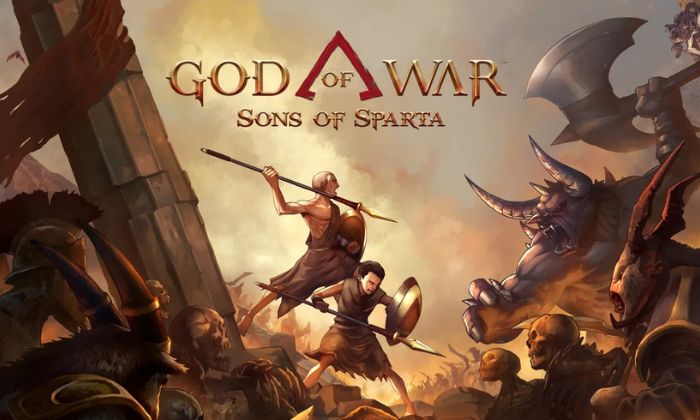
February 17, 2026I’ll be very frank with you: I didn’t expect a new 2D God of War to work so well. In my mind, God of War was always that mix of cinematic brawling, gigantic bosses, a camera glued to the chaos, and a soundtrack screaming “this is epic.” But Sons of Sparta doesn’t want to compete with that. It wants to do something else.
Here, the idea is to put me in control of a teenage Kratos, still “raw,” before he becomes the legend we know. And that choice changes everything. Instead of starting by treating me as a demigod ready to destroy the world, the game makes a point of showing that I’m still just a boy with a spear and a shield, trying to prove my worth in a Sparta that talks a lot about honor, duty, and discipline, but doesn’t always practice what it preaches.
The story is told as a memory. An older Kratos narrates the events to his daughter Calliope, and this framing gives it a very different tone from what I was used to in the Greek phase. It’s more intimate, more of an “origin story” than “let’s overthrow Olympus.” And this might surprise those expecting blood and thunder all the time. But at the same time, that’s exactly where the game finds its own space: it tries to fill in a piece of the character’s puzzle, showing when Kratos began to doubt the system that shaped him.
The adventure’s trigger is simple, almost humble by the franchise’s standards: a colleague goes missing, and Kratos and Deimos decide to go after him. The search becomes the driving force of the entire game. And yes, I missed a “bigger” threat at times, a well-defined antagonist, or a more absurd escalation like the series usually does. But it was also quite interesting to see how the game tries to compensate for this with small personal conflicts, dilemmas of loyalty, and a brotherly relationship that carries the weight of experience on its shoulders.
But then comes the million-dollar question: okay, the story is different, but what about as a video game? As a Metroidvania, in a genre that already has established giants and hundreds of good games vying for space, can Sons of Sparta stand out or just become “another one”?
After many hours exploring Laconia, marking the map, taking shortcuts, getting beaten up by some annoying enemies, landing perfectly timed parries, and suffering through some technical glitches I really didn’t want to encounter, I’ve arrived at a very clear answer. Let’s break it down:
Mechanics and Gameplay
Sons of Sparta is a very traditional Metroidvania in structure, but with a God of War flavor in several layers. I start in a central area connected to Spartan training, and from there I open paths to different biomes, all connected by routes, shortcuts and, in some cases, portals. The map is relatively easy to understand; it’s not that insane labyrinth where you get lost for two hours and come out happy to have found a door. Here, it’s almost always possible to know where I am and where I should go, and the main objective is usually well indicated.
Combat with spear and shield
The combat mechanic is simple: Kratos uses a spear as his main weapon and a shield as a defensive pillar. And I liked this more than I expected, because it changes the “rhythm” of the fighting. Instead of just being about aggression and spectacle, it’s very much about discipline: positioning, gauging distance, choosing when to attack, when to block, when to roll.
The best part of the combat for me was the parry. When I land a parry at the right time, the game gives that delicious feeling of “now you nailed it,” slowing down the action and opening a window for counter-attacks that really make a difference. It’s the kind of mechanic that becomes addictive, because once you get the hang of it, you start playing more confidently, more stylishly.
The game also uses a system of meters and orbs that fly towards Kratos all the time. And here’s a detail: it’s very much like God of War in spirit, but in 2D this can get a bit visually chaotic. I collect orbs of different types to feed different bars, and in the most intense fighting moments, with several enemies exploding into particles, it turns into a rain of colors going onto the screen.
Spartan spirit, healing, and the “dance” of stun.
One of the central mechanics is the Spartan Spirit bar. I fill this bar as I hit, defend, and play correctly. With it, I can activate special moves and, most importantly, create conditions to stay alive in tight spots. At various times, my survival depended on this cycle: hitting to fill the bar, spending the bar to activate special attacks, picking up orbs that help recover health, and returning to the fight.
Furthermore, enemies have a sort of posture or stun bar. The more I hit and parry, the more I fill this stun. When it’s full, it creates an opening for a finishing move. The idea is great and makes the combat more paced, with a beginning, middle, and end. The problem is that the finishing moves themselves don’t always have the impact I expected from God of War. I wanted more brutality, more “weight.” Instead, in many cases it just felt like a “end the fight” button.
Color system for attacks and armor
The game uses a color-coded system to telegraph attacks. Depending on the color, I know if I need to block, parry, dodge, or simply run away because that’s a “no-negotiation” situation. In theory, this adds a very cool layer of readability. In practice, there are two realities: (1) Against large enemies and bosses, it works very well because they give you time to see the color and react. (2) Against small and fast enemies, sometimes I just got hit because the color flashed and the attack was already on top of me.
Beyond the attacks, the game also plays with “rules” for specific enemies, such as armor that requires a certain type of damage or resource to break. This creates variety, but it can also become information overload. There were moments when I felt more like I was solving “combat traffic light” problems than fighting, and that’s when the game gets weird: it seems complex, but in reality I was just rolling backward and waiting for a safe opportunity.
Variety of enemies and repetition
Here I need to be honest: repetition is noticeable. I saw many recycled enemies with variations in color, element, or “biome armor.” Skeletons and similar creatures reappear several times, and this gets tiring because the game has a combat base good enough to deserve more inventive enemies.
Worse: at times I encountered enemies “freezing” in combat, simply ceasing to react while I was performing combos. There was even a mini-boss that became a punching bag because the AI decided to take a vacation. This instantly ruins the atmosphere, because it was supposed to be a tense moment.
Platform, exploration, and progression
Like any Metroidvania, the exploration aspect is the game’s greatest strength for me. The feeling of gradually unlocking the map is very enjoyable. I gained classic genre abilities, such as double jump, mobility upgrades, climbing, and items that open paths. The game gives you tools from different gods, each serving for puzzles and also as secondary weapons, from activating distant mechanisms to traversing obstacles and manipulating objects in the environment. And that’s really cool because it avoids that feeling of “abilities only exist to open yellow doors”.
Exploration is also rewarding: almost every time I strayed from the main path, I found a chest, upgrade material, offering, collectible, or some challenge room. And the game gives me quality-of-life features that I loved, such as the ability to mark points on the map at will and even take photos of locations to remember later. This is perfect for a Metroidvania, because you don’t have to rely solely on your memory. But, again, I ran into bugs: sometimes the photo would open incorrectly or not at all.
Camps, fast travel and pace
The “camps” function as resting points. I would heal, save, and, like in Soulslike games, the enemies would respawn. This is great for creating risk and reward in exploration, and I found the balance quite good. Another interesting detail: when I died in certain fights or closed challenges, the game would sometimes return me to the same room with full health, which reduces frustration in harder sections.
Fast travel is somewhat clunky for a good portion of the game. I felt that backtracking could have been more comfortable earlier on. It wasn’t until near the end that I gained truly practical fast travel between key points, and then “clearing the map” became more enjoyable.
Upgrades, crafting, and builds
The progression is full of systems:
- skill tree purchased with orbs
- equipment upgrades with materials
- Customizing the spear in parts, such as the tip, shaft, and base, changes damage type, finishers, and bonuses.
- Shield variations and upgrades
- Items and amulets that alter exploration and combat.
All of this seems robust, but there’s a catch: a lot of it is functional rather than transformative. I improved stats, gained new moves, adapted elemental damage, but rarely felt that my playstyle changed completely. Still, the spear customization system is a fun aspect because it encourages experimentation.
Now comes an important side effect: if you explore everything and do too many side activities, you can become too strong. In my case, towards the end I was so leveled up that some bosses and encounters lost their impact. I stopped respecting enemy attacks, ignored pattern reading, and went for the “go-get-it” approach because the damage I was taking no longer scared me. This is a balancing problem, not a player skill issue.
Graphics
Visuals are a topic that will divide people, and I understand why. Sons of Sparta mixes a 2D presentation with a retro aesthetic and great attention to detail in its environments, but it also has choices that don’t always seem entirely cohesive.
Pixel art, filters, and identity
The game features classic-style pixel art, and in several scenarios I actually stopped to appreciate it. Some biomes have their own identity and tell small stories through the scenery. Ruins, forests, wetlands, and temples give off a nice feeling of “2D Greek mythology”.
At the same time, I felt that the art direction, in certain sections, focused more on “paying homage to an era” than on creating something truly remarkable. There are areas where everything works and looks good, but it lacks that element that makes you say, “Okay, this only exists in this game.”
There’s also a sense of “different layers” in the visuals. At times, the characters have very smooth sprites and very fluid animations, while the background looks more static, almost painted, with less movement. This doesn’t make the game ugly, but sometimes it gives it a collage-like feel.
Animation and reading
The animations are good most of the time, especially in combat, where I needed to read attacks and react. However, there are moments when I felt the movement was a little “loose,” and this ties into the floaty feeling I mentioned in the gameplay. It’s not a disaster, but it lacks the surgical precision of the more “sharp” Metroidvanias.
Visual repetition of enemies
The biggest visual flaw, for me, is the same as in the gameplay: repetition. Seeing variations of the same enemy, only changing color or element, starts to become tiresome early on. And when that happens, the fantasy of exploration in a living world loses its power.
Sound
Here I have mixed feelings, but with a very positive overall impression.
Soundtrack
The music hits the mark perfectly when it embraces the DNA of the Greek period. There are tracks that evoke nostalgia, with an epic and mythological atmosphere, but without needing to be bombastic all the time. In more intimate moments, the soundtrack holds back and becomes more restrained, almost “spartan,” matching the tone of a coming-of-age story.
On the other hand, I noticed some repetition in certain tracks at the beginning. It doesn’t ruin the experience, because the loops are good, but you can feel that the beginning has less musical variety than I would like.
Dubbing and spoken narration
The narrator, as an older Kratos, is a high point. I felt the weight of his character, his maturity, and that feeling of “I’ve been through this and learned the hard way.” His interventions during the adventure, conversing with Calliope, add charm and help keep the story alive.
The voices of the teenagers didn’t always convince me. Some dialogue works, some emotional moments fit, but there are also times when it sounds strange, as if they were trying to “force youth” in an adult voice. This took me out of the immersion a bit at the beginning, especially when the text is still introducing the world.
Mixing, subtitles, and minor slips.
Unfortunately, I encountered problems that shouldn’t have happened in a production of this size:
- Uneven voice mixing between characters
- The subtitles contain errors, untranslated sections, and some scenes are out of sync.
- moments when the audio seemed to come in late or out of sync.
It doesn’t happen all the time, but when it does, it draws attention.
Fun
This is the part where Sons of Sparta won me over the most and annoyed me the most, sometimes at the same time.
What captivated me?
Exploring is delightful. The game manages to create that addictive feeling of “just one more detour” because there’s always something to find. With each new ability, I remembered old doors and obstacles and started planning my return. The shortcuts are clever, the map is pleasant to navigate, and the progression gives me a constant sense of improvement.
The combat, after I unlocked more options and started mastering the parry, became a lot of fun. In one-on-one fights, especially, I felt that enjoyable rhythm of reading and responding, as if I were really dueling.
And the story, despite its simple central objective, has a very strong core: Kratos and Deimos. The contrast between the two, the provocations, the affection, and the difference in their views on honor and duty sustain the interest. I genuinely enjoyed seeing young Kratos not as a monster, but as someone trying to fit into a system, while doubt begins to creep in.
What disrupted the rhythm?
The repetition of enemies, the lack of memorable bosses in quantity, and the feeling that some combat patterns are repeated too often detract from the impact. There were times when I realized I was always resolving encounters in the same way, and that’s dangerous in a game that relies so heavily on combat to fill the time between explorations.
Furthermore, the balance can break down if you’re a completionist. This is a problem because Metroidvania games encourage completion. When the game rewards you for exploring and then punishes you by making everything too easy, it creates a contradiction.
And of course, technical problems, when they appear, cut the fun short at the root.
Performance and Optimization
Here I need to separate two things: performance and stability.
Performance
Overall, the game runs very well. I had a very solid experience in terms of fluidity and control responsiveness, and it’s the kind of game that feels “light” enough to maintain consistency. I also noticed a nice attention to detail in the controller features, with haptic feedback and use of speaker audio at specific moments, which helps to give it personality.
Stability and bugs
Now, stability was where I took the most painful hit.
I saw interface and quality-of-life bugs, such as glitched map images and minor collision issues. One of the most annoying was when I tried to climb an ledge and there was an enemy nearby. The hitbox would hit absurdly, pushing me back and completely disrupting exploration and breaking the rhythm.
I also noticed behavioral hiccups in the AI, with enemies becoming too passive, and that ruins the challenge.
And the worst part: I experienced soft lock issues and saving problems. There were situations where I defeated a boss and, out of nowhere, I couldn’t interact with anything, as if the game didn’t know what to do with me. And in one case, I lost progress due to a save rollback after a crash. This kind of thing is very serious, because no matter how good the game is, losing hours of progress makes you want to put down the controller and become a monk.
What leaves me most conflicted is that, when none of that happens, Sons of Sparta is a really enjoyable experience to play. But when it does, it becomes a game that feels like it needed more polishing before reaching my hands.
Conclusion
God of War: Sons of Sparta is a game with a curious identity: it’s not the God of War that many people imagine when they read the name, but it’s also not just “another indie Metroidvania.” It’s a smaller, more intimate chapter, focused on planting important seeds in Kratos’ character, using the Metroidvania structure as a way to keep me exploring and evolving.
I loved the exploration, I really enjoyed the sense of progression, and when the combat clicks, it’s truly satisfying, mainly because of the parry and the meter cycle that pushes you to play more consciously. The relationship between Kratos and Deimos is the heart of the game, and the narrative framework with the older Kratos talking to his daughter adds a special charm, almost as if I were listening to a story he never properly told aloud.
But I can’t ignore the limitations. Enemies become repetitive, some systems seem more “functional” than inspired, the bosses lack the consistent and memorable presence I wanted, and depending on how much you explore, the balancing can make the ending lose tension. To make matters worse, the technical problems can range from annoying to destructive, and this hurts the experience in a way that no soundtrack can fix.
So, would I recommend it?
I recommend it with one clear condition: if you like Metroidvania games, enjoy exploring maps, and want to see a more human and formative side of Kratos, Sons of Sparta delivers a solid, sometimes very good, adventure with moments of brilliance. Now, if you want an explosive God of War, full of giant bosses in sequence, with spectacle around every corner, or if you don’t have the patience to deal with bugs and the risk of instability, this one might become frustrating.
Ultimately, Sons of Sparta is one of those games that I end up liking, but also thinking, “If it had been more polished and a little more daring, it could have become a benchmark.”
Positive points
- Rewarding exploration and constant skill progression.
- A very enjoyable parry to perform, with good feedback.
- The relationship between Kratos and Deimos is the high point of the narrative.
- The system for upgrading and customizing the lance encourages experimentation.
- A soundtrack with a mythological atmosphere and good combat tracks.
- Good performance fluidity most of the time.
- Useful quality-of-life features for Metroidvania, such as map markers and photos.
Negative points
- Repetition of enemies and frequent use of color variations.
- The balance can break if you overdo it, taking away the tension from the end.
- The number and impact of the bosses are lower than what the name God of War suggests.
- The color system can become visually overwhelming and tiring in fights full of color.
- Collision problems hinder movement and climbing in specific situations.
- Dubbing by teenagers and initial dialogues are not always convincing.
- Audio bugs, subtitle issues, soft locks, and the risk of losing progress seriously affect the experience.
Rating:
Graphics: 7.4
Fun: 7.6
Gameplay: 7.5
Sound: 7.8
Performance and Optimization: 6.6
FINAL SCORE: 7.4 / 10.0