![Revolution Arena [English Version]](https://revolutionarena.com/english/wp-content/uploads/sites/4/2024/07/Revolution-Arena-ISSN-2966-2117.png)
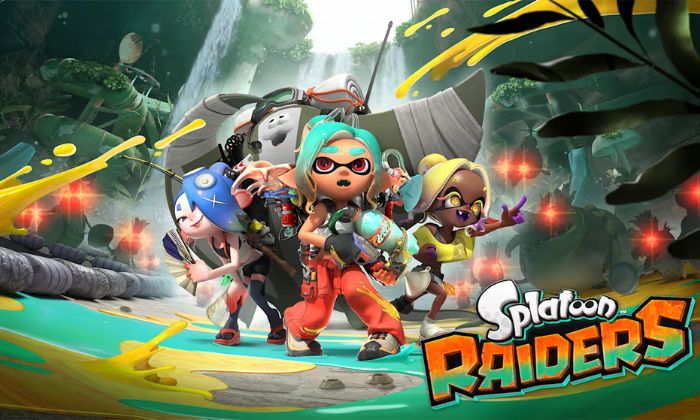
Splatoon Raiders – Review
July 21, 2026Hey everyone, today I’m super excited to share my thoughts on a release that exceeded all my expectations: Splatoon Raiders. I confess that when I saw the first announcements, I was skeptical, quite indifferent actually. After all, Splatoon has always been a competitive multiplayer game with frenetic and colorful battles, and the idea of a spin-off focused on single-player, with a looter shooter feel, left me with a nagging doubt (or several doubts). Would Nintendo be able to maintain the essence of the series in such a different format? Well, after actually playing the game, I can say with certainty: yes, and how they succeeded! Get ready, because Splatoon Raiders is an adventure that goes far beyond what we imagine, bringing a depth and an addiction that made me completely forget about time.
My adventure began somewhat turbulently. I, as a skilled but anonymous mechanic, was piloting a helicopter carrying the Deep Cut trio—Shiver, Frye, and Big Man—to the mysterious Spirhalite Islands. The objective was simple: find treasure to help pay off Splatsville’s debts. But, as expected, a colossal storm caught us by surprise, bringing down the aircraft and leaving us stranded on an archipelago shrouded in fog and mystery. From then on, the mission changed: it was no longer just about treasure, but about surviving, building a base, uncovering the secrets of the islands, and, of course, finding a way back home. And it was in this scenario that Splatoon Raiders won me over, presenting a light, fun, and personality-filled narrative that serves as the perfect backdrop for incredibly addictive gameplay.
Mechanics and Gameplay
The gameplay of Splatoon Raiders is, without a doubt, the game’s greatest highlight. Nintendo took everything we already loved about the main series and brilliantly adapted it into a looter shooter format with RPG elements. The main loop is simple, but extremely effective: you go on expeditions to the islands, face hordes of Salmonids, collect treasures and resources, and return to your floating base to spend everything on upgrades. And believe me, this loop is so well executed that it’s almost impossible to stop playing.
The core of the combat remains ink. Shooting ink to cover the environment, swimming in it to replenish ammunition and heal, and using squid form to move quickly and climb walls—all of this is present and works better than ever. The fluidity of movement and the satisfaction of painting the environment are elements that Nintendo masters, and this game is no different. But what truly elevates the experience are the new layers of depth added.
The arsenal of weapons is vast, with over a hundred variants distributed across familiar categories such as Splattershots, rollers, brushes, and even ink katanas. Each weapon has its own level and rarity, and finding them on expeditions is always a thrill. But the real innovation lies in the gadgets. Instead of the traditional trio of primary, secondary, and special weapons, there are two or three free slots for gadgets that can mimic classic specials, like Splashdown, or offer pure mobility and emergency escapes. Each gadget can be customized with parts that alter reload times, damage, or behavior, allowing for incredibly varied and strategic combinations. I found myself constantly experimenting with new builds, combining different weapons and gadgets to see which best suited my playstyle or the challenge ahead. The freedom of customization is immense, and it’s one of the things that kept me hooked on the game.
The character progression is also very well thought out. We level up by collecting power eggs, improving our ink tank, health, and damage, and increasing our reputation with the treasure we bring home. Furthermore, the robotic companion that accompanies us on each expedition carries its own bar which, when filled, unleashes a devastating screen-clearing attack. And speaking of companions, we can choose between Shiver, Frye, or Big Man to accompany us, each with their own special ability that can be activated by the robot. I, personally, became attached to Big Man, whose Showstopper ability allowed me to control the robot and decimate enemies while remaining invulnerable.
The variety of missions is also a strong point. There are the classic excavation raids, the Salmonid lairs where we race against the clock to collect power eggs, and the buried ruins, which always end with a particularly resentful Salmonid. But my favorites, without a doubt, are the sample dungeons, small puzzles that strip us of almost all our equipment and force us to overcome platforming and ingenuity challenges with what remains. They are a clear homage to the secondary expansions of previous games and made me think creatively about the use of gadgets. The boss fights are a spectacle in themselves, choreographed with a sense of grandeur that we rarely see outside of Nintendo’s big names.
Graphics
Splatoon Raiders is the first exclusive game in the franchise to arrive on the Switch 2, and while it’s not one of those titles that scream “graphical power” with every pixel, it delivers a solid and, above all, very stylish visual experience. The art direction, as always in the series, is a show in itself. The vibrant ink colors, the unique designs of the characters and enemies, and the post-apocalyptic aesthetic mixed with elements of Japanese pop culture create a visually captivating universe.
The characters, both the Inklings and Octolings as well as the Deep Cut trio, are expressive and full of personality. The animations are fluid and detailed, which greatly contributes to immersion, especially in the cutscenes. Speaking of which, the game engine scenes are directed with bold angles and dynamic editing, giving the spin-off a more mature and cinematic feel than previous entries in the franchise.
However, I need to be honest: the visual design of the environments themselves doesn’t always match the same level of care. While there’s a variety of biomes, such as icy tundras, lava-flooded landscapes, and underground caves, many tend to have a more restrained color palette and a reduced number of visual elements, which is a strange contrast for a series that has always thrived on an explosion of color. At times, the environments can feel a bit generic or repetitive, especially in more open areas or linear corridors. It’s not something that detracts from the fun, but it’s noticeable to those accustomed to the visual exuberance of the main games.
Still, the sheer number of enemies on screen, the explosion of ink, and the visual effects during combat are impressive. Even with dozens of Salmonids, projectiles, and ink flying everywhere, the game maintains a visual clarity that allows you to follow the action without getting lost. And, of course, the “do-it-yourself” aesthetic of the weapons, which look like they were assembled from scrap metal and duct tape, adds a unique charm and reinforces the theme of survival and improvisation.
Sound
The sound design in Splatoon Raiders is, as expected from a Nintendo game, of very high quality, although with some nuances that differentiate it from the main series. The soundtrack, for example, takes a slightly different approach. While the numbered games are known for their frenetic electronic beats and catchy pop songs, here the music tends to be more atmospheric and, at times, even a little darker, which aligns well with the theme of exploring ruins and confronting sea creatures.
Don’t get me wrong, the music is still excellent and fulfills its role of setting the tone for the action and creating the right atmosphere for each moment. There are tracks that made me nod my head while I decimated hordes of Salmonids, and others that added a layer of tension and mystery during exploration. However, few of them really stuck in my head like the music from the main games. It’s a matter of personal taste, of course, but I missed some of those “anthems” that the series usually delivers.
The sound effects, on the other hand, are impeccable. The sound of ink being sprayed, the characteristic noise of each weapon, the sound of the squid swimming, the explosions of gadgets, and the grunts and attacks of the Salmonids are all very well done and contribute immensely to the immersion. In a game where the action is so chaotic and visually intense, having clear and precise sound feedback is fundamental to understanding what is happening on screen, and Splatoon Raiders delivers this masterfully. I often found myself using the sounds to identify the location of enemies or to know if my shots were hitting the target, even amidst the chaos.
The voice acting, or lack thereof, follows the Nintendo standard. The characters communicate with a mix of grunts, noises, and a language specific to the franchise, with text bubbles displaying the dialogue. While this is a charm of the series, in a game with so many explanations of mechanics and interactions between characters at the base, I felt that traditional voice acting could have added an extra layer of depth and emotion to the conversations. However, the animations and expressiveness of the characters largely compensate for this absence, effectively conveying emotions and personalities.
Fun
The fun in Splatoon Raiders is a chapter in itself. I, who started out hesitant, found myself completely captivated by the addiction this game provides. It’s the kind of title that makes you think “just one more mission” and, before you know it, hours have passed and the sun is already rising. The combination of fluid shooting mechanics, deep customization, and a constant progression loop creates an incredibly rewarding experience.
What I enjoyed most was the freedom to experiment. Being able to assemble different builds with weapons and gadgets, test new strategies for each type of mission, and see how each choice impacted gameplay kept me constantly engaged. The feeling of becoming more and more powerful, of seeing your character evolve, and of unlocking new abilities and equipment is one of the pillars of fun in a looter shooter, and Splatoon Raiders nails that.
The variety of missions, although with some repetitive patterns, is enough to maintain interest. The sample dungeons, with their platforming and ingenuity challenges, were a breath of fresh air and made me use my head in different ways. And the boss fights, with their grandiose choreography and epic moments, are always a highlight, leaving me with a racing heart and a smile on my face when I finally defeated them.
Besides the main campaign, which gave me a good 15 to 20 hours of gameplay, there’s a lot of content to explore. The “spicy” and “super spicy” difficulty levels offer an extra challenge for those looking to test their limits, and the endgame is full of opportunities to continue improving your character and collecting rare items. I found myself returning to old missions just to test a new build or to collect specific materials, and I never felt like I was “farming” in a tedious way. The fun was always there.
And the cooperative mode? Oh, the cooperative mode! Although I played most of the campaign alone, the possibility of inviting up to three friends to help me on a mission, whether online or on the couch, is an incredible bonus. The game adapts to the number of players, and the dynamic of working as a team to overcome challenges is very rewarding. Even without friends available, the option to ask other online players for help or to offer my help to those who needed it was a fun way to interact with the community and earn extra rewards. Splatoon Raiders manages to be fun for those who prefer to play alone as well as for those who like to share the adventure.
Performance and Optimization
In a word, Splatoon Raiders’ performance on the Switch 2 is flawless. Nintendo has delivered a game that runs extremely smoothly and stably, which is crucial for such a frenetic action title. I played both in docked mode, connected to the TV, and in handheld mode, and in both cases, the experience was consistently smooth.
The game maintains a solid 60 frames per second frame rate most of the time, even when the screen is filled with enemies, ink explosions, and visual effects. In a game where precision and reaction speed are so important, having this stability is a relief and directly contributes to the fun. There were no noticeable frame rate drops, not even in the most chaotic moments of boss fights or in dungeons with massive hordes of Salmonids. This demonstrates exceptional optimization work by the development team.
The resolution is also a positive point. In docked mode, the game appears to run in 4K, with crisp, detailed graphics that truly stand out on a high-definition TV. In portable mode, the 1080p resolution ensures an equally clear and vibrant image on the console screen. The visual quality remains consistent in both modes, which is quite an achievement and allowed me to enjoy the full experience anywhere.
Loading times are surprisingly short. Entering and exiting missions, or returning to base, is an almost instantaneous process, eliminating any frustration and keeping the game’s pace fast. In a looter shooter where you’re constantly moving in and out of areas, this optimization of loading times makes a huge difference in the fluidity of the experience.
The only thing that caught my attention, and which I consider a minor peculiarity, is that the cutscenes, for some reason, run at 30 frames per second, and at times even slightly below that. It’s a strange contrast to the fluidity of the gameplay, and there’s no apparent visual effect to justify this drop. However, this isn’t a serious problem, as these are isolated moments and don’t affect the gameplay itself. Overall, the performance and optimization of Splatoon Raiders are top-notch, guaranteeing a seamless and very satisfying gaming experience.
Conclusion
Splatoon Raiders is, without a doubt, one of the biggest and most enjoyable surprises I’ve had this year. Nintendo took a franchise that was already loved by many and reinvented it in a way that not only respects its roots but also brilliantly expands its horizons. I, who started with a certain skepticism, found myself completely involved and addicted to this universe of treasure hunting and ink combat.
The game manages to be a complete and deep looter shooter, with a weapon and gadget customization system that kept me constantly experimenting and searching for the perfect build. The progression is rewarding, the variety of missions is well thought out to avoid monotony, and the boss fights are memorable. The narrative, although light, is charming and adds an extra layer of personality to an already charismatic cast of characters.
The flawless performance on the Switch 2, with a stable 60 frames per second and crisp graphics, ensures that the frenetic action is always fluid and enjoyable. And the inclusion of a robust cooperative mode, which allows you to play virtually the entire campaign with friends or with the help of other online players, adds immense replayability value.
Sure, the game isn’t perfect. The environments could be more varied and visually impactful, and the music, while good, doesn’t reach the same iconic level as the main games. Furthermore, the lack of Brazilian Portuguese subtitles is a flaw that, in 2026, is hard to ignore, especially in a game with so many tutorials and dialogues. And, at times, the difficulty can spike sharply, requiring some grinding or a change of strategy.
However, these minor drawbacks are overshadowed by the avalanche of qualities that Splatoon Raiders offers. It’s a game that made me laugh, made me sweat, and above all, entertained me for dozens of hours. It’s a perfect invitation for those who have never ventured into the world of Splatoon, offering a complete and addictive solo experience. And for long-time fans, it proves that the franchise has much more to offer than just multiplayer battles.
Splatoon Raiders is a winning bet from Nintendo, a spin-off that stands on its own and, who knows, may even influence the future of the main series. If you’re looking for a fun action game with lots of customization and an addictive gameplay that will make you lose track of time, don’t hesitate to dive headfirst into the Spirhalite Isles. You won’t regret it!
Positive points:
- Fluid and addictive gameplay, with ink combat that has become a trademark of the series.
- An extremely deep and rewarding weapon and gadget customization system.
- A wide variety of missions and challenges that encourage experimentation.
- Confrontations against grand and memorable bosses.
- Flawless performance on the Switch 2, with a stable 60 frames per second.
- The online and local cooperative mode is very well implemented, adding replayability value.
- Charming narrative and charismatic characters.
- Short loading times, which maintain the pace of the game.
Negative points:
- The scenarios can be a bit repetitive and visually less inspired than the main games.
- The music, while good, isn’t as iconic as that of the main series.
- No subtitles in Brazilian Portuguese.
- There are peaks in difficulty at certain points, which may require grinding.
- Cutscenes run at 30 frames per second, contrasting with the gameplay.
Rating:
Graphics: 8.0
Fun: 9.5
Gameplay: 9.0
Sound: 8.0
Performance and Optimization: 9.5
FINAL SCORE: 8.8 / 10.0