![Revolution Arena [English Version]](https://revolutionarena.com/english/wp-content/uploads/sites/4/2024/07/Revolution-Arena-ISSN-2966-2117.png)
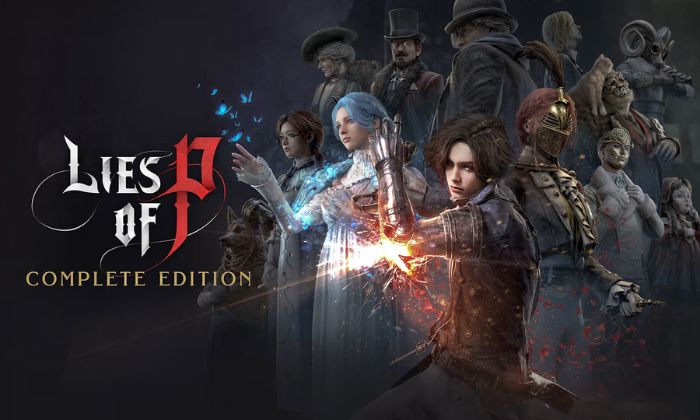
Lies of P: Complete Edition – Review
August 7, 2026After playing the entire game on the Switch 2, including a good portion of the Overture expansion, I can say that I came away from the experience surprised by how deeply Round8 Studio and Neowiz understood what makes a soulslike work, and how well they managed to incorporate their own identity into this mold so well-established by other studios. The idea of taking the story of Pinocchio, written by Carlo Collodi, and transforming it into a dark fable about free will, lies, and what it means to be human, seemed strange on paper, but in practice it proved to be one of the most intelligent thematic combinations I’ve ever seen in a game of this genre.
The city of Krat, devastated by the so-called Puppet Frenzy and a mysterious disease that decimates the human population, is the setting where I embody P, a puppet with almost human features, capable of lying, feeling, and choosing its own path away from the will of its creator. This seemingly simple premise sustains a plot that unfolds gradually through documents, statues, optional dialogues, and especially the interactions at Hotel Krat, the central hub where the few remaining survivors live. Unlike other representatives of the genre that almost intentionally hide the narrative, here there is a balance; you can understand the essentials of the story without needing to read every item description with a magnifying glass, but those who want to delve deeper will find much hidden in the corners of the map.
What makes this Complete Edition different is precisely the complete package: the base game, revamped with all the adjustments and improvements made over almost three years of post-launch support, plus the Overture expansion and all previously released cosmetic items. I played all of this now on the Switch 2 and I was left with the feeling of being in front of one of the most complete and well-cared-for versions this title has ever received, even knowing that it has existed on other platforms since 2023.
Mechanics and Gameplay
Lies of P follows the classic soulslike formula: health and stamina points dictate the pace of each combat, each attack consumes energy, each block takes a chunk out of the health and stamina bars, and dying means losing all the accumulated currency, called Ergo, at the exact spot where I fell. If I manage to get back there without taking more damage, I recover everything, but each hit received along the way reduces the amount I can retrieve. It’s a constant tension that kept me on edge for practically every gaming session.
What sets the combat experience apart here is the blocking and counter-attacking system. When I parry a blow without executing the perfect block, I still take damage, but that damage can be recovered if I manage to hit the enemy immediately afterward. This creates a constant dilemma between playing defensively, waiting for the right opening, or risking everything to recover lost health, knowing that a miscalculation can be costly. When I execute the perfect block at the exact moment of impact, I completely negate the damage, and this precise timing is rewarded with a feeling of mastery over combat that few games in the genre manage to deliver with such clarity.
The real star of the mechanics, without a doubt, is the weapon crafting system. Each common weapon is divided into two parts: the blade, which defines damage, attribute scaling, and the type of damage dealt, and the handle, which determines the complete moveset, that is, how the weapon moves during attacks. This allows for virtually limitless combinations: I can take the heavy blade of an axe and attach it to the agile handle of a dagger, creating a completely new weapon in terms of behavior. Add to that the Fable Arts, special attacks linked to each half of the weapon that consume a specific meter and serve both to buff the equipment and to unleash devastating attacks with unique animations, and the result is a customization system that I have rarely seen so well executed in a third-person soulslike.
In the left hand, you have the Legion Arms, mechanical arms that replace the traditional shield and offer various active abilities. I used the Puppet String quite a bit; it’s an arm that functions like a grappling hook, pulling enemies closer or launching me towards them, which solves many dangerous situations, especially in narrow corridors full of enemies at a distance. I also experimented with versions that shoot flames, spread acid on the ground, or function almost like a rotary machine gun. Each of these arms can be upgraded in Hotel Krat using rare materials, and investing in this makes a huge difference in the midst of more chaotic combat.
Another pillar of progression is the P-Organ, a kind of skill tree fueled by Quartz, a relatively scarce resource scattered throughout the world. It’s through this that I unlock permanent passives, such as more uses of healing items, more amulet slots, or larger regeneration windows when blocking. Progression here is gradual and well-distributed, making each piece of Quartz found feel like a small victory. However, the sheer number of systems orbiting the character—including armor pieces divided into various components, bonus cubes, amulets, and Motor Skill and Technique attributes—can be a little intimidating at first, and I confess it took me a while to fully understand how each piece fit together, but once it does, everything starts to make sense.
The difficulty itself remains moderate within what is expected of the genre. I died quite a few times against the first bosses, some costing me more than twenty attempts, but I never felt the difficulty was unfair, just demanding. A welcome addition in this edition is the presence of more accessible difficulty options, designed for those who have never touched a soulslike before or simply prefer a smoother learning curve. It’s possible to switch between them at any time without losing progress or content, which greatly expands the audience that can enjoy this experience without feeling excluded.
The level design follows a more linear than open structure, in the style of the early games in the series that inspired the genre. There is always a clear main path, with short branches that usually lead to shortcuts, items, or small optional quests. I didn’t find here the sense of an interconnected and labyrinthine world that certain classics of the genre deliver, but in return, the exploration is rewarding, full of small surprises hidden behind locked doors or hidden platforms. The side quests, in turn, vary considerably in quality: some offer interesting choices and multiple outcomes, others are reduced to repetitive back-and-forth movements that serve more to fill time than to add value.
The morality system ties everything together elegantly. At various points in the story and side quests, I can choose to lie or tell the truth to the NPCs I encounter, and these decisions shape both my relationships and the ending I receive upon completing the game. The most interesting thing is that the obvious choice isn’t always the right one, and some lies told with good intentions end up being kinder than the stark truth. It’s a simple system on the surface, but it carries considerable emotional weight when understood within the context of each character.
Graphics
The game constructs a decadent Belle Époque that works very well as a backdrop for the mechanical terror that spreads through the city of Krat. Narrow streets, abandoned theaters, dilapidated hotels, and rusty factories blend into a dark European aesthetic, full of oil dripping down the walls and broken puppets scattered on the floor. It’s one of those games where simply stopping to admire the scenery is worthwhile.
The game arrives with very generous graphics options by the standards seen so far on the Switch 2. In docked mode, there are three settings: quality, which aims for 30 frames per second with richer visual effects and even ray tracing at certain moments; balanced, which attempts to balance frame rate and visual fidelity; and performance, which prioritizes fluidity, reaching 60 frames per second with a lower resolution. In portable mode, for now, only the quality and performance options are available, with the latter still presenting a somewhat unstable frame rate before a day-one update that promises to add a more stable 60-frame mode for when the console is undocked.
I tested virtually all of these settings and came to the conclusion that the balanced mode, when available, offers the best middle ground between sharpness and fluidity for those playing on TV. The quality mode, while beautiful in still scenes, suffers from noticeable performance drops in combat with more effects, and the motion blur effect applied to the camera is quite evident in this mode, without any option to disable it, which can be annoying during more action-packed battles.
Another point that needs to be mentioned is the pop-in of distant objects, more noticeable in denser areas, such as the Lorenzini Arcade and Krat’s Zoo present in the Overture expansion. In enclosed environments, such as warehouses and factories, I also noticed a slight delay in polygon loading when rotating the camera quickly, which generates small white flashes until the scene stabilizes completely. These are imperfections that don’t compromise the experience, but they are there, discreet, remembering that this is a hybrid hardware running a game that was originally designed for consoles and more robust PCs.
Hair textures and certain clothing elements visibly suffer when compared to the PC and console versions, especially in close-up scenes, and distant objects lose considerable definition. Still, overall, the art direction compensates for many of these technical limitations. The character animations are fluid and weighty, the enemies and puppets move in a disturbing and convincing way, and even when the resolution drops, the atmosphere remains intact.
Sound
Much of the exploration takes place in near-total silence, which intensifies the feeling of solitude and constant danger, but as soon as a boss enters the scene, the orchestra takes over with grandiose, tense, and urgent compositions that manage to convey both the weight of the battle and the personality of each enemy faced.
The Hotel Krat theme, played at certain points through the discs I can collect around the world, is another sonic highlight. It’s a calm, almost melancholic piece of music that intentionally contrasts with the chaos outside and ends up becoming an emotional refuge within the game’s own structure. Collecting these discs and listening to them in the central hub became one of my personal little joys during the campaign, to the point where I would simply stand there just to listen.
The voice acting, as it accompanies the scenes and dialogues with the NPCs, also maintains a consistent level of quality, helping to give personality to figures like Sophia, Gemini, and Geppetto himself. The combat sound effects, the metallic clang of blades clashing, the mechanical groan of approaching puppets—all of this contributes to reinforcing the constant tension that permeates each encounter. It’s an extremely competent sound design that sustains and amplifies the game’s visual atmosphere without ever taking a backseat.
Fun
Here, without a doubt, lies the heart of the entire experience. Lies of P manages to balance tension, reward, and experimentation in a way that kept me extremely engaged from beginning to end. Each new weapon found, each different blade and hilt combination, each Legion Arm tested—all of this generates a desire to keep progressing just to see what comes next. I rarely felt tempted to repeat the same build for very long, because the game itself encourages constant variation through enemies that demand different approaches.
For me, the bosses are the biggest highlight of the fun in this experience. Each one has a striking visual design, unique movesets, and a combat rhythm that rarely falls into the generic. Some left me extremely frustrated, especially certain encounters that require absurd patience and precise memorization of patterns, but the feeling of finally defeating a difficult boss, after dozens of attempts, is indescribable and makes up for every previous moment of anger.
The Overture expansion enhances this fun in a way that exceeded my expectations. Set in a past prior to the events of the main campaign, it introduces even more aggressive bosses, new equipment, including a long-range weapon that fits very well into the existing combat structure, and a significantly higher difficulty level than the base game. It’s a sequel that respects those who already master the mechanics, but also adds small quality-of-life improvements, such as the ability to invest Ergo directly from the rest point, an adjustment that should be standard in any soulslike.
The difficulty options added over time also deserve mention in this context, as they greatly broaden the range of people who can enjoy the game. However, I noticed that the adjustment of these easier levels isn’t always perfect, especially within the expansion, where certain balance adjustments seem rushed, creating situations where an intermediate level feels more balanced than the extreme options. Even with this caveat, the overall fun remains extremely high, sustained by a very well-constructed risk-reward cycle and a generous amount of content, considering that the main campaign plus the expansion easily exceeds forty hours.
Performance and Optimization
Lies of P: Complete Edition delivers a performance that, for the most part, pleasantly surprised me. In docked mode, I played a good portion of the campaign in performance mode and rarely noticed frame rate drops, even during encounters with multiple enemies on screen or bosses with many simultaneous visual effects. The balanced mode also performed well, offering a stable frame rate along with slightly superior visual fidelity.
The quality mode, on the other hand, is where the optimization shows its flaws. The frame rate drops noticeably during more intense combat, and the motion blur effect, without a disable option, makes camera movement quite uncomfortable in this specific mode. I recommend avoiding it, both in docked and handheld modes, unless visual fidelity is the absolute priority at the expense of fluidity.
In handheld mode, the experience is still being fine-tuned at the time of play. The performance mode had a more inconsistent frame rate than I expected, functioning more like a balanced mode than a truly optimized 60 frames per second mode. Fortunately, there’s a day-one update scheduled for launch that promises to add a more stable 60 frames mode specifically for handheld use, which should resolve much of this inconsistency once it’s available.
One annoying detail from a practical standpoint is that switching between graphics modes can only be done through the game’s main menu, requiring me to completely exit the game whenever I want to switch between them. It’s a minor inconvenience, but it becomes annoying over time, especially for those who like to frequently switch between docked and portable modes. Loading times, on the other hand, deserve praise: they are fast and discreet, which makes deaths and returns to the resting point much less frustrating from a technical point of view.
Overall, considering the natural limitations of hybrid hardware running a game originally designed for more powerful home consoles, the optimization delivered here is competent and respectful to those who invest in the product, especially knowing that additional adjustments are still on the way soon after launch.
Conclusion
After all those hours immersed in Krat, traversing dark corridors, deciphering weapon combinations, testing different mechanical arms, and facing bosses that made me scream with frustration and joy in a matter of minutes, I can confidently say that Lies of P: Complete Edition is one of the best representatives of the soulslike genre currently available, and its arrival on the Switch 2 is a genuine reason for celebration for those who enjoy playing in the comfort of their couch or anywhere outside the home.
The package delivered here is generous: the already robust base game, plus the extensive and challenging Overture expansion, as well as all the cosmetic content released over the years, all bundled into a single purchase that is justified both for those who have never played the title and for those who have already finished the original version on other platforms and want to relive it in a portable way. Minor technical imperfections, such as occasional pop-in, instability in quality mode, and the need to exit to the menu to change graphics settings, exist, but never come close to compromising what is most valuable in the experience: an extremely well-calibrated combat system, a genuinely creative weapon customization system, a thrilling soundtrack, and a story that manages to balance mystery with narrative clarity in a way that is rare within the genre.
I recommend the complete edition of Lies of P both for hardened soulslike veterans looking for a new challenge and for curious beginners who have always been afraid to tackle this type of game. The difficulty options make the entry smoother for newcomers, while the depth of the combat and progression systems guarantees plenty of satisfaction for those who have been fans of the genre for years. It’s a game that respects its own identity without ever ceasing to engage with classics that came before it, and now, on the Switch 2, it gets a solid, complete, and extremely convenient version to take anywhere.
Positive points:
- A deep combat system that rewards both careful defense and calculated offense.
- Customizing weapons through the combination of blades and handles, allowing for extremely varied builds.
- Legion Arms adds interesting tactical layers to combat.
- Memorable bosses, with striking designs and well-constructed challenges.
- An exciting soundtrack, with highlights including the orchestral compositions by the chefs and the Hotel Krat theme.
- A morality system that significantly impacts relationships with NPCs and outcomes.
- Complete package including the extensive Overture expansion and cosmetic content.
- Good overall performance in docked mode, especially in performance and balanced modes.
- Difficulty options that broaden access to the game without removing content.
- Fast and discreet charging times
Negative points:
- More linear level design, with little sense of interconnected worlds.
- Unstable quality mode, with noticeable frame rate drops and motion blur with no option to disable it.
- Object pop-in in denser areas, both in the base game and the expansion.
- You need to exit to the main menu to change graphics settings.
- Portable performance mode still inconsistent ahead of launch day update.
- An excess of parallel progression systems, which can confuse new players at the beginning.
- Some side quests rely on repetitive and unrewarding backtracking.
- Balancing the additional difficulties isn’t always perfect, especially within the expansion.
Rating:
Graphics: 8.5
Fun: 9.5
Gameplay: 9.5
Sound: 9.5
Performance and Optimization: 8.0
FINAL SCORE: 9.0 / 10.0