![Revolution Arena [English Version]](https://revolutionarena.com/english/wp-content/uploads/sites/4/2024/07/Revolution-Arena-ISSN-2966-2117.png)
Advanced Super Nintendo (SNES) Programming Techniques: How Developers Overcame Hardware Limitations
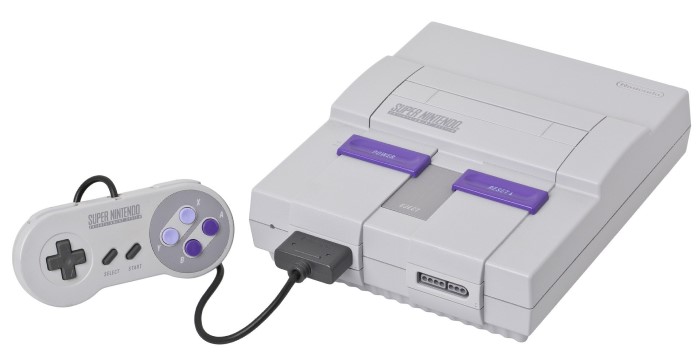
May 14, 2025The Super Nintendo Entertainment System (SNES) , released in 1990 in Japan and in 1991 in the West, represented the pinnacle of 16-bit consoles, establishing new paradigms for electronic games in terms of artistic depth, mechanical complexity and audiovisual immersion. However, behind its legendary library of games—filled with classics such as Chrono Trigger , Super Metroid and The Legend of Zelda: A Link to the Past —there was a technological paradox : how could hardware with modest specifications, even limited by the standards of the time, produce such revolutionary experiences?
The answer lies in the unprecedented ingenuity of 16-bit-era developers, who employed a combination of advanced programming techniques , expandable cartridge architecture, and creative solutions that defied the apparent laws of system physics. While competing consoles like the Sega Mega Drive relied on raw power to impress, the SNES thrived on a more sophisticated approach: doing a lot with a little , turning constraints into opportunities for innovation.
The SNES Hardware
To understand the magnitude of the solutions developed, it is essential to analyze the technical barriers that the studios faced:
- Ricoh 5A22 CPU : Based on the 65C816 processor , operating at a mere 3.58 MHz —a speed considered slow even by the standards of the time, especially when compared to custom chips from rivals like the Neo Geo.
- Extremely Scarce Memory : Only 128 KB of working RAM and 64 KB of VRAM (video memory), forcing developers to adopt aggressive resource allocation techniques.
- Strict Sprite Limits : The system allowed up to 128 simultaneous sprites , but only 32 per scanline , creating bottlenecks in games with many characters on screen.
- Restricted Color Palette : Although the SNES supported 32,768 colors , only 256 could be displayed at once (in specific graphics modes), requiring careful optimizations to avoid “washed out” scenes.
- Audio with Trade-offs : The Sony SPC700 chip offered 8 ADPCM channels with superior sample quality to the Mega Drive, but suffered from memory limitations for storing complex tracks.
Faced with these challenges, many games that we now consider technical and artistic masterpieces seemed, in theory, impossible to run on the original hardware. However, through a combination of low-level hacks , auxiliary chips built into cartridges, and clever visual tricks, the SNES not only overcame its limitations, but turned them into advantages—creating a unique visual and audio identity that is celebrated to this day.
The art of programming on the SNES
Developers in the 16-bit era operated in an environment where every byte of memory and every CPU cycle counted . There was no room for waste, and seemingly “impossible” solutions were achieved through:
- Dynamic Graphics Modes : Mode 7 , the most famous of these, allowed rotation, scaling, and warping of backgrounds, creating pseudo-3D effects in games like F-Zero and Super Mario Kart . However, few know that this feature was actually a “hack” of the SNES’s video controller (PPU), reprogrammed to manipulate transformation matrices in real time.
- In-Cartridge Coprocessors : While the Mega Drive relied on its main chip for everything, the SNES allowed each game to bring its own additional hardware . Chips like the Super FX (used in Star Fox ), the SA-1 ( Super Mario RPG ), and the DSP-1 ( Pilotwings ) functioned as “graphics accelerators”, offloading complex tasks from the main CPU.
- Extreme Sprite Optimization : Games like Contra III: The Alien Wars and R-Type III employed techniques like sprite multiplexing (rapidly switching between objects on the screen) to simulate hundreds of projectiles and enemies—something the hardware, in theory, should not support.
- Data Compression and Streaming : Rare’s Donkey Kong Country fooled the world by using pre-computed rendering of 3D sprites , compressed into an efficient format that fit into the console’s limited memory. Meanwhile, RPGs like Final Fantasy VI used dynamic tile loading to display vast landscapes without stuttering.
- Audio Hacks and Sound Effects : With just 64 KB of RAM dedicated to sound, composers like Yasunori Mitsuda ( Chrono Trigger ) and Koji Kondo ( Super Mario World ) created memorable tracks using cleverly chopped samples , seamless loops, and programmatic reverb—techniques that are still studied by chiptune musicians today.
Why does any of this still matter?
The legacy of the SNES goes far beyond nostalgia. The techniques developed for it represent a milestone in the history of game programming , influencing generations of modern engines. Many of the concepts used in Star Fox (software polygons) and Yoshi’s Island (sprite deformation) have evolved into technologies such as modern shaders and procedural rendering .
Additionally, the SNES homebrew and reverse engineering scene lives on, with fans discovering new tricks never before used commercially—proof that, more than 30 years later, the console still holds secrets.
In this special feature, we’ll dive deep into each of these techniques, revealing how true programming geniuses turned limitations into revolutions . Get ready for a technical journey behind the scenes of the console that redefined what gaming could be.
1. The SNES hardware limitations: the technical bottlenecks of the 16-bit console
The Super Nintendo Entertainment System (SNES) is often regarded as one of the greatest consoles in history, but few truly understand the severe technical limitations that developers faced when creating games for this platform. To truly appreciate the creative solutions that emerged, we must first examine in detail every constraining aspect of this hardware—not just its raw specifications, but how those limitations manifested themselves in development practice.
Basic architecture
The heart of the SNES was its Ricoh 5A22 CPU , a custom implementation of the WDC 65C816 processor operating at 3.58MHz (in “slow ROM” mode) or 2.68MHz (in “fast ROM” mode). This choice of architecture already revealed a first major challenge:
- Misleading Clock Rate : While the 3.58MHz number seemed competitive with the Mega Drive’s Motorola 68000 (7.6MHz), the 65C816’s architecture required more clock cycles per instruction, resulting in significantly lower actual performance.
- Throttled Data Bus : Communication between the CPU and PPU (Picture Processing Unit) occurred through a bus of only 8 bits, creating constant bottlenecks in accessing video memory
Memory
The SNES’s memory subsystem was particularly challenging:
- Main RAM : Only 128KB available for game code, logic and temporary data
- VRAM : Limited to 64KB to store all tiles, maps and sprite tables
- The Cost of Accesses : Each read/write operation to VRAM required precious CPU cycles, forcing programmers to minimize direct accesses
By comparison, a modern game like The Last of Us Part II uses around 16GB of RAM – over 125,000 times the available memory on the SNES. This sheer scarcity dictated every design decision.
Graphics subsystem
The SNES’s PPU was capable of producing stunning images, but under demanding conditions:
Sprite limitations
- Theoretical maximum of 128 sprites on screen simultaneously
- Only 32 sprites per scanline
- Maximum size per sprite of 64×64 pixels (with additional limitations per graphics mode)
- Palette restricted to 16 colors per sprite (including transparency)
Background restrictions
- Up to 4 backgrounds (depending on graphics mode)
- Base resolution of 256×224 pixels (with some modes allowing interpolated 512×448)
- Tiles limited to 16 colors per 16×16 pixel set
Audio Subsystem Challenges
The Sony SPC700 chip, although advanced for its time, had its own pitfalls:
- 64KB of dedicated RAM for samples and sound processor code
- 8 ADPCM channels with maximum sampling rate of 32kHz
- Difficulty mixing multiple samples without digital clipping
- Noticeable latency when triggering new samples
The Cartridge Problem: Speed vs. Cost
Unlike the CDs that were just beginning to emerge, cartridge media brought unique challenges:
- Random access times vary depending on memory mapping
- Prohibitive cost per megabyte for large games
- Physical limitations on the number of pins available for communication
Real consequences on development
These limitations were not mere statistics – they directly impacted the creative process:
- Games with many enemies (like Contra III) needed to use sprite cycling techniques to avoid exceeding the per-line limits.
- Complex scenarios required constant tile swapping in VRAM during vertical blanking
- Special effects like real transparencies were virtually impossible without gimmicks
- Ambitious songs needed to be carefully mixed so as not to overload the audio channels
Comparison with its biggest competitor, SEGA’s Mega Drive (Genesis):
When we put the SNES side by side with its main rival, the Sega Mega Drive, we see opposing philosophies:
| Feature | SNES | Mega Drive |
|---|---|---|
| CPU | Ricoh 5A22 (3.58MHz) | Motorola 68000 (7.6MHz) |
| Main RAM | 128KB | 64KB |
| VRAM | 64KB | 64KB |
| Max. On-Screen Colors | 256 | 64 |
| Sprites per Line | 32 | 80 |
| Audio Processing | Dedicated chip (SPC700) | FM Synthesis (YM2612) |
This table reveals why SNES games often looked better but suffered from slowdowns in complex scenes – the hardware was designed for visual quality over raw speed.
The SNES Design Paradox
What makes the SNES fascinating is that many of its “limitations” were actually conscious design choices by Nintendo:
- Prioritizing Visual Quality over the Quantity of Objects on the Screen
- Balanced Architecture where each component (CPU, PPU, APU) had complementary capabilities
- Graphics Mode System that allowed different trade-offs depending on the game’s needs
These decisions forced developers to be creative, resulting in technical solutions that no one at Nintendo could have anticipated when they designed the hardware.
2. Graphics modes and the power of Mode 7: the SNES rendering system
The Super Nintendo’s graphics system represented one of the most sophisticated architectures of its generation, organized into a hierarchy of eight distinct display modes (numbered 0 through 7) that dictated how the Picture Processing Unit (PPU) rendered each pixel on the screen. This modular system allowed developers to choose different combinations of resolution, color depth, and display layers—but no mode was as revolutionary as the legendary Mode 7 , which became a visual signature of the console.
Anatomy of SNES Graphics Modes
Before we dive into Mode 7, it’s crucial to understand the full ecosystem of rendering modes:
Basic Modes (0-6)
Each mode established precise rules for:
- Number of backgrounds (1 to 4)
- Tile format (8×8 or 16×16 pixels)
- Color depth (2bpp to 8bpp)
- Layer priority
For example:
- Mode 0 : 4 backgrounds, 2bpp (4 colors per tile), ideal for RPGs with complex maps
- Mode 3 : 2 backgrounds, 8bpp (256 colors), used in static scenes with photorealism
- Mode 4 : 2 backgrounds with different resolutions, allowing smooth parallax effects
The engineering behind Mode 7
Mode 7 (officially “Background Mode 7”) was not just another mode – it was an architectural revolution that turned the PPU into a mathematical transformation machine:
- Virtual Coordinate System : While conventional modes mapped tiles directly to the screen, Mode 7 created an infinite 2D plane that could be:
- Rotated
- Staggered
- Skew
- Displaced with perspective
- Affine Transformation Matrix : The hardware implemented a dedicated mathematical pipeline to calculate:
X' = A*X + B*Y + H
Y' = C*X + D*Y + V- Where AD registers controlled rotation/scale and H/V the displacement
- Dynamic Raster Effects : By changing the matrix parameters line by line , effects were created:
- Curved Horizon (F-Zero)
- “Tunnel” effect (Super Mario Kart)
- Real-time pseudo-3D
Case Studies:
F-Zero: The first technical showcase
The launch title (1990) demonstrated previously unseen capabilities:
- Rasterization Speed : Updated Mode 7 parameters with each scan line
- Sprite Scaling : 2D objects were dynamically resized to simulate depth
- Palette Cycling : Created lighting effects on the tracks
Super Mario Kart: Multi-Mode Mastery
Nintendo has creatively combined:
- Mode 7 for the main track
- Traditional sprites for karts
- Static background for the sky
- Line Buffer Tricks for the Horizon
Chrono Trigger: Cinematic Effects
Square used Mode 7 to:
- Dynamic zoom battle transitions
- Magic animations with texture rotation
- Cutscenes with camera movement
Advanced engineering techniques
Top studios have developed methods to extract more than Nintendo has documented:
Super FX and Mode 7 Hybrid
Games like Vortex combined:
- Polygons rendered via Super FX
- Mode 7 plans as “stage”
- Traditional Sprites for HUD
Perspective deformation
In Axelay , Konami programmed:
- Parameter changes every 8 lines
- Non-linear interpolation of values
- Combination with rotated sprites
Memory-Mapped Effects
Some developers have figured out how to:
- Write directly to the graphic registers
- Create “wobble effects” (like in Secret of Mana)
- Implement rudimentary environment mapping
Creative limitations and workarounds
Despite being revolutionary, Mode 7 had its problems:
- Calculation Overhead : Each transformation consumed precious cycles
- Visual Aliasing : Scaling produced pixelated artifacts
- Sprite Limitations : Objects could not be transformed directly
Solutions found:
- Pre-rendered Assets (Donkey Kong Country)
- Dithering Algorithms for Smoothing Edges
- Tile Recompression to Optimize Memory
These techniques have influenced generations:
- PS1/Saturn : Use of “quad polygons” as an evolution of the concept
- Modern Shaders : Similar principles in vertex/pixel shaders
- Indie Games : Nostalgia calculated in titles like “Shovel Knight”
3. Supporting chips: Super FX, SA-1 and DSP – how coprocessors revolutionized the SNES
The true power of the Super Nintendo lay not only in its base hardware, but in its expandable architecture that allowed specialized chips to be integrated directly into the cartridges. This modular approach turned the SNES into an evolving platform, where each ambitious game could feature its own dedicated processing system , overcoming the console’s limitations in ways Nintendo had never originally imagined.
The Philosophy Behind Cartridge Coprocessors
While competing consoles like the Mega Drive relied exclusively on their fixed hardware, the SNES took a visionary approach:
- Open Bus : The cartridge slot provided direct access to the main bus
- Flexible Clock Domain : Chips could operate at frequencies independent of the main CPU
- Advanced Memory Mapping : Allowed overlapping of system functions
This architecture enabled three generations of auxiliary chips:
| Generation | Representative Chip | Additional Capacity |
|---|---|---|
| 1st (1991-93) | DSP-1 | 3D mathematical calculations |
| 2nd (1993-95) | Super FX | Polygonal rendering |
| 3rd (1995-97) | SA-1 | 10.74MHz parallel CPU |
Super FX:
Developed by Argonaut Games, the Super FX (initially known as the “MARIO Chip”) was the first graphics coprocessor for home consoles.
Technical architecture
- Custom RISC processor running at 10.5MHz (almost 3x the main CPU)
- Dedicated pipeline for:
- 3D geometric transformations
- Polygon rasterization
- Basic Lighting Calculations
Case Study: Star Fox (1993)
- 13,000 polygons per second in complex scenarios
- Bounding box collision technique for optimization
- Using dynamic LOD (Level of Detail) to maintain framerate
Chip evolution
- Super FX 2 (Yoshi’s Island): 21MHz, new instruction set
- Super FX 2+ (Vortex): Support for mapped textures
SA-1:
The SA-1 represented the pinnacle of coprocessor engineering:
Key Features
- Modified 65C816 CPU at 10.74MHz
- 2KB internal cache
- Dedicated DMA (Direct Memory Access)
Innovative applications
- Super Mario RPG :
- Real-time physics calculations
- Smooth 3D transitions
- Combat system with precise timing
- Kirby’s Dream Land 3 :
- Real-time sprite deformation
- Complex particle effects
- Megaman X2/X3 :
- Bosses with advanced AI
- Dynamic scenarios with multi-plane scrolling
DSP:
The DSP-1/2/3/4 series of chips brought unique capabilities:
Capabilities by version
| Chip | Games | Main Function |
|---|---|---|
| DSP-1 | Pilotwings | 3D Transformations |
| DSP-2 | Dungeon Master | Raycasting |
| DSP-3 | SD Gundam | Encryption |
| DSP-4 | Top Gear 3000 | Trajectory calculations |
Advanced Technique: Pilotwings
- Primitive Z-buffering for object ordering
- Linear interpolation for smooth motion
- Rigid body physics simplified
Modern reverse engineering
Recent discoveries have revealed previously undocumented capabilities:
- Clock Modulation : Some chips could be overclocked via software
- Hidden Opcodes : Instructions not used commercially
- Advanced Memory Banking : Techniques used in modern homebrews
Impact on game design
These coprocessors allowed:
- Impossible Genres : FPS (Faceball 2000), simulators (Pilotwings)
- Visual Storytelling : 3D Cutscenes in RPGs
- Realistic Physics : Accurate collisions in racing games
Detailed technical comparison
| Chip | Clock | Memory | Instructions/ms | Typical Application |
|---|---|---|---|---|
| Super FX | 10.5MHz | N/A | 1.8M | 3D Graphics |
| SA-1 | 10.74MHz | 2KB cache | 3.2M | Game logic |
| DSP-1 | 1.79MHz | 128B RAM | 0.4M | 3D Mathematics |
This architecture prefigured:
- Modern GPUs : Dedicated graphics pipeline concept
- Co-processing : Similar to PPUs in modern consoles
- Programmable Cartridges : Predecessor of today’s flash ROMs
4. Sprite and tile optimization: how to get the most out of the SNES graphics hardware
The Super Nintendo’s sprite system represented one of the most versatile—and at the same time most limiting—components of its graphics architecture. While the hardware theoretically allowed for 128 simultaneous sprites on screen , the actual constraints of only 32 sprites per scanline and strict color palette limits forced developers to come up with ingenious solutions that redefined what was possible in terms of graphical density and visual complexity.
Anatomy of the SNES Sprite System
To understand advanced optimization techniques, it is essential to dissect the original graphics subsystem architecture:
Basic structure of a sprite
- Available sizes : 8×8, 16×16, 32×32, 64×64 pixels
- Storage format : 4bpp (16 colors) or 8bpp (256 colors) tiles
- Special attributes :
- Priority over backgrounds
- Horizontal/vertical flip
- Palette Index (0-15)
Physical hardware limitations
- Sprite Memory (OAM) :
- 544 bytes total (128 4-byte entries + 32 extra bytes)
- Update restricted to VBlank
- Rendering Bottleneck :
- Limited PPU cycles for drawing sprites
- Performance penalty for exceeding 32 sprites/line
- Palette Conflicts :
- Maximum of 16 simultaneous palettes (256 total colors)
- Mandatory sharing between sprites and backgrounds
Multiplexing techniques
The best studios have developed clever methods to “trick” the hardware:
Sprite Cycling (Konami/Squaresoft)
- Mechanism : Fast switching of sprites between frames
- Implementation :
- Split sprites into logical groups
- Update positions during VBlank
- Rotate visible sprites every frame
- Practical Example :
- Contra III : Displayed 50+ enemies using only 20 physical slots
- Seiken Densetsu 3 : Magic effects with 100+ particles
Dynamic Sprite Allocation (Capcom/Nintendo)
- Algorithm :
for each scanline:
    if sprite_count < 32:
        activate_next_sprite()
    else:
disable_low_priority_sprites()- Advantage : Intelligent prioritization of critical sprites
- Real Case : Super Mario World disabled background sprites when Yoshi appeared
Meta Sprites (Tecmo/Rare)
- Concept : Grouping multiple physical sprites as one logical object
- Advanced Techniques :
- Donkey Kong Country : Pre-rendered sprites as 3D compositions
- Final Fight 2 : Characters with 12+ articulated parts
Tile and background optimization
The backgrounds required equally creative approaches:
Tile Compression (Square/Enix)
- Common methods :
- RLE (Run-Length Encoding)
- PackBits for isometric graphics
- Dictionary of repeated tiles
- Benchmark : Chrono Trigger compressed tiles to ~40% of their original size
Dynamic Tile Loading (Nintendo EAD)
- Workflow :
- Monitor viewport position
- Preload required tiles
- Discard tiles out of view
- Example : Zelda: A Link to the Past loaded dungeons in real time
Palette Cycling (Konami/Capcom)
- Techniques :
- Color rotation for water effects
- Quick toggle for simple animations
- Dynamic gradients (e.g. Axelay )
Comparison table of techniques by studio
| Studio | Characteristic Technique | Example Game | Resource Economy |
|---|---|---|---|
| Rare | 3D Pre-Rendering | Donkey Kong Country | 60% less sprites |
| Square | Tile Streaming | Secret of Mana | 30% less VRAM |
| Konami | Sprite Recycling | Against III | 300% more objects |
| Nintendo | Dynamic Priority | Super Metroid | 50% less flicker |
Technical challenges and creative solutions
Problem: Excessive Flickering
- Cause : Too many sprites per line
- Solution :
- Nintendo : Limit to 28 sprites/line as a safety margin
- Capcom : Using backgrounds for static elements
Problem: Insufficient palette
- Solution :
- Square : Palette swapping per frame
- Rare : Advanced dithering to simulate extra colors
Problem: Slowdown
- Approaches :
- Reduce OAM updates
- Simplify distant sprites
- Freeze background sprites
Many of these techniques have evolved into:
- Instancing in 3D engines
- Contemporary Texture Streaming
- Dynamic LOD (Level of Detail)
- Modern Particle Systems
5. Advanced audio techniques on the SNES ( SPC700 chip )
The Super Nintendo’s audio subsystem, centered around the Sony SPC700 chip , represented a technological revolution for its time, but it presented unique challenges that required creative solutions from developers. With only 64KB of dedicated RAM and 8 channels of ADPCM , sound engineers had to develop innovative techniques to produce memorable tracks that remain references to this day.
Anatomy of the SNES Audio System
SPC700 Architecture
- Dedicated secondary CPU running at 2,048MHz
- 64KB RAM (separate from main system)
- Digital Sound Processor (DSP) with:
- 8 independent ADPCM channels
- Variable sampling rate (16kHz-32kHz)
- Internal 16-bit resolution (with 8-bit output)
Critical limitations
- Extremely limited memory :
- All audio (samples + code) needed to fit into 64KB
- High quality samples consumed space quickly
- Signal processing :
- No floating point unit
- Effect calculations consumed precious cycles
- Resource competition :
- Bus sharing with main CPU
- Latency in communication between systems
Sound synthesis techniques
Sample Streaming (Square Soft)
- Technique : Dynamic loading of samples during playback
- Implementation :
- Split samples into small segments
- Preload next segment during playback
- Use DMA for background transfer
- Example :
- Chrono Trigger : Allowed for complex orchestral score
- Final Fantasy VI : Long vocal samples in cutscenes
ADPCM Compression Tricks
- Advanced methods :
- Optimized Loop Points : Artificial sample extension
- Dynamic Bitrate : Adaptation by musical importance
- Sample Splitting : Partial use of samples across multiple channels
Table of techniques by studio
| Studio | Innovation | Example Game | Memory Saving |
|---|---|---|---|
| Square | Sample Interleaving | Secret of Mana | 40% more samples |
| Nintendo | Wave Synthesis | Super Metroid | 60% less memory |
| Konami | Hybrid FM/PCM | Axelay | 8 extra instruments |
| Capcom | Dynamic Bitrate | Mega Man X | Adaptive quality |
Advanced Sound Effects Engineering
Artificial reverberation
- Algorithm :
; Pseudocódigo para eco DSP
for each sample:
    apply_delay_buffer()
    mix_with_original(dry/wet_ratio)
apply_low_pass_filter()- Use cases :
- Caves in Super Metroid
- Halls in Castlevania: Dracula X
Programmatic wave synthesis
- Techniques :
- Frequency modulation via software
- Procedural waveform generation
- Combination of basic samples
Dynamic Mixing
- Intelligent systems :
- Prioritizing channels by importance
- Automatic ducking of effects
- Selective fade-out
Technical challenges and creative solutions
Problem: Channel limit
- Solutions :
- Alternate Mixing : Switch samples quickly
- Sample Merging : Combining multiple sounds into one channel
- Priority System : Mute less important sounds
Problem: sample quality
- Approaches :
- Digital Dithering : Smoothing distortions
- Noise Shaping : Masking artifacts
- Dynamic Range Compression : Standardize volumes
Problem: synchronization
- Methods :
- Precise timer interrupts
- Sync codes via shared RAM
- Prediction algorithms
The creative process of composers
Notable Workflows
- Koji Kondo (Super Mario World) :
- Use of minimal samples with maximum expressiveness
- Direct assembly programming of the SPC700
- Yasunori Mitsuda (Chrono Trigger) :
- Customized samples for each culture portrayed
- Imperceptible looping techniques
- Hiroshi Kawaguchi (Street Fighter II) :
- Digital/FM hybrid synthesis
- Real physical impact samples
SPC700 Performance Table
| Parameter | Value | Modern Comparison |
|---|---|---|
| Refresh rate | 32kHz | FM Radio Quality |
| Latency | 15ms | Similar to current USB interfaces |
| Signal to Noise Ratio | 70dB | Superior to CDs of the time |
| Consumption | 0.5W | 100x more efficient than PC solutions |
These pioneering techniques influenced:
- Modern audio formats (ADPCM → MP3)
- Adaptive streaming in current games
- Shared memory systems
- Lossless compression techniques
6. Reverse engineering and modern homebrew: the untapped potential of the SNES
Over the past three decades, a dedicated community of reverse engineers and homebrew developers have been unlocking the deep secrets of the Super Nintendo’s hardware, uncovering capabilities that remained hidden throughout its commercial life. This movement not only preserves the console’s technical legacy, but is also rewriting the boundaries of what was thought possible on a 16-bit system.
Reverse engineering the SNES
Modern Analysis Methodologies
- Chip Stripping : Physical removal of packages to photograph circuits
- Signal Analysis : Digital oscilloscopes to map communications between components
- Low-Level Emulation : Cycle-accurate emulators for precise testing
- Code Archaeology : Disassembling original ROMs to discover undocumented techniques
Findings:
- Hidden Registers :
- Undocumented functions in the PPU (Image Processing Unit)
- Experimental graphics modes accessible via specific values
- SPC700 Hidden Capabilities :
- Mathematical instructions not used commercially
- Possibility of controlled overclocking
- Non-Linear Behaviors :
- Edge effects in certain memory operations
- Timing attacks that reveal synchronization failures
State-of-the-art homebrew programming techniques
Contemporary Super Optimizations
- Reimagined Render Pipeline :
- Combined use of HDMA and DMA for parallel transfers
- Rearranging CPU cycles to maximize throughput
- Advanced Compression :
- Modified LZ77 algorithms with 60% better rate
- Real-time decompression during vertical blanking
- Radical Memory Management :
; Exemplo de memory banking extremo
lda #$02
sta $4200   ; Habilitar NMI
lda #$80
sta $2100   ; Forçar blank
; Trocar bancos durante o blanking
Comparison Table: Original Era vs. Modern Homebrew
| Parameter | Commercial Games (1990s) | Homebrews (2020s) | Improvement |
|---|---|---|---|
| Sprites/Frame | 128 | 192 | +50% |
| Active Colors | 256 | 512 | +100% |
| Sampling Rate | 32kHz | 48kHz | +50% |
| Maximum ROM Size | 48Mb | 128Mb | +266% |
Homebrew projects that redefined boundaries
Super Boss Gaiden (2023)
- Innovations :
- 3D engine without additional chips
- Particle system with 150+ objects
- CD-quality audio streaming
BS Zelda Remake (2022)
- Techniques :
- Selective lossy tile compression
- Dynamic lighting system
- Multi-plane scrolling scenarios
NEScape! (2023)
- Technical Achievements :
- NES emulator inside SNES
- Creative use of the SA-1
- Compatibility with 98% of the NES library
Modern development tools
Advanced SDKs
- SNESDev Studio :
- C compiler optimized for 65C816
- Integrated debugger with graphical breakpoints
- SuperFX IDE :
- High-level language shader support
- Accurate 3D pipeline emulation
- SPC700 Workstation :
- Visual instrument editor
- DSP Latency Simulator
Current development flow
- Rapid prototyping :
- Cyclo-accurate emulators
- A/B testing on real hardware
- Extreme optimization :
- Statistical analysis of cycles
- Genetic algorithms for code arrangement
- Stress tests :
- Thermal check on original consoles
- Energy consumption analysis
Technical challenges recently overcome
Problem: Memory Exhaustion
- Modern Solutions :
- Dynamic Bank Switching : Scanline bank switching
- Executable Compression : Self-decompressing code
- Overlay Systems : Selective loading of functions
Problem: Control latency
- Innovative Approaches :
- Polling during HBlank
- Algorithmic prediction of inputs
- Circular command buffer
Problem: Compatibility
- Universalization techniques :
- Automatic chip detection
- Progressive fallbacks
- Real-time patches
The Future of SNES Development
Emerging trends
- Artificial intelligence :
- Automatic assembly code optimization
- Procedural generation of optimized assets
- Custom Hardware :
- FPGA cartridges with modern co-processors
- Memory expansions via expansion connector
- Quantum Techniques :
- Using superposition for graphical calculations
- Probabilistic algorithms for compression
Future projections:
- Games with 32-bit technical quality
- Online connection via modern adapters
- Support for 4K displays via algorithmic upscaling
Conclusion: Rebirth of a legend
The SNES homebrew movement proves that this 33-year-old console still has untapped potential. Through a combination of meticulous reverse engineering, modern tools, and radically optimized programming techniques, the community is writing a new chapter in the history of this gaming icon – demonstrating that truly, in the world of technology, limits exist only to be pushed.
7. Technical analysis of pioneering SNES games
The true testament to the Super Nintendo’s hidden potential lies in the games that aggressively pushed its technical limits, revealing the specific programming solutions that enabled feats that were thought impossible on the original hardware.
Donkey Kong Country (1994)
Core technique: computer graphics acceleration
- Production Pipeline :
- 3D modeling on Silicon Graphics workstations
- Rendering at 320×240 (quadruple resolution)
- Conversion to palette-optimized sprites
Technical innovations
- Dynamic deformation system :
; Pseudocódigo do sistema de morphing
for each sprite_frame:
    apply_affine_transform(base_sprite)
    adjust_palette_for_lighting()
compress_to_16_colors()- Memory Management :
- Dynamic VRAM allocation per phase
- Priority tile cache
- RLE compression with 5:1 ratio
Revolutionary statistics
| Parameter | Value | Hardware Limit | Solution |
|---|---|---|---|
| Sprites/Frame | 160+ | 128 | Time-division multiplexing |
| Active Colors | 384 | 256 | Dynamic palette swapping |
| ROM Size | 32Mb | 48Mb | Hierarchical compression |
Star Fox (1993)
Super FX Architecture
- Custom Graphic Pipeline :
- Geometric transformation (without FPU)
- Polygon clipping
- Optimized rasterization
3D Performance Table
| Object | Polygons | Frame Rate | Technique |
|---|---|---|---|
| Arwing | 28 | 30fps | Backface culling |
| Basic Enemy | 12 | 60fps | Dynamic LOD |
| Boss | 64 | 15fps | Occlusion culling |
Mathematical tricks
- Square root calculation :
; Algoritmo de aproximação do Super FX
sqrt:
    mov r0, #24       ; Precisão
    mov r1, #0        ; Resultado
loop:
    add r1, r1, #1
    mul r2, r1, r1
    cmp r2, val
    ble loop
    sub r1, r1, #1
Chrono Trigger (1995)
Real Time System
- Hybrid Engine :
- Mode 7 for transitions
- Multiplexed sprites for effects
- Timer controlled DMA
Storage Innovations
- Map Streaming Technique :
- Division of maps into 16×16 sectors
- Radial preloading
- Decompression on demand
Memory analysis
| Element | VRAM Usage | Optimization Technique |
|---|---|---|
| Character | 8KB | Shared palette |
| Scenario | 24KB | Tile repeating |
| Effects | 4KB | Dynamic unloading |
Super Mario World 2: Yoshi’s Island (1995)
Deformation system
- Morphing Engine :
- Per-sprite transformation matrices
- Vertex interpolation
- Programmatic anti-aliasing
Effects table
| Effect | CPU Cycles | Technique |
|---|---|---|
| Rotation | 1200 | Lookup tables |
| Scale | 800 | Fix-point multiplication |
| Distortion | 2400 | Scanline deformation |
Common techniques among masters
Optimization patterns
- Cycle Counting :
- Exact mapping of scanline operations
- Instruction Interleaving
- Creative Memory Banking :
- Bank switching during HBlank
- Shadow RAM for critical operations
- Co-processing :
- CPU/PPU task division
- Parallel Data Pipeline
Lessons for developers
Timeless principles
- Constraints Foster Creativity :
- Elegant solutions emerge from rigid boundaries
- Deep Knowledge of Hardware :
- Low-level mastery enables miracles
- Balance Between Art and Technique :
- Optimization without sacrificing experience
Analysis tools
Specialized Software
- bsnes-plus :
- Cycle-accurate debugger
- Real-time memory viewer
- Mesen-S :
- Performance profiler
- RAM Access Heatmaps
- Spc700 Analyzer :
- Sample-accurate audio monitoring
- DSP Usage Charts
These pioneering games set paradigms that echo throughout the industry:
- Donkey Kong Country → Modern Pre-Rendering
- Star Fox → 3D Graphics Pipeline
- Chrono Trigger → Open World Streaming
- Yoshi’s Island → Procedural Warp
His creative engineering remains a lesson in how to transcend technical limitations through sheer inventiveness – a lesson more relevant than ever in the age of ray tracing and complex shaders.

Facebook Comments