![Revolution Arena [English Version]](https://revolutionarena.com/english/wp-content/uploads/sites/4/2024/07/Revolution-Arena-ISSN-2966-2117.png)
Metroid Prime 4: Beyond – Review
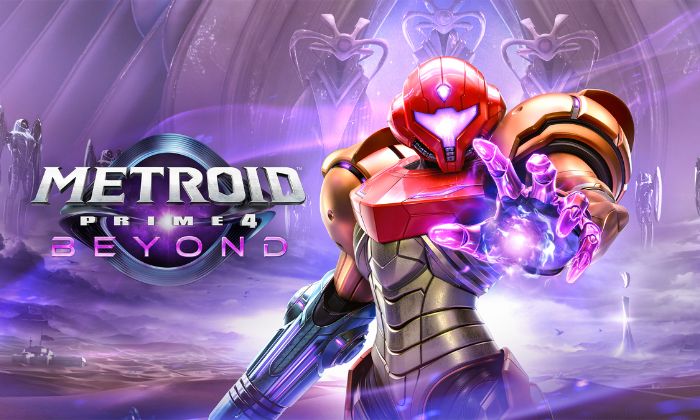
December 2, 2025The feeling of finally starting this game on the Switch 2 is almost surreal, and the best part is: it’s not just the realization of an old dream, it’s a game that holds up today, in 2025, side-by-side with the great modern titles, without seeming like a museum piece. From the first minute, Metroid Prime 4: Beyond makes it clear that it’s not interested in being just “more of the same in HD”. It opens with an explosive prologue, full of gunfights, spaceships, mechs, and a certain rival bounty hunter that fans have been hunting in secret endings for years. It’s almost as if the game is saying: “Calm down, the tutorial phase will be noisy, but I know why you came: atmosphere, exploration, mystery, and that feeling of being tiny on a gigantic planet.” And, thankfully, it delivers on that.
My entire playthrough was on the Nintendo Switch 2, mostly in TV mode, with the game set to Quality (4K at 60 fps). I’ll be blunt: it’s the ideal experience here. Metroid Prime 4: Beyond is one of those titles where you feel like pausing just to admire the scenery. On several occasions I stopped in the middle of an ice bridge, or at the edge of a lava lake, just to turn the camera and think: “What a great game!”…
Mechanics and Gameplay
Metroid Prime 4: Beyond is, first and foremost, a true Metroid Prime game. The backbone of the gameplay is what fans know well: first-person exploration, a huge focus on observing the environment, scanning everything, finding upgrades that open up previously inaccessible routes, and a careful blend of tactical combat and puzzle-solving.
The structure: huge biomes + desert hub
The campaign is structured around an alien planet, Viewros, which functions as a sort of “broken world” with distinct biomes. You have areas such as:
- A dense, humid forest, full of bioluminescent vegetation and ruins swallowed by nature.
- A complex of dark biomechanical factories, filled with machines pulsing purple and yellow lights.
- A frozen laboratory, with broken corridors, ice everywhere, animals trapped in capsules, and a feeling that something went very wrong there.
- A suffocating volcanic zone, filled with rivers of magma, platforms rising and falling between columns of lava, and abandoned machines struggling to avoid melting.
These biomes are interconnected by a vast central desert called Sol Valley. It’s the hub that connects everything, and it’s here that one of the game’s most striking new features comes in: the Vi-O-La space motorcycle, Samus’s vehicle.
Within the biomes, the game is pure Metroid Prime: interconnected corridors, rooms with secrets, areas you pass through and feel “I’ll have to come back here later with something new.” The desert, on the other hand, is a more open space where you travel long distances at high speed on your motorcycle, find small optional shrines, green crystal collection points, and some combat encounters.
In practice, this means the following: when you enter a main region, the feeling is like exploring a huge 3D “dungeon” in the style of Zelda, with several vertical layers, internal shortcuts, lots of things hidden in corners of the map, and a constant flow of “see, suspect, mark, come back later”. When you go out into the desert, the rhythm changes: you even have minutes of almost total silence, just you, the sand, some giant structures in the background, and the roar of the motorcycle.
This is both good and bad at the same time.
On the plus side, the structure of the biomes themselves is fantastic. Each one has a clear identity, both visually and mechanically. You go in knowing you’re going to learn something, get an important upgrade, face a memorable boss, and unlock another piece of the story of that planet and the Lamorn, the extinct alien civilization at the heart of it all.
On the downside, Sol Valley is too big and doesn’t always fill that space with activities that truly justify its size. The motorbike tries to ease the journey, and riding the Vi-O-La is enjoyable (I’ll talk more about it in a moment), but it doesn’t change the fact that, after the umpteenth round trip between the two poles of the desert, that feeling of “wow, huge planet” starts to turn into “okay, it’s taking a while to get here, isn’t it?”.
The Vi-O-La motorcycle: stylish, fun, underutilized.
Vi-O-La is something else entirely. The first time you get on the bike, give it a boost, and do an Akira-style drift on a dune, you automatically think: “I want a spin-off just for that.”
The controls are simple and functional:
- Left analog stick: direction.
- Acceleration button: accelerates in standard mode.
- Boost button: gives a turbo boost for a few seconds.
- Brake button + steering: generates those cinematic drifts.
- Motorcycle attacks: a lock-on shot that hits enemies at high speed.
Physics matters. It’s not a “floating cart”; you feel the friction, the motorcycle bounces slightly on uneven surfaces, and it gains stability after a few upgrades. In terms of feel, it’s one of the coolest things about the game. The problem is that, mechanically, it’s almost always “just” a means of transportation. There are some situations where the motorcycle becomes part of the puzzle (climbing specific ramps, accessing hidden shrines, combat while moving), but they are in the minority.
For much of the time, Vi-O-La is used to traverse vast distances in a desert that, even with a few points of interest, could easily be half that size. It has green crystals to collect (necessary for certain skill upgrades and an important requirement towards the end), ruins that hide short challenges, and mecha parts to find. But the density of content doesn’t match the size. This creates a clear dissonance: the motorcycle is incredible to control, but what you do with it doesn’t always live up to its potential.
Still, it’s undeniable that, especially at the beginning, speeding down the dunes, watching the distant biomes emerge on the horizon, is a very particular, very “solitary sci-fi” sensation.
Psychic Powers: Evolution, not revolution.
Metroid Prime 4 introduces a new layer to the gameplay: the Psychic powers, granted to Samus by an alien Lamorn crystal. Instead of completely replacing the old scanner, they are added to it, functioning as a kind of “psychic mode” for the visor.
These powers manifest themselves in various ways:
- Psychic Visor : reveals invisible platforms, Morph Ball tracks, and glyphs that you need to trace with movement to activate mechanisms.
- Control Beam : You fire a projectile and, for a few moments, time slows down while you manually control the trajectory of the shot. This is useful for both puzzles (hitting distant targets, avoiding obstacles) and combat (hitting weak points that are normally difficult to aim at).
- Psychic Lasso : a type of energy lasso that pulls shields off enemies, rips off sturdy door covers, manipulates parts of the scenery, and functions as a kind of special grapple beam at designated points.
- Psychic Bombs : You enter Morph Ball, load a special bomb, and then, in normal form, guide this energized sphere to distant bomb slots.
In practice, almost all of this is indeed a variation of things the series has already done: controlling projectiles, pulling objects, seeing invisible platforms, moving the Morph Ball with more freedom. But the way this is tied to the psychic theme and the Lamorn family gives it a good layer of identity, and most importantly: it expands the space for experimentation without breaking what already worked.
Many puzzles blend classic and new abilities. There are sections where you need to, for example, use the psychic visor to reveal a series of temporary platforms, jump from one to another, activate a mechanism with the Control Beam, and then roll as a Morph Ball along a newly activated track, all without falling. It’s that “core Prime” feeling recycled in a way that’s fresh enough to take you out of your comfort zone, but still recognizable.
Combat: less frantic, more cerebral
The combat remains 100% aligned with the Prime philosophy: it’s not a “pure reflex” FPS, like an arena shooter, but rather combat based on pattern reading, positioning, and intelligent use of skill.
Samus has:
- The classic Power Beam, with normal and charged shots.
- Missiles, now also used to trigger certain environmental locks.
- Elemental beams (fire, ice, electricity), which have a dual role:
- Offensive (freeze enemy, electrocute group).
- Environmental (turning on generators, freezing liquids, melting barriers).
- Quick side dodge, very important in boss fights.
- Psychic powers, which come into play to control projectiles, pull shields, slow down enemies, etc.
The combination of lock-on with fine free aiming (via gyro or mouse) shines brightly here. You lock onto the enemy with a button, but still need to manually adjust your aim to hit weak points that are often tiny or hidden. In boss fights, this is vital: some monsters are only vulnerable for seconds, in small windows of time.
Common enemies range from wild creatures with simple patterns to robots that teleport, hide, deflect shots, or attack in swarms. It’s not the most advanced AI in the world, don’t expect the behavior of a modern tactical shooter, but there’s enough variety to keep the game from becoming a festival of “same colored creature, different color”.
The boss fights, however, are the real show. Most of the big fights are built like an action puzzle. You enter, get hit, observe, scan, read the description, try something, feel that some newly acquired skill must be the key. Little by little, things fall into place: “ah, this is where I have to freeze this magma flow,” “this is the stage where I use the Control Beam behind the shield.” The feeling of finally fitting all the pieces together in a long fight is delightful.
In terms of difficulty, Metroid Prime 4 isn’t a brick wall. On normal mode, it’s challenging at times, especially with some of the later bosses, but rarely unfair. There’s a harder mode unlocked later, so those who want a tougher experience can go for it. Nostalgic fans might feel it’s a bit “gentler” than Prime 2, for example, but it never feels simplistic.
NPCs and the “Federation team”: more company than you’d expect.
One of the most talked-about changes is the presence of other characters, especially members of the Galactic Federation who were also dragged to Viewros. They appear:
- Such as support in cutscenes, conversations at the base, and on the radio.
- In combat segments where they fight alongside you.
- As an “explanatory voice” of mechanics and objectives.
Myles MacKenzie, the talkative engineer, embodies this more “modern” side of the narrative: he comments, makes jokes, and gives advice on where to go. For the most part, he fulfills this role without exaggeration, but at times he crosses that fine line between “helping” and “please let me make mistakes on my own.”
Personally, I think the game would have benefited greatly from a more granular option to disable only the radio navigation interventions. You can reduce tutorials in the menu, which already lessens the problem, but some lines of “maybe you should go back to that area” still appear. It doesn’t ruin the experience, but for those who enjoy getting lost on purpose in Metroid, it’s annoying.
The good news is that, in most of the main regions, you’re still alone. The structure is roughly like this: “campaign shooter” moments with NPCs, interspersed with long blocks of solitary exploration in the biomes. For me, the final balance was acceptable: they don’t ruin what makes Metroid Metroid, but they also don’t add as much as they could in terms of character depth.
Graphics
Visually, Metroid Prime 4: Beyond is a spectacle on the Switch 2. I played almost the entire time in Quality mode, at 4K and 60 frames per second in docked mode, and it’s the kind of game that seems tailor-made to showcase the difference between the two generations of the platform.
Art direction: each area looks like a sci-fi poster.
What’s most impressive isn’t just the resolution or frame rate, but the art direction. Viewros is a planet designed with an obsession for detail bordering on exaggeration. Some highlights:
- Forests : twisted trees with veins of purple energy, small creatures that scurry away when you approach, light filtering through translucent leaves creating colorful patches on the ground. At certain points, you see Lamorn towers in the distance, entirely sculpted from a material that looks like living marble, with lines of light flowing like miniature rivers.
- Ice Lab : Cracked wall with semi-transparent ice, cold lighting, broken tubes with frozen liquid “dripping” in the middle. Small effects like ice crystals forming on the surface of Samus’s cannon make everything more tangible.
- Biomechanical factories : structures that look like a cross between HR Giger and prog rock, conveyor belts carrying alien scrap metal, giant machines that open and close like mechanical jaws, all with lightning cutting through the sky and sparks passing close to the camera.
- Volcanic zone : rivers of lava with a convincing texture, heat waves distorting the air, smoke and ash flying everywhere, all contrasting with the intense glow of the elemental beams.
Samus’s visor is another highlight. The HUD is rich without being cluttered, and several subtle details enhance the immersion: water splashes, graininess when something overloads the system, light reflections that briefly reveal Samus’s face. Her hand reaching for her helmet in specific situations, such as intense cold, adds small animations that humanize the character without breaking the iconic silence.
Modeling, lighting and effects
The enemy models are meticulously crafted, especially the larger monsters and the bosses. Skin texture, shells, mechanical details—everything is meticulously detailed. In some cases, it’s almost intentionally “disgusting”: creatures with Metroids attached to their bodies, like tumors, are a striking visual highlight.
The dynamic lighting is outstanding. The way the game uses light and shadow to guide your gaze, instead of arrows or a giant HUD, is exemplary. Dark corridors open into rooms bathed in bluish artificial light; caves with only a small crack illuminating the floor, allowing you to see distant silhouettes. Several times I stopped just to slowly rotate the camera and observe how shadows were projected onto the surfaces.
Of course, not everything is perfect. Some minor details, like certain bushes or metal fences, still betray that the game was designed to be cross-gen. You see less defined textures in corners, repeated elements in the desert, but nothing that detracts from the overall brilliance.
Lamorn design and architecture
The Lamorn style is a show in itself. They have a ritualistic, yet technological look. The temples, towers, doors, and psychic devices blend organic forms with rigid geometries and circular symbols. It’s the kind of aesthetic that seems ancient and advanced at the same time, reinforcing that Samus is dealing with something much older and more sophisticated than the Federation itself.
In summary: on the Switch 2, Metroid Prime 4: Beyond is consistently beautiful. It’s not “photo-realistic,” of course, but within the stylized sci-fi genre, it delivers scenes that stay in your mind for a long time.
Sound
If there’s one thing Metroid never got wrong, it’s the soundtrack and ambient sound. Beyond not only maintains the level but, at various moments, feels like a love letter to the classic themes, mixed with bold new compositions.
Soundtrack: variation and identity
The trail embraces different styles according to each biome:
- Forests and ruins: ethereal themes, with subtle vocals and floating synths, almost a “dream pop sci-fi” feel.
- Laboratories and factories: more pronounced electronic beats, heavy bass lines, industrial elements, and subtle glitches.
- Ice Zone: more contemplative themes, with icy piano and pads, which greatly helped to reinforce the feeling of abandonment and isolation.
- Volcano: strong brass and percussion, something more aggressive and tribal, with echoes of classic themes from the series reimagined in grander arrangements.
The great thing is that, even when the music gets louder during boss fights or action set pieces, it never falls into that common “generic blockbuster soundtrack” trap. You recognize “this is Metroid Prime,” only more modern.
Sound effects and mixing
The sound effects are extremely satisfying: Samus’s charged shot has a loud crack, followed by an echo that fills the room; The sound of the Morph Ball rolling along the rails is metallic, but with an “organic” feel, as if the armor itself were vibrating; The creatures have their own sounds, ranging from the grunts and snaps of giant insects to the muffled, mechanical roars of drones.
The audio mix is very carefully done. At many points, the game allows itself to be almost completely silent, with only the sound of the wind, a few drops of water in the background, and perhaps a distant creak. When an enemy appears, the mere sound is enough to alert you even before you see it.
The dialogue is well dubbed (in English, with Portuguese subtitles), with competent performances from the Federation NPCs. It’s not Oscar-winning film dubbing, but it holds up well with the storytelling.
The only decision that still bothers me a little is the choice to keep Samus completely silent in all contexts, even when someone speaks to her directly. At times, it would be interesting to see at least a word, a minimal verbal reaction. Since this doesn’t happen, certain scenes feel a little strange, with the other characters chattering and her only responding with a nod or a stare. Still, it doesn’t ruin anything, it’s just a stylistic curiosity that might be worth reconsidering in the future.
Fun
“Fun” is always the most subjective part, but I like to think of it as: how excited I was to turn on the Switch 2 again, and how little I wanted to put the controller down.
And honestly, Metroid Prime 4: Beyond really grabbed my attention.
Exploring is rewarding.
Each new area brings that classic “unknown map” feeling to the screen, with few rooms revealed. The urge to open everything, find every secret item icon, and speculate “this empty corner of the map clearly hides something” is all there.
Finding upgrades remains a small, internal dopamine rush. Seeing an inaccessible red door at the beginning of the game and, hours later, returning with the right beam and finally seeing what’s inside is exactly the kind of reward that makes Metroidvania fans smile. The game also helps you avoid getting too lost: it has a map marking system, and later on, little robots appear to help locate uncollected items.
Strong rhythm in the biomes, lukewarm in the desert.
For the most part, the progression is quite enjoyable. You feel a good balance between freely exploring, solving puzzles, engaging in tense combat, and reading logs and absorbing lore. The problem is that, at times, this pace drops sharply when you’re forced to cross Sol Valley multiple times, especially if you still need to farm green crystals to meet some specific requirement near the end.
These “too deserted, not enough game” moments aren’t the bulk of the experience, but they’re enough for me to let out a deep sigh a few times, like “okay, let’s go through all this again.”
NPCs: sometimes they help, sometimes they hinder.
As a purely “fun” experience, the NPCs have their ups and downs. Some characters are charismatic enough to make certain missions more interesting. Seeing Samus working with a Federation sniper on a specific mission, for example, creates interesting cover situations, making you feel like you’re coordinating an operation in a hostile environment.
On the other hand, the excessive radio interventions and the parts where you need to take care of the AI’s life (reviving soldiers to avoid game over) can somewhat break the fantasy of the lone hunter. In some segments this adds tension, in others it just seems like an unnecessary anchor.
But, in general, the fun comes largely from what the series has always done best: solitary exploration, the gradual discovery of how the planet works, and that almost childlike pleasure of finding a secret path you had overlooked hours before.
Performance and Optimization
I tested the game exclusively on the Nintendo Switch 2, both in TV mode and in handheld mode, switching between Quality and Performance Mode.
Quality Mode (TV and portable)
On TV, running in 4K at 60 fps, Metroid Prime 4: Beyond is a beautiful example of what the Switch 2 is capable of. Throughout my entire campaign, I saw virtually no noticeable performance drops. Even in boss fights full of particles, lasers, and explosions, the frame rate remained stable.
On a laptop, running at 1080p at 60 fps in Quality mode, the experience was equally smooth. Of course, the smaller screen inevitably hides some fine details, but the overall sharpness is excellent.
For me, this is clearly the ideal mode for most players: the combination of fluidity with visual fidelity is a perfect fit for a game that relies so heavily on reading the environment and atmosphere.
Performance Mode (TV and portable)
Performance mode increases the frame rate to 120 fps (1080p on TV, 720p on laptop). Visually, the difference in fluidity is noticeable, especially if you’re the type who immediately notices any micro-stutter. In a quick inspection, I could see that the input is a little “drier,” more immediate, which may appeal to those who want to play in full-time mouse mode or focus on maximum precision.
On the other hand, you lose a fair amount of definition, especially in distant textures and fine details of the scenery. I personally preferred sacrificing the 120 fps and keeping the 4K, because the pace of Metroid Prime 4 doesn’t demand the kind of reflexes and millimeter-precise reading that would justify this trade-off for most people.
Loading and technical tricks
One curious thing is how the game hides almost all loading screens using classic tricks:
- Long elevators between dungeon sections.
- Short cutscenes of Samus entering or exiting the ship, with cannons in a “launch” style.
On the Switch 2, these moments are short and not particularly bothersome, but if you pay close attention, that’s where the transition between scenarios is happening. The result is an experience that, for the most part, feels quite seamless, without explicit loading screens every time a door is opened.
Stability
Throughout my entire playthrough, I didn’t experience any crashes, soft locks, or serious bugs. The most I saw were minor instances of somewhat strange physics (an enemy stuck in a corner, a bizarre ragdoll during a fall), but nothing that affected progress.
From an optimization standpoint, Metroid Prime 4: Beyond is solid. It’s not a “technical miracle” on the level of certain ultra-tuned PC games, but within the context of a cross-gen title running on hybrid hardware, it performs well.
Conclusion – Is Metroid Prime 4: Beyond worth it?
Metroid Prime 4: Beyond carried a huge weight on its shoulders. It wasn’t just “another game,” it was the return of something that many people had practically mentally said goodbye to. And, with all that, it still decides to be released at a time when the industry is saturated with open-world games, looter shooters, live service, battle royale, and so on.
What does it do? It goes back to its roots. It doesn’t try to reinvent the entire genre, it doesn’t try to be the “new everything.” It delivers an experience deeply focused on: Intelligent exploration; Well-thought-out environmental puzzles; Tactical and satisfying combat; A dense and melancholic sci-fi atmosphere; An alien planet that you feel truly exists, with history, layers, and scars.
At the same time, it takes risks in specific areas: it introduces a fast and stylish motorcycle to change the pace of the journeys, adds Federation characters with more presence, and introduces psychic powers that bring Samus even closer to the alien technology she is uncovering.
This boldness doesn’t always work. Sol Valley, the large desert hub, is impressive in the first few minutes, but loses impact after so many comings and goings. Myles’ interventions on the radio sometimes go too far. The ending relies on some lengthy sections that seem to exist more to increase the game clock than for narrative necessity.
Even so, when I look at the whole package, the overall result is very, very positive. In the moments when Metroid Prime 4: Beyond focuses on what it does best, it not only honors the series, but also shows that there is still room in the current landscape for “no-frills, no-online service, no-weird monetization” single-player experiences that rely on the player’s curiosity and the simple pleasure of discovering a hidden path.
If you like Metroid, Metroidvanias in general, contemplative sci-fi with hints of intense action, this game is practically mandatory. If you’ve never played Prime before, Beyond is still an excellent entry point, precisely because it balances classic elements well with modern conveniences (clear map, optional hints, fair difficulty curve).
Metroid Prime 4: Beyond isn’t perfect. But in a landscape where so many big projects come out broken, rushed, or incomplete, it’s a huge relief to see such a highly anticipated project arrive robust, polished, and with a clear vision of what it wants to be.
I came away from the journey in Viewros with the feeling that, yes, Samus is still “at her peak,” and that this game is both a great self-contained adventure and the beginning of a promising new phase for the series.
Do I recommend it? Absolutely.
Positive Points
- Incredible sci-fi atmosphere, with a very well-constructed sense of isolation and discovery.
- Huge, varied main biomes full of secrets, functioning as memorable 3D dungeons.
- Top-notch art direction, with excellent use of lighting and effects on Samus’s visor.
- A memorable, varied soundtrack that perfectly aligns with the Metroid spirit.
- Solid, tactical combat with intelligent use of lock-on, elemental beams, and psychic powers.
- Creative and challenging bosses, with battles that blend puzzle and action in a satisfying way.
- The Vi-O-La is a very fun motorcycle to control and very stylish, especially in the first few hours.
- Psychic powers expand the gameplay without breaking the classic formula of the series.
- Excellent performance on the Switch 2, especially in Quality mode (4K/60 fps).
- A great entry point for new players, without ignoring what long-time fans expect.
Negative Points
- Sol Valley, the desert hub, is too large and has a lower density of content than it could, resulting in tedious traversal.
- Collecting green crystals and repeatedly traveling to Base Camp sometimes feels like an artificial “grind” to lengthen the game.
- Myles MacKenzie’s radio interventions may annoy those who prefer to manage things independently, lacking a more direct option to mute only this type of tip.
- Federation NPCs, while functional, sometimes sound generic and shallow, without fully justifying the time spent focusing on them.
- Some parts of the ending feel stretched out, with less inspired sections that break the rhythm a bit before the climax.
- The lack of a truly robust free endgame after the credits means that saving time needs to be planned for those who want to complete 100%.
Rating :
Graphics: 9.5
Fun: 9.0
Gameplay: 9.0
Sound: 9.5
Performance and Optimization: 9.0
FINAL SCORE: 9.2 / 10.0


Facebook Comments