![Revolution Arena [English Version]](https://revolutionarena.com/english/wp-content/uploads/sites/4/2024/07/Revolution-Arena-ISSN-2966-2117.png)
Nioh 3 – Review
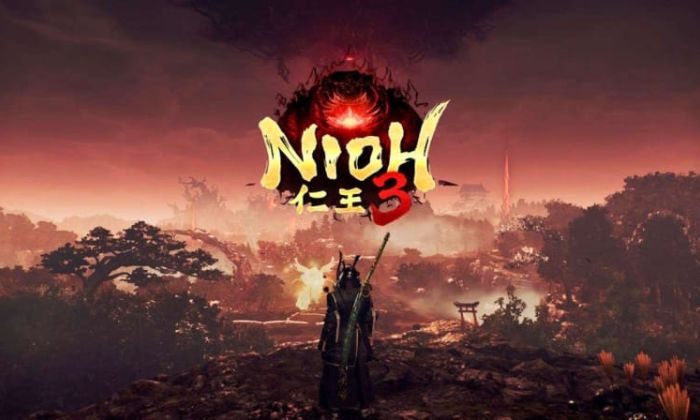
February 8, 2026I’ll be very direct with you: I started playing Nioh 3 thinking it would just be another dose of that good poison that Team Ninja has been serving up for years. Like, “okay, there will be yokai, there will be Ki, there will be people suffering and me too.” But after dozens of hours on the PlayStation 5, the feeling I got was different. Nioh 3 isn’t just “more Nioh.” It takes the classic elements the series has always used and rearranges everything in a way that changes the rhythm of the entire adventure.
What immediately grabbed me was how the game seemed to have been made with a simple idea in mind: to let me play my way, but without sacrificing the weight and tension that define the series. And this shows in everything. In the open-world structure that gives you freedom, but not peace. In the two-style system, Samurai and Ninja, which isn’t just decoration, it’s another real layer of strategy. In the sheer number of systems that exist simultaneously and yet gradually sink into your head until you’re doing absurd things without even realizing it.
This time, the story tries to be more than just “any old backdrop,” and I respected the ambition. You are Takechiyo Tokugawa, an heir about to be named shogun, and the family feud with his brother, Kunimatsu, becomes the trigger for a supernatural mess that spans eras of Japan. There’s time travel, corruption spreading “purgatories” across the map, reinterpreted historical figures, and that dark fantasy atmosphere that Nioh has always loved. I found the beginning strong, with tension and urgency, but along the way the plot wavers. At many moments, it works well as motivation and atmosphere. At others, it becomes almost noise, because the game knows that the true heart here is the combat.
And therein lies the truth: Nioh 3 is a game that grabs you by the collar and says, “Come play at being a machine.” And once you accept, it’s too late.
Mechanics and Gameplay
Open fields, but in true Nioh fashion.
The first major change is structural. Instead of that more “mission, back to menu, choose another mission” cadence, here I feel like I’m traveling through large, interconnected macro-areas, with clear objectives and a lot to do along the way. It’s not an open world in the style of “a giant, endless map.” It’s more like huge zones, full of paths, shortcuts, interior regions, and points of interest. And that changes everything, because Nioh has always been a game that shone when the level design intentionally put you in danger, and here it tries to do that with more space, more verticality, and more possibilities.
I really liked the size of these areas. They’re big enough to give me that “I’m going to see what’s over there” feeling, but not so huge that it becomes pointless walking. And the game is good at giving me reasons to explore: enemy bases, elites, minibosses that appear on the map and give that “if I get close, things are going to get bad” feeling, classic collectibles like Kodamas, combat events in arenas, NPC requests, and corrupted areas that function as a risk-reward challenge.
One mechanic that really hooked me was the exploration progression by region. As I clear activities and discover things, the game recognizes this with bonuses and rewards. This is the kind of incentive that transforms exploration into a real part of progression, not just sightseeing. And the best part is that exploration isn’t “just picking up items.” Often it leads you to good combat, to secrets, to a new shortcut, to an optional fight that can give you something that changes your build.
That being said, it’s not all perfect. There are indeed moments with more generic, checklist-like activities, and in some maps I felt a repetition of “the same type of task with different clothes.” But the combat is so good that even simpler content becomes an excuse to test out new weapons, styles, combos, and tricks.
Samurai and Ninja: it’s not an aesthetic choice, it’s another way of thinking.
The game’s biggest star, for me, is the Samurai and Ninja duality. It’s not a “class” in the traditional RPG sense, and it’s not just “switching movesets” either. It’s like having two complete characters in the same body, each with their own combat identity, weapons, skill trees, equipment, advantages, and limitations.
Samurai embodies the classic spirit of Nioh. You have high, medium, and low stances, and this remains one of the most delightful aspects of Team Ninja’s combat. Stance changes speed, damage, Ki consumption, and response options. The game still demands mastery of rhythm: you attack, you read the reaction, you manage space, and most importantly, you use Ki Pulse with precision to maintain pressure without exhausting yourself. Samurai also feels more prepared for head-on confrontation: blocking, parrying, deflecting, withstanding impact, punishing with heavy blows.
Ninja is the spice that changes the recipe. He’s more mobile, more aggressive in the “in and out” sense, and gives me tools that Nioh never had in this way. Instead of the traditional Ki Pulse, Ninja revolves around an evasion and repositioning technique, with a “mist” trick that deceives the enemy and can save you at the very end. Ninja also opens up the game to true stealth, critical attacks from behind, quick approaches, and a Ninjutsu package that changes the dynamics of encounters. Bombs, shuriken, traps, options to control space, and most importantly: tools that become relevant again in the middle of the fighting, without me having to constantly struggle with the interface.
What surprised me most is how the game encourages you to switch between styles. I was able to play long stretches focusing more on one style, but when the game gets tough, switching becomes a natural response. There are human enemies that I melted better with Ninja because of the rhythm and openings. There are large, brutal yokai that I preferred to face as Samurai for the stability. And when you start switching mid-fight, Nioh 3 becomes almost a technical dance.
The Red Counterattack and the combat that forces you to be brave.
Another thing that gives Nioh 3 a strong identity is the way it transforms switching between attacks into both defensive and offensive tools. You know those attacks marked with a red aura, which always signal danger? Here, responding to that at the right time, often by switching styles, becomes a devastating counter-attack that depletes the enemy’s Ki bar, reduces their maximum Ki, and opens a window for heavy punishment. This rewards reading and courage. It’s the game saying, “Don’t just play defensively, play counter-attacks.”
And the coolest thing is that this mechanic isn’t limited to just one or two enemies. It appears enough to become a real part of your brain during fights. When everything clicked, I’d enter that insane flow state: attack, switch stances, recover Ki, see the red lights, change styles, break the enemy, land a finishing move, use a supernatural attack, and keep going. It’s hard to explain without sounding exaggerated, but I really had moments where I finished a fight and thought, “I can’t believe I did that.”
Bosses, minibosses, and the “learn the hard way” philosophy.
Nioh 3 is packed with bosses. Main bosses, optional bosses, minibosses throughout the map, wave arenas, encounters that feel like “mini final exams.” I really liked that, because the game understands that the pinnacle of combat lies in confrontations that demand adaptation.
The best bosses here are the ones that punish you for carelessness, but also reward you for intelligent aggression. There are fights that seem impossible on the first few tries, and then turn into a lesson in rhythm. I also liked certain corrupted areas where the pressure increases, and you feel you need to play with initiative, because being passive wears you down and puts you in a spiral of error.
Not everything is perfect. Some bosses felt like they were “too cramped” for where they appear, as if they were designed with co-op in mind. And there’s that classic frustration of certain grabs and moves that seem to track you more than they should. Still, overall, I’d say it’s brutal, but fair most of the time.
Loot, builds, and the love-hate relationship of becoming an inventory manager.
Nioh has always been about “loot and katana-wielding spreadsheets,” and Nioh 3 continues to be that, now doubly so, because there are two playable styles with their own equipment. For those who love buildcraft, it’s a feast. You can assemble very different setups, play with bonuses, synergies, elemental effects, equipment weight, and everything else.
For those who don’t love it, it can get tiring. I had sessions where I spent too much time looking at numbers and comparing minimal variations. On the other hand, I also felt more options to reduce this friction, such as automatic organization and equipping functions, and quick ways to convert junk into useful resources. I still think the “flood” of loot makes a lot of things seem insignificant, but the game gives you better tools to deal with it without destroying the rhythm.
One thing I loved as an experimental player was the freedom to redistribute points and experiment. When I wanted to change weapons, switch build focus, or try a different playstyle, I didn’t feel restricted. That’s pure gold in a game with so much complexity.
Guardian spirits, Soul Cores, and the supernatural side that saves lives.
The supernatural remains an essential part of the kit. Guardian spirits return with abilities that complement your playstyle, and there’s a temporary ultimate mode that gives you a window of power and survival. I liked the fact that it doesn’t feel like a “win button.” It’s more of a tool. You use it to turn a fight around, survive an absurd sequence, or speed up a boss at a critical moment.
Soul Cores also come into play as a way to summon yokai attacks for a moment, and this is delightful when used strategically. It’s the kind of thing that, when you master it, makes you seem much stronger than your level actually indicates.
Graphics
Visually, Nioh 3 left me with mixed feelings, but overall, it was positive.
When a game wants to impress, it impresses. The art direction hits the mark perfectly with its dark fantasy blended with different historical periods. I loved how each era has its own identity, from areas with a more warlike and hot climate to frozen regions, illuminated urban districts, ruined villages, temples, caves, canyons, and corrupted areas that seem like another world. Several times I stopped just to look at a distant scene and think, “Okay, this is well-built.” And there’s that pleasure of seeing a distant structure and realizing that you can actually reach it.
The characters and yokai continue to be a spectacle in themselves. There are enemies with grotesque designs, sometimes even funny in their absurdity, and combat effects that make an impact. The new bosses, in particular, tend to be more visually striking.
Now, on the other hand: I also noticed inconsistency. In more open maps, in areas where the game clearly doesn’t want you to focus too much, simpler textures and less polished details appear. At times, I noticed pop-in and certain elements loading in a somewhat strange way. It’s not exactly ugly, but you can feel that the game is stretching an engine that doesn’t always keep up with its ambition.
Overall, I’d say Nioh 3 has strong art and a good variety of environments, but it’s not the kind of game that wins games based on realism or “technological wow.” It wins games based on style, identity, and visual clarity in combat, which is where it really matters.
Sound
Audio is one of those aspects I can’t ignore in action games, because it’s part of the combat feedback. And Nioh 3 does well in this regard, with a few caveats.
Dubbing and language
I tried out the English dubbing a bit and, honestly, it didn’t work for me. Some lines sounded strange, unnatural, and I felt it broke the mood. I switched to Japanese and it was a completely different experience. The Japanese dubbing has much more weight, fits the setting better, and makes even simple scenes more engaging. If you play on PS5 with good headphones or on a TV with decent audio, the difference is immediately noticeable.
Soundtrack
The soundtrack has some very powerful moments, especially during major confrontations and shifts in era, with instruments that give it a distinct signature. There are tracks that evoke both strangeness and grandeur, and this fits perfectly with the theme of traversing historical periods and ending up in places that “aren’t your own.”
But I also felt repetition in exploration and repeated boss attempts. When you’re dying and coming back, dying and coming back, a looping track can become a test of patience. Still, at the peaks, the soundtrack is very good.
Sound effects and combat reading
This is where the game truly shines. The sound of clashing steel, the crack of a well-executed deflection, the impact of a heavy blow, the warning of a dangerous attack—all of this helps to “read” the fight. The game is fast-paced and technical, so this sound feedback is practically part of the interface.
Fun
If I had to sum up my enjoyment of Nioh 3 in one sentence, it would be: I went in to suffer and came out addicted to getting better.
The game is brutal, but it gives me enough tools to feel like I’ve improved through merit. When I lost, I knew why most of the time. And when I won, I felt it was because I understood the rhythm, used the right style, explored ways to improve my build, or executed better.
The open-world layout helped a lot with that. I rarely got stuck in the same place without an alternative. If a boss blocked my progress, I had a natural “plan B”: explore more, clear an area I left behind, get exploration bonuses, find a new weapon, upgrade equipment, adjust skills, and come back stronger and smarter.
The duality between Samurai and Ninja is the driving force behind the fun. It prevents combat from becoming monotonous because there’s always a different way to approach the same threat. And when you really start switching between them, the game becomes a technical amusement park. I had periods where I preferred Ninja almost all the time. At other times, Samurai seemed safer. And I liked that the game accepts this, even if in certain fights it clearly pushes you to use both.
Now, there are aspects that can become tiresome. The repetition of enemies is noticeable, especially for those who have played the previous games. There’s also the repetition of some map tasks, and depending on how much of a completionist you are, you might feel “checklist fatigue” closer to the end. And the loot, even with improvements, can still get tiresome. But, in my case, none of that diminished the main fun, because the core gameplay is just too good.
Performance and Optimization
Here I need to be honest, because I played on PlayStation 5 and felt some fluctuations.
Overall, it’s playable, but it’s not the “smooth all the time” experience I’d like, especially when the maps become more open and crowded, or when there’s a lot happening on screen at once. I noticed stuttering and frame rate drops at specific moments, and that’s the kind of thing that can be disruptive in a technical game, because timing is everything.
I also noticed some strange scenery loading effects in certain areas, as if the game took a while to stabilize visual elements. It wasn’t constant enough to break the experience, but it happened often enough for me to mention it here.
I think it’s one of those cases where patches should improve it. However, as it stands, my impression is: the game holds up to its premise most of the time, but the ambition of open-world gameplay has come at a price. If you’re very sensitive to stuttering, this might be annoying.
Conclusion
Nioh 3, for me, is the point where Team Ninja takes everything they do best and transforms it into a game that finally breathes differently. The combat remains the strongest point and, without exaggeration, is among the most complete and rewarding in the genre. The Samurai and Ninja duality is an excellent idea because it not only adds variety but also changes the way you think about each fight. And the open-world structure was a very wise choice to provide freedom without losing tension, as well as making the progression more organic and less rigid.
The story tries to hold the player’s attention more than before, and I respect that, but it still falls short of the rest. It fulfills its purpose, has a strong start and good ideas, but often becomes a backdrop for the fighting that really matters. And, honestly, that’s okay, because the game doesn’t hide what it likes.
The problems exist and deserve to be mentioned: repetition of enemies and assets, some more generic exploration activities, excessive loot that can make equipment seem less special, and performance issues with drops and stutters at certain moments on the PS5. Even so, the overall package is fantastic.
I strongly recommend Nioh 3 to fans of action and soulslike games who enjoy technical combat, deep builds, and challenges that reward mastery. For newcomers, it’s also a good entry point, provided you’re willing to learn the systems and accept that the game will knock you down many times before you start dancing on top of yokai.
Positive points
- Extremely deep, aggressive, and rewarding combat.
- Switching between Samurai and Ninja really changes the game, it’s not just cosmetic.
- Inspiring bosses and intense encounters, with plenty of room to learn and master.
- Open field structure makes progression more organic and improves pacing.
- Rewarding exploration with relevant bonuses and upgrades.
- Excellent audio feedback during combat and far superior Japanese for immersion.
- Buildcraft is a gigantic platform with the freedom to experiment and readjust.
Negative points
- Repetition of enemies and reuse of content appears frequently.
- Some of the activities on the map are simple and may become tiring in the long run.
- Excessive loot makes many things seem unremarkable.
- Storytelling works, but it rarely becomes the focus of truth.
- Performance on the PS5 experiences drops and stutters during more demanding moments.
- Certain mechanics and systems could be better explained for beginners.
- The lack of a convenient way to save complete build loadouts can be frustrating for those who test a lot.
Rating:
Graphics: 8.6
Fun: 9.4
Gameplay: 9.6
Sound: 8.8
Performance and Optimization: 7.8
FINAL SCORE: 9.0 / 10.0
Facebook Comments