![Revolution Arena [English Version]](https://revolutionarena.com/english/wp-content/uploads/sites/4/2024/07/Revolution-Arena-ISSN-2966-2117.png)
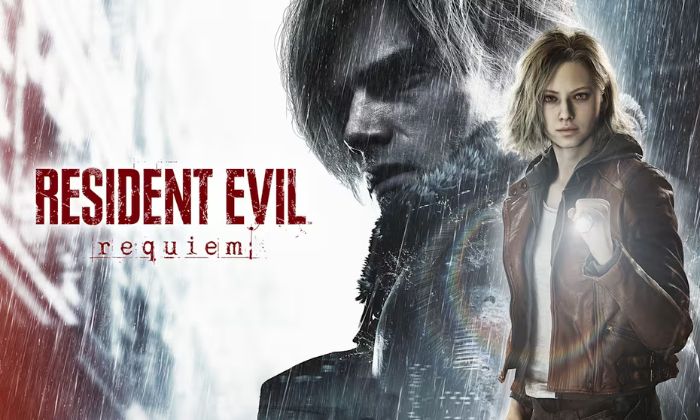
Resident Evil Requiem – Review of all versions (PS5 / PC / Xbox and Switch 2)
February 27, 2026Resident Evil Requiem carries three weights at once: it’s the ninth main installment, it’s the game that marks the series’ thirtieth anniversary, and it’s the title tasked with simultaneously closing one era and preparing the next. Capcom chose to do this without a reboot, without a drastic break, but by stitching together decades of lore, mechanics from different phases of the series, and horror styles that often went in opposite directions. The result is a game that shamelessly presents itself as a synthesis: it wants to be the Resident Evil of the 1996 fans, the Resident Evil of the 2005 fans, the Resident Evil of the 2017 fans. It wants to be a mansion and a narrow corridor, it wants to be a burning village, it wants to be an aseptic clinical laboratory that hides horrors worse than filth…
The starting point is seemingly simple, almost procedural: a series of mysterious deaths of survivors from Raccoon City, investigated by Grace Ashcroft, an FBI analyst with a past personally linked to the 1998 massacre, and by Leon S. Kennedy, the former rookie who became a symbol of the fight against biological threats and who now, three decades later, carries in his body and mind the inevitable erosion of someone who went through all that. The clues lead to the Wrenwood Hotel, the scene of a childhood trauma for Grace, and to the Rhodes Hill Chronic Care Center, a clinic that quickly becomes one of the most memorable spaces in the entire franchise catalog. From there, the narrative bifurcates and rejoins, alternating between Grace’s vulnerability and Leon’s brutal competence, in a structure that deliberately makes the player experience two distinct but interconnected types of horror.
While the structure is conceptually reminiscent of the multiple campaigns in Resident Evil 6, the execution is almost the opposite of that chaos. Here there is focus, clear limits, and a crystal-clear understanding that the secret to pleasing different audiences is not trying to deliver everything at once, but rather accepting that each protagonist will have their own style and rhythm. Grace is the face of fear, scarcity, and psychological horror. Leon is the face of experience, action, and the inevitable loss of wonder of someone who has seen too much, balanced by the emotional weight of memories of Raccoon City and an illness that corrodes him from within. Requiem is organized around this contrast, structuring specific mechanics for each, designing areas conceived for each style to shine, and, above all, trusting that the player will accept a campaign in which terror and catharsis alternate, instead of canceling each other out.
Over the course of approximately 10 to 15 hours on the first playthrough, depending on your exploration and chosen difficulty, the game will drag you through labyrinthine clinics, semi-open urban ruins, crumbling hotel interiors, suffocating tunnels, and waterlogged streets of Raccoon City, stitching together elements from almost everything the series has ever done. There are echoes of the Spencer mansion, the police station, the Spanish village, the Baker House, the Romanian village. There are stalkers reminiscent of Nemesis and Mr. X, mutations reminiscent of Crimson Heads, fan service for those who remember Alyssa Ashcroft, and room for those who only know the series from recent remakes. The crucial point is that, unlike a mere greatest hits compilation, Requiem rarely sounds like a lazy collage: what it borrows is filtered through a clear thematic logic, revolving around memory, guilt, and the inability to detach oneself from a toxic past.
At the same time, this ambition to embrace everything comes at a price. In terms of story, especially in the final stretch, the game overdoes it with plot twists, retcons, and retrospective stitching that will divide the community. Some see this as the catharsis needed to tie up loose ends scattered across decades of games, while others see an overloaded narrative, too dependent on nostalgia and hooks for the future. In terms of design, some specific experiments flirt with neighboring genres in a way that isn’t always organic. But, on average, Requiem is impressively self-assured. It’s a game that knows what it’s doing, that knows who it’s trying to please, and that, for the most part, delivers something that, honestly, seemed difficult for a ninth chapter in such an explored series: genuine freshness.
Mechanics and Gameplay
The heart of Resident Evil Requiem lies in how it divides and alternates gameplay styles between Grace and Leon. With Grace, Capcom embraces both classic survival horror and the first-person horror pioneered by Resident Evil 7. The Rhodes Hill Chronic Care Center functions as a large “modern mansion”: multiple floors, a basement, locked wings, gates requiring three medallions, elevators that only work with the correct combination of circuit breakers, and safes with codes hidden in seemingly trivial notes. The level design here is superb: each new key, magnetic card, or code unlocks a sequence of shortcuts and alternative routes, and the feeling of “mastering” the map gradually builds as the player internalizes the geography of the location. In parallel, the game refuses to let you feel safe in this domain, because the position and state of enemies change as you progress, and because an invincible pursuer, the gigantic deformed woman who roams Rhodes Hill, can transform a familiar corridor into a panic trap at any moment.
Mechanically, Grace is the anti-Leon. She starts unarmed, nervous, stumbling when she runs, with audible breathing that quickens when something approaches. When she gets a revolver and later a pistol, the amount of ammunition available is always too tight, and the enemies are tough enough to make you think twice before spending each bullet. Her inventory is limited in both space and flexibility: items occupy entire slots, the chest helps alleviate this, but never enough to allow you to carry everything you’d like. This forces constant decisions: is it worth carrying this specific key now, or is it better to save it and carry an extra herb combination? Should I keep a hemolytic injector with me or sacrifice that slot for more ammunition?
The great innovation of Grace’s sections is the infected blood system. With a specific device, she can drain puddles, buckets, and even the bodies of defeated enemies, collecting blood that serves as the basis for crafting. Combined with scrap, herbs, and other reagents, this blood allows her to manufacture ammunition, med injectors, steroids that increase maximum health, but above all, hemolytic injectors—syringes that make enemies literally explode into flesh and guts. Using this resource is an exercise in risk management: taking the time to drain blood in the middle of a kitchen where a mutant chef is wielding a cleaver is an invitation to disaster, but giving up this material leaves you with less ammunition and healing in later sections. Spending a valuable injector on a common zombie may seem wasteful, until you discover that that body, ignored on the ground, later resurrects as a Blister Head, the modernized equivalents of the Crimson Heads, faster, more aggressive, and harder to take down.
This layer of choice permeates the entire game with Grace. She is technically capable of killing almost anything the game throws in her path, but the design constantly rewards those who observe, learn movement patterns, identify enemies sensitive to light or sound, and use the environment and distraction tools to get through without fighting. Some zombies get stuck in pathetic and unsettling routines: a maid who cleans the same broken mirror until it bleeds, a security guard who obsessively turns off lights, a blind patient who goes mad with any noise. Learning to deal with them without resorting to confrontation is both mechanical and psychological survival. It’s rare for a Resident Evil to make the player think so much about “who these people were” while they’re still standing, and this gives Grace’s sections a unique texture of tragic horror, closer to Silent Hill in spirit, albeit with Capcom’s language.
Leon, on the other hand, arrives with the mechanical baggage of the Resident Evil 2 and 4 remakes, but with a deliberate refinement towards tactical action. His third-person control is fluid and responsive, and his arsenal grows rapidly: pistols, shotguns, rifles, submachine guns, special weapons, grenades, mines. The inventory returns to the Tetris briefcase format, which completely changes the management logic. Here, the challenge is not so much “does it fit or not,” but rather “how to optimize the briefcase to carry the largest number of tools of destruction without sacrificing diversity.” Weapons and accessories take up more space, but Leon has the freedom to assemble different loadouts by experimenting with combinations. The possibility of selling and repurchasing weapons at terminals allows you to readjust your style without being irreversibly punished.
The other central axis of Leon’s gameplay is the permanent hatchet. In practice, it replaces the disposable knife + contextual counter-attack combination from Resident Evil 4 Remake, but here it is both simpler and more expressive. The hatchet serves to finish off enemies on the ground, apply quick strikes that save ammunition, parry attacks, including those of some bosses, and trigger brutal contextual executions. Its durability is managed by a sharpening system: by pressing a combination of buttons, Leon “sharpens” the blade in real time, recovering its effectiveness. This means that, unlike knives that break, the hatchet is a constant pillar of Leon’s combat, encouraging the player to get closer to enemies, risking melee combat in exchange for saving bullets and creating openings for cinematic finishers.
To tie it all together, the game introduces a point system that converts kills into credits deposited in boxes scattered throughout the environments. Instead of collecting money as loot, Leon has a device that tracks kills and transforms them into resources for purchase. At the terminals, it’s possible to acquire new weapons, improve damage, rate of fire, capacity, buy extra ammunition, armor, and support items. This creates a progression cycle that rewards aggressiveness: the more areas you clear, the more powerful you become, but also the more comfortable the game feels in throwing hordes and elites at you. In certain parts, especially in the semi-open area of Raccoon City, Requiem comes close to the philosophy of Mercenaries, albeit within a campaign structure.
The alternation between these two styles is the secret to the gameplay. The game begins almost entirely from Grace’s point of view, with small insertions from Leon to remind you that he exists, which makes the first, more extensive playable encounter with Leon feel like revenge: after hours of being humiliated by zombies that corner you, you finally enter the same wing with a decent arsenal and transform the same corridors into massacre arenas. Throughout the campaign, especially in the final third, the game begins to switch more quickly from one to the other, sometimes maliciously: when you think “thank goodness I’m playing as Leon here, Grace could never handle this,” the narrative switches characters and forces you to face the same type of threat with the FBI analyst’s limited toolkit.
Not everything in the gameplay is untouchable. Some experimental segments with Leon, flirting with rail shooters and more traditional cover shooters, are interesting as variations but don’t fully integrate into the survival horror DNA. When the most efficient solution is to retreat to a position, throw grenades, and clear out a troop of armed humans as if it were any other game, the seams become apparent. Similarly, some encounters with Grace’s pursuer, near the end of her stay in Rhodes Hill, can fall into moments of calculated waiting that slightly diminish the initial impact of terror. Even so, the average is incredibly high. In terms of feel and control, weapon response, spatial awareness, and how the mechanics articulate with the emotional tone of each protagonist, Requiem achieves a balance that few long-running series manage to find so late in life.
Graphics
Resident Evil Requiem uses the RE Engine at a level that, honestly, seemed difficult to achieve within the same generation cycle as Resident Evil Village and the remakes of 2 and 4. On the most powerful platforms, what immediately stands out is the level of detail in the environments. The Rhodes Hill Chronic Care Center is a study in clinical decay: peeling paint on the walls, cold lighting that bursts into reflections on waxed floors, exposed wires, old medical equipment covered in dirty sheets, yellowed posters of hospital procedures, all filtered through a color palette that ranges from sickly green to pale gray. Each ward has its own visual identity, with subtle changes in color temperature and dirt density that help the player orient themselves without relying solely on the map. When the light fades and Grace’s flashlight becomes the only source of visibility, the contrast between the sharp beam and the deep shadows is enough to transform familiar corridors into something menacing again.
Raccoon City, in turn, is portrayed as a waterlogged and cruel ruin. The fine rain falling on destroyed streets, broken shop windows, overturned cars, and rubble creates a texture of chaos reminiscent of both the opening of Resident Evil 2 and more recent post-apocalyptic settings. In the semi-open sections, the scale of the buildings, collapsed bridges, flooded parking lots, and flooded alleys is impressive, especially when you realize that almost everything there is explorable to some extent, and not just background scenery. In revisited interiors like the RPD, the fidelity to the layout and atmosphere of the previous remakes is impressive, with small visual differences that make sense in the context of a police station devastated by a bomb years ago.
The main character models are top-notch. Leon’s face and body show signs of fatigue, with slight dark circles under his eyes, expression lines, and hair that, for the first time in a long time, doesn’t look like a rigid block stuck to his head. Up close, the hair still reveals some graininess if you start looking for flaws, but in the flow of gameplay, the overall look remains cohesive. The sparse beard, especially on PC and high-end consoles, has a level of detail that allows you to see individual strands illuminated by different light sources. Leon’s clothing accumulates blood dynamically, with splatters spreading across his vest, sleeves, and pants depending on where the blows land. When he gets wet, the fabric gains shine and weight, and the difference between dry and soaked is clear.
Grace, in turn, is animated with a sensitivity rarely seen in horror characters. The way she holds her weapon, the slight trembling in her hands, the panicked look that quickly glances behind her at an off-screen sound, the way she stumbles over crates or almost slips when turning too quickly in tight corridors: everything communicates fragility. In some builds and under certain lighting conditions, especially in less powerful ports, her face may appear slightly plastic in specific scenes, but this does not erase the impact of the facial animation in the main cutscenes. The transition between expressions of disbelief, dread, contained anger, and determination works and sustains many of the game’s dramatic moments.
The enemies are perhaps the biggest visual spectacle. Common zombies are a mix of grotesque horror and tragedy. The model variations are impressive: emaciated patients with protruding bones, nurses in blood-stained uniforms, security guards with torn vests, city dwellers in tattered everyday clothes. Each one has specific damage points that result in dismemberments far more precise than in previous remakes. Shooting an arm convincingly rips away flesh and bone, leaving a zombie limping after blowing out a knee changes its posture and center of gravity. The Blister Heads, when they awaken from the ground, display pulsating tumors that grow and explode in viscous textures, scattering fragments that stick to the scenery. In close-ups, it’s possible to see veins under the translucent skin of the tumors, a level of disgust designed to provoke physical discomfort.
Bosses and special creatures are scenarios in themselves. The giant cook, with an apron stained with dried blood and chunks of meat hanging from it, wields an enormous cleaver that leaves visible grooves on the surfaces it strikes. Grace’s pursuer, with elongated limbs and pale skin, has a design that always seems slightly off, with joints that move in almost human ways, but not quite. Encounters with certain giant monsters in more open sections make good use of particle effects, environmental destruction, and fire. The physics of fire and smoke, in particular, is noteworthy: flames blaze walls, smoke fills environments with density, and the flames interact with wind and explosions, albeit in scripted ways.
The use of lighting and shadow is consistent with what the RE Engine has been doing, but refined. On high-end consoles and PC, reflectors on wet floors, broken shop windows, and metallic surfaces of pipes and train tracks reflect light credibly, with quite convincing dynamic reflections without excessive brightness. On handhelds and the Switch 2, these elements suffer predictable cuts: simplified reflections, less defined shadows, and lower-resolution background textures. Still, the artistic core remains. Played in handheld mode, especially with headphones, the reduction in resolution is overshadowed by the smaller screen scale, allowing you to appreciate the frame composition and color palette without the jagged edges and blur being so bothersome.
If there’s one area where the game most clearly demonstrates the strain of running on weaker hardware, it’s the hair and some fine texture details. On platforms like the Switch 2, character hair reverts to the old problem of strands appearing as unnatural masses, with visible aliasing in certain scenes. In cutscenes, beards and small hairs can lose detail and look like blobs instead of strands. Similarly, in-game, explorable items exhibit strong jagged edges in some contexts. These are unavoidable visual compromises to maintain an acceptable framerate, and the game compensates by maintaining the overall quality of lighting and effects, which keeps the atmosphere well above average for a handheld.
Sound
If Requiem’s visuals impress, the audio closes in. The sound design is probably one of the biggest contributors to the impact of Grace’s sections. In the tensest parts of Rhodes Hill, the music often recedes almost entirely, and what remains is a web of meticulously crafted ambient noises. The dripping of water in pipes, the distant creaking of metal, a fan beating, the hum of a flickering fluorescent lamp, the muffled hum of a generator downstairs: all of this builds a sense of three-dimensional space that makes the player feel that any small additional sound is a potential threat. When the pursuer is close, the game relies on heavy footsteps, animalistic breathing, scratching on the ceiling, and occasionally that distorted laugh or phrase that signals her presence before you see her. With a good surround sound system, it’s possible to identify the direction and approximate distance of these sources, which becomes a gameplay tool. With headphones, the effect is even more immersive, and for people more sensitive to horror, this can be almost excessive.
The soundtrack is less obvious than in some classic Resident Evil games, but effective. In save rooms, calmer themes, with soft piano and subtle synthesizer textures, echo tradition without simply repeating old melodies. The goal there is to provide that sigh of relief, without letting the game completely lose its atmosphere. In Leon’s important battles, the music gains more body, with strong percussion, discreet guitars, and arrangements reminiscent of the Resident Evil 4 Remake soundtrack, but with more modern weight. In some moments of very exaggerated action, there could be an even more striking theme, a more heroic sonic signature, and this is perhaps one of the few points where the soundtrack falls short of what the series has already achieved in terms of musical memorability. Still, as rhythmic support, it works very well and rarely conflicts with what is happening on screen.
The original English dubbing is an absolute highlight. Nick Apostolides returns as Leon, delivering a performance that balances the character’s charismatic arrogance with a weariness that makes sense for someone who has spent decades dealing with biological weapons. His one-liners are still there, of course, and some action moments border on inside jokes about the franchise’s absurdity, but in the more restrained dialogues, especially with people connected to Raccoon City’s past, there’s a genuine weight that humanizes Leon beyond the meme. Angela Sant Albano, as Grace, is perhaps the greatest find in the cast. She conveys fear in an almost physical way: her voice falters at specific moments, the pace of her speech accelerates when the character is cornered, there are small hesitations that match the protagonist’s insecure body posture. In more emotional scenes, related to her mother and childhood traumas, she manages to avoid easy overacting, delivering something that sounds believable within an exaggerated plot.
In localized dubs, both Brazilian Portuguese and other languages offer good work, with particular emphasis on maintaining the personalities of the two protagonists. In Portuguese, there are minor adjustments to register to suit jokes and expressions, but overall the original intention is respected. Playing with original audio and Portuguese subtitles remains the best way to appreciate nuances, but those who prefer the fully localized experience will not find anything amateurish.
On the technical side, the use of spatial audio is exemplary on platforms that support this technology, and even on Nintendo’s handheld, with its limitations, the mix makes intelligent use of the available channels. The feeling of being surrounded by tunnels, for example, is reinforced by specific echoes and reverberations that vary according to the material of the walls. In the rain scenes in Raccoon City, drops hitting the asphalt, the metal of cars, the fabric of clothes, everything has slightly distinct timbres that combine to create a believable backdrop. Grenades, gunshots from different weapons, and chainsaws, when they appear, have a sonic weight consistent with the visual impact, and the noise of body parts hitting the ground completes the gore festival in a way that is satisfactory for those who enjoy this type of macabre detail.
Fun
Fun is perhaps the most subjective dimension of any analysis, but Resident Evil Requiem has a rare characteristic in the series: consistency. Throughout a campaign that, on the first playthrough, lasts between 10 and 15 hours for most players, it’s impressive how there are almost no sections where you look and think, “I can’t wait for this to end.” In previous games, it was common to have parts that became synonymous with wanting to skip them in replays: the sewers of Resident Evil 2 Remake, some specific stages of Resident Evil 5, chapters of more forced chases in Resident Evil 6. In Requiem, although some segments are clearly stronger than others, the minimum level rarely falls below “okay” and, on average, remains at “very good” and “excellent.”
With Grace, the fun comes from a peculiar place, that controlled masochism that defines survival horror. It’s the perverse pleasure of slowly opening a door, knowing there’s a good chance something uncontrollable is on the other side. It’s the adrenaline rush of deciding to try to cross a corridor with a Chunk patrolling, without wasting bullets, and realizing you’re holding your breath along with the character. Rhodes Hill’s design is masterful precisely because each new “conquest” of space is earned through sheer hard work: you memorize where specific zombies are, decide which ones you can kill and which ones are better contained with locked doors, assess whether to invest blood in an injector so a body never rises again or whether it’s better to accept the risk. It’s a type of fun that demands patience, attention, and a certain willingness to deal with frustration. Dying two steps from a save point because you underestimated a Blister Head is something that irritates you at the time, but after a sigh, it becomes a story you tell laughing.
With Leon, the pleasure is different. The first big horde where you realize you’re fully equipped and the game is giving you that “do whatever you want” moment is cathartic. Shooting enemies on the knees to watch them fall in slow motion while you approach with your axe to finish them off, shooting barrels to blow up entire groups, picking up the chainsaw that tormented you so much in Resident Evil 4 and returning the favor by sawing zombies in half: all of this is pure, guilt-free fun. Leon’s gameplay is finely tuned so that moments with dozens of enemies on screen don’t feel like unfair chaos, but rather like arenas to express mechanical mastery. Circulating through the semi-open Raccoon City, with objectives scattered around and freedom to decide the order, helps break the linearity in a healthy way, giving the player space to seek out extra challenges, secrets, hidden weapons, and more points.
The great merit of Requiem is realizing that these two types of fun can not only coexist, but feed off each other. After a tense half hour as Grace, traversing corridors almost blindly, it’s an almost physical relief when the campaign cuts to Leon in a scene where he jumps out of a window, destroys half a dozen monsters with a camera movement, and delivers a dry joke. The reverse is also true: after an almost ridiculous action set piece, with motorcycle chases and rocket launchers, returning to the heavy silence of a dark ward with Grace’s flashlight feels even more intense. This cycle of tension and relaxation rhythmically keeps the player engaged in the flow of the experience.
Replayability is another important factor in the fun here. Finishing the game once unlocks additional difficulty modes, specific challenges, and a reward shop fueled by CP, points earned by completing objectives such as finishing within a time limit, not using certain items, and defeating bosses in specific ways. For those who like to “platinum” or complete 100 percent, there are easily 20 to 30 hours of content, especially since the game encourages experimenting with slightly different routes, taking advantage of shortcuts opened by one character with another, and revisiting Raccoon City with a different arsenal. The absence of a Mercenaries mode at launch is felt precisely because Leon’s gameplay, in particular, seems like it would lend itself beautifully to short score matches. Still, the campaign itself already has moments that almost function as micro-Mercenaries, and it’s perfectly possible to spend hours more playing as a super agent just with the tools the base game offers.
Of course, there are players who won’t enjoy all aspects as much. Those who hate being chased by invincible enemies might find Grace’s sections less appealing, and those who can’t stand excessive action might turn their noses up at some of the more RE6-esque parts. The story, with its heavy reliance on references to older games and its attempt to stitch everything together at once, can also be a source of frustration for those who wanted something completely new, detached from the past. But taking the obvious target audience as a reference—fans of Resident Evil and horror in general—Requiem gets far more right than wrong in terms of fun, and does something rare: it’s a game that, after you finish it, makes you want to start again not only to see alternative endings or get trophies, but because the act of playing itself is pleasurable.
Performance and Optimization
In terms of performance and optimization, Resident Evil Requiem is a clear example of the maturity of the RE Engine. On higher-end platforms, such as PlayStation 5, Xbox Series X, and PCs equipped with modern graphics cards, the game runs with impressive stability. On consoles, the standard mode targets 60 frames per second at high resolution, approaching 4K, and most of the time it consistently achieves this goal. During hours of gameplay, it’s rare to notice perceptible framerate drops in common environments. When the engine is put under stress, with dozens of simultaneous enemies, intense fire, heavy rain, and debris particles filling the screen, it’s possible to feel some occasional drops, but they tend to be smooth, with good frame pacing management, which avoids that “stuttering” effect that breaks immersion.
On PC, the situation obviously depends on the hardware, but with a robust machine it’s possible to activate advanced features like path tracing, more sophisticated reflections, and high-quality filters while maintaining a stable 60 fps at 1080p or 1440p resolutions. The engine scales well across multiple cores, handles texture streaming efficiently, and offers enough options for those who like to fine-tune. Upscaling technologies like DLSS/GPU equivalents help maintain fluidity without sacrificing too much visual detail. There are no consistent reports of memory leaks, serious leaks, or widespread crashes on standard configurations, although, as with any major release, some users may encounter specific driver and hardware combinations that require patches.
The Nintendo Switch 2, being the weakest hardware in the group, is the litmus test for Requiem’s optimization capabilities. And here Capcom surprises positively. In docked mode, the game aims for 60 fps, but in practice operates in a range between 40 and 60, frequently stabilizing around 45 to 50 fps in normal gameplay. The use of image reconstruction techniques and an upscaler like DLSS helps keep the image clean enough on a television, even with a lower internal resolution. More noticeable drops occur at very specific moments, usually in scenes with dense fire filling the screen or in large areas of Raccoon City with many active entities. In at least one area, after using a zipline, the framerate may behave erratically for a few seconds before stabilizing. Still, these events are isolated and do not represent the average behavior of the version.
Interestingly, in portable mode, the game tends to perform even better in terms of fluidity. The resolution noticeably drops, textures and effects are simplified, reflections are reduced to much cheaper versions, but the engine seems more comfortable maintaining 60 fps or something very close to it most of the time. On the smaller screen, the visual difference compared to the docked mode is diluted, making the portable experience one of the highlights of the Switch 2 version. Played in the dark, with headphones, portable Requiem is terrifying enough to make many people reconsider whether they really want to take that horror to bed.
Not everything is perfect. In some Switch 2 builds, there are reports of curious visual glitches, such as weapon slings stretching incorrectly on character models, and at least one isolated instance of an interface bug that prevented access to the menu until the game was closed and reopened, forcing players to repeat a section. These problems are not frequent, but they do exist. The quality of hair and some fine texture details on all smaller platforms is another symptom of this prioritization of stability: it’s a conscious visual sacrifice to maintain an acceptable frame rate, especially on portable hardware.
One positive aspect is the significant absence of stuttering due to streaming data, even in semi-open areas. The RE Engine has gone through several optimization cycles throughout this generation, and Requiem seems to reap the benefits: area transitions are smooth, hidden loaders in door and elevator animations are short, and there are no long pauses that interrupt the flow of the game. On the PlayStation 5, support for specific DualSense features such as detailed haptic feedback and adaptive triggers is implemented carefully. The feeling of rain on the controller casing, the differentiated recoil of each weapon, the weight of heavy footsteps on the floor through localized vibrations reinforce immersion without falling into obvious gimmicks. On the Switch 2, HD Rumble is used similarly, with enough subtlety not to become a carnival.
From a macro perspective, Requiem is a technically very well-tuned game. There are noticeable cuts on less powerful platforms and some occasional hiccups here and there, but for a title that arrives simultaneously on high-end PCs, home consoles, and handhelds, with the level of visual fidelity and content density it presents, the overall stability is impressive. The predominant feeling is of a polished product, with most of the engine’s resources properly tamed and directed to where it matters.
Conclusion
Resident Evil Requiem is, without a doubt, one of the highest points the series has ever reached as a game. It isn’t, and doesn’t try to be, a revolution in the mold like the original from 1996, the fourth episode in 2005, or the seventh in 2017. Instead of reinventing the wheel, it chooses something more difficult: reconciling eras, styles, and audiences without collapsing under its own weight. By placing Grace Ashcroft and Leon S. Kennedy as mirrors of each other, the game manages to summarize two decades of Capcom’s design experiments in a campaign that rarely loses its pace. Grace’s vulnerability, translated into mechanics that emphasize scarcity, fear, and careful environmental reading, returns to the series a type of horror that many fans have been missing since the mansion and police station days. Leon’s firepower and experience, translated into luxurious, responsive, and varied action, show that Capcom has learned a lot from its successes and failures in the transition to action horror.
The plot is both a strength and a point of friction. For those who have lived Raccoon City since the PlayStation 1, followed obscure spin-offs, memorized names like Alyssa Ashcroft, and witnessed reinterpretations in remakes, Requiem is an orgy of fan service. It returns to iconic locations, recontextualizes events, and gives new meaning to incidents that seemed like mere background. It ties together the Umbrella, government, and special agent plots more cohesively than the series average, while planting seeds for the future. For newcomers, it still works as a story of two people trying to survive a biological terror, but there’s a real risk of confusion given the avalanche of references. And for some fans, the desire to “fix” everything via retcons and big revelations may seem excessive, almost as if the series is afraid to cut umbilical cords and move on to something truly new.
In purely recreational terms, however, any doubts dissipate. Few Resident Evil games have managed to maintain such a consistent campaign in terms of gameplay, and even fewer have been so generous in terms of variety of situations without losing the thread of the story. Requiem rarely drags, knows when to end a segment before the trick wears off, and offers enough challenges to satisfy both those who enjoy playing in normal mode, appreciating the story, and those who want to test limits in classic modes with ink ribbons and ultra-limited resources. The post-game, with challenges, CPs, and unlockable rewards, encourages replays without seeming like empty recycling.
In technical terms, it’s a clear showcase of what the RE Engine can do in 2026. On PlayStation 5, Xbox Series, and powerful PCs, it reaches a level of audiovisual fidelity that puts the series alongside other giants of the genre, such as The Last of Us and Alan Wake 2, with its own distinct identity. On the Switch 2, even with visual sacrifices, it offers an impressively close experience, enough to make Nintendo’s handheld a legitimate platform for those who want to experience horror more intimately. The graphical concessions, the occasional performance drops, and the few bugs that appear here and there are minor blemishes on a very solid overall picture.
Requiem doesn’t resolve all the existential dilemmas of a thirty-year series. It still looks too much to the past, still relies too much on Umbrella to define who it is, and still fears daring a radical narrative shift. But it does something that is perhaps even more important at this moment: it proves that Resident Evil still knows how to be deeply fun, tense, emotional, and surprising within its own rules. If this is the end of the Raccoon City and Umbrella era, it’s a worthy end. If it’s just the last great chapter before a new cycle opens, it’s an excellent transition point.
Recommended? For any Resident Evil fan, the answer is a practically mandatory yes. For those who enjoy survival horror, even without prior experience in the series, it’s one of the most complete and well-produced experiences available today. For those who prefer pure action, there are other games that might better satisfy that desire, but even so, Leon’s campaign here delivers action on a level that few horror titles can match. Resident Evil Requiem, with all its exaggerations and contradictions, proves that the old monster is still breathing strong.
Positive points
- Excellent balance between survival horror and action, with two clearly distinct and equally well-executed gameplay styles;
- Grace is an excellent new protagonist, human and vulnerable, with unique mechanics that reinforce her emotional arc;
- Leon delivers the most refined third-person combat in the series, with a varied arsenal, permanent hatchet, and a well-balanced sense of power;
- The level design of Rhodes Hill and the semi-open Raccoon City is inspired, blending classic maze elements with more free-flowing exploration;
- Impressive graphics and art direction on consoles and PC, with excellent use of light, shadow, gore, and environmental detail;
- Top-notch sound and voice acting, with efficient spatial audio and remarkable performances, especially from Grace;
- The campaign’s pace is consistent, without any clearly tedious long stretches, encouraging replays;
- The system of infected blood and hemolytic injectors creates a tense cycle of risk and reward;
- A good amount of post-game content, challenges, and unlockables that extend the game’s longevity;
- The Switch 2 port is surprisingly competent, especially in handheld mode, while maintaining the essential experience.
Negative points
- A story overloaded with fan service, retcons, and cliffhangers that may confuse newcomers and divide veterans;
- Some segments of more linear action and combat against human enemies deviate from the survival horror DNA;
- The absence of a Mercenaries mode at launch, despite the enormous potential of Leon’s gameplay;
- Visual cuts on less powerful platforms, with fine hair and textures suffering from aliasing and loss of detail;
- Occasional framerate drops in very demanding scenes, especially in certain areas on the Switch 2;
- A few isolated bugs, but annoying when they occur, forcing repetition of sections;
- The puzzles, while well integrated, could be more numerous and complex for those who feel the need for a more demanding brain activity.
Review – PlayStation 5 Version
On PS5, Resident Evil Requiem is, in practice, the “standard” console benchmark. Visually, it’s top-notch, with lighting, textures, gore, and animations that are state-of-the-art for the series, and the framerate stability remains solid most of the time. The use of the DualSense (triggers, haptic feedback) greatly enhances immersion in both Grace’s terror and Leon’s action. This is where the complete package feels most “well-rounded” without needing any adjustments.
Graphics: 9.5
Fun: 9.5
Gameplay: 9.5
Sound: 9.0
Performance and Optimization: 9.0
FINAL SCORE (PS5): 9.3 / 10.0
Review – Xbox Series X Version
On the Series X, the game offers virtually the same visual level as the PS5, with minor differences in sharpness in certain scenes and anti-aliasing behavior, but nothing that significantly changes the experience. The framerate also remains very stable at around 60 frames per second, with rare slight drops in extreme situations. The absence of the DualSense’s adaptive triggers is compensated for by good rumble and the overall quality of the surround sound. In practice, it’s a very faithful mirror of the PS5 in terms of gameplay.
Graphics: 9.5
Fun: 9.5
Gameplay: 9.5
Sound: 9.0
Performance and Optimization: 9.0
FINAL SCORE (Xbox Series X): 9.3 / 10.0
Review – PC Version
On PC, Requiem reaches the technical ceiling of the RE Engine for those with capable hardware. With a modern graphics card and decent CPU, it’s possible to play with maximum textures, refined shadows, high-quality reflections, and even heavy features like path tracing at 1080p or 1440p resolutions at a stable 60 fps. The visuals are noticeably sharper than on consoles, especially in hair, beards, metallic surfaces, and volumetric effects. Mouse and keyboard work well for those who prefer this setup, but the game also shines with a controller, bringing the experience closer to consoles. The point where the PC might lose a step is in the inevitable variability: more modest machines require more aggressive adjustments, and it’s easier to find driver and hardware combinations that cause minor problems until patches fix them.
Graphics: 9.7
Fun: 9.5
Gameplay: 9.5
Sound: 9.0
Performance and Optimization: 9.0
FINAL SCORE (PC, on a powerful machine): 9.4 / 10.0
Review – Nintendo Switch 2 Version
On the Switch 2, the analysis is different: the question isn’t “is it as beautiful as on the PS5?”, but rather “how much of the game and its feel is maintained on a less powerful portable device?”. The answer is: surprisingly a lot. In docked mode, the game aims for 60 fps and, in practice, maintains itself mostly between 40 and 60, with noticeable, but generally smooth, drops in scenarios with intense fire or a lot happening at the same time. In portable mode, the resolution visibly drops, but the fluidity improves and the smaller screen masks most of the cuts. The result is an experience that preserves the horror, action, and atmosphere in a format you can take anywhere. The sacrifices are clear: fine hair and textures with aliasing, some isolated visual bugs, one or two areas with uglier frame rate drops, and inevitably, a less clean visual style than on the larger consoles. Still, considering the format, it’s a very strong port.
Graphics: 8.5
Fun: 9.5
Gameplay: 9.5
Sound: 9.0
Performance and Optimization: 8.5
FINAL SCORE (Switch 2): 9.0 / 10.0
Summary to help you decide which version is best for you:
a) If you’re looking for the best possible image and have a powerful PC, the PC is the absolute best option, offering slightly more sharpness and advanced graphics options.
b) If you want simplicity, comfort, and a super consistent package, PS5 and Xbox Series X deliver the “ideal couch experience,” practically equivalent.
c) If true portability and playing in the dark lying down are more important to you than perfect resolution, the Switch 2 offers a surprisingly close Requiem to the home console versions, with some technical compromises, but without cutting content or ruining the horror. Truly, Capcom worked magic delivering the game on the small Switch 2, comparable to the enormous home consoles from Sony and Microsoft.

Facebook Comments