![Revolution Arena [English Version]](https://revolutionarena.com/english/wp-content/uploads/sites/4/2024/07/Revolution-Arena-ISSN-2966-2117.png)
The day the world ended: how The Last of Us shows the first minutes of humanity’s end
May 14, 2025A harrowing dive into the game’s prologue and episode 1 of the series. How Sarah’s death shaped Joel – and the world!
When the end comes not with a bang, but with a tragic whisper
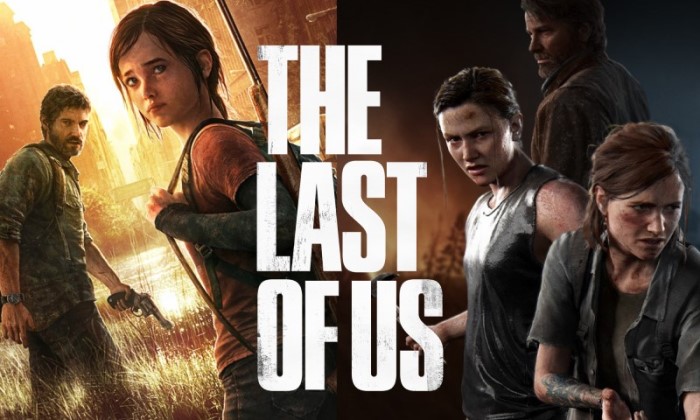
Few works of pop culture have captured the beginning of humanity’s end as vividly as The Last of Us . In both the 2013 game and the 2023 HBO adaptation, the story’s prologue is more than an introduction: it’s an emotional punchline, a visceral portrait of real-time societal collapse and the birth of a new world, cruel, without rules and without hope.
In this Revolution Arena special feature , we dive into the powerful and harrowing narrative of the first few minutes of The Last of Us , exploring the subtleties of the story, the symbolism of the fall of civilization, and the psychological impact of Sarah’s death—the event that defines everything Joel would become from then on. Prepare to relive the day the world as we know it ended.
The Ordinary Day That Became Tragedy: September 26, 2013
It’s an ordinary morning in the suburbs of Austin, Texas. Joel is late for work, and Sarah — his 12-year-old daughter — surprises him with a birthday present: a watch. The seemingly banal scene is one of the most sensitive moments in the story, full of love and humanity. What no one knows is that this would be the last birthday that the two would spend together .
What follows is a tense, meticulously planned build-up, in which subtle signs that something is wrong begin to appear: ambulances passing by, sirens in the background, a news report interrupted by an explosion. Terror infiltrates like an invisible virus — and that’s exactly what it is. The Cordyceps fungus has begun to infect the population, and the world is falling apart before people even realize it .
The apocalypse seen through the eyes of a child
One of the greatest successes of the original game — and one that is masterfully maintained in the HBO series — is showing the collapse of civilization from Sarah’s perspective . Instead of gunshots, explosions, and chaos, we see confusion, fear, and disbelief. This narrative choice is not without reason: it heightens the emotional impact and makes the player (or viewer) identify with the helplessness of someone who doesn’t understand what’s happening.
In HBO’s adaptation, this effect is magnified: we follow Sarah going to school, visiting neighbors, watching TV. Small details hint that something is wrong — but no one wants to accept it . When everything falls apart, the transition is brutal: from everyday life to the struggle for survival, in a matter of hours .
The road, the bridge and the inevitable
The escape sequence is a cinematic spectacle. Joel, Sarah and Tommy (Joel’s brother) try to escape the city as it turns into a war zone. Fires, collisions, people running in panic. The camera, in the game, remains in first person inside the car, and in the series, it follows the same principle: the audience does not watch the chaos – they live it .
But it’s when the bridge is blocked and they have to continue on foot that tragedy strikes. Sarah injures her leg. Joel carries her. They’re being chased by infected. They encounter a soldier. And then comes the moment that would forever change not only Joel’s life, but the entire emotional atmosphere of The Last of Us : the gunshot.
The soldier is ordered to kill. Not infected. Not monsters. Just people trying to survive . The shot comes. Sarah is hit. And she dies in her father’s arms. Joel’s desperate cry resounds like the announcement of the new world: humanity is over. Only pain remains.
The Birth of the Broken Man
From that moment on, Joel dies inside. Decades pass and he emerges as a cold, hardened smuggler, oblivious to emotions. He is the same man, but with a hole that will never be filled. The Last of Us does not build its protagonist as a hero — but rather as a traumatized man, who has lost everything and refuses to love again .
Sarah’s death is not just a narrative device. It is the zero point of a society that has stopped believing in the future. It is the point at which empathy disappears and survival becomes the only law. Joel represents this new era. A world where losing someone is inevitable — and holding on is a dangerous weakness.
The Echo of the End: Joel, Ellie and the Second Chance
Years later, when Joel meets Ellie, the bond he tries to avoid begins to form. But Sarah’s shadow is present in every gesture, in every moment of doubt. Ellie is his second chance—but also his greatest fear. The fear of losing again. The fear of loving again.
This duality is the emotional engine of The Last of Us . And it all began that day. That night Sarah fell. That order given over the radio. That faceless gunshot. The apocalypse may have been caused by a fungus, but what truly destroyed humanity was the breaking of everything that made it human : empathy, compassion, family, innocence.
The end of the world didn’t come with zombies — it came with mourning
The Last of Us ’ prologue is perhaps the most powerful one ever created in a modern game . It needs no grand explanations, no long scientific expositions. It simply shows the world falling apart through the eyes of a child—and invites us to remember that ruin begins not with monsters, but with human decisions, despair, and loss .
The genius of the series and the game is to make us feel all of that — as if it were real. Because, deep down, we know it could be. And maybe, somewhere, it already is.
Did you like this article?
Keep following Revolution Arena for more in-depth content on games, pop culture and the topics that make us think — and feel.