![Revolution Arena [English Version]](https://revolutionarena.com/english/wp-content/uploads/sites/4/2024/07/Revolution-Arena-ISSN-2966-2117.png)
TOP 100 – Best Nintendo Switch Games
January 27, 2026The 100 Best Switch Games!
The Nintendo Switch, officially released on March 3, 2017, has carved out a truly unique space within the gaming universe. It wasn’t just the ability to switch between portable and docked modes that transformed the console into a mega-phenomenon; what truly made the Switch stand out was the sheer strength of its catalog. These are experiences that leave a lasting impression, that surprise with their creativity, that challenge with their quality, and that demonstrate how it’s still possible to reinvent entire genres without losing the fun magic that only video games offer.
After years of exploring every corner of this console, testing hundreds of games, facing bosses, conquering chaotic tracks, immersing myself in worlds and getting lost in storylines that could only exist in games, it became clear to me that it was time to make a TOP 100 list of this wonderful console, and this made me realize that choosing only 100 games is a different and extremely difficult kind of challenge. The Switch is a console that overflows with everything good, especially many games full of creativity. It’s a video game that brings together a very high number of masterpieces that have marked the industry, surprises that no one saw coming, and games that, even with simple ideas, deliver such memorable experiences that they become a part of us.
What’s most interesting is how the Switch has become a meeting point for completely different styles. It hosts gigantic productions, packed with content, but it also gives a stage for small independent studios to shine with some of the smartest projects of the decade. It’s this balance between the simple and the grand, the experimental and the traditional, the comfortable and the unexpected, that makes the console’s library so fantastic and appealing to all types of audiences.
And each game in our Top 100 has a special reason for being there. Some are present because they redefined what their genres can offer. Others because they provide such a good feeling while playing that it’s hard to put the controller down. There are also those that stand out for small details, from breathtaking graphics and art direction to surprising mechanics that change the way we think about game design. It doesn’t matter if it’s a gigantic RPG, a stylish adventure, a precise side-scroller, an irresistible musical game, or a work of pure and intense action. What they all share is the ability to remind us why we love this hobby so much.
The Switch delivers something very rare. Every time you turn on the console, there’s a real possibility of finding something completely new. The catalog is so vast and varied that there always seems to be another world to explore, another system to master, another hidden surprise waiting to be discovered. It was precisely this feeling that motivated me to create this list. This is definitely not just a ranking; it’s a true way to recognize titles that made the console shine and that, over time, have defined part of what it means to be a Nintendo fan in recent years.
Get ready to revisit unforgettable adventures, remember intense moments you experienced in front of the screen, and even discover some gems you may have missed. This is the kind of list that not only highlights great games but rekindles the desire to play them all again. And if you’ve never had the chance to try some of these titles, you can bet you’ll find recommendations that are truly worth your time.
Now it’s time to dive into the best that the Nintendo Switch has to offer; so, let’s get to the special. Because the Switch still has a lot to show, and these are undoubtedly its greatest treasures!
So, check out ours:
TOP 100, WITH THE BEST NINTENDO SWITCH GAMES:
100 – Death’s Door
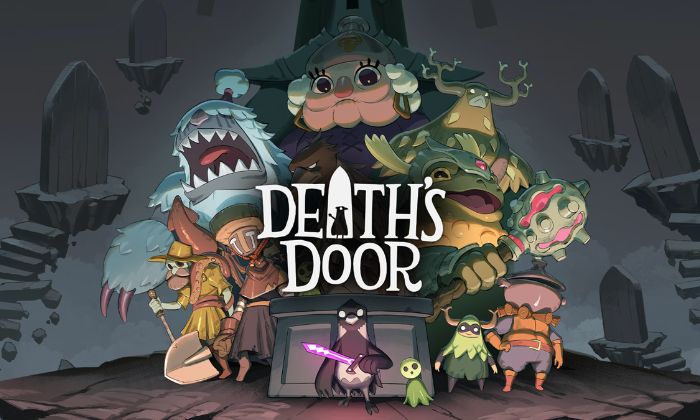
Death’s Door is the kind of game you start “just to see what it’s all about,” and before you know it, you’re completely hooked by the dark yet cute vibe of the universe. You control a reaper crow who works by clocking in to collect souls, but the routine goes out the window when your target soul is stolen and you have to hunt down the culprit. From there, the game throws you into a world full of mysterious places, strange and charismatic characters, secrets hidden in every corner, and a constant sense of discovery, as if every door could lead to something important. The story is simple at its core, but it has a melancholic and intelligent atmosphere, with just the right amount of dry humor, the kind that makes you smile while the world around you remains somewhat sad and dangerous.
In terms of gameplay, it blends action with exploration in an isometric view, in an adventure style with dungeons and shortcuts, but with very direct and enjoyable combat. You attack with a sword and unlock options like bow and magic, as well as dodging abilities that become essential when the game gets tough. The cool thing is that the fights have a very “learn by doing” rhythm: enemies hit hard, groups surround you, and you need to be quick, choose well when to advance and when to retreat, and use the environment to your advantage. And when the bosses arrive, the game intensifies: they are battles with attack patterns, short windows to counter-attack, and that delicious tension of being one mistake away from losing everything, but knowing that you can turn it around if you concentrate. There is also character progression, with attributes to improve, and this helps to customize your style, whether more aggressive, more resistant, or more focused on ranged attacks.
What truly makes Death’s Door stand out is the overall package: the art direction is beautiful, with scenarios that seem simple from afar but are full of detail and personality, and a palette that blends the cute with the sinister without feeling forced. The soundtrack complements it very well, alternating between tranquil and melodic moments with tracks that make the dangerous areas even more tense. On the Switch, it’s perfect for playing in short or long sessions because the exploration and combat structure works very well on the handheld: you always feel like you can “do just one more area,” find just one more secret, defeat just one more mini-boss. In the end, it’s a game that delivers sharp action, an intriguing world, and a respectable atmosphere, the kind that makes you want to finish it and then recommend it to everyone.
99 – The Messenger
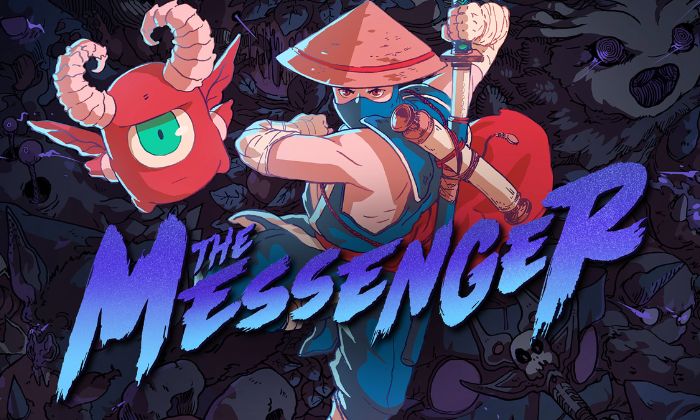
The Messenger is the kind of game that starts out looking like a classic “old-school 8-bit ninja” game, but quickly reveals that there’s much more hidden beneath. You control a young ninja tasked with delivering a vital scroll to save his clan, but this simple mission transforms into an adventure full of twists and turns, sharp humor, and an ever-expanding world. It has the energy of an old-school video game in the best sense, with polished pixel art, an addictive soundtrack, and that “just one more level” feeling that makes you want to play for hours, whether on TV or handheld mode.
In practice, it’s a delightful mix of precision platforming with fast-paced combat, where every jump and every hit matters. You’ll learn moves that completely change the way you play, especially the famous “cloud step,” which lets you bounce off enemies and projectiles in the air to create crazy routes, escape traps, and reach platforms that seemed impossible. The level design is clever and mischievous in just the right measure, always pushing you to master the mechanics without becoming unfair suffering. And when you think you’ve figured out the game, it flips the switch and starts playing with its own structure, opening up exploration, shortcuts, interconnected areas, and a more adventurous pace, with back-and-forth journeys through familiar places with new abilities, just the way that makes people go crazy for games with progression and secrets.
The game’s charm also lies in its writing. It doesn’t try to be “forced funny”; it’s genuinely funny, with fast-paced dialogue, jokes that break the fourth wall, and characters who seem to know they’re in a video game. The shopkeeper, for example, becomes practically a show in himself, always appearing with absurd comments and a presence that makes you want to stop just to see what he’s going to say. And this lightheartedness combines perfectly with the intense action, because the game manages to be challenging without becoming heavy, keeping the vibe high even when you’re dying in sequence in a complicated area.
On the Switch, The Messenger works perfectly because it calls for both short sessions and marathons. You can play “just one mission” and end up discovering a secret area, an upgrade, or an optional challenge that pulls you back in. It’s one of those titles that appeals to both those who love nostalgia and those who want a clever modern game with polished mechanics, satisfying progression, and a strong identity. If the idea is to have an action-platformer with personality, rhythm, and surprises all the time, here you’ll find one of the most memorable of the generation.
98 – Unavowed
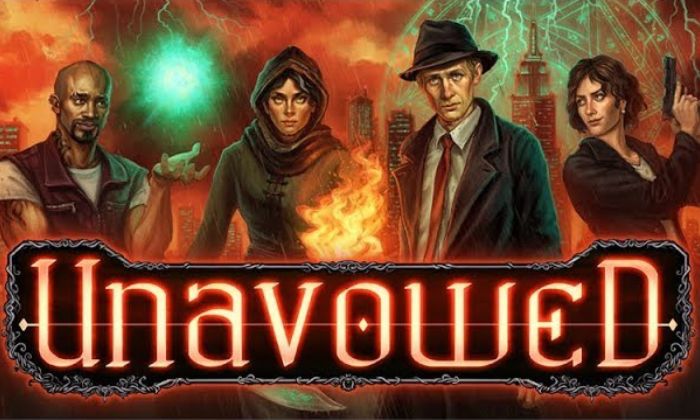
Unavowed is the kind of game that grabs you with its story right from the start and makes you think, “Okay, now I need to understand what’s going on here.” The premise is strong: you’ve been possessed by a demon and, while out of control, your body did horrible things in New York. When you’re finally free, there’s no reset button. Normal life is over, guilt lingers, and the only way out is to join Unavowed, a secret society that fights the supernatural in the shadows, no matter the cost. From there, the game becomes a delightful mix of investigation, urban horror, and modern fantasy, with a great TV series vibe, full of mystery, tension, and conversations that truly matter.
The gameplay is point-and-click adventure, but with a very clever pace and much less of a “pick up random item and try everything” approach. The focus is on exploring scenarios, observing details, piecing together clues, and talking to characters, and here choices matter. You decide how to approach situations, what to ask, who to trust, and even what kind of past your character has, which changes reactions and opens up different possibilities throughout the campaign. And the big difference lies in your team: you’re not alone. You recruit companions with very distinct skills, and this changes the way you solve cases. Taking a tough cop, a psychic, or a firefighter, for example, can open up completely different paths in the same mission. It’s not just aesthetics or alternative dialogue; it’s puzzle solving and investigation routes that transform, which gives a huge boost to replaying and seeing other answers and consequences.
The game world is very grounded, even when things get bizarre. New York here has that vibrant city feel, with ordinary people amidst the chaos, but beneath the routine lies an underworld of creatures, curses, and secrets. The cases escalate, but always with that human touch that makes you care, because it’s not just about defeating evil, it’s about dealing with real damage and difficult decisions. And the writing is the main protagonist: natural dialogues, charismatic characters, moral dilemmas that don’t seem black and white, and a sense of urgency that makes you want to move on to the next scene without stopping.
On the Switch, Unavowed works really well for those who enjoy playing on the couch or before bed, because it’s perfect for focused sessions, like “just one more chapter,” and before you know it, you’re hooked on the plot. If you like stories with investigation, choices, a supernatural atmosphere, and characters that seem like real people, this is one of those games that you finish and keep thinking about afterward, building theories in your head and remembering decisions that could have been different.
97 – Chicory: A Colorful Tale

Chicory: A Colorful Tale is one of those games that embraces you with a cute vibe and then suddenly hits you hard with a story that talks about insecurity, pressure, and self-esteem in a very realistic way. The premise is simple and brilliant: all the color in the world disappears because Chicory, the legendary artist who uses the magic paintbrush, has vanished. It’s up to you, a fan who’s kind of “just like us,” to pick up this paintbrush and try to bring life back to the place. But here it’s not just “painting for the sake of painting”: each scenario, each character, and each mission pushes you to think about creativity, expectations, and that classic fear of “I’m not good enough.”
The unique aspect is the painting-based gameplay: you literally color the world your way, as if the game becomes a living coloring book. You can paint everything, from the ground to the little houses, draw details on top, create patterns, scribble, erase, test combinations, and this becomes part of the puzzle solutions and exploration. You use paint to reveal passages, activate mechanisms, interact with the environment and find secrets, and the game always finds a way to surprise you with different situations to use the Paintbrush. And, since the world is open in areas, there’s that enjoyable feeling of returning to old places with new abilities and discovering things you hadn’t noticed before.
The cast of characters is a show in itself: funny, quirky, charismatic, each with their own dramas, and many dialogues have a very human touch without becoming too heavy. The soundtrack (with big names behind it) is very memorable and knows when to be relaxing and when to build emotion, leaving several scenes with that impact that stays in your head. It’s also a very user-friendly game on the Switch, perfect for playing on the handheld, and full of accessibility options so you can enjoy it your way, without frustration. In the end, Chicory: A Colorful Tale is a creative and exciting adventure that not only entertains you but also leaves you wanting to pick up a pencil and start creating something afterwards.
96 – Castlevania Dominus Collection
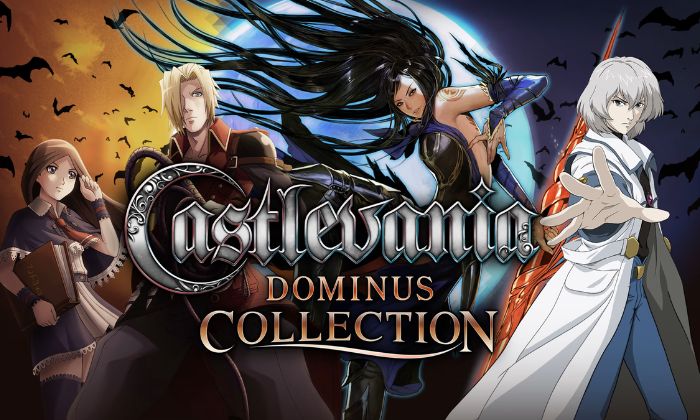
Castlevania Dominus Collection is practically a gift for anyone who loves Metroidvania and wants to see Castlevania at its peak in the “explore, evolve, and break the map” style, because it brings together the Nintendo DS trio that many consider the series’ peak, and best of all: everything works perfectly on the Nintendo Switch, with a package full of modern extras and options. Here you have Dawn of Sorrow, Portrait of Ruin, and Order of Ecclesia, three games that still hold up easily today due to their exploration pace, addictive progression of skills and equipment, and that classic feeling of entering a castle, opening shortcuts, marking doors (not quite there yet), and returning later when you’re overpowered. Dawn of Sorrow is the most straightforward and delightful to play, with an extra touch of interactions that were originally touchscreen and which, on the Switch, can be done in two ways: touching the screen in portable mode, which is the most natural, or using a button and right analog stick scheme, which is a lifesaver for those playing on the TV. Portrait of Ruin changes the dynamic by introducing two characters and letting you switch between them instantly, without any lag, using this in both combat and puzzles, which gives the adventure a very unique identity, even with some moments of more uneven design in enemies and environments. Order of Ecclesia, on the other hand, comes with a more challenging approach and a Glyph system that is simply addictive, because you “collect” skills and weapons in different ways, building your style and feeling the build emerge as you master the game, even if it takes a while to get going and starts out more linear in certain sections.
The adaptation for the Switch is also very clever: since these games originated on two screens, the collection lets you rearrange the interface however you prefer, increasing the map, status, and main screen, and even mimicking the classic DS layout, which looks better on the TV than on the handheld, where everything can become too small. And to make the experience smoother, there are save states and rewind in a dedicated menu for the collection, great for those who want to avoid frustration and for those who just want to practice bosses and difficult sections without wasting time. Even without filters and smoothing, the visuals themselves are beautiful and sharp, with a clear improvement in readability and detail in the environments, so you can enjoy it in the “classic” way without feeling like you’re playing something dated.
But the package goes even further than the basics: it has cool extras in the menu, such as artwork, manuals, promotional materials, and music tracks for you to explore, as well as regional version options, which is great for those who like to compare changes or play the version that reminds them of their childhood. And the icing on the cake is the inclusion of two Haunted Castle games: the original arcade version, which is more of a historical curiosity than real fun, and especially Haunted Castle Revisited, which is the most absurd surprise of the collection, because it takes a famously unfair entry and transforms it into a classic game that’s enjoyable to play, with reworked visuals, beautiful lighting, and rebalanced difficulty, with that Castlevania vibe from the NES and Super Nintendo, but without punishing you for existing. In the end, Castlevania Dominus Collection is a well-crafted package, full of strong content, with three excellent games that have aged very well and a bonus that no one expected to be so good, perfect for those who want to marathon Castlevania on the Switch and understand why the DS era was so special.
95 – Unpacking
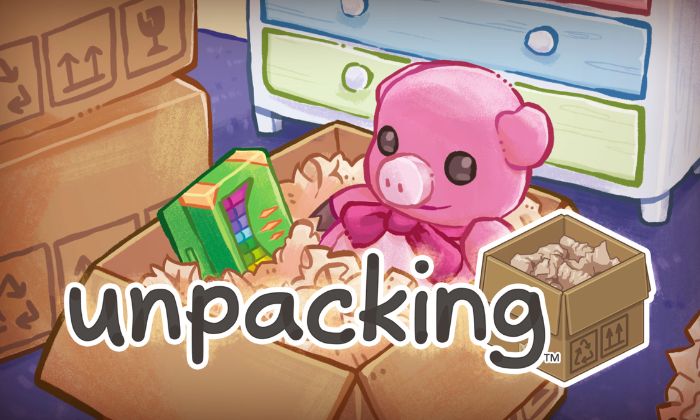
Unpacking is one of those games that seems simple at first glance, but when you start playing you realize it has a “secret power”: transforming something totally ordinary, taking things out of boxes and tidying up a new room, into a relaxing, addictive, and surprisingly emotional experience. The idea is exactly that: you follow several life changes in the same person over the years, and each level gives you boxes full of objects to put in the right place. But “right” here isn’t just about fitting things together for the sake of fitting them. It’s about organizing with logic, with care, and especially with curiosity, because each item tells a piece of the story without needing a single line of dialogue.
The gameplay is a delightful mix of puzzle and decorating. You open boxes, examine their contents, and try to find where each item makes sense within the space. There are clear rules that become the challenge: certain items can’t go just anywhere, some need to be in specific locations, and sometimes the house is small or awkward, so you need to improvise and rearrange everything until it works. But the game also gives you the freedom to personalize the environment. You can fold clothes your way, choose which shelf each book goes on, set up a table full of “little things,” create a cozy corner, and feel that incredible satisfaction when everything finally “clicks” and the scene feels like home.
The immense charm of Unpacking lies in how it tells the story of this character through details. You notice changes in phases, tastes, relationships, achievements, and frustrations just by the type of object that appears, what disappears, what returns, and what is kept. It’s that kind of silent narrative that makes you think, “Wait, something happened here,” and you piece together the story in your head like an emotional detective. The soundtrack and the sounds of the objects greatly contribute to this vibe, creating a calm atmosphere, perfect for disconnecting from the world, and yet still keeping you glued to the screen because you always want to unpack “just one more box.”
On the Nintendo Switch, it shines because it’s so well-suited to the handheld. It’s perfect for playing lying down on the couch before bed, or in short sessions. You advance a level, breathe, feel good, and you’re already eager to see what the next place will be and what the new boxes will reveal. Unpacking is the kind of game that doesn’t need explosions or bosses to be memorable; it wins through the feeling, the hidden story, and the comfort of doing something simple with care and meaning.
94 – Mario Party Superstars
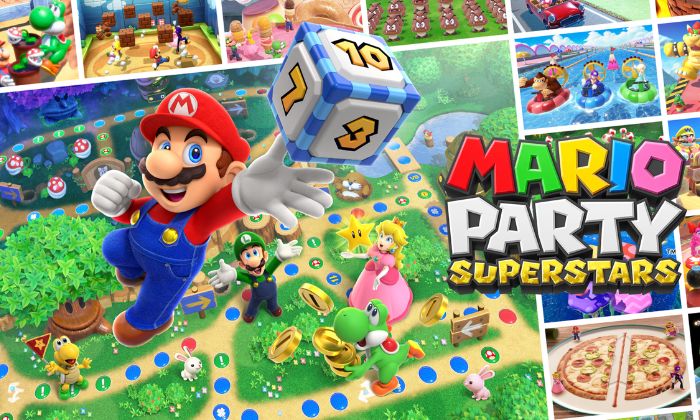
Mario Party Superstars is the best kind of game to prove why the Nintendo Switch was born to bring people together, because it takes the most chaotic and fun essence of the franchise and delivers a “best moments” that works perfectly both on the couch and online. The basics are simple and addictive: you choose your character, enter a classic board full of events and traps, roll the dice and try to manage coins, items and routes while everyone competes for stars and hopes that bad luck falls on their friend. The boards are reinterpretations of classic maps, with that design that makes each round feel like a story, because you’re never just “moving,” you’re negotiating risk, reading the game, trying to predict where the star will appear and deciding whether it’s worth spending everything on an item now to guarantee a comeback later. And that’s where the spice that transforms a match into a shouting match comes in: the typical Mario Party twists, with thefts, trades, unexpected events and those situations where you think you’re winning and, in two moves, the game decides to publicly humiliate you.
But the heart of Mario Party Superstars is its minigames, and here it shines with a huge and varied selection, ranging from reflex and memory challenges to precision competitions, survival, and pure mischief between friends. The best part is that you can feel the package was designed to be “easy to pick up and hard to master,” because anyone understands what to do in seconds, but winning consistently requires timing, reading the game, and a cool head, especially when the game puts you in minigames that turn into direct duels for important coins. The quality-of-life improvements also make everything more enjoyable to play, with options and adjustments that speed up the pace, make life easier for those who want to string together matches, and prevent you from getting stuck in menus or long explanations, so the “just one more round” energy appears quickly and doesn’t go away.
In multiplayer, it’s simply dangerous, because locally it’s the kind of game that turns any encounter into an impromptu tournament, with alliances that last half a match and betrayals that become part of the group’s history. And online it holds up very well, because you can play the entire board with other people, maintain the tension of each turn and feel that healthy paranoia of “who’s saving the overpowered item for the end,” with minigames running smoothly and constantly. In the end, Mario Party Superstars deserves top praise because it’s the definition of instant fun on the Switch, a game that delivers nostalgia and modernity in the same package and that, every time you open it, has a high chance of ending with laughter, shouts, revenge plotted, and the inevitable promise of a rematch.
93 – Pokémon Sword & Shield
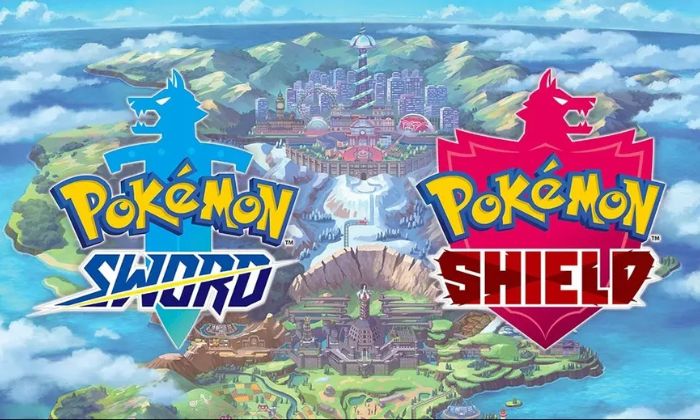
Pokémon Sword & Shield is one of those adventures that you turn on on the Switch and immediately feel like you’re entering a “new season” of the Pokémon universe, with a blockbuster feel. The Galar region is inspired by the United Kingdom and has a very strong identity, with cities that are very different from each other, giant gyms that look like real sporting events, and a championship energy that changes the atmosphere of the entire journey. Here, the goal isn’t just to earn badges, it’s to become a celebrity, compete in battles in packed arenas, and feel that enjoyable pressure of leveling up towards the top, with rivals, gym leaders full of personality, and a story that grows as you progress.
The game’s standout feature is how it modernizes exploration without abandoning the classic formula. The map has traditional routes, but it also includes the Wild Area, an open area where you see Pokémon roaming the world, collect items, battle trainers, and encounter creatures of varying levels, creating that feeling of “whoa, I can’t handle this yet, better come back later.” This gives a much freer pace to the beginning and middle of the campaign, because you can train your way, look for specific types for your team, and even change plans mid-way when a rare Pokémon appears at the right time. The game also makes life easier with several quality improvements, such as more practical access to the team and creation, making progression more fluid and less bogged down in bureaucracy.
In battles, the spectacle is provided by Dynamax and Gigantamax, which transform certain Pokémon into gigantic versions for a few turns, with special moves and effects that change the course of the combat. It’s that mechanic that makes gym battles and some important battles feel like an “anime moment,” especially when the crowd gets into the spirit and the game makes a point of treating that as the climax of the confrontation. And for those who enjoy playing with other people, there’s a strong focus on connectivity, trading, battles, and cooperative raids, which become an addictive pastime for farming items, capturing strong Pokémon, and testing different strategies with friends.
In the end, Pokémon Sword & Shield delivers exactly what many people wanted to see in the series on the Switch: a cinematic main storyline, a world with personality, a capture and training loop that remains extremely addictive, and a social aspect that keeps you playing even after the credits roll. It’s the perfect kind of game for those who love building teams, trading Pokémon, discussing strategies, and experiencing that classic feeling of “just one more gym to go” until they realize they’re already fully invested in Galar.
92 – Cocoon
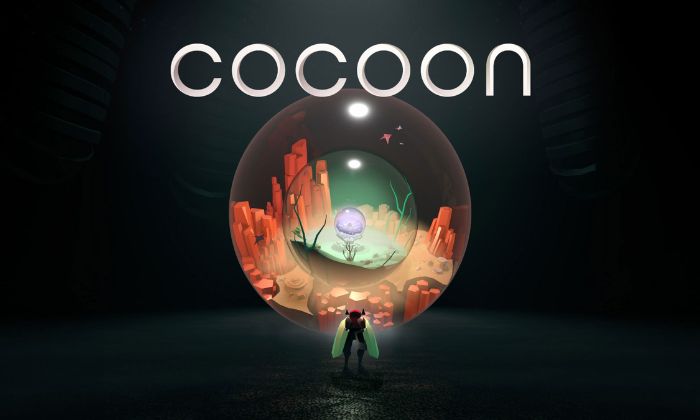
Cocoon is one of those games that makes you feel smart without treating you like a child, because it explains almost nothing with words, and yet you understand everything in practice. You control a little creature traversing a super intriguing alien world, full of organic structures and strange machines, and the fun lies in exploring, observing, and figuring out how that universe works. The atmosphere is mysterious from beginning to end, with a blend of beauty and unsettling elements, and a clean and absurdly stylish art direction that makes each area look like a living painting. It’s the kind of game that makes you want to just stand there admiring the details, but at the same time pulls you forward because there’s always a new “how do I get there?” calling you.
The game’s great gameplay twist is how it plays with worlds within worlds. You find orbs that, in practice, are entire worlds that you can carry, fit into specific places, and use as a tool to open paths, activate mechanisms, and solve puzzles. And that’s where the magic begins: you enter these orbs, grab another world inside, go back, connect everything in a way that makes sense, and suddenly you’re literally organizing universes like pieces of a puzzle. The challenges are clever, always based on logic and experimentation, with that delightful feeling of “wow, that was it” when the solution fits. It’s not a reflex game, it’s a brain game, but without being tiring, because it increases the complexity at the right time and always gives you clear visual and auditory feedback that you’re on the right track.
Beyond the puzzles, Cocoon features moments of tension and encounters with giant creatures that act as bosses, bringing a different rhythm without becoming traditional brawling. You need to understand patterns, use the environment, and apply the mechanics you’ve already learned, which makes everything more integrated and feels like a real adventure, not just “puzzle rooms.” The soundtrack and sound are also excellent, with effects that seem part of the scenery and help guide you, creating a strong immersion even without dialogue. On the Nintendo Switch, it’s perfect for playing on the handheld with headphones because it’s a game that puts you in a state of total focus, the kind you start and only stop when you finish an important section. Cocoon is short enough, intense, creative, and full of ideas that stick in your mind afterward—an experience that proves you can create something unforgettable with just intelligent design, atmosphere, and the courage to be different.
91 – The Legend of Zelda: Skyward Sword HD
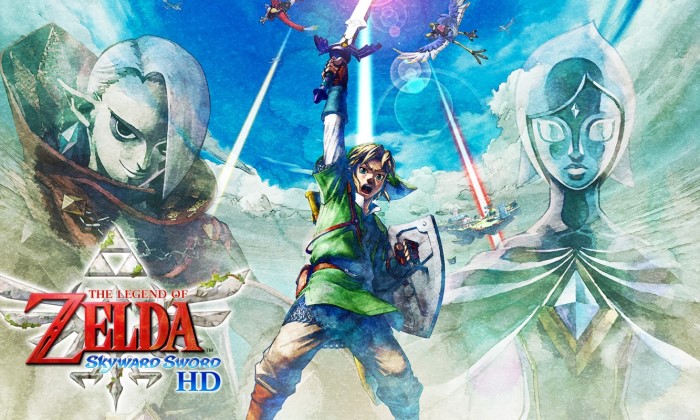
The Legend of Zelda: Skyward Sword HD is one of those Nintendo Switch games that feels like a journey straight to the origin of the legend, because it tells a more cinematic and emotional story, focused on the beginning of everything, with Link and Zelda still very much “just like us,” before they became myth. The adventure begins high above, on the island of Skyloft, where you experience that cozy atmosphere of a small town in the clouds, learn to fly with your Loftwing, and already sense that there’s a gigantic, dangerous, and mysterious world below, waiting to be discovered. And when you finally descend to the surface, the game instantly shifts in energy, with areas full of puzzles, different enemies, and paths that open up as you acquire items and new possibilities, in the classic Zelda style that makes you look at an obstacle and think, “Okay, I don’t have the right tool yet, but I’ll come back here.”
The great differentiator of Skyward Sword has always been its more hands-on sword combat, and in HD this becomes much more enjoyable to play because of the overall refinement and control options. You can fight with motion controls, with directional strikes that require precision and reading of the enemy, making duels much more tactical than simply mashing buttons without thinking, and you can also play with a traditional controller with adapted commands, which opens the door for everyone to enjoy it in their own way. The bosses and enemies were clearly designed for this system, so you feel like you’re really “fencing,” looking for openings, choosing the right angle and punishing with timing, and this adds a different flavor to the battles, especially when the game starts to mix combat with arena, traps and pressure.
In the dungeons, Skyward Sword HD is incredibly strong, with well-constructed temples full of ideas, the kind that leave you feeling like you’ve overcome a series of clever challenges, not just corridors. The items are striking and used creatively, and the game excels at playing with environmental mechanics, with moments that demand observation, object manipulation, and solutions that seem “obvious” once you understand them, but before that, make you freeze and smile when they click. A highlight is how it creates variations within the areas themselves, making you revisit places with new contexts, as well as bringing sequences that play with time and changing scenery in a way that becomes a signature of the game and yields some of the coolest puzzles on the Switch.
Skyward Sword HD also scores points for its meticulous remastering, with cleaner and more beautiful visuals, smoother performance, and several quality-of-life improvements that enhance the adventure’s pace, reducing friction and making the story flow more naturally. Ultimately, it’s a Zelda game that trades some of the total freedom of other chapters for a more directed journey, full of set pieces, challenging dungeons, and a narrative that makes you truly care about the characters—perfect for those who want an epic, charming adventure with the feel of a “legend being born” unfolding before their eyes.
90 – Cadence of Hyrule: Crypt of the NecroDancer Featuring The Legend of Zelda
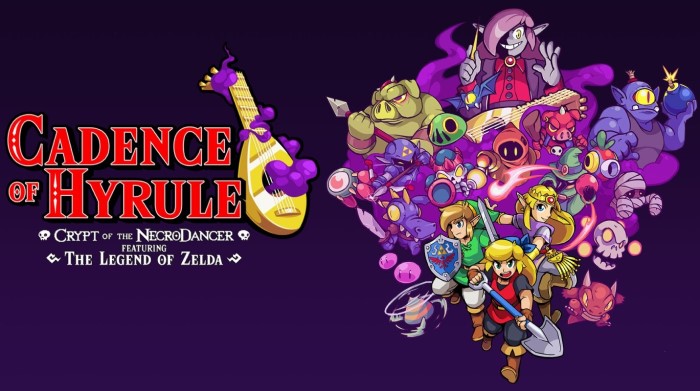
Cadence of Hyrule is the most unlikely and perfect union the Switch has ever received: the addictive energy of a rhythm game with the adventurous spirit of Zelda. The story begins with a “big mess” atmosphere in Hyrule, with the kingdom being engulfed by a dark force that scrambles the map and places monsters and bosses in your path. Here’s the trick: you play as Link or Zelda and need to explore, equip classic items from the series, and face dungeons, but everything works to the rhythm of the music. The world has that nostalgic feel with remixed tracks that make you want to turn up the volume, but at the same time it’s a fresh adventure, full of personality and with its own sense of humor and style.
The biggest difference lies in the gameplay: you move and attack following the beat. Every step, sword strike, item use, and dodge happens at the right time, transforming combat and exploration into a strategic dance. At first it seems simple, but it quickly becomes a puzzle of rhythm and positioning. You learn to “read” enemies by their movement patterns, to use bombs, bows, boomerangs, and magic at the ideal moment, and to assemble builds with weapons and equipment that completely change the way you play. And since the map can change with each new attempt, the feeling of discovery and replayability is enormous, with that classic addiction of “just one more run” because now you know a better path, want to get a specific item, or want to try a new combination.
Besides being incredibly fun, the game is also very friendly to different audiences. You can play in local co-op, which turns into top-quality organized chaos when two people try to keep the rhythm together, and there are options that make the experience less punishing for those who want to enjoy the adventure more than the challenge. On the Switch, it shines because it’s perfect for quick sessions on the handheld and also for marathons, always with pulsing music, enemies marking the beat, and that enjoyable feeling of playing Zelda in a way you didn’t know you needed. Cadence of Hyrule is creative, charismatic, and simply impossible to put down once the beat clicks with you.
89 – SteamWorld Heist
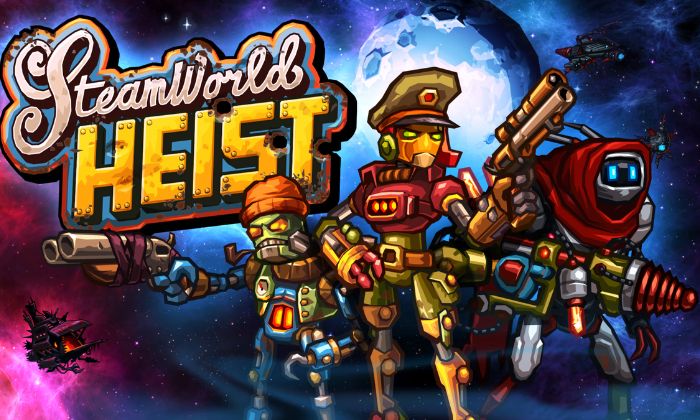
SteamWorld Heist is the kind of game that proves strategy can be intense, stylish, and addictive without becoming a “complicated simulator” that scares off beginners. Here you command a crew of pirate robots in a steampunk space western, raiding enemy ships in search of treasure, weapons, and survival. The atmosphere is light and charismatic, with just the right amount of humor and a universe full of personality—the kind you’re drawn into by the visuals and stay for the mission loop that always makes you want to do “just one more” before stopping.
The gameplay blends turn-based tactical shooting with a 2D side-scrolling perspective, and the key difference is that aiming is manual. In other words, it’s not just about choosing “attack” and watching the number go up; you actually aim, calculate angles, use cover, and perform incredible ricochets off walls to hit hidden enemies. This creates very satisfying moments, especially when you land a perfect shot that takes down two targets, explodes a barrel, and turns the tide of battle. Each mission forces you to think about positioning, using the environment, the order of actions, and how to deal with reinforcements and traps, and the pace is fast enough to avoid becoming tedious, yet strategic enough that you feel you’re improving as a player with each level.
Another addictive aspect is the progression. You recruit characters with different roles, equip weapons, hats, and items that change your style, choose skills, and assemble a team your way, whether focusing on precision, area control, support, or raw damage. Loot is constant, so there’s always that satisfying feeling of reward and wanting to test out new equipment in the next raid. On the Nintendo Switch, SteamWorld Heist is a perfect fit because it works very well in short sessions on the handheld, and also holds up for marathons when you’re in “just clearing one more sector” mode. It’s an accessible, creative, and characterful tactical game, with combat that feels like a puzzle of aiming and strategy at the same time, and that makes you feel like a genius every time an improbable ricochet works.
88 – SteamWorld Dig 2
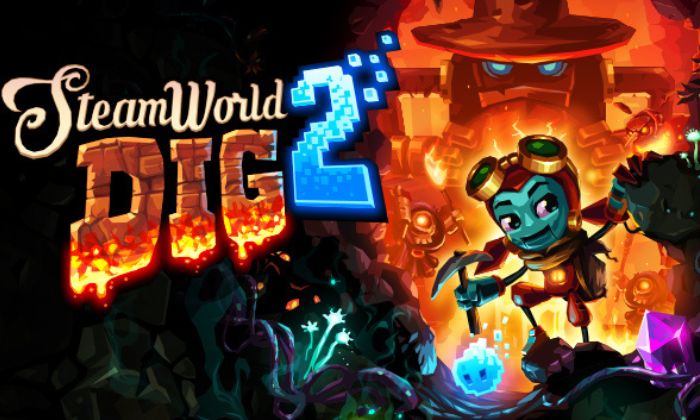
SteamWorld Dig 2 is the kind of game that grabs your attention with its curiosity and hooks you with the addictive desire to explore “just a little bit more.” You control Dorothy, a mining robot who descends into the depths in search of her missing friend, and with each meter dug, the world becomes bigger, more dangerous, and more interesting. The vibe is a super charismatic steampunk western, with gorgeous 2D visuals, meticulous animations, and a constant sense of discovery. You start with simple tools, but quickly realize that this is just the beginning of a journey that mixes adventure, exploration, and that absurd satisfaction of forging your own path and finding secrets you never imagined.
The gameplay is a perfect marriage between Metroidvania and mining. You dig everywhere, collect ores and gems, return to town to sell them, buy upgrades, and unlock new abilities that completely change the way you explore. There are jetpacks, grappling hooks, items to light up caves, and upgrades for your pickaxe, backpack, and armor—all designed to let you go deeper, survive longer, and reach areas that were previously inaccessible. And the map is full of hidden passages, secret rooms, optional challenges, and dungeons with puzzles and traps, so it’s not just “digging for the sake of digging.” The game encourages you to carefully observe the environment, test different routes, and use your tools creatively to gain mobility and open shortcuts.
The combat is perfectly balanced, with enemies that demand positioning, pattern reading, and intelligent use of the environment, without detracting from the exploration. And when you reach the deeper areas, the tension increases with natural hazards, falls, explosions, and the management of resources like light and water, creating that enjoyable feeling of a risky expedition. SteamWorld Dig 2 shines brightly because it’s suitable for short sessions as well as marathons, always with a clear objective in mind, like “I’m just going to get money for another upgrade,” and suddenly you’ve unlocked a new area and found a giant secret. It’s a well-rounded, addictive game full of personality, one of those that turns exploration into pure fun from beginning to end.
87 – TowerFall
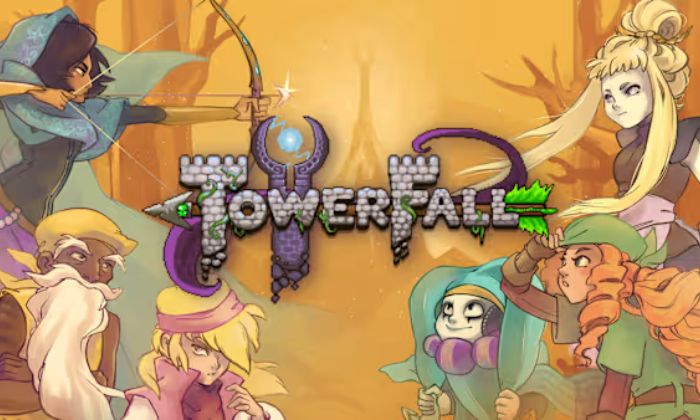
TowerFall is the kind of game that turns any get-together with friends into an instant shouting match, because it takes a simple idea—archers in small arenas—and extracts perfect competitive chaos from it. You control a character with a bow and arrows and engage in fast-paced combat where everyone dies in just a few hits, so every second counts. The coolest part is that it’s not just about aiming and shooting. You jump, dash in the air, grab onto platforms, retrieve arrows from the environment, and use the environment to create absurd plays. Hitting an arrow is already good, but the real magic happens when you learn to predict the opponent’s movement, dodge at the last frame, and turn the game around with a precise long-range shot or a “tap” that sends your rival straight into danger.
The matches are full of twists and turns thanks to power-ups and traps that completely change the dynamics. There are special arrows with different effects, items that mess up the arena, and situations where you have zero arrows and need to survive in desperation until you find a chance to get ammunition. This creates that fun tension of a party game, but with a very real layer of skill and game reading. And when you get tired of versus mode, the cooperative mode against waves of enemies becomes another addiction, because it demands coordination, spatial control, and quick decisions, since the chaos increases greatly and any mistake means defeat.
On the Nintendo Switch, TowerFall fits like a glove, being perfect for local multiplayer, with controls that work super well and short matches that always leave you wanting “just one more”. It’s a modern classic for those who enjoy competition, reflexes, fun, and the kind of game that seems simple but becomes a bottomless well of technique when you start taking it seriously.
86 – Radiant Silvergun
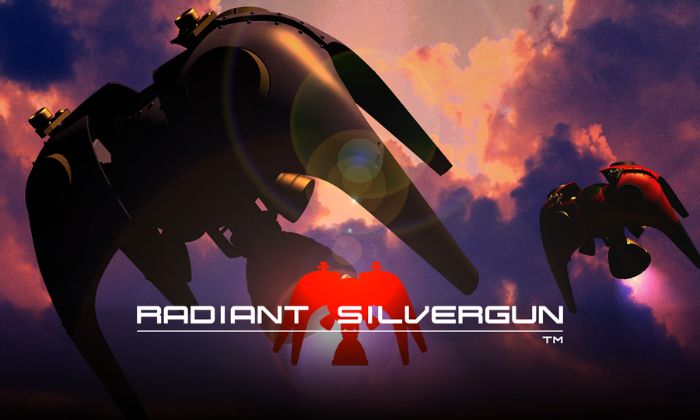
Radiant Silvergun is one of the most legendary shoot ’em ups ever released, one of those that makes you understand firsthand why the “shmup” genre can be as intense as any modern game. The premise is pure arcade science fiction: you pilot a Silvergun unit ship amidst a gigantic disaster that threatens humanity, and the campaign escalates from “okay, this is tough” to “this is a war against apocalyptic machines.” The atmosphere is serious and stylish, with cutscenes that tie the progression of the levels together and a memorable soundtrack that makes each battle feel like a decisive moment.
The biggest difference lies in the gameplay, which is easy to pick up but difficult to master. Instead of randomly switching power-ups, you start with a complete arsenal of weapons, each with a very specific function, such as line shots to clear corridors, scattered shots to control crowds, and more focused options to melt bosses. But nothing is “press and win”: the game pushes you to choose the right tool for each situation, control positioning with precision, and manage the screen crowded with projectiles and enemies. And that’s where the addictive part comes in: the scoring system rewards those who play with their brains, especially with color-coded destruction chains, where you need to take down groups in the right order to multiply points. This completely changes the way you play, because you’re not just surviving, you’re reading the scenario and creating perfect destruction routes.
And speaking of bosses, here they are practically the main attraction. They are long battles, full of phases, with patterns that seem impossible until you learn them, and with that classic arcade feeling of evolving through sheer force, attempt after attempt, until you beat the game. On the Nintendo Switch, Radiant Silvergun shines for those who enjoy chasing high scores, because it’s designed for replaying, training, and optimization, with modes and features that reward performance and score, and it works very well in both quick sessions and focused marathons. In the end, it’s a must-have classic for those who like challenge, precision, and the kind of game that makes you truly improve, not through grinding, but through skill.
85 – Ikaruga
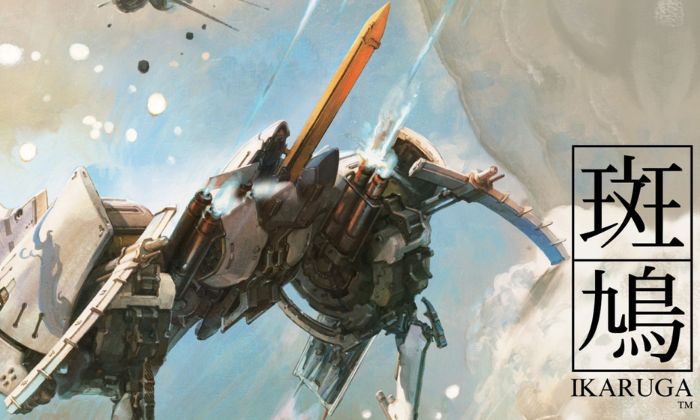
Ikaruga is one of those games that becomes a test of courage and skill in the best sense, a legendary shoot ’em up that makes your palms sweat and, at the same time, makes you want to try again when you lose. The story is simple and has a sci-fi feel, but what matters here is the pure arcade experience: you pilot a spaceship through levels full of enemies, hypnotic shooting patterns, and gigantic bosses that fill the screen as if they were an event. The visuals are clean and stylish, the action is precise, and the soundtrack helps to create that sense of “serious battle” that perfectly matches the challenge.
The reason Ikaruga is so unique is its polarity mechanic. Your ship can alternate between two colors, light and dark, and this changes everything. Shots of the same color don’t hurt you; you absorb and charge energy, while shots of the opposite color destroy you instantly. It sounds easy on paper, but in practice the game becomes a high-speed puzzle: you need to switch polarity at the right time, position yourself amidst insane barrages, and simultaneously attack enemies that also have a color. This creates very satisfying moments where you get through an “impossible” rain of projectiles just because you read the screen correctly and switched at the perfect moment. And for those who enjoy high scores, there’s the chain system, which rewards destroying enemies in sequences in the correct order, transforming each stage into a choreography of risk, precision, and planning.
On the Nintendo Switch, Ikaruga is perfect for quick training sessions and also for marathon runs trying to beat it in “one credit only,” just like in the arcades. It’s a game that shines in replayability because you feel real progress with each attempt, learning routes, patterns, and the exact moments to change colors. It’s also great for playing in pairs, with co-op that increases the chaos and fun as both players try to maintain control of the screen. In the end, it’s a must-have classic for those who enjoy a real challenge, gameplay with its own identity, and that rare feeling of mastering something that seemed impossible.
84 – Dragon Ball FighterZ
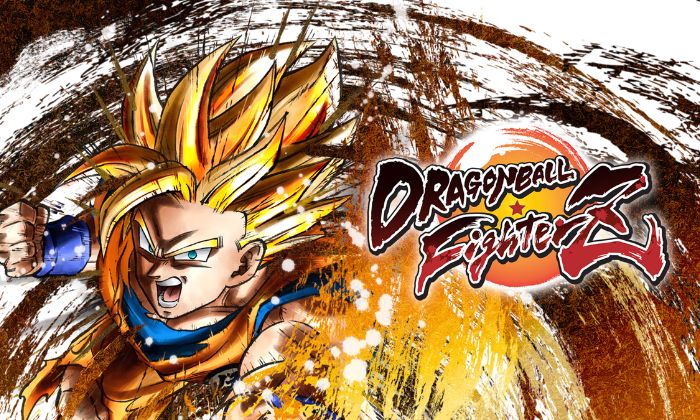
Dragon Ball FighterZ is the kind of game that makes you feel like you’re inside the anime in seconds, with absurdly fast fights, animations that look like official scenes, and that impact in the blows that makes you want to jump off the couch when you land a beautiful combo. The idea is to take the classic Dragon Ball atmosphere, with exaggerated brawling, giant powers, and iconic characters, and transform it all into a super technical 2D fighting game that’s also very easy to enjoy from the first match. The result is one of the most stylish fighting games of the generation on the Switch, perfect both for those who just want to start throwing Kamehamehas and for those who want to really learn, train, and compete.
The gameplay is based on 3 vs. 3, so you assemble a team with your favorites and switch between them during the fight, calling in assists to extend combos, maintain pressure, and create traps. This makes the matches very dynamic because it’s not just “me against you,” it’s you managing character order, energy bar, defensive resources, and the right moments to take risks. The system is famous for being explosive: you can perform long and cinematic combos, but there are also several layers of strategy, such as space control, punishments, mix-ups, and quick decisions on defense. And when Sparking Blast kicks in and the bars are full, the game becomes a spectacle of comebacks, with that “now it’s going to happen” feeling typical of Dragon Ball.
Beyond the versus mode, the game features a story mode with an original plot, full of character interactions and a new enemy that serves as the perfect excuse for heroes and villains to meet and exchange barbs. It also has training modes, challenges, and online matches, which are the ideal place to test what you’ve learned and feel the difference between “playing well” and “playing seriously.” On the Switch, Dragon Ball FighterZ shines as a party game and also as a respectable fighting game, one that delivers top-notch fanservice without sacrificing depth, and that makes each victory feel like the final episode of a saga.
83 – Theatrhythm Final Bar Line
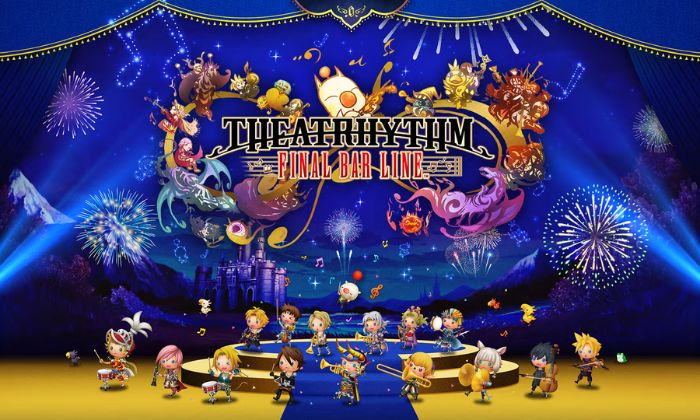
Theatrhythm Final Bar Line is one of those games that becomes a “nostalgia machine” and, at the same time, an addictive rhythm challenge that makes you want to play every day. The idea is simple and brilliant: you choose legendary Final Fantasy songs and enter stages where you need to hit commands with the right timing, following the beat and visual effects that cross the screen. But it’s not just a button-mashing game, because it transforms each song into a small adventure, with characters, enemies, and a celebratory atmosphere of the entire series, from the classic 8 and 16-bit soundtracks to the more modern and cinematic ones.
The heart of the game is the sheer amount of content and how it makes you want to experience everything. You assemble a team with heroes and iconic figures from the franchise, each with their own unique abilities, and this changes how you approach the levels. As you hit the notes, your group advances, activates skills, deals damage, and defeats monsters, so rhythmic performance becomes part of a light RPG strategy. You can level up characters, create compositions focused on damage, support, or survival, and find that perfect combination to get through the most difficult songs or farm items and objectives. Furthermore, the game has various level types that change the playing experience, some more “racing” and others more “battle-like,” always using the universe and music to keep you excited.
On the Switch, it’s perfect for both quick handheld sessions and marathon sessions trying for Full Combos, Perfect Chains, and flawless notes. The soundtrack is the highlight, with arrangements and music that give you goosebumps, and the presentation is full of top-notch fanservice, with references, characters, and moments that will make any Final Fantasy fan smile. In the end, Theatrhythm Final Bar Line is a gift for those who love video game music and a rhythm game that truly holds its own thanks to its gameplay, progression, and the delightful feeling of improving one song at a time.
82- Paper Mario: The Origami King
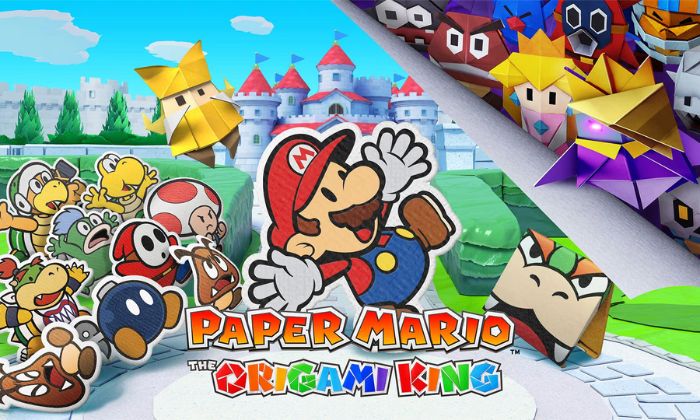
Paper Mario: The Origami King is the kind of game that feels like a playable cartoon, but with plenty of charisma and a sense of adventure that pulls you by the hand without making you feel silly. The story begins with a simple and very good premise: the Mushroom Kingdom becomes the target of an origami feud, with Peach’s castle completely transformed and giant streamers dominating the map, and Mario sets off on a journey with Olivia, a companion who is pure heart and becomes the emotional soul of the adventure. From there, the game becomes a road trip full of different and memorable places, with regions that completely change the atmosphere, from colorful tourist spots to mysterious ones, always with that art direction that makes everything look like it’s made of paper, with folds, textures, tape, cutouts and details that you stop to observe because it’s beautiful and funny at the same time.
Exploration is one of its greatest strengths, because the world is divided into wide-open areas full of secrets, with environmental puzzles, collectibles, hidden passages, and little stories happening in every corner. The game encourages you to hit objects, collect confetti, reveal holes in the scenery to “fix” the world and discover new things, so there’s always that enjoyable feeling of constant progress, as if you were cleaning and rearranging a giant diorama. And, in the midst of all this, it excels in humor, with sharp dialogues and situations that seem silly but hit the mark perfectly, in addition to secondary characters who steal the show and give each chapter its own identity. It’s the kind of adventure RPG where you want to talk to everyone, read signs, investigate suspicious corners, and see what joke or surprise the game has in store for you.
The combat is the most unique aspect of the package, as it swaps the classic system for puzzle-style battles with rings. Before attacking, you need to rotate and slide the circles to align enemies and create the best possible formation, and when you get the right solution, you get that immediate “genius” feeling, especially since it directly influences the damage and efficiency of the fight. At first, it’s super fun and creative, and then it becomes a test of speed and perception, since time is limited and some enemies start to mess up the board even more. The boss battles are a show in themselves, because they invert the logic: instead of aligning enemies, you build paths on the board to reach the boss, hit weak points, and use special actions at the right moment, with fights that feel like a mix of puzzle and cinematic battle. And even when you don’t feel like solving everything in “chess” mode, the game offers ways to make it easier, so it can satisfy both those who love the challenge and those who just want to enjoy the adventure.
Visually, it’s one of the most beautiful and expressive games on the Switch, with animations full of personality, detailed environments, and a use of color and lighting that makes each area look like a movie set. The soundtrack follows this vibe, alternating light and funny tracks with more epic themes when the story gets heavier, and the result is a journey that knows how to be fun, but also surprisingly emotional when it decides to be. In the end, Paper Mario: The Origami King is a must-have because it mixes addictive exploration, clever puzzles, sharp humor, and absurd charm, delivering an adventure that’s easy to get into, hard to put down, and memorable from beginning to end.
81 – Streets of Rage 4
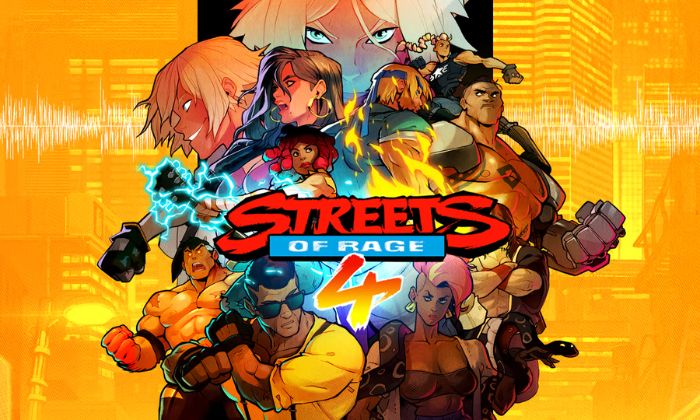
Streets of Rage 4 is living proof that beat ’em ups can still be absurdly fun when done with care and personality. The game takes the classic DNA of the series—street brawling, combos, hordes of enemies, and dangerous levels—and updates it all with hand-drawn visuals that look beautiful in motion, plus an art direction that blends the “90s” with a very distinctive modern style. The story returns with the legendary crew and introduces new characters, placing you in the middle of a crime-ridden city where each level feels like an escalation of chaos leading to the next insane showdown.
In practice, the addiction lies in the combat. You walk, run, grab, throw, perform aerial attacks, use special moves, and string together combos that make the screen explode with impact, but with a real layer of strategy behind it. Special moves, for example, consume health, so you need to choose the right moment to spend it to save your skin or extend a combo, and you can recover that health if you keep hitting without taking damage, which encourages you to play with courage and precision. Each character has a different pace, range, and options, so experimenting with the cast greatly changes the feel of the game, whether with someone faster, heavier, more technical, or more focused on crowd control.
The level design is full of variety, with enemies that demand different responses and bosses that test your timing and positioning, without resorting to simply cluttering the screen. The soundtrack is another huge highlight, with electronic music and beats that perfectly match the brawling atmosphere, and which also pay homage to the franchise’s legacy. On the Nintendo Switch, it shines especially in multiplayer, because it’s perfect for co-op play and turning each level into a festival of shouting, laughter, and improvised coordination, as well as working very well in quick sessions on the handheld. Streets of Rage 4 is straightforward, stylish, and addictive, one of those games that you finish wanting to come back to play better, make cleaner combos, and tackle higher difficulties.
80 – Super Mario Party Jamboree
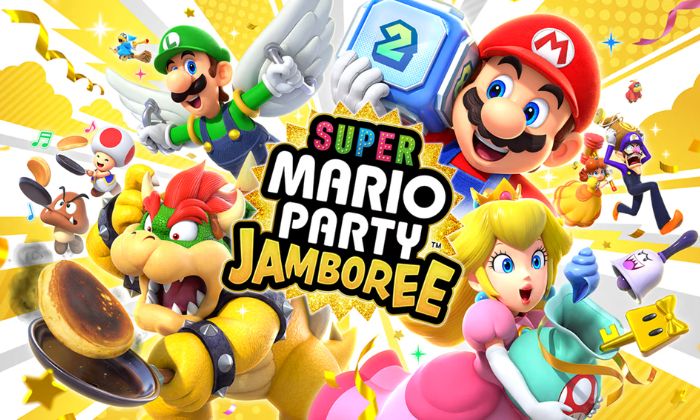
Super Mario Party Jamboree is the kind of game that turns any room into an event, the kind you turn on “just to play a game” and, before you know it, people are yelling about a stolen star and laughing at unbelievable bad luck on the dice. The premise remains Nintendo’s best definition of organized chaos: you choose your character, enter a board full of routes and traps, collect coins, chase stars, and try to survive the twists and turns that appear each turn. But here everything is even more of a “party,” with a super polished presentation, fast pace, and that friendly competitive atmosphere that, in practice, is never so friendly when someone makes the perfect move at the right time.
The heart of the game lies in its minigames, and that’s where it truly shines. The variety is enormous, with challenges testing reflexes, timing, memory, cooperation, and that classic mischief of putting everyone in situations where any slip-up turns into disaster. The best part is that the minigames aren’t just about “button mashing”; they make good use of the Switch’s controls when it makes sense, and also maintain more traditional options so no one is left out. And since the coins change hands each round and luck can turn upside down in seconds, each match has its own story, with absurd twists, temporary alliances, and that inevitable moment when someone says “that’s rigged” while everyone laughs.
On the board, the fun lies in reading the map and deciding whether to play it safe or gamble on chaos. There are shortcuts, events, path choices, and mechanics that affect everyone’s positioning, so it’s not enough to just roll the dice and hope for the best. You’re constantly calculating whether it’s worth saving coins, investing in items, causing chaos, or simply rushing to the star before the game conjures up a tragedy. And since the game usually offers different modes in addition to the classic Mario Party, it can fit into quick sessions or entire nights with friends, varying rules and objectives to keep everything feeling fresh.
Ultimately, Super Mario Party Jamboree is that essential Switch game for group play, perfect for family, friends, and any situation where you want laughter, rivalry, and “I can’t believe that happened” moments every five minutes. It’s fun, accessible for those who don’t play much, but also has enough strategy and game awareness for those who like to compete seriously, and above all, it delivers what it promises: a party that always gets out of control in the best possible way.
79 – Overcooked! All You Can Eat
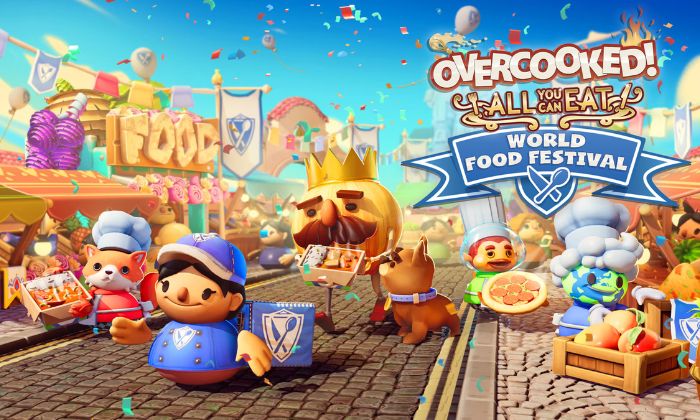
Overcooked! All You Can Eat is the ultimate package for those who love chaotic cooperative games and want to test friendships in the funniest way possible. It brings together Overcooked! and Overcooked! 2 with all the extra content, delivering a gigantic marathon of levels in completely crazy kitchens, with moving counters, separate platforms, fires, slippery ice, portals, conveyor belts, elevators, and situations that seem designed to go wrong. The idea is simple to understand and difficult to execute when the pressure mounts: grab ingredients, chop, cook, assemble dishes, and deliver everything on time, while the kitchen is constantly changing and the order queue keeps growing.
What makes the game shine on the Switch is the energy of “everyone doing everything at the same time.” You need to communicate, divide tasks, improvise when the plan goes wrong, and deal with the classic moment when someone grabs the wrong ingredient, accidentally throws the dish in the trash, or spills food on the floor at the crucial moment. And even though it’s a party, there’s real strategy behind it, because to get three stars in the levels you have to optimize routes, reduce steps, coordinate deliveries, and keep the kitchen running like a production line. To make it more accessible, the package also includes options that help those who want to enjoy it without so much stress, while those who like a challenge can dive into the harder levels and competitive modes. In the end, Overcooked! All You Can Eat is a must-play for duos, trios, or quartets, with matches that instantly become stories, shouting, laughter, and that wonderful feeling of hard-fought victory when everything finally falls into place.
78 – The Plucky Squire
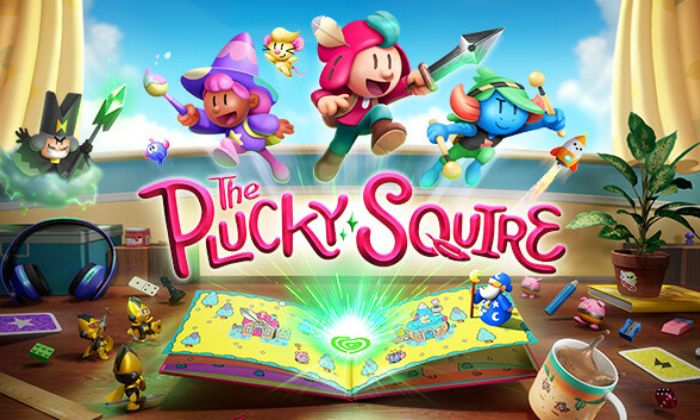
The Plucky Squire is an adventure that will bring a smile to your face within the first few minutes, because it looks like a cute children’s storybook adventure, but quickly transforms into a showcase of creativity that never ceases to surprise. The game transforms a brilliant idea into gameplay all the time: you are Jot, a children’s book hero who discovers that his story can be rewritten, and then you have to face a villain who wants to mess everything up, including the pages themselves. The game starts with that cute illustration look, as if you were walking inside a book full of drawings and pop-ups, but it soon surprises you when you jump out of the page and start exploring the “real world” around the book, completely changing the perspective and the way you solve problems. This switch between 2D and 3D isn’t just a pretty trick; it becomes the basis of the challenges, creating moments where you think, “How come I didn’t think of that before?”
In practice, it’s a delightful mix of platforming, exploration, light combat, and creative puzzles that play with page elements, objects on the table, letters, illustrations, and the rules of the setting itself. You alternate between traversing the story’s stages, with paths and enemies reminiscent of classic tales, and using the space outside the book to reposition things, find different solutions, and open new routes. The pace is quite varied, with mini-challenges and new ideas frequently appearing, so it rarely gets repetitive, and the presentation is a show in itself, with meticulous animations, just the right amount of humor, and art direction that feels alive. On the Nintendo Switch, The Plucky Squire is perfect for those who enjoy games full of charm and creativity, the kind that make you want to keep playing just to see what the next surprise will be.
77 – Astral Chain
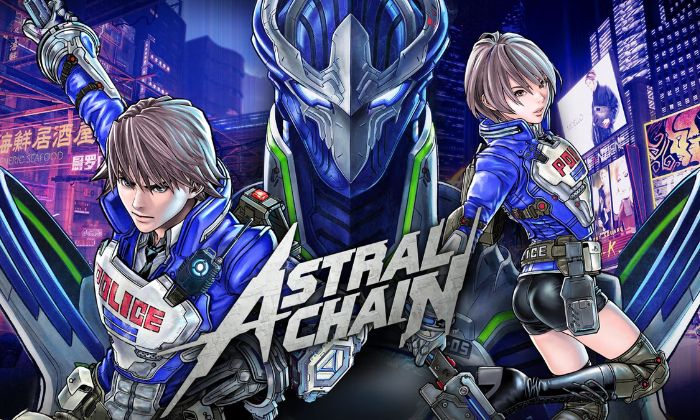
Astral Chain is a Switch exclusive game that gives you the feeling of playing an ultra-stylish action anime directed by people who really know their combat. You are part of Neuron, a special police force in a cyberpunk future where humanity clings to its last refuge, the city of Ark, while creatures from another dimension begin to invade and turn everything into chaos. The story has that investigative feel with conspiracies and out-of-control technology, but what really hooks you is the “sci-fi elite squad” patrol atmosphere, with memorable characters, neon aesthetics, and an electric soundtrack that makes each mission feel like the final episode.
The big difference is the co-op gameplay, but you control both sides. Besides your protagonist, you fight connected to a Legion, an entity captured and bound to you by an astral chain, and this becomes a mechanical spectacle: you fight with your weapons while commanding the Legion to attack, hold enemies, block projectiles, and create openings. The chain isn’t just visual; it’s a weapon, allowing you to entangle enemies, interrupt attacks, and create setups that resemble choreography, because you’re constantly positioning both in space. As you progress, you unlock different types of Legion, each with its own style, so one moment you’re focusing on speed and combos, the next you’re using brute force, control, and specific abilities to deal with enemies and bosses that change the rhythm of the fight. The combat has that signature technical action game feel, with perfectly timed dodges, pattern reading, and huge rewards when you string together a well-executed sequence, but it’s also accessible enough to let you shine early on, especially when you start to understand how to switch Legions mid-combat.
And it’s not just fighting. Astral Chain mixes action with moments of investigation and exploration, where you patrol areas, interrogate suspects, search for clues, solve incidents, and use Legion to interact with the environment, track, overcome obstacles, and access secrets. This alternating pace works well to give weight to the world and make you feel like a real agent, not just a combo machine. With skill progression, customization, and stylish missions, Astral Chain delivers a unique experience on the Switch—intense, different, and with a strong identity—the kind that leaves you wanting to come back to get better ranks and master the two-player combat once and for all.
76 – Teenage Mutant Ninja Turtles: Shredder’s Revenge
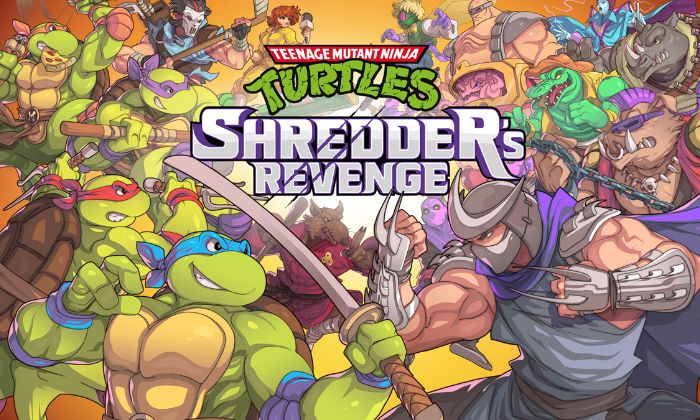
Teenage Mutant Ninja Turtles: Shredder’s Revenge offers a modern take on classic beat ’em up games, the kind that makes your brain switch to arcade mode as soon as you start playing. The premise is pure cartoon: the Turtles find themselves in a new mess with the Foot Clan, Krang, and of course, Shredder, while the action unfolds in scenarios full of personality that seem straight out of an episode, with humor, vibrant colors, and beautiful pixel art animations. It’s a game that understands exactly what people want when they think of TMNT: fast-paced brawling, charismatic villains, funny lines, and a non-stop “let’s clean up this street” energy.
Combat is the soul of the game and works in a delightful way: you have quick attacks, strong blows, combos, throws, aerial attacks, dodges, and special moves that burst the screen when you use them at the right time. Each character has their own style, so you can choose who suits you best, whether it’s a faster character, a heavier one, one with more reach, or one with a more “rushdown” kit. As you play, you unlock and improve moves, which makes the fights more varied and gives you that incentive to go back to old stages and test your new options. And since enemies come in waves, with different types that force positioning and group control, you’re not just automatically mashing buttons. You have to know when to prioritize a target, when to throw enemies away to relieve pressure, and when to use a special move to save the team.
The pacing of the levels is perfect for short sessions or marathons, with scenarios full of references, clear routes, little secrets, extra objectives, and bosses that are a spectacle in themselves. The boss fights feel like mini-events, with patterns, moments of “now he’s going to get aggressive,” and that enjoyable sensation of learning the timing and finally winning without taking a silly hit. And the greatest brilliance lies in the multiplayer, because playing in a group transforms each level into a coordinated mess, with everyone reviving each other, combining special moves, competing to see who gets the most KOs, and laughing when the screen becomes a festival of flying enemies.
On the Nintendo Switch, Shredder’s Revenge is essential to always have installed because it’s easy to get someone to play with, it’s quick to get into the mood, and it’s addictive enough that you’ll want to finish it on the hardest difficulty later. It’s a straightforward, stylish, and charismatic beat ’em up that hits the mark both as nostalgia and as a modern action game, delivering enjoyable brawling and cartoonish energy from beginning to end.
75 – Sea of Stars
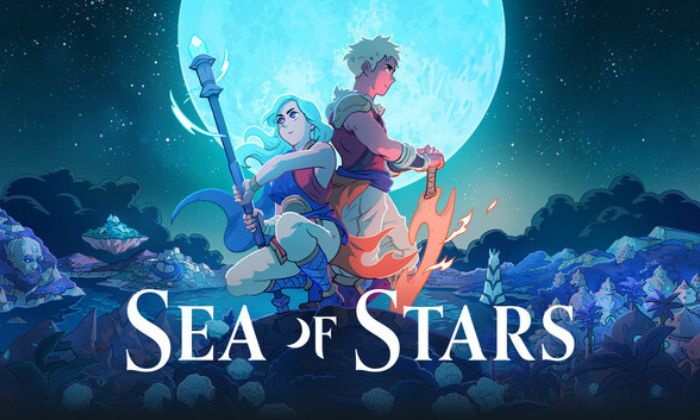
Sea of Stars offers a modern take on classic RPGs, with a fast pace and a vibe that quickly draws you into the world. The adventure follows two Solstice Youths, warriors capable of channeling the power of the sun and moon, on a journey to confront dark creatures created by a sinister alchemist. The story begins with that “training and destiny” feel, but grows in scale, locations, and revelations, always alternating between lighthearted moments, well-timed humor, and scenes that hit you hard when you least expect it. The pixel art visuals are simply beautiful, with detailed environments, meticulous lighting, and animations that make each city, forest, and dungeon seem alive, while the soundtrack provides a nostalgic boost without sounding stuck in the past.
The turn-based combat is where the game shines: it’s strategic, but it doesn’t stand still. You have attacks with precise timing, defense with well-timed presses, and abilities that gain impact when you get the cadence right, so each turn becomes a real action, not just choosing an option from a menu. Furthermore, many enemies “charge” powerful attacks, and you can break this preparation using the right type of attack to interrupt, which transforms each fight into a mini-puzzle and avoids that feeling of repetitive battles. The magic and dual techniques are also a highlight, because they encourage building synergies between characters and conserving resources to explode at the ideal moment, especially in longer fights and boss battles, which require reading, planning, and adaptation.
Outside of battles, Sea of Stars is a delight to explore. It features fluid navigation with climbing, jumping, platforming, and environmental puzzles, so the dungeons aren’t just corridors; they have rhythm and play with the mechanics of the environment itself. The world is full of secrets, alternative routes, optional items, and side activities that truly reward curiosity, leaving a constant sense of discovery. On the Nintendo Switch, it works perfectly in both short sessions on the handheld and marathons, because there’s always an objective calling you to “just do one more piece.” In the end, Sea of Stars is one of those RPGs that blends heart, style, and clever combat, delivering an adventure that pleases those who love the classic and, at the same time, wins over those who just want a beautiful, fun, and addictive game from beginning to end.
74 – Enter the Gungeon
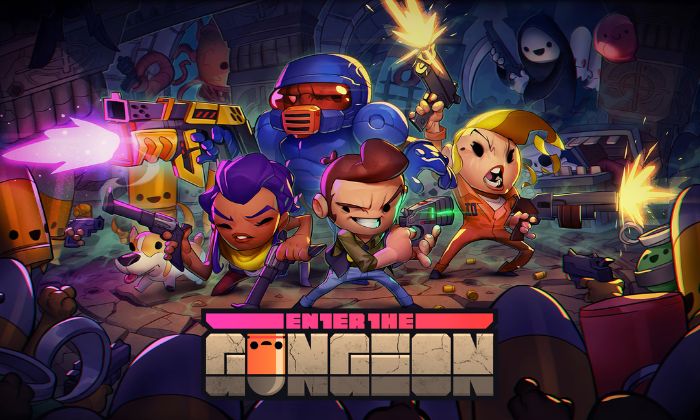
Enter the Gungeon is an action roguelike that blends frenetic shooting with humor and creativity in a way that quickly becomes addictive, because every run turns into a different story of desperation, improvisation, and victory at the last minute. The premise is simple and brilliant: there’s a living dungeon, full of absurd weapons and unbelievable dangers, and everyone who enters wants to find the weapon capable of “killing the past.” You choose a character from among several adventurers with different starting styles and equipment and descend floor by floor through rooms full of enemies, traps, and secrets, always with that feeling of “if I survive two more rooms I’ll get stronger,” until you realize the game isn’t going to let up.
The real highlight is the bullet hell-style combat with twin-stick controls, where you need to move well, aim precisely, and dodge patterns of shots that fill the screen. Each room is a mini test of reading and reflexes, and rolling dodges become essential, because one mistake is costly. But Enter the Gungeon isn’t just difficult for the sake of being difficult; it’s fair and rewarding, the kind that makes you truly improve as you learn patterns, understand enemy behavior, and master movement. The bosses are a show in themselves, with fights full of phases and attacks that seem impossible until you get the hang of it, and the feeling of defeating a boss with low health at the last second is incredible.
The most addictive part is the loot. The game has a huge amount of weapons and items, ranging from the “normal revolver” to completely nonsensical things, with references, jokes, and unique mechanics. One weapon can fire lasers, another can summon strange effects, another can completely change how you position yourself on the map, and the passive items create synergies that transform your build into a machine of destruction or a walking disaster. Since the rooms, rewards, and combinations change all the time, you’re always curious to see what comes next, and this makes each run have its own rhythm, alternating moments of absolute power with moments where you’re just barely surviving.
Besides the single-player mode, co-op is one of the best ways to play because it allows you to share the chaos with someone, enables different strategies, and creates hilarious situations when one saves the other in a pinch or when both panic in a crowded room. On the Nintendo Switch, Enter the Gungeon is perfect for short sessions on the handheld and also for marathon play, trying to go further, unlock shortcuts, unlock characters, discover secret rooms, and, above all, master the dungeon until you can face the final challenge. It’s a stylish, intelligent, and brutally fun game that gives you that constant urge to try “just one more run” because this time you’ll get it.
73 – Super Mario 3D All-Stars
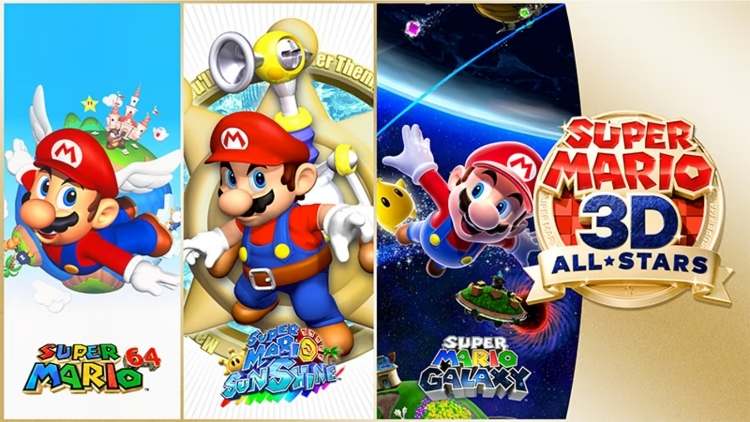
Super Mario 3D All-Stars is that package that, on the Nintendo Switch, functions as a time capsule of 3D Mario and, at the same time, as proof of why it became an absolute reference in the genre, because it puts side by side three adventures that marked generations and still have plenty of personality to keep you hooked for hours.
This collection brings together Super Mario 64, Super Mario Sunshine, and Super Mario Galaxy, and the coolest thing is feeling the evolution of ideas from one game to the next: in 64, the feeling of freedom was revolutionary, with castles full of levels within paintings, varied objectives per star, and a huge focus on learning to move, testing jumps, mastering the camera, and exploring every corner in search of secrets. In Sunshine, the game changes the vibe to a sunny island and introduces FLUDD, that water jet that becomes a mobility and puzzle tool, allowing you to glide, gain height, clean slime, and create different routes, as well as delivering more “hardcore” platforming challenges when FLUDD is removed, in the kind of level that makes you sweat and celebrate every success. Galaxy, on the other hand, is a spectacle of total creativity, with little planets, crazy gravity, levels that seem like an endless parade of ideas, and an orchestrated soundtrack that gives epic weight even to grabbing a hidden star, all with precise control and that addictive “just one more star” feeling before bed.
The charm of the package lies in being able to switch between three 3D Mario styles without leaving your seat, comparing the feel of the controls, the pace of the levels, and the type of challenge each game offers, whether you’re someone who wants to relive the nostalgia or someone who is experiencing these classics for the first time. And even with differences in age and “look” between them, all three still have that special something that makes Mario Mario: levels that reward curiosity, objectives that pull you in to explore, secrets that seem to be everywhere, and a constant feeling that the game is inviting you to play with movement.
Ultimately, Super Mario 3D All-Stars is the kind of collection that goes beyond nostalgia, because it delivers three gigantic, historic, and incredibly fun games, and that’s why it makes perfect sense to consider this package one of the highlights of the Nintendo Switch catalog.
72 – Fez
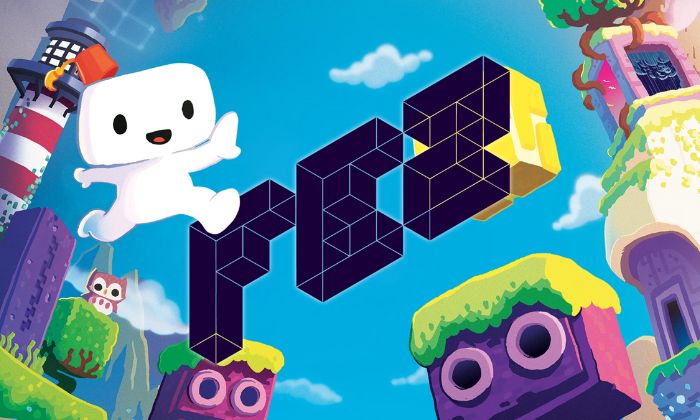
Fez is one of those games that seems simple at first, but within minutes you realize you’re facing an adventure that messes with your head in the best possible way. You control Gomez, a cute little creature who lives in a peaceful 2D world, until he discovers that his reality isn’t just flat and that there’s a hidden third dimension there. From then on, the game becomes a journey of exploration and discovery where the main objective is to find cubes and fragments scattered across a map full of connected areas, secrets, and paths that only appear to those who observe carefully and think outside the box.
The game’s great trick is the world rotation mechanic. With a single command, you rotate the scenery 90 degrees, and what was background becomes sideways, platforms align, stairs “appear” out of nowhere, and abysses disappear because the perspective has changed. This transforms each screen into a clever puzzle, since you’re not just jumping and walking; you’re rearranging the space to create routes. The most addictive part is that the game makes you see patterns, symbols, and tiny details in the scenery, because many solutions are hidden in how the elements connect when viewed from a different angle. And when you get the hang of it, that dangerous cycle of “just one more secret” begins, because there always seems to be something more in every corner—a mysterious door, a code, a hidden room, or a shortcut that changes everything.
Even though it’s a platformer, Fez has a much more contemplative than frantic pace. It wants you to explore at your own pace, revisit old places with a fresh perspective, and realize that the entire world is one big interconnected puzzle. The soundtrack greatly enhances this sense of journey, with music that creates a relaxing atmosphere but also leaves an air of mystery always in the background, as if the game is provoking you to delve deeper. On the Nintendo Switch, Fez is perfect for short gaming sessions because it’s the kind of game where you advance a little, solve a challenge, discover something strange, and keep thinking about it even after you turn it off. In the end, it’s a memorable, charming, and intelligent experience, made for those who enjoy exploring, discovering secrets, and feeling that spark of genius when the solution appears right in front of you.
71 – DAVE THE DIVER
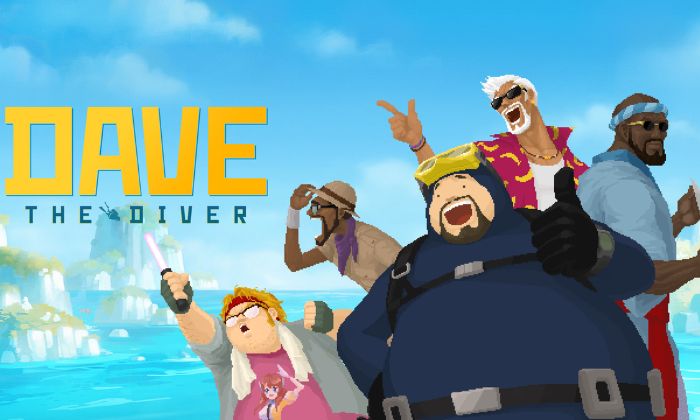
Dave the Diver is a game that blends adventure, exploration, and management in such an enjoyable way that it feels designed to keep you hooked on the perfect cycle of just one more dive and just one more night at the restaurant. You play as Dave, a friendly diver who gets caught up in a far from normal routine: during the day, he descends into the mysterious Blue Hole to hunt fish, find treasures, and uncover secrets, and at night he helps run a sushi restaurant run by the eccentric Bancho, transforming everything you’ve caught into dishes that turn into money, upgrades, and new possibilities.
The diving aspect is where the adventure truly shines. The map changes frequently, so you never feel like you’re repeating the exact same dive, and each descent has that tense, exploratory feel, as oxygen and inventory are limited. You start with simple equipment, but gradually upgrade with improvements that completely change your efficiency, such as better cylinders, suits that withstand more pressure, weapons, tools, and gadgets that help you catch bigger fish or deal with predators that don’t care about your plan. And the game is full of surprises, with different biomes, events, hidden areas, and creatures that change the tone from “peaceful fishing” to “survive here” in seconds, especially when aggressive fish and more dangerous encounters appear.
When night falls, the vibe shifts to a very dynamic and fun management experience. In the restaurant, you define the menu based on what you’ve caught at sea, adjust dishes to increase yield, improve recipes, hire and train staff, and try to handle the flow of customers without letting the service become a disaster. It’s a much more interactive part than it seems, because you participate in customer service, deliver orders, serve drinks, and need to keep up the pace, especially when the restaurant starts to get crowded and the pressure mounts. The coolest part is how the two halves of the game feed into each other: fishing better means selling better, selling better means buying upgrades, and upgrades unlock new depths, new fish, and new stories.
Beyond the main loop, Dave the Diver is packed with side content and special moments, featuring missions, charismatic characters, minigames, and an ever-expanding narrative that blends humor, mystery, and completely unexpected situations. On the Nintendo Switch, it’s perfect for short handheld sessions, but it’s also dangerous for those who say “I’ll only play for half an hour,” because there’s always another objective calling, another upgrade missing, another rare fish to catch, and another day to make the restaurant break records. It’s a stylish, addictive, and surprisingly complete game that manages to be both relaxing and exciting at the same time.
70 – Vampire Survivors
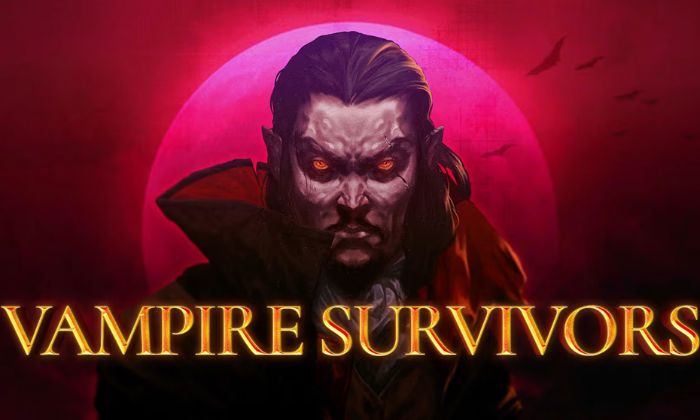
Vampire Survivors is an absurdly addictive game that proves how a simple idea, when well executed, becomes a time warp. The premise is straightforward and brilliant: you choose a character, enter a map full of constantly spawning monsters, and try to survive as long as possible while your character attacks automatically. Your job is to move well, read the screen, escape ambushes, gather experience, pick up items from the ground, and build an increasingly stronger character, until the screen becomes a light show with hundreds of enemies exploding simultaneously. It’s the kind of game that starts out “chill” and, without you realizing it, you’re in a level of chaos that seems impossible, but strangely, you can control it once you learn the rhythm.
The loop is perfect for “just one more run” because each match gives you constant choices. As you level up, you choose weapons and passives that completely change your strategy, from options that clear the surrounding area to projectiles that cross the screen, freeze effects, chain damage, and abilities focused on surviving longer. The highlight is when you learn to create synergies and evolutions, combining weapons with specific items to transform them into much stronger versions, which changes the game from “hard-fought survival” to “I am the danger.” But it’s not all about brute power, because positioning, upgrade priorities, and route decisions matter a lot, especially when elites, denser waves, and patterns that try to corner you start appearing.
Beyond the combat, Vampire Survivors has a meta-progression that will keep you hooked for hours. Between runs, you unlock permanent upgrades, new characters, weapons, maps, and relics that unlock extra mechanics, secret objectives, and a constant escalation of possibilities. The game loves to hide content, so there’s always a strange condition to unlock something new, a stage that changes the rules, an item that completely alters how you play, or a challenge that forces you to leave “automatic mode” and try a different approach. On the Nintendo Switch, it’s perfect for short sessions on the handheld, but it also works as a marathon game when you decide to hunt for unlocks and complete objectives, and it gets even better when you play in local co-op, transforming the chaos into shared fun and improvised strategies. In the end, Vampire Survivors is easy to start, hard to put down, and incredibly rewarding when your build clicks and you finally feel like you’ve weathered the storm.
69 – Balatro
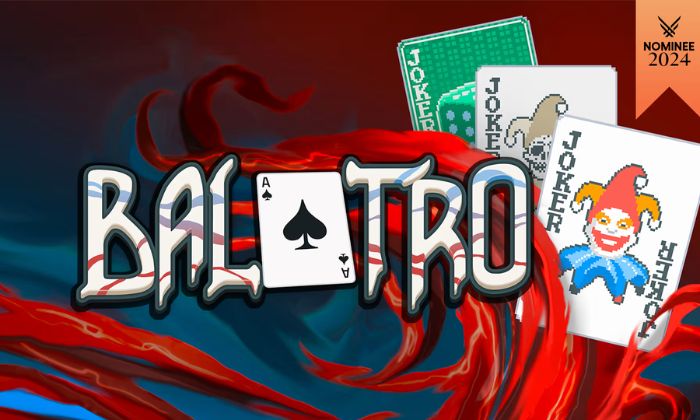
Balatro is the kind of game you open “just to test it out,” and before you know it, you’ve spent an hour planning your next move as if your life depended on it. The idea seems simple on the surface because it uses the language of poker, with classic hands like pair, three of a kind, straight, and flush, but what Balatro really does is transform that into an extremely addictive deck-building roguelike, where each round is a chance to break the game with absurd combinations. You enter a run facing blinds that require a minimum score, win money, improve your deck, and raise the stakes, always with that enjoyable tension of “will my build hold up to the next jump?”.
The real charm lies in how it gives you the tools to create insane synergies. Besides adjusting the deck with card draws, removals, and upgrades, the game revolves around Jokers, which are special cards with effects that completely change your priorities. A Joker can multiply your score if you play a certain type of hand, another can increase the value of cards with a specific suit, another can reward repetition, discarding, sequences, pairs, and so on. The fun is that you start with one strategy and suddenly find a piece that changes everything, forcing you to adapt your plan mid-run. At each store, you make decisions that seem small but accumulate in a way that defines your destiny, such as spending now to get stronger or saving money for interest and better purchases later, risking a more aggressive approach or stabilizing to avoid being eliminated in the next blind.
Balatro also nails the pacing. The matches are quick, the interface is clear, and the game delivers that instant pleasure of seeing numbers explode on the screen when your combination clicks and the multiplications start to escalate. But it’s not all spectacle, because it demands reading, planning, and, above all, knowing how to deal with the unpredictability typical of roguelikes. Sometimes you build a perfect machine and cruise, sometimes you survive by sheer grit with a patched-up deck, improvising with whatever’s available in the store and trying to extract value from each hand. And since there are always new decks, difficulties, unlocks, and challenges to try, it easily becomes a long-term game, one of those you come back to every day to try a different run.
Balatro is practically tailor-made for the portable console, because it works perfectly in short sessions as well as marathons, with that constant feeling of progress and “just one more try”. It’s a clever, stylish, and dangerously addictive game that takes a familiar base and transforms it into a puzzle of synergies and decisions that makes you think fast, take big risks, and celebrate when your build finally becomes an unstoppable monster.
68 – Chained Echoes
Chained Echoes is an RPG that takes everything people love about classic 16-bit games and turbocharges it with modern ideas, delivering a huge adventure full of twists and turns and combat that really makes you think. The story takes place in Valandis, a continent marked by wars, political intrigue, and ancient powers that shouldn’t be touched, and follows a group of very different characters, each with their own goals, traumas, and difficult choices. The game excels at scaling the journey, because you start dealing with “human” conflicts, but gradually enter into larger conspiracies, absurd weapons, heavy magic, and consequences that change the course of everything, with scenes that hit the mark both in drama and in that well-timed humor that makes the characters feel more alive.
The standout feature is the turn-based battle system, which is fast, clear, and full of decision-making. Instead of relying solely on grinding, it rewards skillful play. There’s an Overdrive bar that acts as the “rhythm” of the fight: if you use varied actions and manage your choices well, you stay in a safe zone that increases your efficiency, but if you repeat too much or lose control, the group enters Overheat and starts taking penalties. This gives each turn real weight, because you’re always planning your next action with the whole picture in mind, alternating abilities, managing resources, and responding to enemy weaknesses. To top it off, the game has a very generous skill and equipment system, with gems and upgrades that allow you to create different builds without becoming an impossible mess, so you can customize your team and feel constant progress without wasting time on unnecessary complications.
And just when you think you’ve seen it all, Chained Echoes unveils a second, game-changing layer: the Sky Armors, a type of mech that enters the fray in specific battles and exploration. Mech battles have their own rules, with energy management and strategies different from on-foot battles, so it’s not just “same old combat with a skin,” it’s a parallel system that adds variety and makes certain encounters feel like events. The game also shines in exploration, with a map full of secrets, alternative paths, dungeons with puzzles, and various rewards for those who like to delve into every corner. The pixel art is stunning, with highly detailed environments and elaborate animations, and the soundtrack helps to convey the epic adventure atmosphere, making each new area feel important.
On the Nintendo Switch, Chained Echoes is perfect for anyone who wants a truly grand RPG, the kind you play on the handheld for half an hour and, before you know it, two hours have passed, because there’s always a new mission, a discovery on the map, a challenging fight, or an upgrade that changes your team. It’s an RPG with heart, personality, and intelligent systems that captivates with its story and wins you over completely with its gameplay.
67 – Katana Zero
Katana Zero is a 2D action game that makes you feel like a perfect assassin for a few seconds, and then reminds you that just one mistake is enough to turn everything into chaos. You are a professional killer known as Zero, working on dirty missions in a decaying city, with an intense story that mixes crime, trauma, paranoia, and a constant feeling that something is very wrong behind what you’re being ordered to do. The game wastes no time: it throws you into tense situations, with sharp dialogue and response choices that make conversations feel like confrontations, while the narrative becomes increasingly strange and intriguing, playing with perception, memory, and consequences.
The game’s greatest addiction lies in its gameplay, which is fast-paced, brutal, and extremely satisfying. Each level is like a challenge room you need to enter, read the environment in a second, and execute a perfect plan using your sword, dodging, running, precise attacks, and, most importantly, the ability to slow down time to react at the last minute. But the game is “one hit, one kill,” both for you and your enemies, so the fun isn’t in enduring punishment, it’s in mastering the rhythm and doing everything with style. You can deflect shots with your katana, throw objects, use the environment to your advantage, and clear an entire room in a seemingly choreographed sequence. And when things go wrong, the restart is instantaneous, pushing you to try again until you get it right in the cleanest way possible. This loop of trial and error is what makes Katana Zero so addictive, because each victory feels like a well-directed action scene you yourself created.
Beyond the action, the game boasts strong art direction, with neon, shadows, and a gritty urban atmosphere that perfectly complements the fast-paced violence of the levels. The electronic soundtrack is another highlight, as it quickens your heart rate and makes each room invasion feel like a decisive moment, helping to maintain the flow and tension. On the Nintendo Switch, Katana Zero works perfectly for short sessions, as the levels are straightforward and the game rewards you for replaying and improving, but it’s also one of those dangerous games to marathon, because you always want to do just one more level and discover just one more piece of the story. It’s a stylish, intelligent, and sharp action game that delivers pure adrenaline without sacrificing a captivating narrative.
66 – Shovel Knight: Treasure Trove
Shovel Knight: Treasure Trove is practically a goldmine for anyone who enjoys classic 2D platformers with modern refinement and plenty of creativity. You control Shovel Knight, a knight with a shovel as a weapon, who returns to action to face the Order of No Quarter and confront the Enchantress in a journey full of memorable levels, charismatic bosses, and a delightful gameplay rhythm. The feel is reminiscent of the 8-bit era in its visuals and straightforward simplicity, but everything is polished: the controls are precise, the level design is intelligent, and the difficulty challenges you without feeling unfair, creating that addictive feeling of wanting to try again because you know you can do better.
The gameplay centers around running, jumping, and fighting with the shovel, and the game turns this into a playground of mechanics. The “pogo” with the shovel, when you attack downwards and bounce off enemies and objects, becomes an essential tool for both combat and platforming, opening up space for quick sequences and stylish maneuvers. Throughout the campaign, you collect treasures to buy upgrades, spells, and equipment that change your playstyle, allowing you to focus on mobility, survival, or aggression. And there’s a very clever element of risk and reward: when you die, you lose some of your money and have to decide whether to go back to recover it or move on with fewer resources, which adds tension without becoming excessive punishment.
But Treasure Trove truly shines because it’s more than just one game. Beyond the main Shovel Knight campaign, the package includes complete campaigns with other characters, each with its own identity and real changes in mechanics and pace. You have Specter of Torment, faster and more aggressive, with acrobatic movement and a combat flow that resembles a deadly dance. There’s King of Cards, with a broader and more adventurous approach, featuring a map, varied challenges, and an addictive card minigame that almost becomes a game in itself. And there’s Plague of Shadows, which transforms everything into a more technical and explosive style, with bombs, jumps, and combos that require practice to master. The result is a collection that offers several “versions” of the same world, each with its remixed levels, revisited bosses, and a different way to approach the challenges.
Shovel Knight: Treasure Trove is perfect to always have installed because it works for both short sessions and marathons, and it still has that charm of a game you replay to find secrets, clear levels, and defeat bosses with more style. With a memorable soundtrack, just the right amount of humor, and a rare level of polish, it’s one of the best examples of how a game can pay homage to the past while still feeling fresh, full of personality, and simply fun from beginning to end.
65 – Neon White
Neon White is one of those games that seems designed to make you obsessed with improving, because it mixes FPS with platforming and speedrunning in an extremely satisfying way. You play as White, an assassin taken from hell and placed in heaven to participate in a brutal competition: eliminate demons as quickly as possible to earn a chance at redemption. But the story isn’t just an excuse for action; it comes with memorable characters, rivalry, dark humor, and a very anime-like atmosphere, with dialogues and scenes that build a greater mystery about who you are and why everyone there seems to have old scores to settle.
The heart of the game lies in its short, intense levels, designed to be replayed until you master every detail. The key element is the Soul Cards, cards you collect along the way that function as weapons, but also as abilities. You can shoot with a weapon that came as a card, but you can also discard that same card to use a movement power, such as a dash, extra jump, grappling hook, or explosion that propels you forward. This transforms each level into a speed puzzle: you’re always deciding whether it’s better to keep the weapon to kill safely or spend the card to launch yourself across the map and cut corners. Once you start to understand the routes, the game becomes a choreography, with precise shots, perfectly timed jumps, millimeter-precise discards, and quick decisions to maintain the rhythm without wasting time.
The feeling of flow is incredible because everything is built to be agile. Enemies exist to be dealt with quickly and stylishly, and the level design rewards you for thinking about angles, straight lines, controlled falls, and how to chain abilities without hesitation. After each stage, you receive a ranking and time, and this is the fuel of the experience, because you can always shave seconds off, find a hidden shortcut, change the order of the cards used, and go from “passed” to a perfect performance. And since the game has extra objectives and collectibles that change routes and open up new possibilities, it gives you real reasons to come back, not just for the score, but to discover the smartest solution.
Neon White shines for those who enjoy fast-paced action and challenges, with levels ideal for short sessions, but dangerous for marathon play when you get into the “now I’m going to get this rank better” mindset. Add to that an energetic soundtrack that perfectly matches the frantic pace, and you have a stylish, creative, and highly replayable game that makes you feel faster and more precise as you master your own routes.
64 – Resident Evil 4 HD
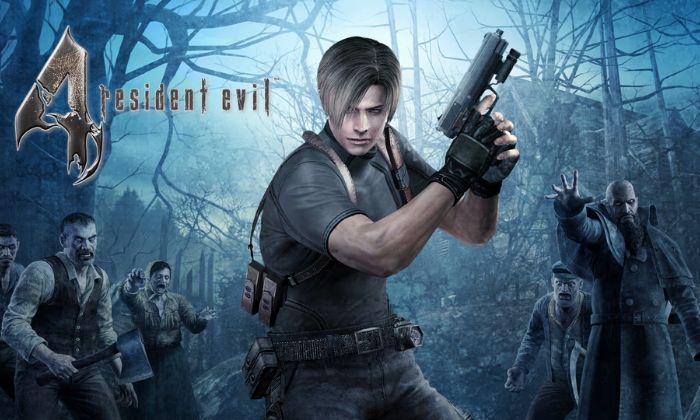
Resident Evil 4 HD on the Nintendo Switch is the kind of game that redefines the “must-play classic” because it blends horror, action, and adventure pacing with incredible confidence, and it still works incredibly well today. You control Leon S. Kennedy on a mission that begins as a simple rescue and quickly descends into a nightmare in an isolated village, where the inhabitants aren’t ordinary zombies, but aggressive, intelligent, and unpredictable enemies who constantly surround, flank, and pressure you. The over-the-shoulder camera makes everything closer and more tense, and each encounter feels like a small survival puzzle, because it’s not enough to just shoot; you need to position yourself, control crowds, and decide when it’s worth spending ammunition or risking getting closer.
Combat is the main reason why Resident Evil 4 remains so addictive. The impact is great, with shots that truly “catch” enemies, and the game encourages you to play smartly, aiming at specific points to stun and chain kicks and blows that take down entire groups. This creates a delightful combat rhythm, where you alternate between precision, spatial control, and quick decisions, especially when the screen starts to fill up and you realize that panicking is the quickest way to die. Beyond that, the arsenal is a show in itself, with pistols, shotguns, rifles, magnums, and special weapons that you buy and upgrade with the Merchant, one of the game’s most iconic characters. Upgrades to damage, capacity, reload speed, and stability become part of the strategy, and it gives you that satisfaction of transforming a favorite weapon into your ultimate companion until the end.
The campaign is packed with memorable set pieces and constantly shifts in scenery and intensity, so it rarely gets repetitive. You explore, resolve risky situations, face memorable bosses, and experience moments of pure tension in areas that seem to test you in different ways—sometimes tight survival, sometimes open combat, sometimes resource management at the limit. The game also knows how to vary the mood with a heavy and unsettling atmosphere, mixing horror with action in a way that keeps the adrenaline high without losing the sense of threat.
63 – What Remains of Edith Finch
What Remains of Edith Finch is one of those experiences that leaves you speechless for a few minutes after finishing, because it grabs your attention with its curiosity and hits you hard emotionally. You control Edith, the last of the Finch family, returning to the enormous and strange house where everyone lived and, somehow, everyone left. From there, the game becomes a story-driven exploration: you walk through the house, find diaries, letters, and mementos, and each open door seems to pull you into another chapter of the past, as if the architecture itself held secrets. The atmosphere is one of mystery, but not in a scary way, but rather the kind of mystery that makes you want to understand what happened and why this family carries a “curse” that has become a legend.
The way the game tells these stories is what makes it so special. Instead of just reading or watching, you experience small interactive vignettes, each completely changing the language and gameplay. There’s a section that becomes almost a fantasy sequence, another that seems like a strange dream, another that puts you in a common routine that gradually becomes heavy, and so on. These constant changes make everything extremely creative and impossible to become repetitive, because you never know what the next visual or mechanical idea will be, and many of these scenes are designed to make you feel something specific, whether it’s lightness, tension, comfort, or that tightness in your chest when the penny drops.
Exploring the house is also a pleasure, because it’s practically a character in itself. The closed rooms, preserved like small memorials, the hidden passages, the details scattered throughout the scenery—everything helps to build the personality of each Finch without needing to explain too much. And the game excels at balancing beauty and sadness, with meticulous art direction, a discreet soundtrack, and narration that guides you without diminishing your sense of discovery. On the Switch, What Remains of Edith Finch works perfectly for playing in one sitting, especially on the handheld, as it’s a more focused and narrative experience, designed to carry you along from beginning to end, like a short series that leaves a lasting impression. It’s a different, courageous, and memorable game, one that proves that video games can also be a story told in a way that only video games can.
62 – A Short Hike
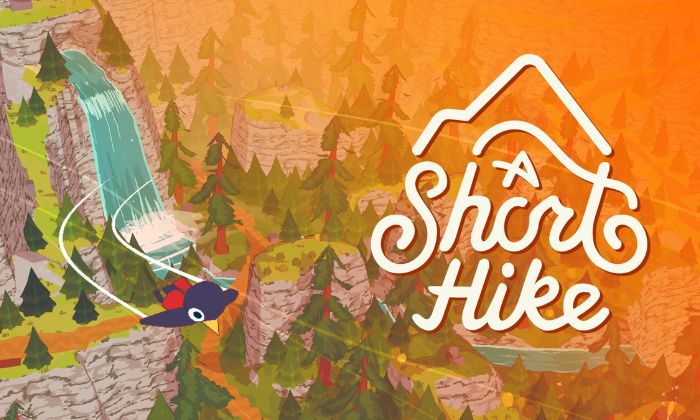
A Short Hike is the perfect game for when you want to relax, smile, and still feel like you’re living a real little adventure. You control Claire, a young bird who arrives at a park full of trails, rivers, mountains, and hidden corners, with a simple goal: to reach the top to get a cell phone signal. But the journey there is precisely the charm, because the game invites you to explore at your own pace, without haste, without pressure, and with a delightful feeling of freedom, as if you were on vacation in a super cozy place.
Exploration is at the heart of the game. You can walk, climb, and, most importantly, glide and fly around as you find golden feathers that increase your stamina and improve your mobility. This creates a very enjoyable loop: you see a high point in the distance, improvise a route to get there, find a feather, and suddenly the whole world becomes more accessible. The map is compact, but it’s full of secrets, shortcuts, and surprises, so there’s always a hidden beach, a cave, a climbing challenge, a buried treasure, or a beautiful place to simply stop and appreciate. And the game is great at rewarding your curiosity, not with huge, noisy things, but with cute discoveries and moments that give you that feeling of “it was worth coming here”.
What makes it all even more special are the characters and the little side stories. You’ll meet visitors and park residents and can help with simple tasks, such as finding items, participating in mini-challenges, running, fishing, or competing in light activities, always with funny dialogues and a very human atmosphere, even though everyone is an animal. These interactions give personality to the place and make the park seem alive, as if each trail had someone with a different plan for the day.
On the Nintendo Switch, A Short Hike works perfectly both in handheld mode and on TV, because it’s a short but very memorable experience, ideal for playing in one or two sessions and coming away with a light heart. It’s a game about exploring, talking, getting lost for pleasure, and realizing that sometimes the best part of a journey isn’t reaching the goal, but everything that happens when you decide to take a stroll “just to see what’s there.”
61 – Tunic
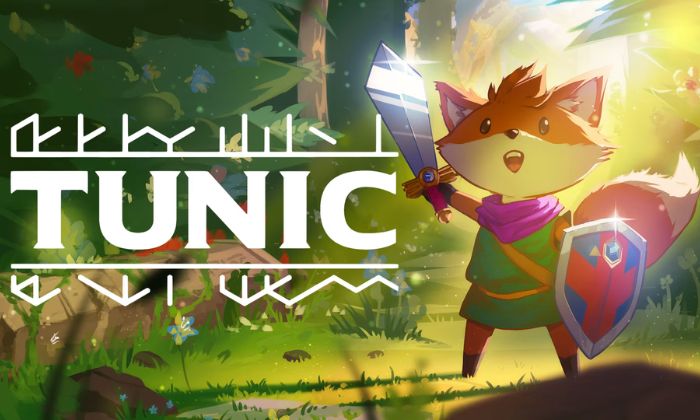
Tunic is an isometric adventure that starts out looking like a cute and simple game, but quickly reveals itself to be one of the most intelligent and mysterious games on the Nintendo Switch. You control a little warrior fox in a world full of ruins, forests, and ancient temples, and the fun part is that almost nothing is directly explained. Instead, you find pages of a manual within the game itself, like in the cartridge era, and each new page completely changes how you understand the map, the items, the controls, and even the objectives. It’s the kind of experience where you get excited because you realize you were missing obvious things, and suddenly the game unfolds in layers, with hidden shortcuts, secret doors, and rules that were right in front of you the whole time.
In combat, Tunic has a very precise and tense approach, with sword and shield, dodging, stamina management, and enemies that punish those who desperately mash buttons. Each encounter demands positioning, pattern reading, and clever use of resources, and the bosses are “now it’s serious” moments, the kind that require learning, improving, and returning sharper. But the game isn’t just about fighting. Above all, it’s a giant puzzle disguised as an action-adventure, because much depends on observing the environment, interpreting symbols, connecting clues from the manual, and testing ideas. Even the invented language is part of the charm, as it reinforces the feeling of exploring something unknown, and when you begin to understand what each piece of information means, the feeling of discovery is surreal.
The exploration is addictive because the world is compact yet extremely interconnected, with intersecting paths, elevators, and shortcuts that transform your route, as well as optional secrets that seem made for those who love theory, collectible hunting, and that classic “how did I not see this before?” moment. Visually, the game is beautiful, with a delicate style, meticulous lighting, and a soundtrack that alternates between calm and tension in just the right measure, leaving everything with an air of mysterious fable. On the Switch, Tunic is perfect for playing on a handheld, progressing little by little and thinking between sessions, because it’s one of those games that stays in your head even when you’re not playing. In the end, it’s a charming, challenging, and brilliant adventure, made for those who enjoy action with weight, exploration with rewards, and secrets that make you feel like a genius when you finally fit the pieces together.
60 – Chants of Sennaar
Chants of Sennaar is an adventure puzzle that puts you in the role of a traveler trying to decipher unknown languages in a gigantic tower, and the feeling is that of experiencing an archaeological mystery, but playable, clever, and addictive. Instead of giving you ready-made translations, the game makes you learn in the coolest way possible: observing the context, reading signs and notes, following conversations, comparing symbols, and noting hypotheses in your notebook until the pieces start to fit together. Each “word” discovered is a small victory, because it not only helps to understand the text, it unlocks paths, solves problems, and completely changes how you see those people and that place.
The tower’s structure is divided into communities with their own cultures and routines, which makes everything more interesting because each group uses a different language and has its own social codes. You need to move around areas, investigate, connect clues, and often use what you’ve already translated to advance in new situations, such as negotiating passage, interpreting important warnings, or noticing when someone is hiding something between the lines. The game also mixes exploration with logic challenges and moments of light infiltration, where you need to move carefully, observe patterns, and choose the right moment to act, without turning everything into frantic action. The focus remains on the brain, curiosity, and that desire to understand “what’s really going on here.”
Visually, Chants of Sennaar is beautiful and stylish, with inspired art direction, simple yet personality-filled animations, and environments that tell a story through architecture, colors, and details alone. The soundtrack and atmosphere reinforce the idea of a sacred yet tense place, where communication is power and misunderstanding becomes a literal barrier. On the Nintendo Switch, it’s perfect for playing at your own pace, in short or long sessions, because you can always advance a little further, discover another symbol, and feel that delightful click when your translation finally makes sense. It’s a different, intelligent, and extremely satisfying game that transforms language into mechanics and rewards you like few others when you realize that learning to communicate is, literally, the key to everything.
59 – Crash Bandicoot N. Sane Trilogy

Crash Bandicoot N. Sane Trilogy is the triumphant return of one of the most iconic mascots in video games, bringing together in one package the remade versions of Crash Bandicoot, Crash Bandicoot 2: Cortex Strikes Back, and Crash Bandicoot: Warped, with modernized visuals and the same chaotic energy that made these games legendary. The premise is simple and great: run, jump, spin, and survive levels full of traps, enemies, and treacherous platforms, all with that fast-paced rhythm that makes you enter “just one more try” mode until you hit the perfect course. On the Switch, the trilogy becomes even more dangerous for your free time, because it’s easy to play a quick level on the portable console and, before you know it, you’ve strung together several trying to improve your performance.
The first Crash is the most “classic” and also the most brutal, with linear levels that demand precision, patience, and jump control, especially in narrow sections and obstacle sequences that catch you off guard. Crash 2 offers a delightful evolution in pace, with more variety, new abilities, and levels that better play with speed and exploration. Warped, on the other hand, is a festival of diversity, placing you in levels with different themes all the time, including vehicles and variations that completely change the way you play, making the progression very dynamic and giving it a blockbuster feel. And since all three games are in the same package, you can clearly feel this evolution of ideas, from the purest challenge to the most varied spectacle.
The gameplay remains simple to understand and difficult to master, and that’s where the addiction lies. Completing levels “on the fly” is already fun, but the game challenges you to come back and do better, whether it’s to find hidden boxes, reach gems, complete objectives without dying, or tackle Time Trials to achieve insane times. This extra layer transforms each level into a mini performance challenge, where you start to memorize patterns, choose safer or faster routes, and shave seconds off with cleaner movements. And when you finally string together a perfect sequence, the feeling is amazing because it’s entirely thanks to your control.
The collection also succeeds in making everything more user-friendly without losing its identity. The checkpoints and modern adjustments help reduce frustration, but the difficulty remains high enough to maintain that classic platforming feel that doesn’t forgive distractions. In several parts, you can also play as Coco, which adds an extra spice and makes the experience more varied without changing its essence. In the end, Crash Bandicoot N. Sane Trilogy is a must-have package for anyone who enjoys challenging platforming, plenty of charisma, and that perfect blend of nostalgia with modern polish—one of those games that makes you laugh, suffer, and celebrate loudly in a matter of minutes.
58 – Splatoon 2
Splatoon 2 is that Nintendo Switch shooter that makes you want to play constantly because it swaps the standard military vibe for colorful, stylish, and intelligent chaos, where winning isn’t just about hitting shots, it’s about dominating the map with ink. The premise is brilliant and easy to understand: instead of just eliminating opponents, you and your team need to paint as much ground as possible, and that changes everything, because ink is simultaneously territory, mobility, and defense. You shoot to cover areas, turn into a squid and “dive” into your own ink to move quickly, reload, and escape, and suddenly every corner becomes a mental game, every painted wall becomes an alternative route, and every second at the end of the match becomes despair when the losing team pulls off an absurd comeback. The arsenal is huge and full of personality, with weapons to suit every type of player, from rollers that spread paint on contact, to precise rifles, buckets that shoot paint in an arc, and more technical options. Each kit also comes with a sub-weapon and special ability, so you can assemble a complete style, whether you want to play aggressively, control an area, provide support, or make long-range pick-offs.
Online, Splatoon 2 truly shines with modes that change the logic of the match and demand teamwork, map reading, and timing, because it’s not enough to just “be good,” you have to understand the objective, rotation, and when it’s worth taking risks. The matches are fast, intense, and always different, since the layout of the levels and the weapon composition change the pace all the time, and the game pushes you to improve without feeling obligated, because learning to use terrain, paint, and positioning is fun in itself. Beyond that, Salmon Run is the perfect cooperative mode for those who want to play together against the CPU, with frantic rounds, bosses appearing in waves, and constant pressure that turns any mistake into a disaster, but also generates those epic victories when the team clicks. And for those who enjoy solo content with more story and challenge, the campaign is already good for practicing mechanics, and the Octo Expansion raises the bar with more creative and difficult challenges, the kind that test precision and reasoning and make you play better in multiplayer.
Beyond everything else, Splatoon 2 has an incredible identity, with a world full of attitude, fashion, music, and charismatic characters, and an art direction that makes each match look like a music video, with catchy soundtracks and a youthful energy that perfectly complements the Switch. Ultimately, it’s a game that stands out because it’s competitive without being inherently toxic, accessible without being shallow, and unlike any traditional shooter, since here the map is as important as aiming, and mastering the ink becomes addictive.
57 – The Stanley Parable: Ultra Deluxe
The Stanley Parable: Ultra Deluxe grabs your attention with its curiosity, and before you know it, you’re laughing, questioning your choices, and even doubting what it means to “play right.” You control Stanley, an ordinary employee who suddenly realizes that everyone in the office has disappeared, and the only thing guiding you is the voice of a narrator describing what you “should” do. But the fun is precisely in disobeying, testing limits, and seeing the game react, because here every decision becomes a provocation: following the narration can lead you down one path, ignoring it can open another, and insisting on going against the grain almost always triggers even more absurd, intelligent, and unexpected situations.
What makes The Stanley Parable work so well is how it transforms something simple—walking down corridors and choosing doors, into a labyrinth of possibilities and different endings. The game constantly plays with video game rules, with the idea of player freedom, with choices that seem important, and with the feeling of being watched by a story that is also watching you. And it does this without becoming just a “joke,” because behind the humor there is a very sharp side of reflection, dealing with themes such as control, routine, narrative, obedience, and the need to find meaning in things that may not have any meaning at all.
The Ultra Deluxe version is the ultimate way to experience this, because in addition to bringing the original game with adjustments and refinements, it adds a huge amount of new content, with unprecedented paths, surprises, new variations on classic situations, and that constant feeling that the game still has one more trick up its sleeve. It’s the kind of experience where you think you’ve figured it out, then you choose a different option, take another turn, interact with some detail, and discover another sequence that seems impossible to predict. On the Nintendo Switch, it’s perfect for playing in short sessions, because you can jump in, look for another ending, explore another route, and leave with the feeling of having lived a complete little story. In the end, The Stanley Parable: Ultra Deluxe is a must-have for anyone who enjoys creative and meta games that break expectations, make you laugh out loud, and still leave a bunch of questions in your head after the screen goes black.
56 – Burnout Paradise Remastered
Burnout Paradise Remastered transforms racing into pure adrenaline, making you drive as if every corner is an invitation to do something reckless and stylish. Instead of trapping you in endless menus and lists, it throws you straight into Paradise City, an open city designed for reckless driving, discovering shortcuts, crossing bridges, tunnels, and giant avenues, and suddenly realizing you’ve memorized the entire map just from exploring. The game’s structure is quite simple and highly addictive: you choose an event at a traffic light, head out to the starting line through the streets, and the game rewards you for getting to know the city, improvising routes, and taking risks that seem wrong but become the perfect move when you cut through traffic at the last second.
What truly defines Burnout is the automotive combat, because here the idea isn’t just to win, it’s to survive the chaos and take down others before they take you down. In modes like Road Rage, the objective becomes causing takedowns, throwing rivals against walls, poles, and traffic, and the sensation of impact is delightful, with crashes that look cinematic and accidents that become a spectacle. And when you crash badly, the game transforms your failure into a show with Crash Mode, putting the camera to follow the damage and giving you that “okay, that was beautiful” moment, even though it was entirely your fault. The variety of events keeps the pace high, alternating races, speed challenges, chases, and precision tests, all using the same city as a stage, which makes each attempt different depending on the route you choose and the chaos of the traffic.
The progression is also addictive, because with each victory you unlock new cars, licenses, and challenges, and there’s always a reason to want to play more and more. And since the map is full of secrets, jumps, billboards to break, and repair points, the game encourages you to drive while looking at the world, not just the minimap, discovering new things in each neighborhood. The Remastered version brings the complete package with a lot of extra content, making the experience even richer and perfect for marathon gaming on the handheld, and on the Switch it shines especially because it’s the kind of game you can play for five minutes and end up playing for an hour, because there’s always a quick race or a challenge you want to try again.
Visually, it remains stylish and retains that classic arcade feel, with a strong sense of speed and a soundtrack that perfectly matches the concept of reckless, high-speed racing (wow, this game really reminded me of how I played Crazy Taxi on the Dreamcast, pure passion). I consider Burnout Paradise Remastered a must-have for anyone who enjoys racing, because the game gives you total freedom in the form of racing, a true amusement park on wheels that mixes exploration, competition, and destruction in an extremely fun way.
55 – New Super Mario Bros. U Deluxe
New Super Mario Bros. U Deluxe is the game that proves why 2D Mario is still one of the absolute kings of the Nintendo Switch: it’s accessible for anyone to pick up a controller and have fun, but it also has enough challenge and precision to become addictive when you decide “now I’m going to get a perfect score”. Here, the classic formula of running, jumping, and traversing levels shines with a delightful rhythm, with varied themed worlds, secrets hidden in every corner, alternative exits that open paths on the map, and a flow of levels that alternates between moments of speed, more technical platforming sections, and timing challenges that demand attention. The movement is responsive and enjoyable, and the game knows how to create that good tension of dodging enemies, timing jumps at the limit, and maintaining momentum until the end of the level to secure coins, lives, and collectibles, always with that feeling of “I could do better” when you finish.
The Deluxe package is even more complete because it combines the base game with New Super Luigi U, which functions as a turbo version of the same adventure: shorter, faster, and much more difficult levels, with less room for error and a gameplay that forces you to play aggressively, master momentum, and think fast. This gives it incredible longevity, since you have a super balanced campaign to play casually and, when you really want to sweat, you have another one to test your reflexes and precision mercilessly. And to make it even more accessible, the game features characters with different styles, including options that help beginners, so you can play with family, friends, or even someone who almost never plays video games, without turning the experience into frustration.
Multiplayer is where the good chaos happens: playing in a group transforms each level into a mix of cooperation and mayhem, because while you can save each other, carry each other, and combine moves to get secrets, there are also collisions, people falling together, someone stealing an item at the wrong time, and everyone laughing at the disaster. And since the game has many power-ups and situations that change the way you approach the level, the replayability is huge, especially for those who like to hunt Star Coins, find hidden exits, and complete everything 100%. Visually, it’s clean, colorful, and well-animated, with soundtracks that keep the energy high and that classic Nintendo adventure feel. New Super Mario Bros. U Deluxe is a must-have on the Switch because it delivers pure 2D Mario, with plenty of content, just the right level of difficulty, and a perfect multiplayer to turn any session into an event.
54 – Shin Megami Tensei V: Vengeance
Shin Megami Tensei V: Vengeance is an RPG that throws you into a stylish and brutal apocalypse, with that dark and powerful vibe that only the Shin Megami Tensei series delivers. You are a student in Tokyo who, after an inexplicable event, ends up trapped in Da’at, a distorted and deserted version of the city, dominated by angels, demons, and entities waging a war for the fate of the world. The story has that heavy end-times atmosphere, full of moral dilemmas and choices that affect the course of humanity, and Vengeance makes everything even more interesting by bringing a new narrative route, with new characters and plot twists that significantly change how you perceive the conflict, as well as offering the original campaign for those who want to compare paths and decisions.
Turn-based combat is the game’s biggest draw because it’s fast, punishing, and intelligent. The Press Turn system makes every choice serious: hitting enemy weaknesses gives you an advantage and more actions, but missing, hitting resistances, or taking a critical hit can make your team crumble in seconds. This makes every battle feel like a strategic duel, where you need to assemble a balanced team, predict what the enemy will do, and adapt your plan amidst the chaos. And since the game revolves around recruiting demons, negotiating with them, and fusing them to create stronger creatures, progression becomes a delightful obsession. You’re always testing new combinations, inheriting important abilities, adjusting resistances, and building a team with real synergy, not just “high numbers.” The protagonist, like Nahobino, also evolves in a very flexible way, and you can mold your build to focus on elemental damage, brute force, support, survivability, or a well-calculated mix.
Exploring Da’at is another highlight, as the game blends expansive areas with verticality, secrets, and a constant sense of danger. You collect essences for customization, encounter Miman scattered across the map, face powerful enemies that patrol like mini-threats, and discover shortcuts and rewards out of sheer curiosity. Visually, the contrast between the surreal desert and broken urban structures is striking, and the art direction of the creatures is simply absurd, with demons full of personality and presence. Vengeance also arrives more polished, with quality-of-life adjustments and extra content that make the experience more fluid and inviting, without losing the series’ tough and challenging identity.
On the Nintendo Switch, Shin Megami Tensei V: Vengeance is a massive RPG for those who enjoy true strategic combat, an apocalyptic atmosphere, and that feeling of always being one wrong decision away from being crushed, but also one right decision away from dominating the fight with style. It’s intense, deep, and extremely addictive, a game that makes you think about builds, weaknesses, and fusions even when you’re not playing.
53 – Unicorn Overlord
Unicorn Overlord is a tactical RPG that seems made for those who love strategy, charismatic characters, and that feeling of commanding a real war, but with an absolutely beautiful art style. On the Nintendo Switch, it shines as a huge adventure, with a medieval fantasy atmosphere and a meticulously crafted presentation by Vanillaware, full of detailed portraits, elegant animations, and battles that look like paintings in motion. The story follows Alain, an exiled prince who must gather allies and reclaim his kingdom after a coup that put an oppressive empire in control, and the game puts you in the shoes of a resistance leader who liberates regions, gains support, and discovers that the conflict is much bigger and dirtier than it seemed at first.
The big difference lies in how the battles work. Instead of just “move units and attack,” you assemble squads with various characters, define formations, priorities, and abilities, and then watch the confrontations unfold dynamically, with room to pause, reposition, and use resources at the right time. It’s addictive because victory doesn’t just come from high levels, but from assembling a smart team, combining classes that protect and enhance each other, controlling terrain, routes, and objectives, and adjusting tactics when something doesn’t fit. Each class has a clear role, from cavalry that quickly traverses the map to archers, healers, tanks, and more technical units, and the fun increases when you start creating compositions with their own identity, testing synergies, equipment, and leadership skills to transform a squad into a war machine.
Outside of combat, Unicorn Overlord also hits the mark in terms of adventure and progression. The open world gives you the freedom to explore, accept missions, liberate cities, rebuild important locations, and recruit new characters, creating a delightful “just one more region” rhythm because there’s always something interesting popping up along the way. The characters aren’t just game pieces; the game invests in interaction, bonds, and small stories that make you care about the army you’re building, as well as management choices that affect how you prepare for the next big confrontation. In the end, it’s a game that blends accessible strategy with an absurd depth to master, all wrapped up in unforgettable visuals and a massive campaign, perfect for anyone who wants one of the most engaging and stylish tactical RPGs on the Switch.
52 – Kirby and the Forgotten Land
Kirby and the Forgotten Land proves that Kirby can reinvent itself without losing its cuteness and charm, delivering one of the most fun and creative adventures on the Nintendo Switch. Here, the pink balloon leaves the 2D world and fully enters a 3D world full of exploration, platforming, and secrets, in a setting quite different from the usual: a “forgotten land” that looks like an abandoned civilization, with buildings reclaimed by nature, destroyed parks, an empty shopping mall, and ruins that blend beauty and strangeness. The story begins when Kirby is pulled into this place and finds the Waddle Dees being kidnapped by the Beast Pack, then the mission becomes a perfect mix of rescue, curiosity, and adventure, with that lighthearted energy that captivates you with its smile and keeps you hooked on the gameplay.
The great charm lies in how the game transforms each level into an accessible yet layered 3D playground. You advance through areas with clear objectives, but the level of detail is so high that there’s always something more to discover, whether it’s an alternate path, a hidden challenge, a well-placed collectible, or a secret room that completely changes your pace. Exploration is rewarding because the game gives you real reasons to look at every corner and test possibilities, especially to save more Waddle Dees, which act as the heart of progress. They’re not just “collectibles,” because each rescue helps rebuild Waddle Dee Town, a hub that grows and becomes more vibrant, unlocking minigames, a shop, upgrades, extra activities, and cute interactions that give a delightful sense of progression from one level to the next.
In combat and platforming, Kirby and the Forgotten Land takes the best of the series and adapts it to 3D with enjoyable controls and clear spatial awareness. Copy Abilities remain the main ingredient, and here they shine even brighter because the game creates arenas and situations designed for you to experiment with different styles, such as Sword for a more direct pace, Ranger for distance, Bomb for explosions and area control, Needle for aggression, and so on. And to make it even more addictive, several abilities can be evolved, gaining new forms and effects that change your strategy and make you want to test them. Kirby and the Forgotten Land is Kirby’s big 3D turnaround, and it works impressively: it takes all the classic cuteness and creativity of the series and throws it into three-dimensional levels full of secrets, light action, and moments that seem made for you to stop and say, “Okay, this is brilliant.” The premise itself is attention-grabbing, because instead of the usual Dream Land, Kirby ends up in a mysterious world that looks like an abandoned civilization, with buildings, shopping malls, parks, and avenues reclaimed by nature, creating a beautiful contrast between the “clean” post-apocalyptic atmosphere and the character’s colorful and friendly vibe. But the game doesn’t just focus on the visuals; it uses this setting to create levels that function like small playgrounds, with alternative paths, platforming challenges, combat arenas, and extra objectives that encourage you to explore every corner.
The gameplay is easy to understand and delightful to master. Kirby retains the ability to copy powers by swallowing enemies, but here it’s even more enjoyable because the powers have been adapted to 3D with very well-tuned controls, so attacking, dodging, and positioning blows in space becomes part of the pleasure of playing. You alternate between abilities like sword, fire, ice, bomb, and several others, each with its own style, and the game gives you real reasons to experiment, since certain situations and bosses become easier when you choose the right kit. And there’s a detail that makes the progression addictive: you can evolve your abilities, making them stronger and gaining variations with new moves, which gives a great sense of growth without turning the game into something complicated or bureaucratic.
The game’s signature feature is Mouthful Mode, which is basically Kirby doing the impossible by swallowing giant objects from the environment to transform into a car, a vending machine, a traffic cone, a lamp, and other absurdly creative shapes. This isn’t just a visual joke, because each transformation becomes a specific level mechanic, such as passing through walls, speeding through obstacle courses, illuminating dark areas, or solving mini environmental puzzles. The result is a very varied pace, where the game is always giving you a new idea before anything gets repetitive, and many of these ideas become memorable scenes due to their inventiveness.
The campaign also excels in its structure of objectives and rewards. In each stage, in addition to reaching the end, you can complete extra missions that require careful observation of the environment and more attentive play, fueling the desire to revisit stages to complete everything. These objectives connect to rescuing Waddle Dees, which are the game’s emotional “currency”: the more you save, the more Waddle Dee Town grows, opening shops, minigames, and side activities. This hub is one of the game’s most charismatic aspects, because it makes your progress visible and vibrant, and also offers fun distractions, such as arena challenges and other games that work perfectly for short sessions on the portable console.
Kirby and the Forgotten Land is one of those games that you can confidently recommend to practically anyone, but especially to those who enjoy lighthearted adventure, polished 3D platforming, and a game that constantly rewards you with charm, humor, and creativity. It’s accessible for those who just want to enjoy the journey, but it also has extra content and optional challenges for those who like to squeeze every level to the max, delivering a complete, polished experience with a “happy game” energy from beginning to end.
51 – Splatoon 3
Splatoon 3 is the definition of addictive multiplayer on the Nintendo Switch, mixing shooting, fast-paced movement, and plenty of personality in matches that feel like a brawl with championship strategy. The idea is simple and brilliant: instead of winning just by eliminating the opposing team, you need to paint the map with your team’s color, creating routes, dominating areas, and turning the game around in the final seconds with a well-executed play. The result is a frenetic pace, because every painted wall becomes mobility, every corridor taken becomes an advantage, and the entire match is a duel of positioning, space control, and reading what the other team is trying to do.
The gameplay shines because you not only shoot ink, you also turn into a squid to swim through your own color and move much faster, escape danger, climb walls, and appear out of nowhere on the enemy’s flank. This gives Splatoon 3 a “ink parkour” feel, where aiming, movement, and map are as important as reflexes. And since there’s a huge variety of weapons, from more balanced shooters to rollers, sniper-type chargers, sloshers, and more “crazy” options, you can find a style that suits you, whether you’re aggressive in the front or supportive, painting and holding the area. Sub-weapons and specials also change the game, with bombs, sensors, barriers, and attacks that can create a decisive opening, so learning when to save and when to use your special becomes part of the strategy.
In addition to the classic Turf War mode, the online mode features objective-focused ranked matches where the team needs to coordinate pushes, defend zones, and play for the score with much more pressure. This is where the game becomes even more competitive, because attack timing, spawn control, and special synchronization are worth more than just hunting for kills. For those who enjoy co-op, Salmon Run is one of the highlights of the package: you and three other players face hordes of enemies and need to collect golden eggs amidst total chaos, with rapidly escalating waves and situations where one wrong decision can bring down the entire team. It’s challenging, fun, and perfect for that feeling of “one more try, this time it’ll work.”
For those who enjoy playing alone, the story mode delivers creative levels that serve as fun practice for movement and mechanics, with varied challenges and moments that showcase the game’s inventiveness beyond multiplayer. And on the social side, Splatoon 3 thrives on events: Splatfests allow the community to choose a side and compete for a few days, creating a festival atmosphere with memes, music, and healthy rivalry, while also keeping the game feeling fresh.
Splatoon 3 is also a showcase of style, with excellent music, an interface full of attitude, strong customization of clothing, weapons and loadout, and that visual identity that makes any screenshot look like a poster. It’s a game that rewards learning the map, mastering mobility and understanding your role in the team, but without losing its light and fun vibe, making it easy to get into and hard to put down. For those who want a multiplayer unlike anything else, with quick matches, lots of replayability and a constantly moving community, it’s one of the console’s essentials.
50 – Prince of Persia: The Lost Crown
Prince of Persia: The Lost Crown is a stylish and surprisingly addictive return to the franchise, now in a Metroidvania format that combines precise platforming, sharp combat, and an exploration pace that will keep you hooked for hours on the Nintendo Switch. You play as Sargon, an elite warrior called The Immortals, sent to rescue a kidnapped prince, but who ends up plunging into Mount Qaf, a mythical place where time and reality seem distorted. The result is an adventure with a legendary atmosphere, contrasting scenarios, and a constant sense of danger and discovery, always with that “just one more way” energy because the map constantly teases you with locked doors, shortcuts, and secrets in plain sight.
The movement is the standout feature, because the game understands that a good Metroidvania needs to be enjoyable to control. Sargon runs, climbs, jumps, slides, and performs maneuvers with excellent fluidity, and the platforming sections are designed to challenge you without becoming a lottery, with traps, saws, spikes, and increasingly creative timing sections. As you gain new abilities, the map intelligently opens up, and backtracking becomes enjoyable because you return stronger, faster, and with new route options. And to avoid relying solely on memory, the game has a very clever feature where you mark images of points of interest on the map, perfect for remembering that inaccessible chest or that mechanism you don’t yet know how to activate.
In combat, The Lost Crown is intense and highly technical, focusing on reading enemies, parrying, dodging, and punishing at the right time. Attacks are impactful, enemies vary considerably, and bosses are the kind of challenge that forces you to learn patterns and stay calm, especially since the game likes to mix pressure, projectiles, and short windows to counterattack. You also have options to customize your style with charms and upgrades, creating more aggressive, more defensive, or mobility-focused builds, which helps both those who want to optimize and those who just want a comfortable path to progress.
The icing on the cake lies in the time-related powers, which come into play in both combat and exploration, giving the game its own identity. These abilities create situations where you need to think fast, reposition yourself, reverse a disadvantage, and even solve puzzles with movement, so the adventure isn’t just about opening doors with a new key; it constantly gives you tools to play with space in different ways. Visually, the game is very appealing, with clean art and well-done animations that make the action easy to read even when everything gets chaotic, and the soundtrack maintains the epic journey atmosphere.
Prince of Persia: The Lost Crown is a sure choice for those who enjoy rewarding exploration, platforming that demands real skill, and combat that makes you feel every victory. It’s the kind of game that starts out exciting and only gets better as your options increase, delivering a long, polished adventure with a strong identity, perfect for a list of the console’s best games.
49 – Luigi’s Mansion 3
Luigi’s Mansion 3 is the kind of game that wins you over in five minutes because it takes Luigi, Nintendo’s most charismatic and timid character, and puts the poor guy in a gigantic, beautiful hotel full of traps, where everything becomes a reason for scares, jokes, and adventures. The story begins with a “vacation” trip that goes terribly wrong when the place reveals its haunted side and Mario, Peach, and the rest of the gang are captured. Luigi then has to do what he does best: tremble with fear and still keep going. The atmosphere is light, funny, and has that cartoonish charm, but the game also knows how to create enjoyable tension with dark corridors, creaking doors, and ghosts chasing you when you least expect it.
The real highlight is the gameplay, which blends exploration, puzzles, and combat in a way that’s incredibly enjoyable to control on the Switch. The Poltergust G 00, the ghost vacuum, isn’t just for sucking up enemies; it’s a tool for interacting with the entire environment. You pull curtains, spin fans, disassemble furniture, search for keys, activate hidden mechanisms, and solve problems using resources like air blasts and suction cup shots, which allow you to grab objects and throw them to break barriers or reveal secrets. Ghost fights are fun because they become a “tug-of-war” where you need to time your attacks to stun and then slam the enemy to the ground, causing extra damage and controlling the space when the room becomes chaotic. And the bosses are a show in themselves, each with their own unique concept and a specific way to be defeated, so you’re not just repeating the same strategy all the time.
Another incredible highlight is Gooigi, the slime version of Luigi, which completely changes the way you explore. He goes through grates, enters pipes, passes through spikes, and reaches places that normal Luigi can’t, which opens up very creative puzzles and makes the progression full of “why didn’t I think of that before?” moments. Furthermore, the game is even better in co-op, because you can play in local co-op controlling Luigi and Gooigi, turning the hotel into a collaborative amusement park, with one helping the other hold off enemies, press buttons simultaneously, and discover secret paths.
And speaking of the hotel, it’s practically a character in itself. Each floor has its own theme, with super different environments full of details, from luxurious areas to places that look like they came straight out of a movie, always with incredible animations, meticulous lighting, and art direction that makes you want to explore everything. The game rewards your curiosity with money, gems, and collectibles, fueling the desire to return to previous floors to open locked doors and complete what was left behind. To top it all off, there are also multiplayer modes that are great for playing with friends, such as ScareScraper, with cooperative challenges on haunted floors, and ScreamPark, with fast-paced and chaotic competitive minigames.
Ultimately, Luigi’s Mansion 3 is one of the most humorous, beautiful, and creative games on the Nintendo Switch, perfect for those who enjoy exploring, solving puzzles, hunting for secrets, and laughing at Luigi’s desperate reactions as he tries to play the hero in the most clumsy way possible.
48 – Pokémon Legends: Arceus
Pokémon Legends: Arceus is one of the most refreshing games in the franchise on the Nintendo Switch because it takes the classic Pokémon formula and turns it on its head, focusing entirely on exploration, capture, and discovery in a world that is still “being born.” Instead of gyms and a traditional journey, you go to the Hisui region, an older version of Sinnoh, where humans and Pokémon don’t yet coexist peacefully, and the main mission is to help create the first real Pokédex. This completely changes the pace: here, the game pushes you to observe behavior, study habitats, test approaches, and truly live the fantasy of being a researcher, not just a trainer going from city to city.
The core gameplay loop is addictive because catching Pokémon happens in real time, directly on the map, with you aiming and throwing Poké Balls without needing to constantly engage in battle. You can approach stealthily in tall grass, use lures to attract them, throw items to distract them, take advantage of turned backs, and choose whether it’s worth fighting or simply catching and moving on. When combat does occur, it’s faster and more strategic than it seems, with the Agile and Strong style system, which alters the turn order and makes you think about risk and reward: attacking faster to act first, or hitting harder to try and finish, even if it leaves you vulnerable. And the game also puts you, the character, in the middle of danger, because aggressive Pokémon can chase you and knock you down, creating a tension quite different from the main series.
The world’s structure is divided into large open areas, full of biomes, alternative routes, resources to collect, and plenty to do besides “just” completing the story. Crafting is essential, so you’re always gathering materials to create Poké Balls, potions, and items, which fits perfectly with the wilder, more exploratory approach. Progression is also delightful thanks to mounts, which unlock new ways to traverse the map, run, swim, and climb, opening shortcuts and encouraging you to return to old locations to reach areas that were previously inaccessible. And when elements like space-time distortions and massive outbreaks come into play, the game gains adrenaline and reward peaks, with rare encounters, valuable loot, and that feeling of “something’s happening now, I need to take advantage of it.”
In terms of story, Pokémon Legends: Arceus succeeds in creating a sense of mystery and urgency with the threats to settlements and the noble Pokémon, which function as battles that differ from the standard, mixing action, dodging, and moments of pressure. The cast of characters and the more “historical” setting also help to create its own identity, and the game does a great job of providing context for the relationship between people and Pokémon, showing a world where capturing is not tradition, but novelty. In the end, it’s a Pokémon game that shines for its freedom, the fluidity of capture, the pleasure of exploration, and the constant feeling of progress, being one of those titles that makes you say “just one more expedition” and, before you know it, you’ve spent hours hunting for another perfect entry for your Pokédex.
47 – Octopath Traveler II
Octopath Traveler II is one of the most enjoyable JRPGs to play on the Nintendo Switch because it takes the foundation of the first game and evolves practically everything, delivering a huge adventure with beautiful HD-2D visuals, a memorable soundtrack, and a cast that makes you want to follow along until the end. Instead of following a single protagonist, you choose which of the eight travelers you will start with and gradually build your group, experiencing very different stories from each other, with tones ranging from light and funny to tense and dramatic. The world of Solistia is more alive and varied, with cities full of character, routes with secrets, and a structure that gives you the freedom to explore at your own pace, alternating between land and sea, with that classic feeling of an epic journey.
Turn-based combat remains highly addictive thanks to the Break and Boost system. You exploit enemy weaknesses to break their defenses and, at the right moment, spend Boost points to multiply attacks, turbocharge spells, or strengthen abilities, creating delightful comebacks when the fight was slipping out of control. The beauty is that it’s not enough to have a high level; you need to understand patterns, build synergies, and carefully choose the timing of your “explosive turn.” Octopath Traveler II also improves the variety of strategies with new abilities, jobs, and more interesting combinations, making battles more dynamic from beginning to end, including bosses that truly demand planning.
Outside of combat, the game shines with Path Actions, unique actions for each character to interact with NPCs and the world. You can buy, steal, investigate, challenge to duels, seduce, hire followers, and so on, and this changes how you obtain items, information, and access areas and missions. The key is that these actions aren’t just for show; they create parallel stories, alternative solutions, and a constant incentive to test what each traveler can do in each city. Another great idea is the day and night cycle, which alters NPCs, events, and even interaction options, making exploration richer and rewarding those who return to places at different times.
Individual stories remain the heart of the game, but here they tend to have more pace, more memorable moments, and a greater sense of “complete adventure.” There are also chapters and content that connect the characters more directly, reinforcing that you’re assembling a real group, not just eight separate campaigns. Visually, the HD-2D is even more polished, with lighting, water, shadows, and effects that make each city look like a diorama, and the soundtrack powerfully carries emotional scenes and tense battles, the kind you recognize instantly.
Octopath Traveler II is perfect for anyone who wants a long, beautiful, and strategic JRPG with freedom to explore, addictive combat, and a world that always has something more to discover, be it a clever side quest, an optional boss, a rare item, or a hidden city along the way. It’s the kind of game you start to “see what it’s all about,” and before you know it, you’re completely invested in your party and build choices, trying to land that perfect Break and Boost combo in every fight.
46 – Dragon Quest XI S: Echoes of an Elusive Age Definitive Edition
Dragon Quest XI S: Echoes of an Elusive Age Definitive Edition is one of those RPGs that makes you want to live inside it, because it delivers a gigantic, charismatic adventure with a classic feel, but with modern polish to keep you glued to the Nintendo Switch for dozens and dozens of hours. You take on the role of the Luminary, a young man marked by an ancient destiny, who leaves his village and ends up in the middle of a huge conflict involving kingdoms, legends, and dark forces. The story begins with a fairytale atmosphere and gradually gains weight, with twists, exciting moments, and an epic climb that makes you attached to the group and want to see how far this journey will go. And the best part is that the cast is incredibly good: each member of the team has a strong personality, chemistry with each other, and their own arcs, so traveling with this group becomes part of the charm, not just “recruiting another character.”
In terms of gameplay, it’s the complete package of a well-made traditional JRPG. You explore detailed cities, talk to NPCs, hunt for secrets, open chests, collect materials, and discover new areas with that enjoyable feeling of a large and welcoming world. The combat is turn-based, super easy to understand, but with real room for strategy when you start playing with buffs, debuffs, support abilities, and team compositions. The Pep system adds a fun twist, because characters enter a special state that unlocks Pep Powers, combo attacks, and unique abilities that can turn the tide of important battles. And even though it’s a very “classic” RPG, it’s not slow in a bad way, because the Definitive Edition brings several quality-of-life improvements that make everything more fluid, including battle speed adjustments and options for you to control the pace of the adventure your way.
The “S” part is the reason this is the ideal version on the Switch, because in addition to the base game being huge, it comes packed with extra content. It has additional character-focused stories, new events, improvements and adjustments, plus the incredible option to switch to 2D mode, which transforms the game into a retro experience, in the style of the old Dragon Quest games, perfect for those who enjoy nostalgia or want to vary the feeling of exploration. There’s also the Fun Size Forge, the game’s portable forge, which lets you create and improve equipment without relying so much on shops, encouraging you to experiment with builds and customize your team exactly how you like it.
Visually, the game is a spectacle of colors and comfort, with art direction by Akira Toriyama giving it that instant Dragon Ball and Dragon Quest DNA simultaneously. The monsters are creative, the cities have identity, and the world has that “real” adventure energy, where each region feels like a new chapter. The soundtrack maintains the epic atmosphere and the lighthearted vibe when needed, and the big moments in the story become even more memorable because of it. In the end, Dragon Quest XI S: Echoes of an Elusive Age Definitive Edition is a sure choice for anyone who wants a long, beautiful, and extremely enjoyable JRPG, the kind that starts as a fun trip and, before you know it, has become one of your great journeys on the Switch.
45 – The Elder Scrolls V: Skyrim
The Elder Scrolls V: Skyrim is the kind of game that devours your time in a dangerous way, because it throws you into a gigantic open world and simply says “go,” letting you create your own legend amidst snowy mountains, caves, ancient ruins, and cities full of intrigue. You start as an ordinary prisoner and, within minutes, you’re at the center of a prophecy with dragons, cries of power, and a destiny that could turn the kingdom upside down. But the most incredible thing is that Skyrim doesn’t just rely on the main story to be memorable. It’s a factory of emergent adventures, the kind where you go out to deliver a simple item and, three hours later, you’re exploring a Nordic tomb, becoming a member of a guild, making complicated moral decisions, and carrying too much loot because you can’t let go of anything.
Freedom is the real addiction here. You can play as a shield-and-sword warrior, a stealthy archer, a devastating mage, a conjurer, a rogue, an alchemist, or a completely crazy hybrid you invent along the way. And the game truly follows your choices, because your skills evolve as you use them, so you feel your character getting better naturally. Combat mixes punches, magic, and stealth, with that classic pleasure of landing a well-placed bow shot, turning the tide of battle with a well-timed heal, or using a Shout to throw enemies away, freeze them, slow down time, or cause total chaos. Exploration is also incredibly rewarding, because there’s always a hidden dungeon, a lore book, a unique item, a new shout, or a secret in a corner that seemed like just scenery.
Skyrim also shines in the sheer number of parallel narrative threads. You can get involved in the kingdom’s civil war, join the Companions, become a professional thief in the Thieves Guild, delve into magic and politics at the College of Winterhold, or follow quests that start small and become entire sagas. And because the world reacts to what you do, there’s a constant feeling that you’re leaving your mark, whether it’s buying a house, adopting children, getting married, becoming Thane of a city, or being hunted by enemies you unintentionally provoked. It’s a game that gives you ready-made stories, but also creates your own, those moments you recount later because they happened “only to me.”
On the Nintendo Switch, Skyrim becomes even more tempting because it’s a true portable epic. The console edition comes packed with content, including expansions, so there are dozens of hours of adventure, and you can play anywhere without losing that feeling of traveling through a vast world. There are also Switch-specific extras, such as amiibo support and themed items, as well as optional motion controls for those who enjoy aiming in a more physical way. In the end, Skyrim is an absolute classic because it combines freedom, exploration, fantasy, and customization in a gigantic package, the kind where you always find a new objective, a new path, and another reason to say “just one more mission” before turning it off.
44 – Super Mario Maker 2
Super Mario Maker 2 is practically an “infinite Mario” on the Nintendo Switch, because it transforms the idea of a platforming level into a gigantic toy: you can create your own levels with super intuitive tools and, at the same time, play an absurd number of levels made by the community from all over the world. It’s the kind of game that works both for those who just want to have fun jumping and running and for those who enjoy inventing challenges, testing crazy ideas, and watching other people try to survive what you’ve created. And the coolest thing is that it has that classic Mario magic, but with a constant sense of surprise, since each level can have a completely different style, rule, and plot twist.
In terms of creation, the game is a playground of possibilities. You choose the visual and physics style from Super Mario Bros., Super Mario Bros. 3, Super Mario World, New Super Mario Bros. U, and the special Super Mario 3D World style, which adds its own elements and gives a different feel to the movement. From there, you can create traditional levels with well-placed progression and checkpoints, or go for total chaos, creating precision challenges, puzzles with keys and doors, musical levels synchronized with obstacles, mazes, autoscrollers, speedruns, “troll levels” full of tricks, and whatever else your creativity can handle. And since the editor allows you to adjust the theme, water, lava, night with special effects, and various types of enemies and mechanisms, you can create levels that look like official games and levels that look like an experiment with no rules other than your own.
For those who prefer just playing, Course World mode is a huge time black hole. You find levels by popularity, novelty, difficulty, tags, and creators, save favorites, follow people, and enter that delightful cycle of “just one more level.” The game also encourages challenge with the Endless Challenge, a marathon where you try to survive a sequence of levels with limited lives, and then the tension rises because you can fall into an easy level or a precision nightmare. And when you find a good creator, it almost becomes a series, because you want to play everything that person has made and see how they think.
The single-player package is also strong. The Story Mode features official levels made by Nintendo and even uses this as a showcase to teach you design tricks and mechanics that you can reuse in the editor. It’s perfect for those who want a “campaign Mario” and, at the same time, want to learn how to create better levels, with a smoother flow, clearer ideas, and challenges that are difficult without being unfair. Furthermore, the game gives you that feeling of building with a goal, because you rebuild the castle and unlock content as you progress.
In multiplayer, Super Mario Maker 2 becomes pure shouting and laughter, with competitive and cooperative modes where four players tackle levels created by the community. In co-op, there’s that vibe of total improvisation, saving each other from falling, using blocks and items to help, and trying to reach the end together. In versus mode, it’s all about racing and sabotage, with people pushing, stealing power-ups, and taking advantage of any mistake to get ahead, and since the levels are unpredictable, each match becomes a different story.
Ultimately, Super Mario Maker 2 is essential on the Switch because it never ends. Even after dozens of hours, there will always be a new level to surprise you or an idea you haven’t yet tested in the editor. It’s a game that blends creativity, challenge, and community into an addictive package, perfect for those who want to both play Mario and “be” the mind behind the next impossible level that will go viral.
43 – Super Mario RPG
Super Mario RPG is one of the most charismatic and enjoyable RPGs to play on the Nintendo Switch, bringing back a classic Mario adventure with modernized visuals and the same lighthearted and funny spirit that made the original a cult classic. The story starts with full energy: Bowser is in Peach’s castle, as always, but a giant sword falls from the sky, smashing everything and scattering the Star Pieces, throwing the kingdom into a mess that even Mario wasn’t prepared to face. From then on, the game becomes a journey full of personality, with unexpected encounters, absurd situations, and a cast that works very well precisely because it mixes the “Mario world” with a very traditional RPG feel, including unforgettable allies like Mallow and Geno, as well as seeing Bowser himself in a very different role than usual.
Turn-based combat is simple to understand and delightful to master because of the timing. Instead of just choosing an attack and watching, you press the button at the right moment to increase or reduce damage received, making each battle more active and avoiding that “autopilot” feeling. As you progress, you unlock spells, abilities, and strategies with your party, and the fun lies in assembling a balanced team, exploiting weaknesses, managing resources, and using the right rhythm to maintain control. The remake also makes everything more fluid by current standards, with quality-of-life improvements and new options that make fights more dynamic, including combined party attacks that add that extra touch of spectacle when you’re in the middle of an important confrontation.
In terms of exploration, Super Mario RPG shines by being a more straightforward RPG with excellent pacing, perfect for those who want a complete adventure without it becoming an endless commitment. The scenarios are varied, full of secrets, light puzzles, and simple platforming, and the game thrives on cute moments, quick jokes, and characters with expressions and animations that perfectly convey humor. Visually, the Switch version delivers a beautiful charm with updated graphics that respect the style of the original, and the soundtrack features meticulous arrangements that make the memorable scenes even more memorable. In the end, Super Mario RPG is an accessible, addictive, and extremely charming RPG, ideal for those who want to enter the genre without complications or for those who just want a Mario adventure unlike anything else, with plenty of personality from beginning to end.
42 – Donkey Kong Country: Tropical Freeze
Donkey Kong Country: Tropical Freeze is one of the most insane and well-produced platformers on the Nintendo Switch, one of those that immediately hits you with energy, creativity, and a catchy soundtrack. The premise is straightforward and great: the Snowmads invade Donkey Kong’s island, freeze everything, and kick everyone out, so you embark on a journey through completely different islands and biomes to reclaim your territory. But what makes the game special is the level of detail in each stage, because Tropical Freeze isn’t just “running and jumping,” it’s a festival of gameplay ideas, with scenarios that constantly change pace, obstacles that force you to read the environment, secrets hidden in places that seem like just decoration, and a sense of movement that gets better and better as you get the timing of DK and master the flow of the sequences.
The gameplay is pure precision and impact. Donkey Kong is heavy, the jumps are committed, and every landing, roll, and leap onto an enemy has that feeling of sharp control that makes you better with each attempt. And that’s where the brilliance of the levels comes in: there’s a mine cart section, an animal ride with moments of pure adrenaline, an aquatic area that demands calm and a well-chosen route, a storm, ice, lava, jungle, beach, factory, and all of this with its own mechanics that appear, develop, and disappear before becoming repetitive. It’s the kind of design where you realize that each screen was designed to surprise you, whether with a platform that falls at the exact right time, or with an alternative path that only appears if you trust your instincts and explore.
The challenge is respectable and part of the charm. Tropical Freeze is the kind of game that doesn’t go easy on you, especially if you really want to complete it, collecting the KONG letters, puzzle pieces, and unlocking extra content. But the difficulty here rarely feels unfair, because the game is very good at teaching you patterns and punishing you when you slip up, not when it decides to troll you. And for those who want to enjoy the adventure with less pressure, the Switch version comes with Funky Mode, which puts Funky Kong as a playable option, bringing more mobility and advantages that make the journey more accessible without taking away the fun of exploration and level design.
Another strong point is the playable cast and the co-op mode. Besides DK, you can use partners like Diddy, Dixie, and Cranky, each with different abilities that change how you traverse specific sections, creating an extra layer of strategy, especially when choosing how to tackle a tighter sequence. In cooperative mode, two people play together and the chaos turns into fun, because you can save each other, share responsibilities, and laugh when you both make a mistake at the same time on that “obvious” jump that wasn’t so obvious after all. To top it off, the game is beautiful and full of personality, with expressive animations, deep environments, and art direction that makes each world look like a moving cartoon, and the soundtrack is simply legendary, with music that elevates the adventure atmosphere and makes even repeated attempts at levels exciting. In the end, Donkey Kong Country: Tropical Freeze is a masterclass in platforming on the Switch, perfect for those who want a challenge, memorable levels, and that dangerous addiction of saying “just one more try” until you nail the perfect run.
41 – Super Mario 3D World + Bowser’s Fury
Super Mario 3D World + Bowser’s Fury is a massive package on the Nintendo Switch because it delivers, all at once, one of the most fun Mario games to play in a group and an extra adventure that feels like a laboratory of ideas for the future of the series. In Super Mario 3D World, the vibe is that of a “level-based Mario,” with a well-defined beginning, middle, and end, but with the freedom and creativity of 3D: you traverse themed worlds full of platforms, precision challenges, secrets, green stars to collect, stamps, and special levels that truly test your skill. The movement is delightful, the pace is fast, and the variety of situations is absurd, with levels that play with gravity, shadows, speed, quick puzzles, and sections where the game changes the rules out of nowhere just to surprise you. The game’s main symbol is the Super Bell, which transforms the characters into feline versions and completely changes the way you play, allowing you to climb walls, perform quick attacks, and explore alternative routes you never imagined existed, so each level becomes an invitation to replay and discover more things.
The playable cast also greatly contributes to the “it doesn’t get boring” factor, because Mario, Luigi, Peach, and Toad have different movement styles, and choosing who you take changes how you approach certain sections. And that’s where one of the biggest reasons this game is so strong on the Switch comes in: the multiplayer. In co-op, the fun becomes controlled chaos, with four people trying to coordinate jumps, carry items, save someone falling, and sometimes unintentionally mess things up, which leads to easy laughs and moments that become stories to tell later. At the same time, it remains great solo, with levels that function as pure challenges and a sense of progression that makes you want to clear everything, including extra content for completionists who want to prove they’ve mastered every mechanic. This Switch version further improves the flow with adjustments that make the experience more agile and enjoyable to play, especially for those who want to marathon worlds in sequence without losing momentum.
And just when you think you’ve already played enough games, Bowser’s Fury comes along like an absurd dessert, because it’s a very different experience from what you expect from a traditional Mario game. Here, the structure is more open, in a large interconnected map where you explore, solve mini-challenges, face bosses, and collect Cat Shines to unlock new areas. The idea is to give you a compact world, but full of activity, where you’re always seeing an objective nearby and thinking “just one more,” but with a constant dose of tension: from time to time, Bowser goes into fury mode, changes the atmosphere of the scenario, and becomes a gigantic threat on the map, forcing you to move, protect yourself, and take advantage of the chaos to reach places and unlock things that only appear at these moments. It’s exciting because the game mixes free exploration with peaks of cinematic action, including epic transformations to face Bowser on equal terms, and even allows you to play in co-op with someone controlling Bowser Jr., which makes everything more dynamic and perfect for casual couch play.
Ultimately, Super Mario 3D World + Bowser’s Fury is one of those essential Switch games because it delivers two flavors of Mario on the same cartridge: an extremely polished 3D platformer, full of memorable levels and addictive multiplayer, and an extra adventure that focuses on freedom, experimentation, and huge, memorable moments. It’s a complete package for those who want immediate fun, just the right amount of challenge, and that classic Nintendo feeling at the peak of its creativity.
40 – Red Dead Redemption

Red Dead Redemption is an open-world game that pulls you in with its atmosphere, and before you know it, you’re completely immersed in the Old West at its most chaotic, beautiful, and brutal. The adventure puts you in the shoes of John Marston, a former outlaw forced to hunt down old partners to try and “buy” a new life. What begins as a straightforward mission quickly turns into a grueling journey full of tension, choices, and consequences, showcasing a West in transformation where the law is arriving, but violence and corruption still reign supreme. The narrative has a cinematic pace, with memorable characters, sharp dialogue, and a constant sense of danger, while also allowing for quieter, more contemplative moments as you traverse plains, deserts, and dusty towns while the sun sets, making you feel like you’re living a real story.
The gameplay is the perfect combination of free exploration and cinematic action. You can follow the campaign and watch the plot unfold, but you can also disappear into the world for hours, accepting jobs, hunting bounties, helping strangers, playing poker, dueling, hunting animals, and discovering random events that arise along the way, creating stories that feel unique. The shooting is easy to understand and very enjoyable to master thanks to Dead Eye, the ability that slows down the action and lets you aim shots with precision, transforming confrontations into pure Western scenes, complete with life-saving comebacks when things get tough. And since the game encourages you to live like a gunslinger in the world, you manage weapons, ammunition, horse, money, and reputation, feeling the weight of being recognized as a hero, villain, or someone in between, depending on how you behave.
The setting is what makes Red Dead Redemption unforgettable. Each region has its own identity, each city has its own problems, and the map is full of details that make the world feel alive, from patrols and gangs to unexpected encounters on the road. On the Switch, the experience works very well for playing in portable mode, because it’s the kind of game that offers both long story sessions and “just one more mission” before turning it off. To top it off, this version also includes Undead Nightmare, an expansion that takes all that serious West and throws supernatural chaos on top, with a more arcade-style and fun approach, perfect for a change after the main campaign. In the end, it’s a classic that holds up to this day by combining a strong story, real freedom, and a Western atmosphere that few games can come close to.
39 – Bayonetta 2
Bayonetta 2 is action at its most exaggerated and stylish, one of those Nintendo Switch games that makes a big splash with its fast-paced, choreographed, and absurdly fun combat. You control Bayonetta, a powerful and sassy witch, who embarks on a desperate mission to save someone important while the world descends into chaos with angels, demons, and gigantic creatures beating each other up in settings that look like they were made for a movie scene. The story has that intense fantasy tone with humor and spectacle, but the real addiction lies in how the game gives you the freedom to fight your way and feel incredible doing it, whether playing “pretty” to score high or just trying to survive a hail of blows.
Combat is the heart of the game and functions like a dance of aggression, reflexes, and creativity. You combine punches and kicks with different weapons equipped in your hands and feet, alternate between combos, charged attacks, and finishing moves, and even use Witch Time, which slows down time when you dodge at the right moment, opening a perfect window to punish enemies with style. The game encourages experimentation because each weapon completely changes the rhythm of the fight, and that’s where Bayonetta 2 shines: it doesn’t want you to just mash buttons, it wants you to master the flow, read patterns, improvise, and turn each encounter into a performance. To make everything even more explosive, Umbran Climax comes in as a power mode that turbocharges strikes and summons, creating those turning points where the screen becomes a festival of effects, impact, and destruction.
And it’s not just “arena and that’s it.” The stages are full of insane set pieces, with chases, fights on top of vehicles, gigantic bosses, and changes of pace that keep the adventure always fresh. Between one brawl and another, the game also throws in lighter sections, optional challenges, and special arenas for those who want to improve their technique and seek high ranks. Visually, it’s pure spectacle, with smooth animations and art direction that perfectly sells the extravagant fantasy of the series, while the soundtrack and effects give that satisfying weight to each hit, especially when you string together a long combo and finish with an absurd finishing move.
Bayonetta 2 fits perfectly with its practicality of playing on both handheld and TV, which is a great match for a game that makes you want to revisit it to improve your performance, test new weapons, and replay chapters in search of better medals. There’s also a cooperative mode focused on battles, great for those who enjoy facing challenges in pairs and wanting variety after the campaign. In the end, it’s one of the best action games on the console, made for those who want truly stylish combat, gigantic cutscenes, and that constant feeling of controlling the most confident character in the room while the world crumbles around them.
38 – The Legend of Zelda: Echoes of Wisdom
The Legend of Zelda: Echoes of Wisdom is one of those historic Nintendo turns on the Switch, because it puts Zelda as the true protagonist and transforms the way you play Zelda into something both familiar and totally new. The adventure begins with Hyrule being swallowed by mysterious rifts that “erase” people and places from the map, and Zelda must act on her own to understand what is happening and save the kingdom. The tone is that of a classic fantasy tale, with mystery and urgency, but with that light charm that matches the cuter and more detailed, diorama-style visuals, which make each village, ruin, and forest look like a super elaborate toy.
The game’s biggest differentiator is the Echo mechanic: instead of solving everything with just a sword, you use a power that allows you to copy objects and creatures you find in the world and recreate these “copies” whenever you want. This completely changes the logic of exploration and puzzles, because the solution is rarely unique. You can create blocks to climb to high places, make bridges, improvise platforms, block attacks, activate buttons, distract enemies, and even assemble combinations that seem like clever player tricks. The feeling is great because the game rewards creativity all the time, and each new Echo you learn becomes another tool in your “box of possibilities,” making you look at the scenery and think, “How do I break this in my own way?” And since Hyrule is full of secrets, alternative paths, and well-hidden rewards, exploring becomes addictive, especially when you realize that what seemed like an obstacle might just be a lack of the right idea.
In combat, the game also embraces this philosophy of improvisation. You can use echoes to pressure enemies, create positional advantages, and control space, which adds a very different flavor to the “just walk in and smash” approach. At the same time, the adventure doesn’t abandon action, bringing moments where Zelda adopts a more direct fighting style, allowing the pace to vary between intelligence, exploration, and brawling in just the right measure. Bosses and challenges tend to require pattern reading and clever use of what you’ve already collected, so it’s not just brute force; it’s about brainpower, and when you find a creative solution that works, you get that delightful feeling of “I invented this myself.”
The Legend of Zelda: Echoes of Wisdom is special because it delivers an adventure with its own identity, full of new ideas, but with the Zelda DNA in every detail: an inviting world, well-designed dungeons and challenges, progression that makes you more versatile, and that constant curiosity that pulls you to the next corner of the map. It’s a game that makes you feel intelligent, creative, and a hero all at once, and it also carries the symbolic weight of finally letting Zelda shine center stage the way it always deserved.
37 – The Legend of Zelda: Link’s Awakening
The Legend of Zelda: Link’s Awakening on Nintendo Switch is one of those games that seems small at first glance, but gradually wins you over until it becomes an unforgettable adventure, mainly due to the absurd charm of its diorama-style visuals and the way it blends cuteness with a mysterious atmosphere. Here, Link awakens after a shipwreck on the enigmatic Koholint Island and discovers that, to get back home, he needs to awaken the Wind Fish by gathering special instruments hidden in dungeons scattered across the island. The story is simple to understand, but it has a somewhat surreal and even melancholic touch, with strange characters, unexpected moments, and a constant feeling that something is “out of place” behind all that innocent appearance.
The game shines with the classic Zelda rhythm: exploring, talking to NPCs, solving puzzles, and unlocking tools that open new paths. Koholint is a compact but extremely well-utilized map, full of secrets, optional caves, character swaps, and small side objectives that keep you constantly exploring the island, always finding something new along the way. The controls are straightforward and enjoyable, with simple but efficient combat, and a progression system that gives you iconic items to change how you face enemies and navigate the environment, creating that addictive feeling of returning to an old place and finally being able to traverse what previously seemed impossible. The dungeons are a highlight for those who enjoy well-crafted puzzles, with rooms that force you to observe patterns, move blocks, use keys carefully, and combine items in clever ways, as well as bosses that test whether you really understood the mechanics that area wanted to teach you.
Beyond the campaign, the remake adds a fun extra layer with the dungeon-building system, where you create labyrinths by fitting together rooms you’ve already found, completing objectives to earn rewards. It’s a bonus that fits the game’s vibe, because it gives more reason to explore and revisit content without breaking the flow of the main adventure. In the end, The Legend of Zelda: Link’s Awakening is perfect for those who want a more compact Zelda, full of identity, with excellent puzzles and a world that looks like a living toy, but which holds surprises and emotions far greater than its cute appearance suggests.
36 – NieR:Automata The End of YoRHa Edition
NieR:Automata The End of YoRHa Edition is the kind of game that starts out seeming like “just” a stylish action RPG and, without you realizing it, turns into an experience that messes with your head and sticks in your heart, mixing insane brawling, existential science fiction, and an absurdly good soundtrack. You mainly play as 2B, a YoRHa combat android sent to a devastated Earth, where humanity has fled to the Moon and the surface has become a battleground between invading machines and androids created to retake it. But what seemed like a straightforward mission becomes increasingly strange and intriguing, because the game uses this “eternal war” scenario to discuss identity, purpose, consciousness, and the weight of continuing to fight when no one knows exactly why anymore. It’s the kind of story that doesn’t settle for giving you easy answers, and when you think you understand, it turns the tables and makes you see everything from a different angle.
In terms of gameplay, NieR:Automata shines because it’s fast-paced, responsive, and full of style. The combat, with PlatinumGames’ signature, lets you alternate between light and heavy attacks, perfectly timed dodges, and counter-attacks that transform fights into choreographed sequences, while your Pod, a partner “drone,” maintains constant fire and special abilities to control the field. The fun is that you can play aggressively, always close to the enemy, or more cautiously, using distance, and the chip system allows you to customize your character as if you were building a character: more damage, more healing, a cleaner interface, defensive bonuses, automations, and adjustments that truly change how you approach the game. And when the game wants to surprise you, it changes perspective and genre without ceremony, bringing bullet hell moments, sections with different camera angles, and variations that keep the pace fresh, as if each stage had its own “personality.”
The world is open in just the right way, with large interconnected areas, journeys between urban ruins, desert, amusement park, factories, and forests, all with an art direction that mesmerizingly blends beauty and decay. Exploring is well worth it because there’s always a side mission that adds context and hits harder than you expect, whether with quirky humor, tragedy, or that unsettling realization that the machines aren’t just generic “targets.” The enemies, in particular, are a show in themselves, because the game uses designs and behaviors to tell a story, and you’ll find yourself questioning who the “villain” is, what’s just programming, and what seems like genuine emotion.
And here’s the detail that makes many people fall in love: NieR:Automata isn’t a game that “ends” when the credits roll for the first time. It was built to be replayed in a way that makes sense within the narrative, revealing new perspectives, new information, and new layers, until you reach the most important endings, which transform the entire experience. On the Nintendo Switch, The End of YoRHa Edition delivers this complete adventure in a portable format, perfect for playing with headphones and getting lost in the world’s atmosphere, with battles that work very well in short sessions and a story that always pulls you in for “just one more chapter.” In the end, it’s one of the console’s most memorable titles because it manages to be fun to control, beautiful to listen to, and impossible to forget.
35 – Okami HD
Okami HD is one of those games that feels like an interactive legend, focusing more on beauty, atmosphere, and creativity than on “button mashing,” which is why it has aged so well on the Nintendo Switch. You control Amaterasu, the sun goddess in the form of a white wolf, on a journey to cleanse the corruption consuming the world, restoring life to villages, forests, and rivers. The story leans heavily towards Japanese folklore, with humor, eccentric characters, and truly epic moments, and the game has that classic adventure feel where you gradually unlock powers and feel the world unfold before you.
The visuals are the game’s calling card: Okami looks like a moving painting, with a sumi-e style and effects reminiscent of ink and paper, so exploring is already a pleasure just for the artistic flair. And the mechanic that defines everything is the Celestial Brush, the “divine brush.” At any moment you can pause the action and literally draw on the screen to change the world: trace a cut to attack or open paths, draw a circle to fix things, create wind, summon the sun, make flowers bloom, solve puzzles, and unlock secrets. This makes the game stand out because it encourages you to think creatively, not just to look for the right key, and many challenges have more than one solution depending on the power you already possess.
In combat, Okami blends action with the use of the paintbrush. You punch, dodge, and use different weapons (with their own styles and combos), but you also “interrupt” the fight to draw and control the situation, whether by weakening enemies, creating openings, or activating effects. It’s not as technically proficient as Bayonetta, for example, but it’s varied and has a very enjoyable flow, especially when you start chaining brush strokes and attacks and realize you’re fighting in the most “divine” way possible. Exploration is also full of rewards: you purify areas, find items, complete optional tasks, and feel the direct impact of your actions on the world, as dead places gradually come back to life.
On the Switch, Okami HD is a great portable game because it’s perfect for short sessions, advancing a part of the story or clearing an area of the map. And since it’s a game that relies heavily on art and atmosphere, prioritizing visual quality makes perfect sense, because its charm lies precisely in appreciating each scene as if it were a painting.
34 – Portal: Companion Collection
Portal: Companion Collection is an excellent package on the Nintendo Switch because it brings together Portal and Portal 2, two of the best first-person puzzle games ever made, with a perfect blend of logic, physics, and dark humor. The idea is simple and brilliant: you’re trapped in the Aperture Science labs and need to escape using the Portal Gun, which creates two connected portals. From there, the game becomes a festival of “why didn’t I think of that before?”, because you start by learning the basics and, before you know it, you’re using momentum, infinite falls, boost jumps, cubes, buttons, lasers, and gels to solve increasingly clever rooms.
The first Portal is shorter and more direct, almost like a concentrated burst of creativity. It teaches you to think with portals in a way that no other game does, and it delivers a somewhat strange and minimalist atmosphere that perfectly matches the feeling of being watched all the time. Portal 2 takes this foundation and explodes the scale, with more mechanics, more elaborate rooms, much more varied environments, and a much more present story, full of memorable dialogues. This is where the franchise becomes a “complete adventure,” without losing focus on the puzzles.
What makes Portal work so well is that it doesn’t rely on quick reflexes, but rather on mental clarity and experimentation. You look at the room, test a hypothesis, make a mistake, adjust, and suddenly everything falls into place. And since the solution usually involves physics, the game creates that rare pleasure of understanding a concept and applying it in practice, like using your own fall to gain speed and launch yourself to a place that seemed impossible. The writing is also a huge highlight, especially with GLaDOS and the cast of Portal 2, because even when you’re racking your brain, the game is nudging you with jokes and comments that lighten the mood.
The collection is perfect for portable gaming: you can play in short sessions, solving a few chambers at a time, and the experience remains clean and legible on the smaller screen. Portal 2 also features a cooperative mode, which is great for playing with another person, because the levels were designed to require coordination and communication, with puzzles that change completely when there are two Portal Guns in the room.
33 – INSIDE
INSIDE is one of those games that you start thinking you’ll play “just a little,” and before you know it, you’re completely immersed in a suffocating, strange, and fascinating atmosphere. On the Nintendo Switch, it shines precisely because it’s a super-focused experience: a cinematic, minimalist, and intelligent puzzle platformer that tells a heavy story without needing dialogue, long tutorials, or spoon-fed explanations. You control a boy trying to survive in a cold and oppressive world, full of surveillance, industrial structures, laboratories, and people who always seem to be one step ahead, and the tension grows with each new area because the game makes you feel small, vulnerable, and constantly watched.
The gameplay is easy to pick up and delightful to master, because everything revolves around movement, timing, and reading the environment. You run, jump, climb, push objects, pull ropes, drag boxes, use switches, and solve puzzles that feel natural within the setting—the kind you understand by looking and testing, without needing giant arrows pointing you in the right direction. The coolest part is how the game varies the ideas: one moment the challenge is to hide and go unnoticed, the next it’s manipulating machines, dealing with physics, using the environment to your advantage, and making quick decisions while danger is approaching. And when INSIDE throws you into the water, the atmosphere changes completely, bringing tense sequences that mix exploration, escape, and that feeling of desperation that makes you truly hold your breath.
Visually, it’s a masterclass in art direction. The game uses cool colors, heavy shadows, and extremely well-done animations to build a world that feels real and, at the same time, wrong, as if everything had been designed to control and crush anyone who tries to escape. The cinematic camera and the way it frames scenes make each moment seem carefully considered, as if you were inside an interactive film that never stops to give you comfort. The sound is another absurd point: instead of a traditional soundtrack all the time, INSIDE uses noises, echoes, machines, water, footsteps, and silences to create tension, so even a distant noise becomes a warning of trouble.
The pacing is one of its greatest strengths. The game knows exactly when to tighten the noose with chases and when to slow down to let you explore, observe, and piece together the puzzle solution, always with well-placed checkpoints so you can quickly return after a failure. And you will fail a lot, because INSIDE isn’t afraid to be cruel at times, but it never becomes unfair. When you die, you can almost always understand why, adjust your approach, and try again with more confidence, which makes that cycle of trial and error quite addictive.
What truly makes INSIDE stick in your mind, however, is the mystery. It tells a powerful story from beginning to end without giving everything away through text or dialogue, and this makes you interpret every detail, every scenario, and every situation, drawing your own conclusions. It’s the kind of game that finishes and leaves you wanting to be silent for a minute, thinking about what just happened, and then discussing theories with someone. On the Switch, it’s a sure recommendation for those who enjoy short, intense, and unforgettable experiences, with clever puzzles, a heavy atmosphere, and a visual narrative that relies on your intelligence to fill in the gaps.
32 – Undertale
Undertale is the kind of RPG that seems simple at first, but quickly shows itself to be much smarter, funnier, and more exciting than any description can adequately summarize. On the Nintendo Switch, it remains a must-play experience because it takes the classic retro RPG structure, with pixelated visuals and room exploration, and transforms it into a game where your choices truly matter, including how you decide to treat each enemy. Instead of just “go into battle and defeat everyone,” Undertale gives you real alternatives: talk, calm down, understand the other side, use specific actions to resolve encounters without violence, or go for direct confrontation if that’s your style. And the coolest thing is that the game reacts to this with consequences, different dialogues, unexpected situations, and a constant sense that it’s paying attention to what you do, which gives enormous weight even to decisions that seem small.
The combat is a show in itself because it mixes turn-based mechanics with “bullet hell” in an addictive way. When it’s your turn, you choose actions and attacks; when it’s the enemy’s turn, you control a little heart and need to dodge patterns of attacks inside a box, like a minigame of reflexes and movement reading. Each enemy has its own attack style, personality, and “logic” to be faced, so the battles become small puzzles with humor and creativity, and not just a trade of damage. This gives the game rhythm: sometimes you’re laughing at an absurd dialogue, the next you’re tense trying to escape a difficult pattern, and then you’re surprised by a response from the game that seems to read your mind. Toby Fox’s soundtrack greatly enhances these moments, with catchy songs that manage to be cute, epic, and sad in just the right measure, elevating simple scenes into things that stay in your head for years.
Exploring the Underground is also part of the charm, because the game is full of memorable characters, quick jokes, strange situations, and a huge heart behind all the craziness. Undertale has sharp writing that knows how to play with video game clichés, break expectations, and make you question what it means to “win” in an RPG. It doesn’t need a giant map or realistic graphics to be unforgettable, because its strength lies in its creativity, the timing of its humor, the way it uses mechanics to tell a story, and the connection you create with the world. On the Switch, it’s perfect for playing in short sessions on the handheld or binge-watching to the end, and it’s exactly the kind of game that finishes and leaves you wanting to start again, not because of repetition, but because you realize there are other ways to experience that same adventure.
31 – Animal Crossing: New Horizons
Animal Crossing: New Horizons is the kind of game that becomes a delightful routine on the Nintendo Switch because it doesn’t put you in a race to “beat” it; instead, it invites you to build, decorate, and live on an island your way, at your own pace. You start by arriving in a practically empty piece of paradise, with a tent, a few neighbors, and a lot of possibilities, and gradually transform that place into a complete community, with houses, bridges, ramps, shops, a museum, and themed areas that reflect your personality. The feeling of progress is very satisfying because everything is achieved in stages: you collect resources, make tools, plant trees, grow flowers, hunt insects and fish, search for fossils, complete donations, and unlock new customization options, always with something new to do even when you only log in “for 20 minutes.”
The real addiction lies in the creative freedom. New Horizons gives you a crafting system that makes exploring and gathering materials part of the daily routine, and the decoration is incredibly deep, both indoors and outdoors, allowing you to rearrange the entire island with paths, fences, lighting, furniture, seasonal items, and custom patterns. The Island Designer changes everything when you unlock it, because then you can shape rivers and cliffs, creating neighborhoods, squares, gardens, viewpoints, and any crazy idea you can imagine. And since the game runs in real time, with days, nights, seasons, and special events, the island changes with the calendar, bringing different fish and insects, varied weather, and themed dates that make you want to come back to see what’s happening.
The inhabitants are another reason to stay hooked: they have styles, phrases, quirks, and interactions that make the island feel like a “living place,” and chatting, helping with small tasks, and watching the squabbles and friendships unfold becomes part of the charm. The museum, run by Blathers, is also a spectacle, because transforming your captures into complete exhibitions gives a very strong sense of collection, besides being simply beautiful to stroll through and see everything organized. And there’s the “relax” side of the game, with music, a cozy atmosphere, and that satisfaction of tidying up an area and then just walking around to appreciate the result.
In multiplayer and online features, Animal Crossing: New Horizons becomes an addictive social experience. Visiting friends’ islands, trading items, fishing and bug catching sessions, showing off your decorations, and getting inspiration from other islands is one of the most fun parts, and the custom design system creates a huge culture of clothing, paths, and art made by the community. You can even travel to mysterious islands to recruit new villagers, farm resources, and vary your exploration, which helps a lot when you’re in that “I’m going to renovate everything” mode.
Ultimately, Animal Crossing: New Horizons is one of the most essential games on the Switch because it delivers comfort, creativity, and a rare sense of belonging in video games. It’s perfect both for those who want a quiet retreat to play every day and for those who love decorating, collecting, and transforming an entire map into a showcase of ideas, always with that feeling that their island is unique because it was built exactly the way they wanted.
30 – Cuphead
Cuphead is an action spectacle on the Nintendo Switch that blends respectable difficulty with a presentation that looks like it came straight out of a 1930s cartoon. Here you control Cuphead and Mugman, two brothers literally with cup-shaped heads, who end up making a terrible deal and need to pay off their debt by facing an insane sequence of bosses. The story is simple and humorous, but what really makes the game shine is the addictive challenge and the absurd audiovisual style: hand-drawn animations, scenarios full of personality, effects that look like moving paintings, and a jazz and big band soundtrack that gives each battle a show-like atmosphere.
The gameplay is a shooting and platforming game with a total focus on precision and reflexes. You run, jump, dash, aim in various directions, and need to learn to read attack patterns all the time, because Cuphead is the kind of game where each boss is practically a new “exam.” The fights are incredibly creative, with stages that change pace mid-combat, bosses that transform, attacks that force you to alternate between aggression and survival, and situations where you have to pay attention to everything on the screen at the same time. In addition to the main battles, there are run-and-gun style stages to collect coins and unlock upgrades, and that’s where the strategic layer comes in: you buy weapons with different behaviors, choose Charms that change your mobility and resistance, and decide on a Super to use when the bar is full, so you can adjust your “build” to match your play style and the type of challenge at hand.
The real spice of combat lies in the parries, where you precisely tap pink objects to gain energy and maintain control in chaotic situations. This makes Cuphead more than just “memorizing patterns,” because the game rewards courage and timing, and the best victories are those where you risk the parry at the right moment to turn the tide of battle. On the Switch, it works very well both in handheld mode and on TV, and the cooperative mode is perfect for playing in pairs, with that mix of teamwork and fun desperation, reviving your friend in the midst of chaos and celebrating each conquered level as if it were a championship final. For those who enjoy extra content, the expansion The Delicious Last Course adds more challenges and new features to further extend the game’s lifespan. In the end, Cuphead is a must-have for anyone who loves 2D action, memorable bosses, and a challenge that knocks you down but makes you come back immediately to try “just one more.”
29 – Donkey Kong Country Returns HD
Donkey Kong Country Returns HD brings back one of Nintendo’s most intense and addictive 2D platformers, the kind that makes you smile with the creativity of the levels and, five seconds later, has you gritting your teeth trying to get past an impossible section. The story is simple and classic: Donkey Kong’s island is invaded by the Tiki Tak Tribe, who hypnotize the animals and wreak havoc, and DK has to go and recover his bananas using jumping, punching, and charisma. But what really matters here is the journey, because each world is a sequence of levels full of personality, with scenarios that vary between jungles, beaches, ruins, caves, and factories, always with a rhythm that alternates between exploration, challenge, and spectacle.
The gameplay is pure precision and fluidity, with that enjoyable “weight” in Donkey Kong’s jump and a sense of impact when you roll to knock down enemies and overcome obstacles. The great thing is that the levels are packed with secrets and extra objectives, so it’s not just about reaching the end. You’re hunting for KONG letters, puzzle pieces, and hidden passages, often revealed when you interact with the environment, explode barrels, poke suspicious corners, and pay attention to details. This gives it a huge boost in replayability, because you can beat it “the hard way” and then go back to complete everything, or go in perfectionist mode from the start and suffer with style.
And when the game wants to take your breath away, it throws in the most cinematic levels, like the mine cart and rocket stages, which become a test of reflexes and memory with obstacles coming at you at high speed. The bosses also make a strong impression, with patterns that demand reading and timing, and that classic feeling of hard-fought victory when you finally understand the rhythm of the fight. In co-op, you can play with another person controlling Diddy Kong, adding a jetpack and extra tools that change the approach to some sections, as well as making the adventure much more fun to play as a duo, even if the chaos increases when both start making mistakes together. Nintendo has updated the game, including a playable Dixie Kong, a turbo mode that allows you to play against the clock where everything is accelerated, improvements in visual effects, resolution and loading times, as well as the inclusion of new languages, such as Brazilian Portuguese.
As an HD version on the Switch, the game boasts a cleaner and more beautiful presentation, great for enjoying on both TV and handheld, and maintains the sharp level design that made it a favorite among platforming fans. Donkey Kong Country Returns HD is for those who love a real challenge, creative levels, and that addictive feeling of “I can do it, I just need one more try,” a modern classic that continues to hit the mark.
28 – Ori: The Collection (Ori and the Blind Forest: Definitive Edition + Ori and the Will of the Wisps)
Ori: The Collection is simply one of the most beautiful and exciting packages to have on the Nintendo Switch, bringing together Ori and the Blind Forest: Definitive Edition and Ori and the Will of the Wisps in two adventures that blend precise platforming, Metroidvania-style exploration, and a story that hits you right in the heart. It’s the kind of game that makes you stop for a second just to admire the scenery, but the next minute it’s demanding reflexes and fine-tuned control in frantic escapes, millimeter-precise jumps, and sequences where everything can go wrong if you lose your rhythm.
In Ori and the Blind Forest, the journey is more “pure” and focused on movement: you explore a living and dangerous forest, unlocking abilities that completely change your mobility, such as improved jumps, climbing, dashes, and other tools that open up previously impossible paths. The map is gradually revealed, and the pleasure lies precisely in returning to old areas with new powers, finding secrets, collectibles, and shortcuts, and realizing that you are becoming increasingly agile. The Definitive Edition makes the experience even more complete and polished, with improved flow, extra content, and adjustments that help the game shine as it deserves. And when the big escape sequences arrive, the game becomes pure adrenaline, with collapsing scenery, rising water, fire chasing you, and that “go, go, go” feeling that makes victory almost cathartic.
Ori and the Will of the Wisps takes this foundation and evolves everything to an absurd level. The combat becomes much deeper and more enjoyable, with more attack options, equipable abilities, and greater freedom to build your style, whether more aggressive, more cautious, more focused on mobility, or area control. The world structure also grows, with more varied areas, side quests, memorable characters, and a broader sense of adventure, almost as if the game were saying, “Now you’re ready for something bigger.” It’s still demanding platforming and intelligent exploration, but with more tools, more pace, and more epic moments, including battles and challenges that truly test everything you’ve learned.
What unites the two games, and makes this collection so special on the Switch, is the combination of art direction and soundtrack. Ori has a visual style that looks like a moving painting, with super fluid lighting, particles, and animations that bring every corner of the map to life, and the music is the kind that carries real emotion, elevating scenes and discoveries without needing exaggeration. Even when the game is heavy and sad, it manages to be beautiful, and even when it’s beautiful, it manages to give you that pang in your chest. In portable mode, this becomes even more addictive, because these are perfect games to play “just one more section,” explore another piece of the map, and end up playing for hours.
Ultimately, Ori: The Collection is a must-have for anyone who loves high-quality platformers, worlds that reward curiosity, and stories that keep you invested from beginning to end. It’s beauty, challenge, and emotion on the same level, twice over.
27 – Into the Breach
Into the Breach is one of those Nintendo Switch games that makes you feel like a tactical genius in one match and completely humiliated in the next, and that’s exactly the charm. Here you command a squad of mechs in fast-paced, intense battles on a grid-based board, trying to save what’s left of humanity from an invasion of giant monsters, the Vek. But the absurd difference is that the game shows you the enemies’ attacks before they happen, so it’s not about “hoping it works out,” it’s about seeing the puzzle of the moment and finding the best possible response, using positioning, pushing, blocking, and prioritization to prevent disaster.
The battles are short, highly objective, and full of painful decisions. Each mission takes place on small maps, with buildings and civilian objectives that you need to protect, and often you don’t win by “killing everything,” but by preventing the Vek from causing havoc. This completely changes your mindset: pushing an enemy away, turning an attack against another Vek, blocking a ground spawn, freezing the right threat, sacrificing a mech to save a city—all of this becomes part of your mental toolkit. The combat has a delightful clarity because the rules are clean, the feedback is immediate, and each turn feels like an explosive mini-chess game where a single mistake can cost you the mission.
The progression is roguelike in style, so each campaign is a sequence of islands with increasing challenges, rewards, shops, and route decisions. When you lose, you go back to the beginning, but with real learning and, in some cases, pilot progress and unlocks. And that’s where another addictive part comes in: the squadrons are very different from each other, with weapons and mechanics that completely change how you play. There’s a team focused on fire and area attacks, another on ice and control, another on pushing and repositioning, and so on. The game forces you to relearn strategies when you switch teams. Pilots also make a difference, bringing special abilities and that “I can’t lose this guy” factor that increases the tension of each turn.
On the Switch, Into the Breach is perfect because it fits both short sessions and marathons. You can play a quick battle on the handheld, but it’s also very easy to fall into the loop of “just one more island,” “just one more upgrade,” “now it’s going to work.” And even though it’s a compact game, it has enormous depth, with adjustable difficulty, optional objectives, equipment synergies, and decisions that seem small but change everything. In the end, it’s one of the best examples of modern strategy on the console, a game that transforms each combat into a tense, intelligent, and extremely addictive puzzle—the kind where you finish a mission and immediately want to start over to do better.
26 – Dead Cells
Dead Cells is one of the best examples of “just one more run” on the Nintendo Switch, because it mixes extremely fast-paced 2D action with an addictive roguelite structure—the kind that knocks you down, teaches you something, and makes you immediately come back to try again, only better. You control a strange, “immortal” creature that possesses bodies and tries to escape a gigantic, ruined island, traversing interconnected biomes full of traps, secrets, and brutal enemies. The story is told in a mysterious and indirect way, with clues in the environment and text, but the main focus here is the sensation of movement and combat, which is simply delightful: running, jumping, rolling, parrying attacks, stringing together combos, and transforming a room full of monsters into a choreography of destruction.
Combat is the heart of the game, and it works because everything responds instantly. Each weapon has its own personality, range, and rhythm, so changing equipment truly changes how you play. You can go for melee with a sword, dagger, and whip, play it safe with a bow and crossbow, use shields for perfectly timed parries, or assemble insane builds with grenades, turrets, traps, elemental effects, and synergies that melt bosses. The best part is that the game thrives on quick choices: grab that powerful item now or keep what suits your build, spend gold to roll better attributes or save it for the shop, risk an optional room to earn a reward or take the safer route. And since the levels are generated with variation on each attempt, the feeling of discovery never fades, even when you already know the “skeleton” of the map.
Progression is another addictive element. Even when you die, you collect cells to permanently unlock new weapons, perks, and upgrades, expanding your possibilities run after run and giving you that feeling of becoming more powerful and smarter at the same time. Dead Cells also pushes you to play well with systems like speed doors and rewards for killing without taking damage, which are an invitation to learn routes, dominate enemies, and maintain aggression without becoming kamikaze. When you start reading patterns, using rolls with precision, and landing parries, the game becomes a perfect flow, and that’s when it shows why so many people consider it one of the most satisfying 2D action games of the modern era.
The biomes and bosses help keep the tension high, because each area has its own threats, tricks, and visual identity, ranging from prisons and sewers to towers, caves, and more sinister regions, always with alternative paths that change your course and the type of challenge you will face. And when you get to the bosses, things become a trial by fire, with fights that demand pattern reading, positioning, and control of your kit, punishing mistakes but rewarding mastery with that absurd feeling of “now I understand the game.” On the Switch, it fits perfectly both in portable mode and on the TV, because each run can be a short and intense session, and the responsive performance is essential for a game that thrives on timing. In the end, Dead Cells is a must-have for anyone who enjoys frenetic action, creative builds, and the kind of challenge that forces you to evolve until you realize that what seemed impossible has become routine.
25 – Stardew Valley
Stardew Valley is the kind of game you start thinking “I’ll just plant a few things” and, before you know it, you’re completely hooked on living a second life on the Nintendo Switch. You inherit an abandoned farm in Stardew Valley and decide to start over from scratch, transforming a plot of land full of weeds and rocks into a place that reflects your vision, with crops, animals, production machines, and a routine that becomes increasingly enjoyable to optimize. The best part is that the game gives you total freedom to choose your pace and focus: you can be the laid-back farmer who spends the day watering and decorating, the entrepreneur who builds a production chain and gets rich, the adventurer who disappears into the mines in search of ore and loot, or a little bit of everything, alternating according to the season and your desires.
The gameplay revolves around an addictive cycle of days and seasons. Each season changes what you can plant, which fish appear, which events occur, and even the city’s weather, so there’s always a reason to plan and experiment. You plant, harvest, fish, cook, gather resources, craft items, and upgrade tools to work faster and reach new areas. And the progression is delightful because everything improves your life in a very concrete way: a better watering can makes the start of the day easier, a barn opens up new possibilities with animals, a greenhouse completely changes your production, and before you know it, you’re creating an “empire” without even realizing it.
But Stardew Valley isn’t just about farming; it’s about community. Pelican Town is full of characters with strong personalities, their own routines, and little stories that unfold as you talk to them, give gifts, and participate in town life. There are friendships, romances, heartwarming events, and dialogues that alternate between cuteness, drama, and humor, creating that feeling that you truly belong. The festivals are also charming because they break the routine with minigames, competitions, and memorable moments, in addition to giving that “year passing” vibe that makes the world feel more alive.
For those who enjoy a more tense side, the mines and other dangerous areas come as a second layer to the game. There you fight monsters, explore floors, collect ore, unlock upgrades and assemble equipment, mixing adventure with the practical need for resources to evolve your farm. And since the game is full of secrets, collections, upgrades and big goals to pursue, there’s always a “next step” calling you, whether it’s completing the community center, improving the house, expanding buildings or finally finding that perfect strategy to make money without becoming a slave to routine.
Stardew Valley is a perfect fit for the Nintendo Switch because you can play in short sessions on the handheld, tackling it for just one day, or spend hours in marathons without realizing it. And if the idea is to play together, the cooperative multiplayer transforms everything into a wonderfully productive mess, with each person taking care of a part, dividing tasks, exploring, and building a gigantic farm as a team. In the end, it’s one of the most comfortable and addictive games on the console, simultaneously relaxing and profound, capable of captivating you with its freedom, its characters, and that rare satisfaction of seeing your little corner of the world grow day after day.
24 – Persona 5 Royal
Persona 5 Royal is a gigantic and stylish RPG on the Nintendo Switch that blends school life, urban drama, and fantasy with absurd confidence—one of those games that makes you jump in “just to play for a day,” and before you know it, you’re planning your entire week around the game’s calendar. You take on the role of a transfer student to Tokyo who, along with a group of friends, awakens a power capable of invading the hearts of corrupt adults and forcing real change in the world, forming the Phantom Thieves. The story begins with an atmosphere of injustice and constant pressure, but it grows in scale with twists, rivalries, moral dilemmas, and a cast that evolves in a way that makes you want to protect, tease, hug, and shout along, all wrapped up in a striking art direction, menus full of personality, and a catchy jazz-pop soundtrack.
The main loop is addictive because Persona 5 Royal isn’t just about battles; it’s about life management. By day, you live your routine: you go to school, explore the city, work part-time jobs, study, improve social attributes like Courage and Knowledge, and strengthen bonds with characters through Confidants, which aren’t just for “side stories” but unlock bonuses that truly change the game, opening up new options in combat, exploration, and even how to handle difficult situations. Then, when it’s time to act as a Phantom Thief, you invade Palaces, dungeons with their own theme and visual identity, created from the distorted mind of each target. Each Palace is an “amusement park” of puzzles, stealth, and cinematic moments, with specific mechanics, rooms full of secrets, alternative routes, and a rhythm that alternates between tension and reward, culminating in memorable bosses that demand strategy, weakness reading, and preparation.
The turn-based combat is fast and aggressive, with a feel that will even excite those who aren’t into RPGs. Exploiting weaknesses takes down enemies, allows you to pass the turn to allies, unleash All-Out Attacks, and chain victories in style, while the Persona system gives you enormous freedom to assemble your team, fuse creatures, inherit abilities, and create builds that match your play style. It’s the kind of RPG where you learn to love planning, because a good Persona and a good skill composition make you feel invincible, and a wrong choice can remind you that the game knows how to punish. And Royal elevates everything with refinements and extra content that make a difference: more events, new characters, quality-of-life improvements, pacing adjustments, and a narrative expansion that adds new layers to the plot, making the version even more complete and impactful.
On the Switch, Persona 5 Royal becomes the perfect companion for playing anywhere, because the days and activities format fits both short sessions and giant marathons. In the end, it’s one of the console’s most essential RPGs, combining a strong story, an unmistakable style, and an addictive loop of everyday life and fantasy, always with the feeling that every day matters and every choice leaves its mark.
23 – Divinity: Original Sin 2 Definitive Edition
Divinity: Original Sin 2 Definitive Edition is one of the most ambitious and “unleashed” RPGs you can play on the Nintendo Switch, one of those that hands you an entire world and says: figure it out your way. You start as a Sourcerer, someone marked by a forbidden power, in a fantasy universe that has no mercy on you and no time to be cute, with political conflicts, religious fanaticism, monsters, betrayals, and choices that change the course of missions and relationships. The beauty is that the game doesn’t treat you like a tourist: it puts you in situations full of consequences, gives you the freedom to be a hero, an opportunist, a manipulator, chaotic, diplomatic, or all of the above, and makes the world react in a very convincing way.
The heart of the game is roleplaying with real freedom. Almost everything can be resolved through conversation, investigation, cleverness, or cunning, and the map is full of missions that seem simple but turn into long, twisty stories. Want to enter a forbidden area? Maybe it’s best to convince a guard, maybe you disguise yourself, maybe you break down a door, maybe you teleport someone, maybe you use stealth, maybe you turn the tables and cause chaos that changes the entire scenario. Divinity has that delightful feeling of “does this really work?”, because it respects creative solutions and lets you experiment, including combining skills and environmental interactions to create unexpected results.
In combat, it becomes a brutal and addictive turn-based chess game. Positioning is everything, height gives an advantage, crowd control decides fights, and the elemental system transforms the battlefield into a dangerous toy. You can set an oil slick ablaze, electrify water to stun multiple enemies, freeze surfaces to knock people down, fill an area with poison and then explode, or use teleportation to throw an opponent into the middle of the chaos. And since enemies also use these ideas against you, each confrontation becomes a tactical puzzle where preparation and turn reading matter as much as raw damage. Character building is also addictive: you can mix classes and schools of magic, create combos between group members, and assemble very different builds, from a tank warrior who controls the field to a rogue who eliminates targets, or a mage who transforms the ground into a living trap.
The Definitive Edition polishes everything, with improvements and adjustments that make the experience more complete and consistent, as well as strengthening the cast and narrative. And the cast here is strong: you can create a character from scratch or choose origin characters with their own stories, internal conflicts, and special interactions, which changes dialogues, paths, and even how you perceive events. This makes you really want to replay, because a different party, different choices, and a different approach can transform the campaign into an almost new experience.
What’s most impressive is having an RPG of this size in portable mode, perfect for immersing yourself in long missions, tactical battles, and leisurely exploration. And for those who enjoy playing together, the cooperative mode is one of the coolest parts of the package, because the adventure becomes even more dynamic when two people discuss plans, divide roles, and even disagree on decisions, since the game truly allows the group to follow different paths within the same story. In the end, Divinity: Original Sin 2 Definitive Edition is a treat for those who love true RPGs, with freedom, strategy, a strong story, and that rare feeling that you’re not just following an adventure, you’re writing your own.
22 – Dark Souls Remastered
Dark Souls Remastered is that game everyone’s heard of for its reputation for being difficult, but what truly shines is the sense of accomplishment and its unique atmosphere. It throws you into Lordran without treating you like a child, without arrows on the ground or spoon-fed explanations, and forces you to learn by doing, paying attention to the environment, respecting each enemy, and understanding that every step has consequences. You start as an undead trying to break a curse, but quickly realize that the fun isn’t just in “beating” the game, but in surviving a ruined world full of mystery, tragedy, and stories told in small details, like item descriptions, enigmatic dialogues, and environments that seem to carry memories. It’s the kind of game that makes you piece together the lore puzzle on your own, and when everything fits together, you’ll want to discuss theories for hours.
The combat is methodical and tense, with a total focus on timing, positioning, and pattern reading. Here, mindless button mashing is an invitation to die: you need to manage stamina to attack, defend, roll, and run; choose when to be aggressive and when to retreat; and understand the true range of your weapon. And since there are several starting classes, build styles, and equipment, you can play your way, whether with a shield and patience, with two hands and a lot of courage, with magic to control distance, or with hybrid builds that mix everything. Each enemy becomes a mini-lesson, and the bosses are moments of pure adrenaline, with fights that seem impossible until you learn the rhythm, identify openings, and win through sheer grit—that victory that makes you put down the controller and truly breathe a sigh of relief.
The progression is addictive because the game rewards attention and exploration. Lordran is a brilliantly interconnected map, full of shortcuts that open up and make you realize that vast areas were connected all along, creating a feeling of “wow, I understand this world” that few games achieve. Bonfires serve as both respite and tension, because resting restores your resources but brings back enemies, so you’re constantly balancing risk and safety. Amidst all this, the online system adds a special touch: messages on the ground that can save you or troll you, invasions that turn any area into instant panic, and cooperative boss battles with another person, creating emergent stories that range from epic to hilarious.
Remastered brings the classic experience with tweaks and improvements, and on the Switch, the added charm is having this brutal world at your fingertips, perfect for short sessions trying to get through “just one more section” or marathons when you’re in total stubbornness mode. In the end, Dark Souls Remastered is a must-play because it’s not just a difficult game, it’s a fair game, with legendary level design, combat that teaches you to play better, and an atmosphere so memorable that it stays with you long after the credits roll, the kind that turns every victory into a story to tell.
21 – The Witcher 3: Wild Hunt Complete Edition
The Witcher 3: Wild Hunt Complete Edition is that gigantic RPG that makes you turn on your Nintendo Switch to “quickly complete a quest,” and before you know it, you’ve spent the whole night riding along muddy roads, entering shady taverns, and getting involved in stories that feel like entire episodes of a premium series. You control Geralt of Rivia, a monster-hunting witcher who lives off contracts, investigations, and difficult choices, while searching for Ciri amidst a war that is engulfing entire kingdoms. But the game’s great trick is that it doesn’t deliver a clean and predictable hero’s adventure: here, almost everything is gray, people lie, suffer, contradict themselves, and often your “right” decision comes at a price later. It’s a world that pulls you in with curiosity, but holds you back with the weight of the consequences.
The map is huge and packed with great things to do, and the most impressive thing is that the side quests don’t feel like filler. There’s a monster contract that turns into a full investigation, a small mission that devolves into heavy drama, and side stories so well-written that you’ll want to forget the main quest just to see where it all leads. And since Geralt is a true witcher, hunting creatures here isn’t just about hitting them: you track footprints, analyze clues, discover weaknesses, prepare oils for your sword, choose potions, and use magical signs to control the fight. Combat mixes sword, magic, and preparation, with dodging, parrying, bombs, and tools that completely change your approach depending on the enemy, giving you that delightful feeling that you’re winning because you understood your target, not just because you’re strong.
The setting is spectacular. From impoverished villages crushed by war to cities brimming with intrigue, passing through swamps, forests, ruins, and windswept islands, the game manages to be both beautiful and oppressive at the same time. And the characters carry the weight of this, with sharp dialogue, well-timed humor, and relationships that evolve naturally, whether with important allies or ordinary people you meet along the way. Amidst all this tension, there’s also a parallel addiction that many people embrace with pride: Gwent, the card game within the game, which starts as a tavern pastime and suddenly becomes a personal goal, with card collecting, duels, tournaments, and that desire to build the perfect deck.
As a Complete Edition, the Switch package comes with the full campaign and expansions, turning it into an absurd marathon of content. Hearts of Stone delivers a more self-contained, intense plot full of twists and turns, while Blood and Wine is practically an extra game, with a new map, different atmosphere, new missions, and a “final great chapter” feeling that closes the experience in style. On the Nintendo Switch, The Witcher 3 becomes even more irresistible because it’s portable: it’s a huge world to carry in your pocket, perfect for playing in short sessions or getting lost for hours. In the end, it’s one of those games that easily makes it onto any list of the console’s best because it combines high-level storytelling, real freedom of exploration, and a universe that makes every detour seem like the best decision you could have made.
20 – Crash Bandicoot 4: It’s About Time

Crash Bandicoot 4: It’s About Time is the return in grand style of one of the most charismatic mascots in gaming, and on the Nintendo Switch it delivers exactly what fans wanted: classic platforming, fast-paced, colorful, full of personality, and with that kind of difficulty that makes you laugh, get angry, and celebrate as if you’d won a championship. The story begins in chaos, with Neo Cortex and company up to their old tricks and tearing reality apart, which becomes the perfect excuse for Crash and Coco to traverse dimensions with levels that constantly change themes and always seem to have something new to knock you down or surprise you.
The gameplay is a 3D platformer in a “runner” style, with a total focus on precision. You run, jump, spin, slide, bounce on boxes, collect Wumpa fruit, and try to reach the end without being crushed, exploded, burned, or thrown into the abyss by some absurd trap. The big difference here is how the game plays with rhythm and control, because in addition to long levels full of alternative paths, it adds Quantum Masks, masks that give very creative powers and change the way you see each section. There’s a mask that allows you to spin to pass through objects and gain time in the air, another that inverts gravity and transforms walls and ceilings into tracks, one that slows down time to pass through sequences impossible with normal reflexes, and another that swaps elements of the scenery, revealing platforms and boxes that didn’t even exist before. This creates challenges that feel like moving puzzles, where knowing how to use the power at the right time is worth more than just memorizing the jump.
The game is also generous in its variety. You don’t just play as Crash and Coco, but you take on other characters at specific moments, each with their own abilities and levels designed to explore different styles, which breaks the repetition and keeps the campaign always feeling like “next chapter.” And for those who like to extract everything, Crash Bandicoot 4 is practically an amusement park for completionists: in addition to finding gems, hidden boxes, and secret routes, you have alternative levels with variations in visuals and challenge, time relics for those who enjoy mastering every turn, and modes that put your consistency to the test. It’s not the most “easy” Crash game in the world, and at various points the game demands fine control and patience, but that’s precisely where it shines, because the feeling of learning the section, clearing the level, and finally nailing a difficult sequence is just too good.
Crash Bandicoot 4: It’s About Time is one of the best platformers on the Switch for those who enjoy a real challenge, creative levels, cartoonish humor, and that classic “one more try and I’ll pass” energy, with a package that respects the series’ history but modernizes everything with new ideas and a level design that doesn’t let the player breathe.
19 – Paper Mario: The Thousand-Year Door
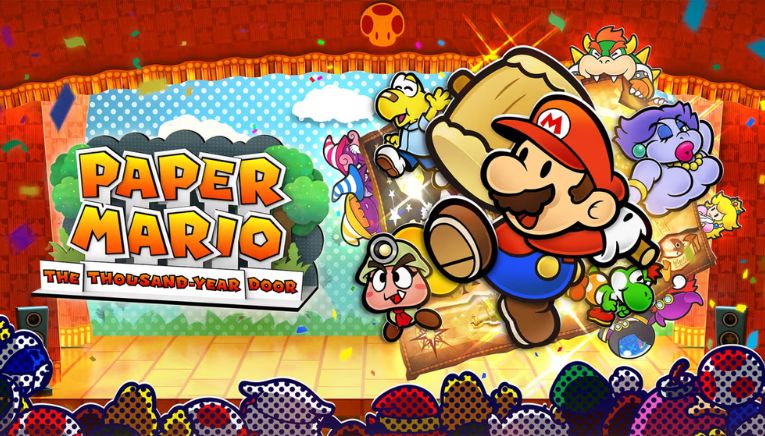
Paper Mario: The Thousand-Year Door on Nintendo Switch is an RPG that blends adventure, humor, and charisma to an absurd degree. It’s one of those games where you start with the cute visuals and, before you know it, you’re completely invested in the story, the characters, and every mystery along the way. Here, Mario ends up in Rogueport, a port city full of pickaxes, shady alleys, and strange characters, to hunt for the legendary treasure hidden behind the Thousand-Year Door. But nothing is simple: the journey becomes a series of incredibly memorable chapters, with very different locations, an “anime episode” feel to each region, and a cast that steals the show, always with quick dialogue, spot-on jokes, and that touch of adventure that makes you want to see what happens next immediately.
The combat is turn-based, but with a twist that makes everything more lively and addictive: the action commands. Instead of just choosing “attack” and watching, you press buttons at the right time to hit harder, reduce damage, extend combos, and even make your defense more efficient, so the fight becomes a delicious mix of strategy and skill. And since the battles take place on a stage, with an audience reacting, throwing items, hindering or helping, each confrontation has its own personality, especially when you start to master the rhythm of the show. Furthermore, Mario’s partners are a huge highlight: each one has unique abilities to fight and explore the map, opening shortcuts, solving situations, and completely changing how you approach certain sections. The badge system completes the package perfectly, because it gives you real freedom to build your character, choosing whether you want to focus on more damage, more defense, more resources, specific combos, or more cunning moves, making the game perfect for those who just want to enjoy the story as well as those who like to optimize everything.
Outside of battles, exploration is full of secrets, light puzzles, and worthwhile side quests, with a world that rewards curiosity at all times. The Switch remake also gives the adventure the polish it deserved, making everything prettier, more fluid, and even more enjoyable to play, without losing its classic identity. In the end, Paper Mario: The Thousand-Year Door is one of the most unforgettable RPGs on the console because it delivers a campaign with iconic moments, creative combat, clever customization, and such a strong charm that you finish wanting to start over, just to relive the journey and test different builds.
18 – Monster Hunter Rise
Monster Hunter Rise is pure adrenaline in the form of a hunt on the Nintendo Switch, a game that throws you into gigantic open arenas to face colossal monsters and, without you realizing it, becomes an addiction of progression and mechanical mastery. The premise is simple and perfect: you are a hunter from Kamura Village and you need to prepare for expeditions where each monster is practically a complete “boss,” with its own patterns, weak points, attacks that change according to the state of the fight, and that classic moment when it flees to another area and you go after it, sharpening your weapon, drinking potions, and thinking about the next move. The loop is dangerously enjoyable: you defeat a monster, transform parts of it into new armor and weapons, test a different set, unlock more difficult missions, and realize that you are hunting not only for loot, but because you want to get better, faster, and more confident in the next fight.
The great thing about Rise is how it makes the action more agile and fun without losing the strategic edge of the series. The Wirebug changes everything, because it gives you absurd mobility with grappling hooks and special moves, allowing for repositioning in the air, stylish dodges, and attacks with each weapon’s “signature” move. This makes combat feel like a dance: you learn the timing of the monster, land your combo, use the wire to escape an impossible hit, get back on top, and turn the fight around intelligently. And the game gives you tools to keep the pace high, like the Palamute, which functions as a mount and combat partner, speeding up movement on the map and making hunts more fluid, in addition to the Palico helping with support and utilities.
The variety of weapons is a spectacle in itself and is one of the reasons Rise is so addictive. Each weapon is practically a different game, with its own rhythm, range, and style, ranging from fast and aggressive options to heavy weapons that reward patience and positioning. And since building a weapon makes a real difference, you enter that laboratory mode: choosing armor abilities, talismans, decorations, elements, and affinity to assemble a set that matches your play style. Want more mobility, more critical damage, more resistance, more support for the team? You can adjust everything and feel the impact in practice, especially when the game starts demanding execution and pattern reading.
The missions have that “come on, one more” vibe because there’s always a clear objective, a better route to take, a monster you haven’t yet mastered, and an upgrade that’s just a drop away. Rampage mode adds a different energy with base defense and controlled chaos, while the main content truly shines in the traditional hunts, where each encounter becomes a story. And in multiplayer, Rise becomes a real party: joining a mission with friends or through matchmaking and seeing four hunters coordinating traps, buffs, mounts, and concentrated damage is incredibly satisfying, especially when the monster is on the brink and the team gets everything perfectly timed.
Monster Hunter Rise is one of the strongest games on the Switch because it delivers high-level action, addictive progression, and a skill ceiling that makes you feel real progress, from your first somewhat clumsy hunt to the moment when you’re already reading movements, punishing openings, and hunting with style. It’s one of those games that becomes a good routine, always with one more monster to take down and a new set to test.
17 – Pikmin 4
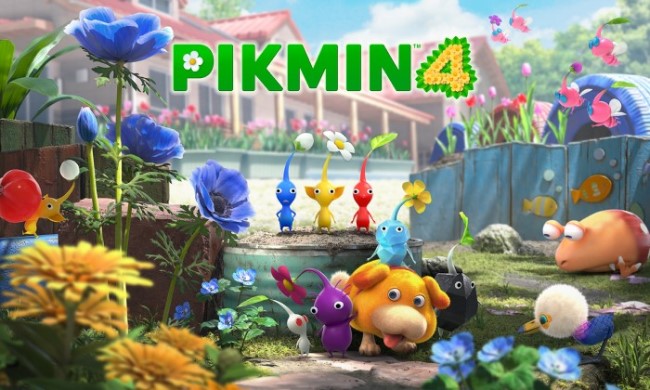
Pikmin 4 is a game that looks cute and peaceful on the outside, but inside it’s an addictive real-time strategy game that keeps you thinking about routes, efficiency, and “just one more day” without even realizing it. The premise immediately grabs you: you arrive on a mysterious planet for a rescue mission, and soon you’re exploring backyards, caves, and areas that seem ordinary, but seen from the perspective of an ant—everything is gigantic, full of dangers, and with secrets everywhere. The fun is in commanding an army of Pikmin, colorful little creatures that you raise, organize, and lead to carry treasures, build paths, overcome obstacles, and face enemies, always balancing haste and caution, because any mistake can turn into tragedy in seconds.
The loop is delightful because it blends exploration with time management and micro-decisions throughout. You choose where to go, divide your squad, decide who will work and who will fight, use shortcuts, build bridges, and transform the map into a place increasingly dominated by you. And the game greatly rewards those who play smart: you can optimize routes, leave “teams” carrying things while you tackle another objective, and return to base with that feeling of maximum productivity. This is where the word that Pikmin 4 practically teaches you by force comes in: dandori, the art of planning and making everything work, which becomes one of the most addictive aspects of the campaign, including specific challenges and efficiency battles that truly test your mastery.
The variety of Pikmin is what makes each area behave like a living puzzle. Each type has its own characteristics, so you learn to switch teams according to the terrain and threats. There are Pikmin that resist dangerous elements, others that fly to reach difficult places, others that shine in combat or specific tasks, and the game gets increasingly clever at mixing obstacles to force you to think, not just fill the screen with creatures. The caves are another highlight because they change the pace to something more tense and focused, with floors full of surprises, more treacherous enemies and great rewards, in addition to that classic feeling of “okay, just one more floor and I’ll stop,” which is never just one more.
The big new star is Oatchi, your canine companion, who completely changes the way you play. He gives you mobility, strength to carry heavy things, helps in combat, and opens up exploration possibilities that make everything more fluid and creative. Often, the solution isn’t just sending more Pikmin, but using Oatchi the right way, combining abilities to traverse dangerous areas, rescue allies, and keep your team alive. And when the game enters nighttime expeditions, the atmosphere changes completely: the tension rises, the mission becomes more focused on defense and survival, and you need to be quick and intelligent to hold off waves of enemies and protect what matters, creating excellent variety within the campaign.
Visually, Pikmin 4 is beautiful and full of detail, with scenarios that look like living dioramas, super charismatic animations, and a sense of scale that makes any ordinary object look like a giant landscape. Ultimately, it’s a game that uniquely blends cuteness with strategy, perfect for those who want to relax exploring and collecting treasures, as well as for those obsessed with playing better, faster, and more efficiently. Pikmin 4 is one of those titles that makes you smile, but also truly challenges you, and before you know it, you’re completely attached to its colorful army and the organized chaos that only this series delivers.
16 – Metroid Dread
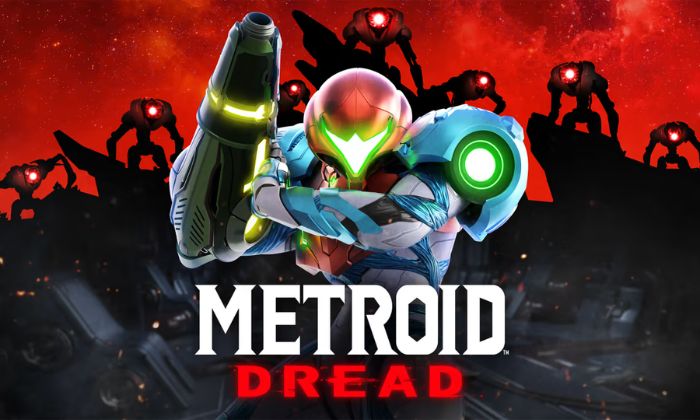
Metroid Dread is one of the most intense and “in-your-face” games on the Nintendo Switch, an absurd return of Samus Aran in a 2D Metroid that mixes classic exploration with a heart-pounding chase atmosphere. The story throws you onto the planet ZDR to investigate a mysterious signal, but within minutes you understand that you are trapped in a hostile place, full of secrets, sinister laboratories, violent creatures, and a constant feeling that you are being hunted. The game has that classic Metroid magic: you start vulnerable, with few abilities, and gradually regain power, opening up the map as if you were disassembling a giant puzzle, where each upgrade completely changes your mobility and the routes you can see.
The gameplay is fast, precise, and delightful. Samus moves with a fluidity that’s a pleasure to watch, climbing, sliding, aiming freely, and landing shots and missiles with agility, making each room a mini-challenge of reading and executing. The combat is aggressive and rewarding, with enemies that pressure you and force you to move forward, and melee counter-attacks remain an important tool for creating openings, controlling threats, and maintaining the pace. As you unlock new abilities, such as mobility upgrades and more powerful weapons, the game becomes a dance: enter, clear the room quickly, find a hidden path, test a suspicious wall, return with a new power, and discover that that “dead end” was a brilliant shortcut.
The game’s biggest differentiator, and what gives it its name, is the EMMI, hunter robots that patrol specific areas and transform exploration into pure suspense. When you enter one of their zones, the atmosphere changes instantly: the game becomes more tense, the music and sound effects convey danger, and you need to use stealth, speed, and clever routes to survive. Being caught usually means immediate defeat, so each escape becomes a cinematic moment that depends on your control and your cool head. And the best part is that it’s not just “running for the sake of running,” because you learn to manipulate their behavior, use abilities to hide, create distance, and, at the right moment, turn the tables to get the necessary upgrades to finally take them down.
The bosses and special enemies are a show in themselves. Metroid Dread features fights that demand pattern reading, positioning, and quick reactions, and it’s very good at teaching you this in practice: you get hit, understand what’s happening, come back stronger, and suddenly you’re instinctively dodging and punishing openings as if it were second nature. These battles also value your tools, because missiles, beams, and new abilities aren’t just for show; they become central to the strategy and change the pace of the confrontation. And since the game is full of shortcuts, optional upgrades, and alternative paths, it greatly rewards those who explore attentively, hunt for improvements, and try to optimize their route, bringing that classic urge to replay to do it faster, get more items, and discover different ways to traverse the map.
Visually, it’s one of the most beautiful and well-animated 2D games on the Switch, with detailed environments, effects that highlight the action, and art direction that gives each area of ZDR its own identity, in addition to a more present narrative, with scenes and revelations that propel the story forward without letting go of your control for too long. In the end, Metroid Dread is a must-have because it delivers exactly what a 2D Metroid needs to be: addictive exploration, satisfying progression, sharp combat, and a constant sense of danger that transforms every corridor into a challenge, every upgrade into an achievement, and every escape into a memorable moment.
15 – Xenoblade Chronicles: Definitive Edition
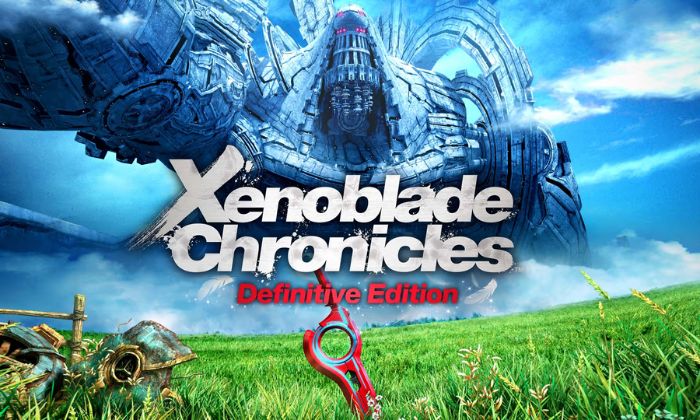
Xenoblade Chronicles: Definitive Edition is a massive and unforgettable RPG on the Nintendo Switch, one of those that makes you look at the clock and realize you’ve spent hours exploring “just one more piece” of a seemingly endless world. The story starts with a bang, putting you in the shoes of Shulk, a young man whose life is turned upside down when the war between the Bionis and the Mechonis explodes, and the legendary Monado sword enters the scene with powers that change everything. What begins as revenge and survival grows into an epic adventure, full of revelations, plot twists, and dramatic moments that stick with you, with a cast that evolves significantly and a constant sense of “okay, I need to see what comes next.”
The world is one of the game’s biggest highlights, because it’s not just big, it’s creative: you explore areas built on the bodies of colossal titans, with gigantic plains, caves, peaks, forests, and regions that completely change in climate and visual identity. And the game loves to reward your curiosity, whether with absurd vistas, hidden items, giant, high-level enemies roaming the map, and side quests that help bring the cities and characters to life. It’s easy to fall into that addictive loop of “I’ll just open up another piece of the map,” “I’ll just complete one more quest,” “I’ll just face that unique monster,” because Xenoblade has a sense of scale that few RPGs manage to deliver.
The combat blends real-time action and strategy in a unique way. You attack automatically, but the real game happens in positioning and using Arts—abilities with cooldowns, effects, and different functions. Hitting the enemy in the back at the right time, controlling aggro, using Break, Topple, and Daze to knock down and lock down the opponent, coordinating the party, and knowing when to use a Chain Attack to unleash damage and extend combos—all of this gives that delightful feeling that you’re truly improving, not just getting stronger through sheer numbers. And that’s where the game’s most iconic mechanic comes in: Visions. In critical moments, Shulk predicts future attacks, and you need to react quickly, changing tactics, defending allies, drawing the enemy’s attention, or using the right ability to avoid disaster. This makes the fights tense and cinematic, especially against bosses and unique monsters, where a mistake becomes a wipe and a success becomes a victory that will make you jump out of your seat.
Definitive Edition is the most enjoyable way to experience the classic, with quality-of-life improvements, prettier visuals, and an overall finish that makes everything more fluid and modern without losing the identity of the original. The soundtrack is also amazing, with themes that elevate exploration and battles and make each area seem even more memorable. In the end, Xenoblade Chronicles: Definitive Edition is a must-have for anyone who enjoys grand RPGs, an endless world to explore, layered combat, and a narrative that starts strong and only gets bigger, more intense, and more exciting with each chapter.
14 – Xenoblade Chronicles 3
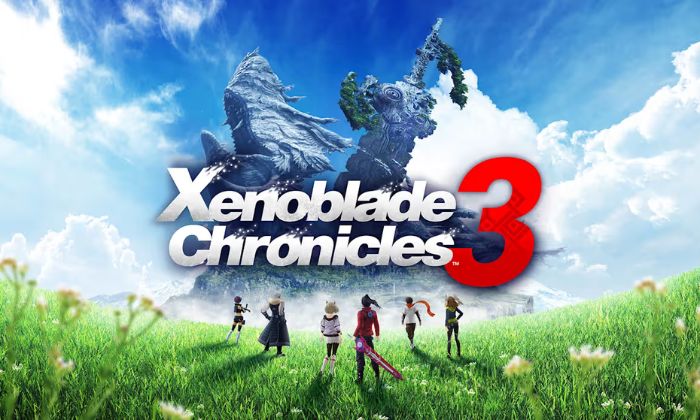
Xenoblade Chronicles 3 is a massive and emotional RPG on the Nintendo Switch that will captivate you for dozens, sometimes hundreds of hours, because it perfectly blends epic story, a huge world, and addictive combat. The game takes place on Aionios, a planet trapped in an eternal war between two nations, Keves and Agnus, where soldiers are literally born to fight and live with their time running out. You follow a group of six protagonists, three from each side, who start as enemies but are forced to walk together when they discover a truth that turns their world upside down. From there, Xenoblade Chronicles 3 becomes a heavy and human journey about friendship, purpose, freedom, and what it means to exist when your destiny already seems decided, with powerful scenes, plot twists, and a cast that grows significantly as you progress.
Exploration is one of the game’s greatest addictions. The maps are enormous, full of incredible vistas, secret areas, giant monsters you see from afar and think, “One day I’ll come back here,” and that classic pleasure of finding a hidden path that throws you into a completely new region. The game excels at giving you reasons to stray from the main path, because the side quests aren’t just for show: many delve deeper into colonies, characters, and world conflicts, and often deliver story moments that feel like extra chapters. Furthermore, the Heroes system adds a delightful twist, as you recruit special characters, unlock new classes, and change the face of your team with different abilities and roles, encouraging experimentation and creating very varied compositions.
In combat, it seems chaotic at first, but it becomes a delightful strategic puzzle when everything “clicks.” Fights happen in real time, with automatic attacks and a huge focus on positioning, cooldown time, and skill chaining. You switch classes, mix Arts from different styles, manage healing and aggro, and search for that perfect flow of combos that take down the enemy and create an opportunity to unleash damage. The Chain Attack system is a spectacle in itself, transforming key moments into cinematic sequences where you plan the order of characters, trigger multipliers, and turn the tide when things get tough. And when the Interlink mechanic kicks in, with pairs merging into Ouroboros, combat gains an extra layer of power and decision-making, as you choose when to transform to apply pressure, survive, or finish, and you still need to manage the limit to avoid losing timing.
The result is an RPG that delivers scale, freedom, and high-level emotion, with a memorable soundtrack, art direction that makes each region stick in your memory, and a constant sense of progress, whether through story, exploration, or mastery of the class system. Xenoblade Chronicles 3 is one of those games that leaves you feeling like you’ve lived a real journey, and that stays with you long after the credits roll.
13 – Fire Emblem: Three Houses
Fire Emblem: Three Houses is one of those Nintendo Switch games that starts as a “pretty anime strategy RPG” and becomes a hugely addictive game full of story, planning, and character attachment, because it makes you truly care about each student who joins your group. You play as Byleth, a mercenary who ends up becoming a teacher at the Garreg Mach monastery, a kind of military academy in the center of the continent of Fódlan. There, you choose one of the three houses, led by Edelgard, Dimitri, or Claude, and this decision completely changes the course of the campaign, the allies, the conflicts, and even the way you see the world. The game captivates you because it’s not just about “winning battles,” it’s about following an entire generation growing up, making mistakes, maturing, and later facing the brutal consequences of a war that divides the continent.
The loop is delightful precisely because it alternates between two complementary halves. Outside the battlefield, you live the routine of the monastery, exploring areas, conversing, doing activities, training, teaching, choosing the focus of study for each student, and building relationships. This is where the addiction begins: you start assembling your team as if you were managing a cast, deciding who will become a knight, mage, archer, or something completely different from their initial “destiny,” because the class and certification system gives you the freedom to experiment with builds, correct weaknesses, and create very strong combinations. Relationships also matter a lot, because Supports unlock excellent conversations, deepen personalities, create chemistry between characters, and even give practical bonuses in combat, so investing in friendship and partnership is a real strategy, not just fanservice.
When the action begins, Three Houses delivers turn-based tactical battles with that classic Fire Emblem flavor: positioning is everything, every decision has weight, and one mistake can trigger a chain reaction that destroys your formation. The weapon and skill system provides several layers for the player to consider, such as durability, combat arts with special effects, spells with limited uses per battle, range and terrain advantages, as well as battalions and Gambits, which function as “aces up your sleeve” to control area, break the posture of giant monsters, and create space for finishing moves. It’s the kind of game where you celebrate a perfect play, an improbable defense, or a life-saving critical hit, and also panic when a beloved character is in danger, even more so if you play with permadeath, the classic rule of the series where losing someone means a definitive goodbye.
The narrative is one of the biggest highlights of the entire Switch game. Three Houses is full of political intrigue, ideological clashes, and dilemmas that aren’t black and white, so you find yourself wondering if you made the right decision even when you “won.” The structure with different routes gives it an absurd replay factor, because playing again with another house changes the perspective, reveals new information, and transforms characters who were allies into very different figures depending on the path. In the end, Fire Emblem: Three Houses is a must-have for anyone who enjoys strategy, memorable characters, and stories that pull you in, delivering a package that mixes long-term planning, tense battles, and a cast that you come to protect as if they were your own.
12 – Celeste
Celeste is one of the best platformers on the Nintendo Switch because it combines precise controls, addictive challenge, and a surprisingly human story into an experience that makes you want to try again immediately, even after failing twenty times in a row. You play as Madeline, a young woman determined to climb Celeste Mountain, and what begins as a simple adventure becomes an intense journey about anxiety, self-sabotage, courage, and the weight of continuing when your own mind seems to be pulling you down. And what’s most impressive is how the game fits this narrative into the gameplay without losing pace, without moralizing, and without dragging things out, using short dialogues, striking scenes, and symbolism that hits hard without needing to shout.
In terms of gameplay, Celeste is pure, sharp 2D platforming. The movement kit is simple to understand, but deep to master: jumping, climbing, and an air dash that becomes the foundation of everything. From there, each level starts playing with new ideas: winds that push you, platforms that move, blocks that respond to the dash, obstacles that demand perfect timing, and sequences that seem impossible until you get the hang of it. The secret is that the game is difficult in the right way, because it demands precision but respects you at all times. Died? You come back almost instantly, without long loading screens, without annoying punishment, without making you redo a huge section. This creates that delightful cycle of learning the hard way, where each attempt teaches you a new detail and, suddenly, a room that seemed insane becomes a course your hand runs automatically.
The level design is brilliant because it trains you without you even realizing it. Celeste introduces a concept, tests you in a controlled environment, and then increases the complexity until it becomes a choreography, always leaving room for creativity and improvisation. And for those who like a real challenge, the game has extra content to raise the difficulty with alternative levels and challenges that demand total mastery of movement, as well as collectibles that serve as a push to explore riskier routes and learn new techniques. At the same time, it’s also welcoming: the Assist Mode allows you to adjust the difficulty in a personalized way, with options to reduce frustration without destroying the experience, which is perfect for those who want to enjoy the story and atmosphere but prefer a lighter challenge.
In terms of audiovisuals, Celeste is unforgettable. The pixel art is beautiful, full of personality, and the scenery changes atmosphere in a way that matches the climb and the emotional state of the journey. And the soundtrack is amazing, the kind that gets stuck in your head and elevates every attempt, transforming defeat into motivation and victory into catharsis. On the Switch, it fits like a glove: you can play in short sessions on the portable console, just “one more screen,” or immerse yourself for hours trying to conquer that section that has become your obsession. Celeste is a game that challenges you, embraces you, and transforms you, and that’s why it’s a must-have for any serious list of the console’s best games.
11 – Hollow Knight: Silksong
Hollow Knight: Silksong is the sequel to Hollow Knight, which took a long time to be released, but as soon as you turn on the game, you immediately get the feeling that the wait was worth every second, because you can see that everything was refined with care and attention, even when the game decides to be cruel on purpose.
Controlling the Hornet completely changes the pace of the adventure: she’s fast, acrobatic, and aggressive, and combat becomes a dance of positioning, advancing and retreating, with enemies that don’t just stand there taking hits; they react to your choices, retreat to pull you into a bad situation, and punish any slip-up with painful counter-attacks. Pharloom is a visual spectacle, with absurdly detailed environments, layers upon layers of depth in the background, effects that give a sense of a living world, and a variety of geometry in the platforms that makes each area seem hand-built, without that basic “blocky” look. And the most incredible thing is that the game’s biomes become increasingly beautiful and unique without becoming repetitive.
The exploration continues with that classic Metroidvania feel, including the map you need to buy in each region and fill in manually. The game gives you many reasons to get lost, backtrack, open shortcuts, and discover hidden paths, but the “reward” isn’t always as exciting as the discovery itself, because some secret rooms only yield crafting materials, sometimes useless if your inventory is already full. Sound-wise, Silksong is spectacular, with a strong soundtrack and such meticulous sound design that every jump, hit, and impact is enjoyable to listen to, while enemies utter sounds and dialogue in an invented language that adds personality and, out of nowhere, makes you laugh amidst the chaos, because there are menacing creatures that attack making sounds like deflating balloons. And this mix of a desolate world with humor is one of the game’s great successes, since it keeps you tense, but also creates situations so absurd and malicious that you curse and laugh at the same time, like when you cross a long stretch of platforming waiting for a workbench to save your progress and discover that it was a trap.
The difficulty is high, and in arenas and boss fights, I got stuck for several long minutes, sometimes almost an hour, but the game gives off that feeling of being tough and fair, because when I died it was almost always due to misreading animations, panic, or bad positioning, even more so in fights with well-coordinated duos and attacks that aren’t just about memorizing patterns, since projectiles and trajectories can vary and you need to understand how your movements influence the enemy’s behavior.
For those who enjoy a challenge and want a more intense, dynamic, and beautiful Metroidvania, Hollow Knight: Silksong delivers a brutal, stylish, and memorable journey—one that knocks you down, provokes you, and yet makes you want to try again without a second thought.
10 – Super Smash Bros. Ultimate
Super Smash Bros. Ultimate is simply the biggest beat ’em up amusement park on the Nintendo Switch, a game you open for five minutes and, before you know it, you’re discussing rules, choosing stages, setting up matchups, and wanting “just one more” match until the battery dies. The idea is easy to understand and perfect: instead of winning by emptying a life bar, you increase the enemy’s percentage and try to throw them out of the arena, creating fights that become controlled chaos full of comebacks, reads, and absurd moments. The roster is gigantic and feels like a celebration of video game history, with characters from various eras and franchises, each with their own style, memorable moves, and totally different ways of dominating the arena, so there’s always someone new to learn and a main to call your own.
The gameplay is the great secret to its addiction because it works on two levels simultaneously. You can play completely casually, with items enabled, crazy stages, and four people yelling on the couch, and you can also take it seriously, turning off items, choosing competitive rules, and exploring the game’s skill ceiling. Movement, dodging, recovery outside the arena, edge control, mistake punishment, habit reading—all of this becomes its own language as you improve, and the coolest thing is feeling the evolution happening: that silly fall outside the arena starts to become a recovery at the limit, that random hit becomes a consistent combo, and suddenly you’re thinking about frame advantage without even realizing it. And since the game has many stages, variations, and music, each fight feels like a mini-event, with just the right amount of fanservice and a rhythm that never gets old.
In terms of modes, Ultimate is huge and generous. The World of Light mode delivers a massive campaign with a map, challenges, and progression based on Spirits, an addictive system for collecting and assembling combinations that change attributes and advantages, perfect for those who like to unlock things and test builds. There’s Classic Mode with themed routes for each character, challenges, training, special fights, and enough options for you to adjust the chaos the way your group likes it, whether with stamina, team, stock, specific items, or party rules. In local multiplayer, it’s a must-have, because it’s the kind of game that brings together people who don’t even play video games and everyone still has fun. And online, when the connection is good, it becomes an endless pit for those who want to level up, test characters, face rivals, and experience that “just one more ranked” feeling.
Super Smash Bros. Ultimate is one of the most essential titles on the Switch because it delivers absurd amounts of content, charisma, variety, and combat that’s accessible from the first match, yet deep enough to become an obsession for years. It’s celebration, competition, and good-natured mayhem all in one package, and few games manage to be as perfect for the couch as it is for those who truly want to dominate the ring.
9 – Super Mario Galaxy + Super Mario Galaxy 2

Super Mario Galaxy + Super Mario Galaxy 2 is, for many, the pinnacle of 3D Mario in terms of pure creativity, one of those games that seems like an endless parade of ideas that work in practice and still make you smile with each new level. Instead of just running on “straight” platforms, here you play with gravity and tiny planets, walk on walls, do complete laps around spheres, jump between asteroids, cannons, spaceships and constellations, always with that pleasant feeling of exploring an amusement park in space. The gameplay is extremely precise and enjoyable, with Mario’s jump landing perfectly, the spin being the signature of the controls, and the levels mixing platforming, light puzzles and rhythm challenges, all wrapped up in a charming visual style and an orchestrated soundtrack that is simply legendary.
The first Galaxy still has that more “magical” and adventurous feel, with Rosalina’s story and the Lumas adding a different flavor to the journey, as well as missions with comets and variations that make you revisit worlds with new objectives. Galaxy 2 takes this base and turns it into a brilliant level-based machine, more direct, more inventive, and often more challenging, with mechanics that change all the time and ideas that appear, shine, and say goodbye before becoming tiresome, in addition to iconic moments like the presence of Yoshi and levels that test precision and timing in an addictive way.
Having Super Mario Galaxy to play anywhere is a luxury, because it’s the kind of game that fits both quick sessions and marathons, always with one more star calling you, and the Galaxy duo as a concept continues to be the ultimate reference for level design, variety and charm, the kind of experience that easily makes it onto any serious list of the best Nintendo games.
8 – Hollow Knight
Hollow Knight is a Metroidvania that has become an obsession worldwide because it throws you into a beautiful and melancholic underground world and gives you that dangerous freedom to explore in your own way, get lost, find shortcuts, unlock new abilities, and suddenly encounter a boss that makes you rethink everything you thought you knew. You control a small knight in Hallownest, a ruined kingdom full of abandoned cities, caves, railways, temples, acid lakes, and completely different regions in terms of climate and identity, all connected like a giant labyrinth that unfolds as you gain movement, strength, and courage. The charm lies in the perfect cycle of curiosity and reward: every corner can hide a map, an amulet, a strange NPC with memorable dialogue, a secret area, an optional challenge, or another truth about what happened there, and the game trusts you so much that it doesn’t hold your hand, so the feeling of discovery is real.
The combat is simple to understand and deep to master, with your stinger as the main weapon, spells that consume Soul, and movement that becomes increasingly enjoyable as you unlock dashes, double jumps, and other tools that completely change your map reading. Enemies aren’t just “obstacles”; many have patterns that force you to learn timing, space, and rhythm, and the bosses are the kind of fight that starts out seeming impossible, but suddenly you get into the flow, dodge instinctively, punish openings, and win with your hand trembling from adrenaline. The Charm system is another addictive feature, because it lets you truly build your playstyle, choosing combinations that change damage, range, healing, Soul generation, mobility, and even how you approach exploration and challenges. So you can play more aggressively, more defensively, or more “tactically,” always with room to test new builds.
Visually, it’s a 2D spectacle, with fluid animations, art direction that’s both dark and delicate, and environments that convey a sense of solitude and grandeur that perfectly complements the journey. The soundtrack is striking, knowing when to be calm and when to turn into pure tension, and the game’s sound, from footsteps to blows, helps create an atmosphere that pulls you in. And the story is the kind that doesn’t spoon-feed you everything; it unfolds in details, dialogues, descriptions, and encounters, making you piece together the puzzle yourself and want to discuss theories afterward.
Hollow Knight is a perfect fit for the Switch because you can explore it in short sessions or endless marathons, always with another area to unlock, another shortcut to find, and another boss to defeat. And when you finally understand Hallownest, you realize you’ve just played one of the most fantastic worlds on the console.
7 – Hades / Hades II
Our TOP 100 ended up having more than 100 games, because in seventh place we have a heavyweight tie! Hades and Hades II, two games from the same series that simply deliver absurd excellence in the action roguelike genre. Hades is still the more well-rounded and iconic package, with perfect pacing, addictive builds, and a narrative that flows with every attempt. Hades II expands on everything with new ideas, more combat possibilities, and a constant sense of novelty. In the end, it was impossible to choose a “best” without being unfair to the other, so they both share the position due to their absurd quality and how well they complement each other.
Hades
Hades is one of those games that traps you in the most dangerous cycle possible: you die, you go back to the beginning, and instead of getting frustrated, you just think “okay, now it’s going to work,” because each attempt is different, stronger, and more exciting. You control Zagreus, the son of Hades, trying to escape the Underworld, and this simple premise becomes a festival of fast-paced action, broken builds, and a good story that unfolds naturally between runs. The combat is the great addiction here, with precise controls, dodging that lets you play with risk and reward, and arenas that force you to move constantly, reading patterns, controlling space, and exploding enemies in seconds when your combination clicks. And the best part is that the game gives you several weapons with totally different styles, so changing equipment really changes your playstyle, whether it’s aggressive melee combat, safe range, charged attacks, or more technical combinations.
But Hades isn’t just about brawling; it’s an absurdly fun build laboratory. In each room, you choose blessings from the Olympian gods that alter your attacks, specials, dash, and abilities, creating synergies ranging from “clean and consistent build” to “this has become a beautiful chaos that melts bosses.” There’s a run that turns into electricity leaping between enemies, another into insane critical hits, another into area control with freeze, poison, push, explosion, and so on. And since the choices are quick and clear, you’re always building a strategy while playing, without slowing down the pace. The progression is also one that respects your time: even when things go wrong, you come back with resources to strengthen Zagreus, unlock upgrades, unlock new options, and feel like you’re really progressing, which makes “just one more try” practically inevitable.
What sets Hades apart, however, is how it tells a story within a roguelike without hindering the action. Every death becomes part of the narrative, every conversation in the hub brings a new detail, and the cast is incredibly charismatic, with characters you’ll want to see again just to hear another line. The voice acting is excellent, the dialogues are sharp, full of personality and reactivity, and the game makes you care about relationships, conflicts, and secrets while still obsessed with improving your time and build. Visually, it’s stylish and striking, with strong art direction, effects that make the action legible even in chaos, and a soundtrack that pushes you forward and makes each boss feel like an event. On the Switch, Hades is perfect because it fits both quick sessions and marathons on the handheld, and few games manage to be as addictive, as well-written, and as satisfying to play as it.
Hades II
Hades II was the game where I realized, just a few hours after starting, that I was facing an obvious contender for the best Nintendo Switch experience, because it takes everything that was already addictive in the first game and transforms it into something even more complete, more varied, and more enjoyable to play, without losing its soul. Here, the story swaps Zagreus for Melinoe, a witch trained to face the impossible, and the objective is weighty: to descend ever deeper to confront Cronos, who has taken control and messed up the fate of the entire Underworld. The most impressive thing is how the game works perfectly even if you haven’t played the previous one, but at the same time constantly throws in references and connections for those who know the series, in a way that makes you want to talk to everyone just to see what new detail will appear. The hub, the Crossroads, becomes part of the ritual: you return from a run, walk around the place, talk to charismatic characters, pick up side quests, tinker with upgrades, collect materials, do light activities like harvesting things, fishing, and preparing resources for the next attempt, and before you know it, you’re invested not only in “getting stronger,” but in seeing the world react to your victories and defeats.
In practice, the gameplay loop is dangerously perfect: each night begins with the choice of a Night Weapon, and each one changes your playstyle in a real way, whether with completely different range, speed, weight, combos, and cadence, and there are also variations and upgrades that open up new strategies as you progress. Then come the blessings of the gods and other mythological entities, which appear randomly and force you to improvise, test combinations, and discover absurd synergies, so two runs rarely look the same, even when you go through the same biomes. Melinoe’s unique selling point is that she’s not just “weapon in hand,” she’s magic too: there’s an energy bar for spells and special abilities, which adds a tactical layer and resource management that makes the fights more intense, because you need to decide when to spend everything to blow up a room and when to hold back to avoid arriving at the boss “dry.” And to tie it all together, the Arcana system is addictive because you build a deck of passive effects before you go out, with limits that force you to choose well and create builds with identity, like more health and recovery, more spell power, more safety to survive a mistake, or more damage to play at full risk. Add to that the Keepsakes, which you swap at specific points during the run to adjust your strategy, and voila, you have a giant toolbox that makes each attempt feel like a new experiment.
The combat is fast, clean, and delightful, with clear animations, strong impact, and that feeling that dying is your fault, not the game’s, but Hades II doesn’t go easy on you. The Guardians at the end of each region are tests of reading and execution, and learning their patterns feels like an action puzzle you solve by sheer force, until the moment what held you back becomes “the part you get through automatically.” Even so, when the final challenges arrive, the difficulty curve climbs higher than you expect, with fights that demand a well-constructed build, perfect positioning, and calmness to avoid panicking. This can hit you like a wall on the first few attempts, but the feeling of progress is real precisely because it’s a game that makes you evolve along with it. And even when you lose, you return to base with new conversations, new possibilities, new improvements, and side objectives, such as prophecies and tasks that give you extra goals beyond simply “getting further,” so repetition never becomes boring, it becomes fuel.
The presentation is spectacular: gorgeous art, meticulous portraits, sets full of personality, effects that make the battles almost hypnotic when the screen is packed with action, and an absurdly good audio direction, with high-level voice acting, mixing that gives weight to each ability, and music that knows when to be calm and when to be insane when the boss enters the scene. And the detail that struck me most was the amount of unique dialogue, because even when repeating encounters and bosses dozens of times, there’s always a new line commenting on your weapon, your choices, recent events, and even small things you’ve done, which gives that rare feeling of a game that’s really paying attention to you. To top it off, the relationship system is another captivating layer, because gifting characters opens scenes, reveals new sides of them, and can even turn into romance, but even without focusing on that, you want to see everything because the cast is just too good. Ultimately, Hades II is the best because it combines addictive combat, a huge variety of builds, a story that grows naturally with each attempt, and a level of polish that makes you want to play “just one more run” until you realize it’s already morning.
6 – Mario Kart 8 Deluxe / Sonic Racing: CrossWorlds
Another great tie between ultra-powerful titans, as in sixth place we have Mario Kart 8 Deluxe and Sonic Racing: CrossWorlds , two games that engaged in a grand and high-level battle, but it’s impossible to place one above the other… in the end, we have to fairly acknowledge the technical rigor and fun provided by both games, leaving them tied, because the meticulous and meticulous work done by Nintendo on Mario Kart and by Sega on Sonic Racing is undeniable. Both games are captivating, addictive, and above all, extremely fun. A true gift for us all!
Below is a summary of each game, in alphabetical order:
Mario Kart 8 Deluxe:
Mario Kart 8 Deluxe is the kind of game that practically defines the Nintendo Switch, because it works in any scenario: alone trying to improve your time, with friends on the couch yelling at every red shell, or online in that cold war of “nobody trusts anybody” on the last lap. The formula is perfect and remains unbeatable: choose a character, assemble your kart with combinations of body, wheels and glider to adjust acceleration, speed and control, and hit tracks that are a spectacle of creativity, full of shortcuts, delicious curves and details that make each race memorable. The driving is sharp and addictive, with drifting that rewards timing, mini turbos that become a habit, and the antigravity mechanic adding an extra spice, since touching opponents in certain parts of the track becomes a strategy to gain momentum and maintain pace. And of course, items remain the heart of the fun chaos, because they balance the competition, create absurd comebacks, and transform any race into a story to tell, especially when the classic sequence of taking a shell, losing coins, being overtaken, and then, out of nowhere, pulling out a life-saving item to recover everything on the last corner kicks in.
The content is gigantic, and the Deluxe package is the most complete and comfortable version to play. Besides the Grand Prix mode and quick races, it has Time Trials for those who like to hunt for milliseconds and learn the perfect line, and an excellent Battle Mode, with dedicated arenas and variations like Balloon Battle and Coin Runners, perfect for that all-night rivalry between friends. In local multiplayer, it’s pure gold, with split-screen that becomes an instant event, and online the game shines with its constant rhythm of matches and the feeling of always having someone at your level, whether to relax or to sweat trying to climb the ranks. And since the Switch is portable, Mario Kart 8 Deluxe has that rare magic of being a “party game” and, at the same time, a game for serious training, because you can play a quick race anywhere and still feel that there’s always something to master better, whether it’s a more consistent shortcut, a cleaner drift, or a perfect defense when chaos erupts. Ultimately, it’s a must-have because few games manage to be as accessible to those who have never played before as they are profound and addictive for those who truly want to improve, offering charisma, variety, and virtually infinite replayability.
It’s still possible to add the additional track pack, which is included in the Nintendo Switch Online subscription price or can be purchased from the Nintendo Switch eShop. The new tracks bring a lot of extra fun and further enhance the game’s enjoyment factor.
Sonic Racing: CrossWorlds:

Sonic Racing: CrossWorlds is that kart racer that grabs you by the collar and doesn’t let go, because it understands exactly what makes the genre addictive: absurd speed, enjoyable drifting that rewards timing, and a ton of possibilities for you to shape your racing style. The basic gameplay is delightful and straightforward: accelerate, drift, use items, and repeat. But here, drifting is practically its own language, with a boost bar in levels, combos that link one turbo to another, jumps with aerial tricks, and landings already set up for the next turn. There’s no “cheat sheet”; missing the right moment to drift costs you traction and speed, getting it right propels you forward like a rocket—exactly that feeling of mechanical mastery that makes you want to try again just to do it cleaner.
The game’s defining characteristic is its CrossWorlds system. The race has three laps, and at the end of the first, a transfer ring appears: the leader chooses between two options, and everyone crosses a portal to a section of another world on the second lap. These CrossWorlds aren’t just for show; they truly change the strategy, with aerial sections focused on flying and boost hunting, aquatic sections demanding jump rhythm and corner timing, and more technical segments that disrupt “top speed only” setups. The final lap shakes things up again, with the base track reconfiguring, new routes appearing, extra dangers, and a “moment of truth” atmosphere where your track reading meets your build.
And that’s where the most addictive system in the package comes in: the Gadgets. You equip upgrades on a board with six slots, and the choices go far beyond numbers, because they tangibly change the vehicle’s behavior. You can assemble classic kits for speed, acceleration, handling, and boost, or create mischievous builds that alter your driving style, such as unlocking an extra level of drift for a bigger burst of power on corner exits, boosting aerial tricks to link maneuvers, starting the race with specific items, carrying more rings, and even turning your driving into a weapon by bumping into others. With this, each track becomes a delightful laboratory; long straights demand one configuration, winding tracks and water CrossWorlds demand another, and the sense of ownership grows along with the desire to return.
The game also succeeds in introducing an “official” rival to spice up the cups, with varying difficulty levels, taunts, and a behavior that truly puts pressure on you, providing a clear target for your competitiveness. Items are varied and quite chaotic, with offensive, defensive, and utility options, and the ring system completes the risk-reward cycle: collecting rings increases your top speed, but colliding, scraping, and taking hits drops rings and causes your final spike to collapse, so choosing riskier routes to collect more rings becomes a real strategy, not just greed.
In terms of content, CrossWorlds comes in strong. Grand Prix is the heart of the game, with speed classes that scale naturally and a final race that mixes one lap from each of the three previous tracks, requiring quick adaptation between themes and rhythms. Time Trial becomes a rabbit hole for those chasing milliseconds, testing lines, boosts, and build variations, and also pushes you with rewards and goals. Race Park is the perfect couch mode, with more “party” team rules, like focusing on collecting rings, unlocking only extreme items, or creating different victory conditions, guaranteeing that fun chaos that brings laughter and rivalry in just the right measure.
In terms of audiovisuals, it’s a spectacle of color and identity. The tracks and alternate worlds have clear and legible themes, ranging from neon metropolises and sunny beaches to golden temples, icy areas, and volcanic landscapes, and the transition from one world to another during the race is the kind of thing that sells the game’s fantasy instantly. The soundtrack is huge and full of energy, with music and rearrangements that span Sonic’s history, and the game even lets you create playlists per lap, giving your races a very personal signature. The sound of rings, boosts, impacts, and items has that classic DNA that perfectly matches the controlled chaos of the genre.
Overall, Sonic Racing: CrossWorlds is a modern kart racer that knows what it wants to be: fast, replayable, full of content, and with a real skill ceiling where you feel your progress as you master drifting, shortcuts, trick timing, and item choices. It does have some drawbacks, such as more grindy progression in parts, repetitive dialogue in long sessions, the absence of a story mode to vary objectives, online limited to one player per console, and an initial awkwardness in aquatic sections for those still getting the hang of it, but none of that detracts from its essential qualities. For those who love arcade racing, noisy multiplayer on the couch, and that eternal hunt for the perfect time, it’s a blast and one of the most addictive games in the genre to have on the Nintendo Switch.
5 – Super Mario Bros. Wonder
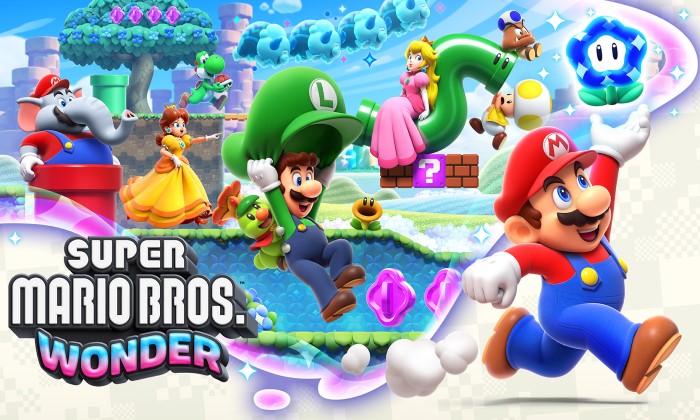
Super Mario Bros. Wonder is a game that reminds you, in less than five minutes, why Mario is still the ultimate platformer: it takes the classic run-and-jump formula and injects an explosion of creativity into each level, with ideas that constantly change the game and make you exclaim “no way!” repeatedly. The adventure takes place in the Flower Kingdom, and the star here is the Wonder Flower, which, when activated, transforms the stage in completely unexpected ways, changing rules, scenery, and even enemy behavior. There are levels where pipes start moving as if they were alive, others where gravity and the pace of the challenge become something else entirely, and moments where the game simply decides to go crazy with animations, effects, and surprises that make each stage feel like an event. The feeling is like playing a “best of” compilation of ideas, but all stitched together with sharp level design that challenges you without being unfair and rewards you for exploring every corner in search of secrets, coins, and alternative exits.
In terms of gameplay, Wonder is delightful because it’s simple for those who just want to have fun and deep for those who like to master the game. You choose from several characters, including options that make it easier for beginners, and each one approaches the levels with the same focus on precision and rhythm. The great spice of progression comes from the badges, which function as equipable abilities that change your mobility and your way of playing, such as different jumps, more control in the air, new ways to dodge or reach difficult places. This gives it a “build-ahead” feel within a 2D Mario game, making you test combinations, revisit levels, and find more stylish ways to get through sections that previously seemed difficult. And when the game wants to push you, it pushes you hard, especially in bonus levels and optional challenges, but always in that addictive way where you fail, understand why, and immediately try again.
The multiplayer also shines, because you can play together and turn the campaign into organized chaos, with moments of real cooperation, last-minute saves, and that energy of everyone reacting to the same Wonder Flowers antics at the same time. Visually, it’s a spectacle, with super vibrant expressions and animations, colorful and detailed scenarios, and an art direction that makes everything more “cartoonish” and expressive without losing the Mario identity. The soundtrack follows this vibe, with exciting music and moments that become instant memes, creating levels that stick in your head even after you turn off the console. In the end, Super Mario Bros. Wonder is a 2D Mario game with a spirit of constant novelty, one of those games that are easy to recommend to anyone, but also have plenty of content and challenge for those who want to complete everything and prove they’ve mastered every jump.
4 – Metroid Prime Remastered
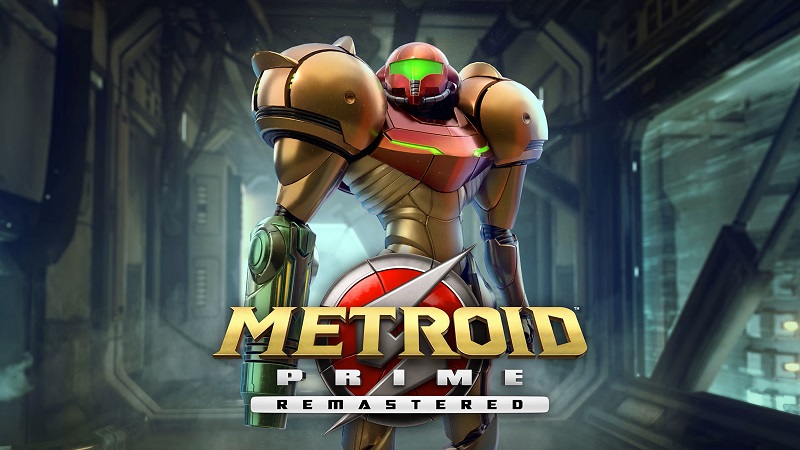
Metroid Prime Remastered is a masterclass in first-person adventure gameplay, offering atmosphere, exploration, and an absurdly strong sense of “I figured this out myself.” You once again control Samus Aran on a mission that begins with a chase in space and quickly throws you into Tallon IV, a mysterious, beautiful, and dangerous planet where everything seems alive, but also contaminated by something very wrong. The fun isn’t just shooting; it’s investigating: Metroid Prime has always been about entering an unknown place, observing the environment, feeling the atmosphere, and gradually unlocking the world, and here it works like an addiction. You explore ancient ruins, caves, laboratories, and natural regions with very different biomes, and each area has its own dangers, enemies, and environmental puzzles, so progression becomes a giant puzzle where each upgrade is a key that completely changes what you can do and where you can go.
The game shines in how it blends exploration and environmental analysis with action. The Scan Visor isn’t just for show; it’s part of the game’s identity, encouraging you to analyze creatures, mechanisms, Chozo technology, and story clues scattered across the planet, piecing together the narrative as you play, without needing constant cutscenes. And as Samus recovers classic abilities like missiles, bombs, the Morph Ball, and different beams, you feel that delightful evolution from “surviving” to “hunting,” mastering the map, opening shortcuts, and returning to old locations to access secrets that have been staring you in the face from the start. The boss battles are a spectacle in themselves, full of patterns, attack windows, and moments where you need to switch visors or weapons at the right time. The combat, in general, has a rhythm that mixes strategy and reflexes, with enemies that demand attention and require precise positioning.
The Remastered version does justice to the classic with a stunning visual upgrade, making environments and effects much more beautiful and crisp without losing the original art direction. It also maintains that captivating atmosphere, with a soundtrack and sound design that transform Tallon IV into a place you feel, not just visit. It’s also the kind of game that benefits greatly on the Switch because of the more modern control options, which allow for more comfortable aiming and movement, making the experience more fluid for newcomers without sacrificing the charm of leisurely exploration. In the end, Metroid Prime Remastered is a must-have because it delivers a dense, immersive, and intelligent adventure, with addictive exploration, truly game-changing upgrades, and a sci-fi atmosphere that makes every corridor, every secret room, and every discovery feel like a significant moment.
3 – The Legend of Zelda: Tears of the Kingdom
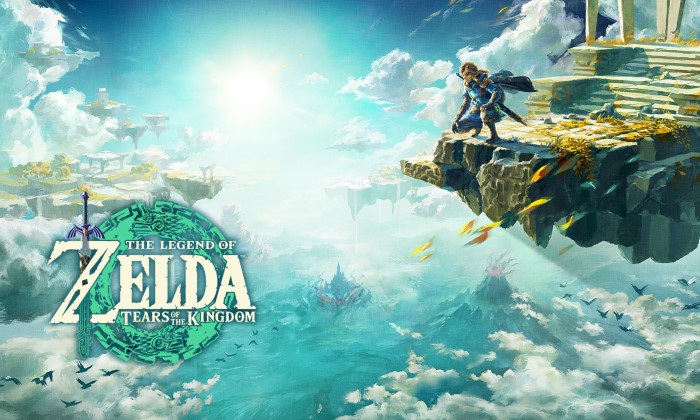
The Legend of Zelda: Tears of the Kingdom is the kind of game that makes you completely lose track of time, because it takes the absurd freedom of Breath of the Wild and puts a “creativity engine” on top, giving you tools to invent solutions your way and transform each objective into a unique story. The adventure begins with Hyrule drastically changing, with islands floating in the sky, rifts and mysteries opening up in the world, and a threat that not only increases the danger but also gives a more urgent feel to Link’s journey. But the great thing is that the game doesn’t confine you to a single path; it gives you a giant world and basically says, “Go out there and figure it out,” and that’s a compliment, because exploration is at the heart of everything. You look at a mountain and think “I can get there,” you see an island up there and think “okay, how do I get up there,” you fall into a hole and discover there’s a whole world below, and before you know it you’re marking points on a map, hunting for sanctuaries, solving environmental puzzles, and stumbling upon random events that turn into missions, rewards, or delightful confusion.
The biggest difference lies in the new abilities, which completely change the way you interact with the world. With Ultrahand, you literally build things, put pieces together, create bridges, platforms, crazy machines, and improvised vehicles, and the most fun part is that the game accepts both elegant solutions and ingenious makeshift solutions. Fuse transforms weapons and shields into experimental toys, allowing you to combine materials and enemy parts to create effects, increase damage, invent tools, and even solve problems creatively, so loot ceases to be just a number and becomes a possibility. Ascend is that ability that seems simple but becomes addictive because it allows you to cross ceilings and reappear on top, opening routes and shortcuts that make the world seem even more “breakable” and intelligent. And Recall, by rewinding the movement of objects, creates absurd moments of creativity, whether to solve puzzles, return projectiles to enemies, or turn a mistake into an opportunity.
In combat, Tears of the Kingdom maintains the element of choosing how to approach each situation, but adds more options for you to be clever and stylish, using the environment, buildings, arrows with varied effects, and item combinations that completely change a fight. The challenges in shrines and dungeons bring a stronger puzzle vibe, exploring these new mechanics in a way that makes you feel like a genius when you figure out the solution, even if your solution is completely different from someone else’s. And the vertical exploration is amazing, because now Hyrule isn’t just “forward,” it’s up and down, and the sense of scale grows immensely when you alternate between the sky, the surface, and the depths, each layer with its own dangers, weather, and rewards.
Visually and in terms of art direction, it maintains the style that’s already a hallmark of the Switch and manages to be beautiful both at sunrise on a hill and in darker, more tense moments, with a soundtrack and atmosphere that maintain immersion throughout. Ultimately, The Legend of Zelda: Tears of the Kingdom is one of those games that not only gives you a world to explore, it gives you a set of tools to create adventures, and this allows each player to have their own unique experience, full of discoveries, improvisations, funny failures, and victories that feel 100% their own.
2 – Super Mario Odyssey
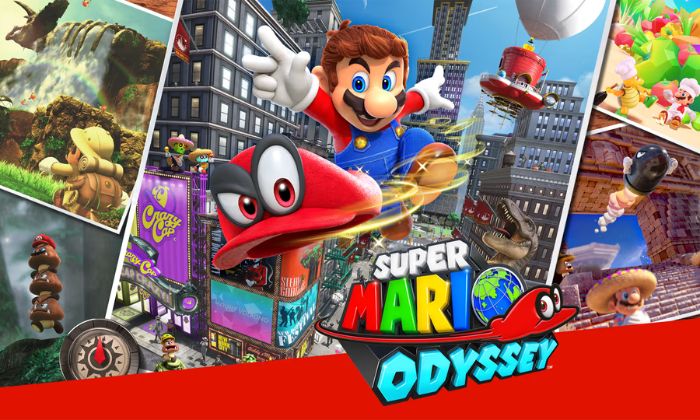
Super Mario Odyssey is one of the most essential games on the Nintendo Switch because it takes the foundation of classic 3D Mario and transforms it into a festival of creativity, exploration, and “wow, this actually works” moments. The story is simple and perfect for driving the adventure: Bowser kidnaps Peach, and Mario sets off in pursuit across the world, but now with the help of Cappy, a living hat that becomes the game’s big trick. With him, Mario gains the capture mechanic, which allows him to possess enemies and creatures to use entirely new abilities, and that’s where Odyssey truly shines, because each kingdom becomes a toy box with its own rules. One minute you’re jumping and doing parkour as always, the next you’re controlling a giant T-Rex, turning into a stackable Goomba, squeezing into pipes like an electric worm, or using different bodies to solve puzzles and reach secret areas.
The game’s structure is addictive because it embraces exploration in the most enjoyable way possible. Instead of just “reaching the end of the level,” the kingdoms are open areas full of secrets, challenges, minigames, alternative routes, and hidden interactions, so you always find a Moon of Power through curiosity, skill, or simply by observing the scenery. This creates a perfect rhythm of constant reward, where you complete a large mission, but also collect several moons along the way simply by existing and exploring, and before you know it, you’re trying to complete everything, hunting for collectibles and unlocking extra challenges. And the game excels at varying its tone: there are super colorful and happy kingdoms, others more urban, others with a mysterious atmosphere, and each one has a strong identity, a memorable soundtrack, and details that make the world feel like a real place.
In terms of gameplay, Odyssey is one of the most enjoyable Mario games to control. Mario’s movement is extremely fluid and expressive, with jumps, rolls, and combos that let you play with space, and Cappy becomes a tool for both combat and mobility, allowing you to create stylish sequences and traverse sections in a way that seems improvised, but is pure mastery of the controls. Combat isn’t the main focus, but it works well within the game’s concept, and the boss battles and platforming challenges are spectacular without losing their lightness. And when the game decides to pay homage to the series’ history, it does so with style, bringing moments that evoke nostalgia but still fit into the modern and fast-paced rhythm of the adventure.
Visually, this game is a spectacle in every sense, with animations full of personality, art direction that changes significantly from one kingdom to another, and a presentation that conveys that “world adventure” energy. The soundtrack is another highlight, alternating classic themes with catchy new songs, and has specific moments that become instantly memorable due to their excellent construction. In the end, Super Mario Odyssey is a must-have because it delivers pure joy in the form of gameplay, with endless creativity, exploration that rewards you every time, and a Mario so fun to control that you play smiling, even when you’re trying to get that last moon that’s been teasing you for half an hour.
1 – The Legend of Zelda: Breath of the Wild
The Legend of Zelda: Breath of the Wild is the kind of game that redefines what “open world” means on the Nintendo Switch, because it doesn’t just give you a giant map, it gives you an entire playground and says “go,” trusting that you will learn, invent, and surprise yourself on your own. You wake up as Link in a broken world after a tragedy, with Hyrule dominated by the threat of Ganon, and the mission is clear, but the path is completely yours: you can go straight to the final objective if you are brave, or spend dozens and dozens of hours getting stronger, exploring, understanding the game’s systems, and building your own journey in the most organic way possible. The feeling of freedom here is real, because any mountain you see on the horizon can be climbed, any curious spot can hide a sanctuary, a treasure, a bizarre secret, or an encounter that becomes a story to tell, and each discovery seems to have been “yours,” not something the game pushed on you with arrows and endless tutorials.
What makes Breath of the Wild the best is how everything connects in a set of systems that lets you play and be creative. Weather and physics really matter: rain makes climbing harder, metal attracts lightning, fire spreads with wind, ice creates paths, height and momentum change the outcome of your ideas, and suddenly you’re defeating enemies with improvised traps, using the environment as a weapon, or solving a puzzle in a completely different way than the “obvious.” The Sheikah Slate runes, such as Magnesis, Stasis, bombs, and Cryonis, are tools that open up possibilities all the time, both in combat and exploration, and the sanctuaries function as short doses of intelligent challenge, with puzzles, skill tests, and rewards that make you want to say “just one more” before getting back on the road. And when you find a tower, reveal the map, and look around, you get that classic click: there’s always something catching your eye, whether it’s a strange formation, a glow on top of a hill, a hidden valley, or a ruin that seems to promise trouble.
Exploration is at the heart of the game, and it’s delightful because the world has its own identity and danger. You traverse plains, deserts, forests, frozen mountains, and villages teeming with life, encountering Koroks along the way in hidden puzzles that make you observe environmental details. Cooking becomes part of the adventure because food and elixirs are your way of preparing for temperature, resistance, stealth, and combat, and each piece of equipment you find changes your understanding of the world. Combat is open and full of options: you can play in direct confrontation, stealthily, with a bow and arrow, with runes, with heavy weapons, with a shield, or simply with strategy and cunning, and the enemies are dangerous enough to force you to respect the game, especially at the beginning. The durability of weapons may divide opinions, but it also creates a unique rhythm of improvisation and adaptation, where you are always choosing what is worth spending, what is worth saving, and how to turn what you have into an advantage.
The story is told in a more contemplative way, with memories, memorable characters, and a constant atmosphere of melancholy and hope, and the soundtrack is brilliant precisely because it knows when to appear and when to let the sound of the wind, rain, and footsteps carry the tension. Visually, the art style brings Hyrule to life in an unforgettable way, with beautiful sunsets, terrifying storms, and that feeling of being small in the face of a huge world.
Undoubtedly, Breath of the Wild is the best game on the Switch, and will remain among the best video games in history, because it not only delivers adventure, it delivers a rare sense of discovery and ownership, as if each solution, each route, and each victory were truly yours, and that’s why after playing it, it’s difficult to look at other open worlds in the same way.

Facebook Comments