![Revolution Arena [English Version]](https://revolutionarena.com/english/wp-content/uploads/sites/4/2024/07/Revolution-Arena-ISSN-2966-2117.png)
Diablo IV: Lord of Hatred – Review
April 22, 2026There are rare moments in a gamer’s life when you sit down at your computer or console, open a game, and immediately realize that it’s going to consume the next few weeks of your life in such a way that you’ll disappear from the company of your friends and other living beings, and you won’t even regret it. Diablo IV: Lord of Hatred brings exactly that kind of feeling when you start playing. After almost two years of waiting for the conclusion of the Lord of Hatred’s saga, the second and seemingly definitive expansion of Diablo IV has finally arrived (this review is being published ahead of schedule. The official release of Lord of Hatred will be on April 28, 2026), and I can say with absolute certainty that it not only met expectations, but in many aspects surpassed them in ways I simply wasn’t prepared to face.
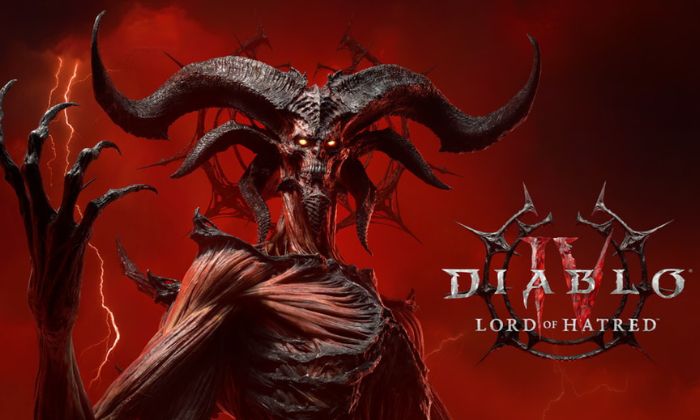
For those who have followed the journey since the base game’s release in 2023 and then ventured into Nahantu in Vessel of Hatred, the context of Lord of Hatred is straightforward: Mephisto, the First Evil One of Hatred and villain who has been building up as a threat since the beginning, finally takes center stage. He has assumed the identity of the prophet Akarat, a figure of worship for many in Sanctuary, and uses this sacred facade to sow corruption and manipulate the desperate masses who blindly follow him. At the same time, signs of Lilith’s presence in the world still haunt the narrative, forcing the protagonist to reinterpret his relationship with an old adversary in the face of a much greater common threat.
The story takes place on the Skovos Isles, a Mediterranean region of Sanctuary that had never been visited in the game. And right from the start, when the camera opens onto the coast of Skovos for the first time, something unexpected happened: my jaw dropped not at monsters or horrors, but at the light. The water was an impossible blue, the sun shone brightly, and the landscape stretched out with an almost unsettling sense of hope and beauty. After years traversing the icy and putrid lands of Sanctuary, encountering Mediterranean beaches and virtually intact Greek architecture was as disorienting as it was comforting. But in the best possible way: because the feeling that it will soon be destroyed hangs in the air the whole time, and it is precisely this tension that Lord of Hatred uses as its main emotional engine.
During my approximately 10 to 12 hours in the main campaign, I was treated to a narrative that I consider easily the strongest Diablo IV has ever presented. Not with the largest number of missions or the most extensive map, but with the courage to be decisive, emotionally impactful, and to deal with characters in a way that made me genuinely care about what was happening on screen. This, coming from a game whose main promise has always been to kill demons and collect loot, is an achievement that deserves to be celebrated.
And after the campaign? That’s when things get even crazier. The changes Lord of Hatred makes to the progression systems, skill tree, endgame, and character customization are so profound that the game practically reinvents itself beneath the player’s feet. For longtime Diablo fans, it’s the kind of shake-up you’ve been waiting for. For newcomers, it’s a better entry point than any other in the game. I joined one of my favorite classes in the entire ARPG genre, the Warlock, and easily spent over 40 hours experimenting with builds, exploring dungeons, crafting items, and losing track of time with frightening consistency.
Mechanics and Gameplay
I’ll start with what I consider Lord of Hatred’s greatest achievement: the complete overhaul of the skill tree for all classes in the game. This was a chronic problem in Diablo IV for a long time. The old trees had many generic passive nodes that did simple things like increase damage by X% or reduce cooldown by Y seconds. They worked, but they were incredibly tedious to navigate and made building a frustrating experience mid-campaign, as you were reliant on rare legendary items for the builds to actually work.
Lord of Hatred threw that out the window quite elegantly. Now, every active ability in the game has a set of modifiers directly tied to it, and the player chooses between two or three options for each node. These choices aren’t symbolic: they fundamentally change how the ability works. For example, you can transform fire serpents into ice serpents if that works better with the build you’re creating. You can make a wall of summoned demons encircle the enemy instead of just blocking them. You can make an ability that normally expands in a cone now rotate around your character. These are decisions that change the identity of your build, not just the numbers.
Furthermore, Blizzard cleverly incorporated effects into the skill trees that previously only existed on specific legendary items. This means you now have access to powerful combinations during the campaign, without having to pray for RNG to give you that specific item for your build to work. Character building is no longer a race of luck but an engaging puzzle that you can solve at your own pace. There is one point of criticism here: since the game now allows you to invest up to 15 points per skill, many of the decisions after the first points boil down to allocating the remaining points to the skills you’ve already chosen, which recreates some of the mechanical feel of the old skill trees. But the overall gain in expressiveness and meaning of the choices is undeniable.
The Warlock, the entirely new class in this expansion, deserves a paragraph of its own. It operates on a dual-resource system called Wrath and Dominance. Wrath fuels direct destructive abilities, while Dominance allows you to control and redirect the demons you summon. But “control” is a mild word to describe what happens in practice: you’re constantly summoning, using, and discarding demons as tools. They aren’t companions, they’re weapons. This creates a combat style that I can only describe as managed panic: you’re always reacting, repositioning yourself, chaining abilities to activate interactions between your summons, in a kind of frantic improvisation that is absurdly fun.
I played with the Warlock’s Vanguard specialization, which uses a lot of fire and area-of-effect summons, and the synergy I created between claws that emerge from the ground and a giant demon summoned with the ultimate ability was one of the most satisfying combinations I’ve ever put together in an ARPG. The demon drops out of nowhere onto groups of enemies with an impact that shakes the camera, while claws sprout around it to mow down the survivors. It’s as heavy and satisfying as it sounds, and I immediately understood why the developers describe the Warlock as the most “heavy metal” class in the game.
The Paladin, on the other hand, has been available for a few months to those who pre-ordered the expansion, so those who arrived on launch day already knew it well. But for those experiencing it now, it’s a class built around oaths and convictions that guide its playstyle. It controls the battlefield, alternates between defense and attack, and has aura builds that allow it to literally devastate everything around it just by walking. It’s comfortable in the best sense: predictable like a well-forged weapon, and incredibly powerful when you find the right combination.
The Talisman system is another addition that has changed how I think about building my character. It’s basically a separate inventory tab where you equip charms to gain passive bonuses. Set charms unlock larger bonuses as you equip pieces from the same set, and these bonuses can have class-specific effects. What makes this clever is that it decouples set bonuses from the need to wear specific armor: you use the gear that works best with your build, and the Talisman handles the themed bonuses separately. It took me a while to figure out how to get the most out of it, but when the pieces clicked it was very rewarding.
The Horadric Cube is possibly the most impactful addition to the gameplay loop in the entire expansion. It’s available in cities and works with recipes that require specific components. With it, you can add affixes to equipment, reroll stats, increase the rarity of an item from common to legendary or unique, and much more. That common pair of boots I was going to sell to the blacksmith became my most prized item after a crafting session that left me grinning from ear to ear. Common items, which previously were worthless beyond their selling price, are now the only ones that can be transmuted into unique items, so even the trash on the ground has potential. It’s a system that completely renews the player’s relationship with loot.
The War Plans, the new endgame system, function as a curated playlist of activities that the player assembles and completes sequentially. You choose from different activities, such as nightmare dungeons, the Pit, infernal raids, and more, and upon completing them you earn rewards and progress through progression trees specific to each activity. These trees allow you to add modifiers to the activities, such as an extra boss after the boss of a dungeon or special rewards for completing a wave sequence. The practical effect is that you always have a direction to follow in the endgame, without having to hunt for keys or wait for events to organically appear on the map. You teleport directly to the next activity in seconds, and the pace of progression remains constant. The system has a notable flaw in co-op: since each player has their own randomized War Plan, playing in a group often means that one of the players is not progressing in their own plan, which creates a strange feeling of inefficiency that I hope will be corrected soon.
Finally, the addition of the loot filter was one of the most welcome quality-of-life improvements in the game’s history. Now you can set rules to automatically filter the items that drop, focusing only on the affixes and rarities relevant to your build. No more stopping every two seconds to sift through piles of useless items.
Graphics
Skovos is visually stunning, and I don’t say that as a generic compliment. I say this because, within the artistic proposal of Diablo IV, which is dark, gothic, and full of body horror, the Skovos Islands represent a deliberate subversion of expectations that works masterfully. When I first arrived there, the Mediterranean coastline, the white buildings, and the warm sunlight created such a striking contrast with everything I had seen in the game up to that point that I needed to stop for a moment just to absorb it.
But Blizzard’s artwork doesn’t stop at the pretty surface. As the story progresses and Mephisto’s corruption spreads across the islands, the color palette and environmental design gradually and disturbingly change. The Lycander Forest, for example, initially seems like an almost peaceful place, with tall oak trees and green grass. But gradually the grass begins to turn gray, the trees calcify, and the region’s animals have their flesh replaced by twisted vines that break when you defeat them. It’s the kind of environmental design that tells a story without needing dialogue.
The dungeons in this DLC also deserve special mention. They have a much more bizarre and surreal look than the traditional caves and cathedrals of the base game, with corridors that seem suspended in pockets of hell, entrances framed by cages of ribs, and arenas surrounded by demon corpses hanging from chains. It’s the kind of more abstract and dreamlike aesthetic horror that I associated with Diablo 3, and it’s been lacking in the series for a long time. Finding it here, in the darker and more realistic context of Diablo IV, was a very welcome surprise.
The cutscenes remain the best in the industry when it comes to animation and cinematic direction. Each of the great arc-ending scenes has the level of polish and visual impact of a movie trailer, with convincing facial expressions, spectacular lighting, and camera movement that amplifies the emotional intensity of what is being narrated. There are scenes that have remained etched in my memory long after I finished the game.
My only reservation about Skovos’ visuals is that some environments and bosses fell short of the high standard of the rest. Not that they’re bad, but alongside the extraordinary beauty of the beaches, the corrupted forests, and the surreal dungeons, some areas seemed less inspired in comparison. It’s a detail that most players probably won’t notice in the heat of the moment, but that I perceive when comparing it to the most impressive parts of the expansion.
Sound
The soundtrack for Lord of Hatred is, without exaggeration, one of the best I’ve heard in a video game in recent years. And I say this as someone who considers the soundtracks of the base game and Vessel of Hatred to be exceptional. What Blizzard has done here is create a sonic identity that belongs specifically to Skovos, mixing orchestra with unusual instruments like electric violin and elements that evoke Mediterranean music, creating something that is both Diablo and completely new within the franchise.
The boss battles are where the music truly shines. The compositions develop alongside the phases of the fights, scaling in intensity and complexity as the battle progresses. On more than one occasion, I found myself neglecting to monitor my health bar for a few seconds because the music reached such an impactful peak that I needed to pay attention. This is dangerous in an action RPG, but it’s also the highest possible compliment for a combat soundtrack.
The voice acting also deserves enormous praise. The game’s cast was already strong, but Lord of Hatred delivers some of the best performances in the entire series. Mephisto’s presence as Akarat is built with a calm and theatrical cadence that makes each of his lines unsettling. Lorath Nahr, the old scholar who has accompanied the protagonist from the beginning, has some of the most emotionally charged lines in the expansion, and the way the actor delivers these lines makes you feel the weight of everything this character has carried throughout the journey. For those playing with Brazilian Portuguese dubbing, the localization quality also remained high, with a few minor exceptions that Blizzard has indicated they will correct.
The sound effects of the combat remain visceral and satisfying. Each blow from the demon summoned by the Warlock carries a sonic weight that you almost physically feel. Skovos’ enemies, due to their origins linked to the sea and Greek mythology, have sounds that reinforce their environmental identity: aquatic creatures that gurgle and chinn in unsettling ways, plant beings that crackle and break apart with a dry, disturbing sound when defeated.
Fun
I can’t remain neutral on this topic: Lord of Hatred is simply addictive in a way I haven’t seen in Diablo IV since the months following the base game’s release. There’s something about the combination of the new skill tree with the Horadric Cube and the Talisman that makes every hour of gameplay a constant exercise in experimentation and discovery. In every session, I came away with at least one new idea for something to test, a combination I hadn’t yet explored, an item that had the potential to be transformed into something powerful with the Cube.
The campaign itself, with its intense and well-paced narrative, is extremely fun to play through. The enemy density in most missions is high enough to make progress satisfying, and the boss battles range in quality from challenging to epic depending on how well you’ve prepared your build. I played most of the campaign as the Warlock, and the feeling of commanding a giant demon while claws emerge from the ground to eliminate survivors never got old during the ten hours I spent on this first playthrough.
The co-op system remains one of the most fun ways to play, especially during the campaign. Playing with friends who are experimenting with different classes and creating impromptu synergies in the heat of battle is very satisfying. The only point that slightly detracts from the fun in group play is the War Plans, which, as I mentioned, have an individual progression problem that makes co-op less efficient than it should be in those moments.
Echoing Hatred, the new endless wave survival activity, is one of the most fun additions to the endgame, but with an important caveat: it requires a very rare consumable to activate. When I managed to participate in a session, the escalating difficulty of the waves was one of the most exciting experiences I’ve had with the game, a real test to see how far your build can go. But the rarity of the access item is frustrating when you want to use this activity more frequently.
Fishing, added as a surprise minigame, is a charming detail that unexpectedly whetted my collector’s appetite. There’s something genuinely comical and relaxing about pausing the massacre of demonic hordes to pull out a fishing rod on a Skovos beach. It doesn’t revolutionize anything, but it’s the kind of detail that shows the development team has a sense of humor and understands that people also want a moment of respite within such an intense game.
Performance and Optimization
The pre-release version I tested had some technical issues that are honestly worth noting. During my sessions, I encountered frame rate instability during periods of higher density of on-screen effects, especially when multiple demons summoned by the Warlock were on the field simultaneously with activated abilities. I also recorded some synchronization errors during important scripted scenes and, on rare occasions, disconnections during Echoing Hatred, which were particularly frustrating given that the activity requires the rare consumable to be initiated.
Furthermore, some isolated bugs in the abilities appeared during testing, and there were moments of audio equalization where sound effects cut off dialogue when too much was happening on screen at the same time. Blizzard has publicly committed to fixing all these issues before the official release, and I know the company’s history well enough to believe that the most serious problems will be addressed in the launch patch. But, in the state I found it, the technical experience fell short of the polish that the rest of the expansion delivers.
On high to ultra settings on PCs with current-generation hardware, the game is beautiful and maintains stable performance most of the time. The brightly lit and colorful Skovos demands more from the hardware than the dark environments of the base game, so those playing on older machines may need to adjust the lighting and shadow settings to maintain a comfortable frame rate. The console version, in the tests I followed, showed similar results to the PC version in terms of bug occurrence, but with generally more stable performance thanks to the fixed hardware environment.
The game is verified for Steam Deck, which is good news for those who enjoy playing on Valve’s handheld console, although the ideal experience remains on PC or a console connected to a larger TV, especially given Skovos’ visual details which deserve a big screen.
Conclusion
Diablo IV: Lord of Hatred is, quite clearly, the best version this game has ever been. Not necessarily because it revolutionizes the formula from scratch or because it delivers an endgame that will eternally withstand the test of time, but because it precisely attacks the deepest problems that have been eroding the experience since launch and presents solutions that work not only in the short term, but structurally change how the game is played from now on.
The narrative is bold in a way that’s uncommon in live games. Instead of leaving everything open-ended to generate hype for the next content, Blizzard chose to be decisive, to truly close cycles, to let the characters carry real consequences. This gives the expansion an emotional weight that sets it apart from almost everything that came before in the franchise, and made me feel that the entire journey since 2023 was worthwhile in a way I didn’t expect.
The Warlock is an extraordinary addition to the class roster. It’s the most “Diablo” class I’ve ever played in the purest sense of the word: chaotic, powerful, visually spectacular, and with build depth that will keep even the most dedicated players busy for months. The Paladin is a welcome return of an archetype that many fans have been waiting for for years, and even though it’s the more familiar of the two, it has plenty of room for creative and powerful builds.
The rework of skill trees for all classes was a bold move that initially seemed disruptive, especially for those with well-established builds that now need to be completely rethought. But after a few hours with the new system, the logic behind the changes becomes clear: the goal was to make each skill point a decision with real meaning, and this was achieved. Builds that were weak before now have room to shine. Combinations that depended on specific items are now accessible through the tree itself. And the ability to redistribute points with relative ease makes experimentation genuinely encouraged instead of punished.
The Horadric Cube and Talisman system deepen customization in a way that makes every hour of endgame rewarding, even without the perfect drop. Knowing that a common item found on the ground can become something unique with the right ingredients completely changes the player’s relationship with loot. And the loot filter finally solves a quality-of-life problem that has bothered players since launch.
That said, there are points that prevented me from giving it a perfect score. The War Plans endgame, while a welcome improvement in accessibility and variety, still lacks the depth of curation that competitors like Path of Exile 2 offer. The co-op problem is real and hinders one of the most fun ways to play. Echoing Hatred is fantastic, but it’s unwise to restrict such a good activity to such a rare consumable. Some new characters have insufficient screen time for you to truly care about what happens to them. And the pre-release build had technical issues that, while expected at this stage, somewhat tarnish the experience of content so well-finished in terms of narrative, class design, and art.
Even so, the important question is simple: Is Diablo IV: Lord of Hatred worth it? The answer is yes, without a doubt, especially for those who have followed the journey from the beginning. If you abandoned the game at some point because of its problems, this expansion solves a good portion of them and gives you the best reason to come back. If you’ve never played, the complete package with Vessel of Hatred included in the price of Lord of Hatred represents the most complete and polished entry possible in the franchise. And if you’re the type of player who already lives in Sanctuary season after season: get ready to spend weeks immersed in it. There’s no way to stop halfway through.
Positive points:
- An excellent and courageous narrative that concludes the Mephisto/Lilith arc with real emotional impact.
- The Warlock is one of the most fun and original classes in the history of the franchise.
- The reworked skill trees make build creation more expressive and meaningful.
- The Horadric Cube and Talisman system greatly enhance character customization.
- Skovos is visually stunning, with environmental diversity that surpasses previous regions in the game.
- An extraordinary soundtrack, perhaps the best of the entire series.
- Excellent voice acting throughout the cast.
- Loot filter and overlay map finally arrive as a quality-of-life improvement.
- War Plans provide clear direction for the endgame and reduce friction in accessing activities.
- Two new Torment 12 games and new difficulty levels for those seeking an extreme challenge.
Negative points:
- Technical issues in the pre-release build, including frame rate instability and ability bugs.
- War Plans has a serious flaw in its co-op mode, hindering the progress of players who are not the group leader.
- Echoing Hatred is excellent, but access via a rare consumable is an unjustified barrier.
- Some new characters have too little screen time to generate real emotional attachment.
- Some aspects of Mephisto’s arc could have been further developed narratively.
- Endgame still lags behind competitors in terms of depth and curation.
- The art design of some environments and bosses falls below the high standard of the rest of the expansion.
- The starting price may be high for casual gamers who are only interested in the story.
Rating:
Graphics: 8.5
Fun: 9.0
Gameplay: 9.0
Sound: 9.5
Performance and Optimization: 7.5
FINAL SCORE: 8.7 / 10.0