![Revolution Arena [English Version]](https://revolutionarena.com/english/wp-content/uploads/sites/4/2024/07/Revolution-Arena-ISSN-2966-2117.png)
Tomodachi Life: Living the Dream – Review
April 16, 2026If you enjoy social simulators but are tired of the same old thing, or if you simply want a good laugh at the most bizarre situations, then stick around because I’m going to tell you all about this insane journey.
From the first Tomodachi Life on the 3DS, I was already a fan of the concept, but I confess I hadn’t quite grasped its magic. Now, with Living the Dream , Nintendo not only made me understand it, but threw me headfirst into this universe of absurd humor and limitless customization. It’s like having a digital aquarium, but instead of fish, you have your friends, family, celebrities, and even fictional characters living their craziest lives. And the best part? You are the god of this island, the master of interactions, the creator of walking memes. So, get ready to embark on this journey with me, because Tomodachi Life: Living the Dream is a rollercoaster of emotions and laughter!
Mechanics and Gameplay
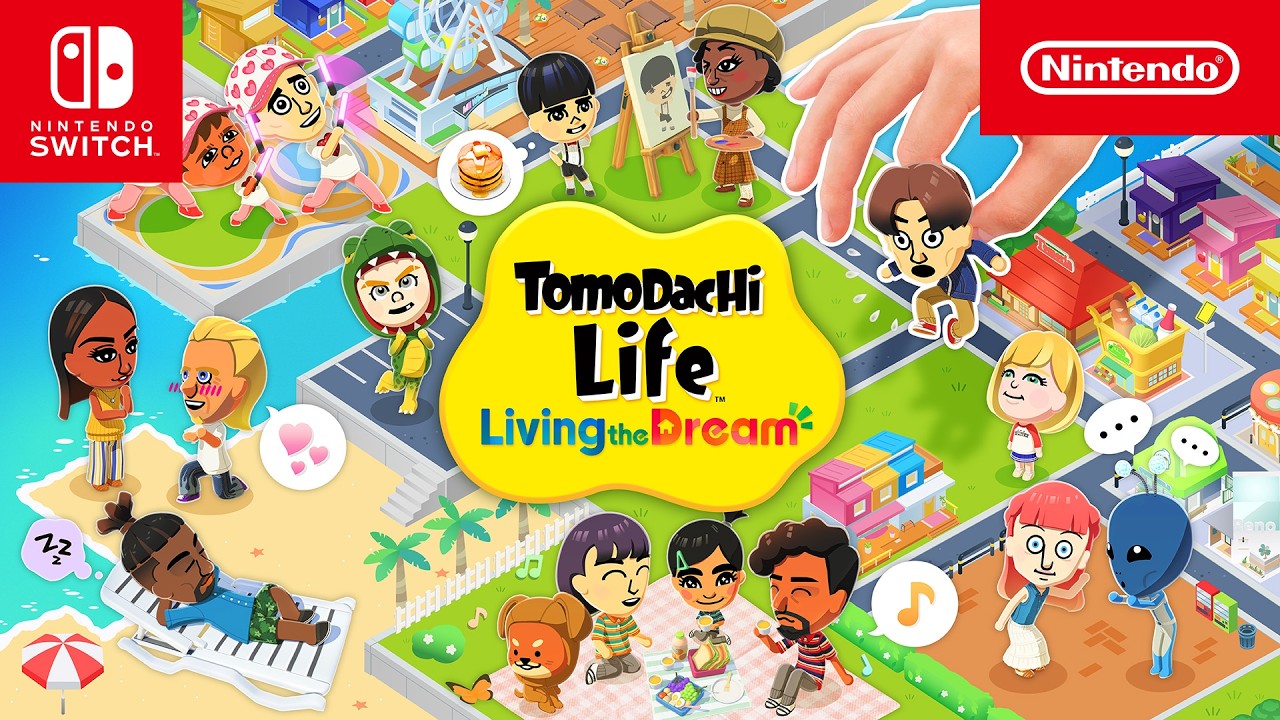
The gameplay of Tomodachi Life: Living the Dream is a unique blend of social simulator with a touch of “ant farm,” where you are the observer and, occasionally, the divine manipulator. The first thing you do is create your Miis, and here the freedom is almost endless. The Mii editor has been turbocharged, with many more options for hair, secondary colors, eye and pupil details, and yes, now they have ears! You can replicate anyone you can imagine, and the result is always hilarious, even if caricatured. The coolest thing is that you can draw directly on the Miis’ faces, which opens up a gigantic range for creativity. I, who am no artist, had a blast trying to turn my cat into a Mii, and the result was as bizarre as it was funny.
After creating your Miis, you define their personalities with a few sliders, which influence how they interact. And the accuracy is impressive! My Mii, for example, was classified as “Perfectionist,” and the description perfectly matched me. Furthermore, Nintendo listened to the community and included non-binary gender options and same-sex relationships, making the island a much more inclusive and fun place for everyone.
From then on, the magic happens. Your Miis begin to live their lives on the island, interacting with each other in unpredictable ways. They walk around the island, talk, make friends, fight, fall in love, get married, and even have children! And you, as the “Great Being,” can intervene. I love to grab a Mii and drag it to another to force an interaction, or give them gifts and food to see their reactions. It’s an addictive cycle: the more you dedicate yourself to your Miis, the more they reward you with hilarious and unexpected moments.
One of the things that really caught my attention was the island customization. The “Island Builder” is incredibly intuitive and precise. You can move buildings, change the terrain, create paths, and decorate everything your way. My Miis even gave me suggestions on where to place a tree or a bench, which helped me a lot since I’m kind of indecisive. And the “Palette House” is a show in itself: there you can create your own items, from clothes and food to pets and decorative objects. I made a custom video game for my Miis, and it became the biggest hit on the island!
Minigames are also a fun part of the routine. They’re simple, like bowling with Miis as pins or guessing pixelated objects, but they always provide good laughs and give you treasures that you can sell or give as gifts. And the Miis’ dreams? Ah, those are a whole other story. Seeing a Mii dreaming of an avalanche of cakes or a séance with rabbits is pure comedy.
The game has a daily rhythm, like Animal Crossing , where you come back to see what happened, what new items appeared in the shops, and what problems your Miis need to solve. It’s an experience that benefits from short sessions, but can keep you hooked for hours if you let your creativity run wild and the desire to see what other absurd things can happen.
Graphics
Visually, Tomodachi Life: Living the Dream takes a huge leap forward compared to its 3DS predecessor. The Miis are now much more detailed three-dimensional models, with a cartoonish style and vibrant colors that make them even more charming and expressive. They have a stylized finish that makes them seem more “alive” than in any other game they’ve appeared in. The island, though simple at first, transforms into a colorful and vibrant setting as you customize it.
The third-person camera lets you explore the island and watch your Miis in action, and it’s fun to see the digital “ant farm” in motion, with everyone walking, talking, and interacting. Even with many Miis on screen, the game remains fluid, without crashes or performance drops, which is great.
Although it’s not a game that demands high graphical power, the minimalist and cartoonish visuals fit perfectly with the absurd humor. It’s a style that ages well and, in my opinion, is perfect for what the game wants to convey. The transition to the Switch’s high definition really did the Miis good, and they’ve never looked so good.
Sound
The sound design in Tomodachi Life: Living the Dream is as quirky as the rest of the game, and that’s a compliment! The soundtrack follows the original, with melodies that blend unusual sounds to create a deliberately comical atmosphere. It’s not meant to relax; it’s meant to make you laugh and highlight the absurdity that happens around every corner. Some tracks are remastered, others are new, but all maintain that eccentric tone that is the series’ trademark.
But the real star of the sonic show is the Miis’ voices. They speak with a robotic synthesizer that you can customize in tone and speed. And believe me, hearing your Miis commenting on situations with these voices is hilarious. Much of the game’s comedy comes from what they say and how they say it. I found myself laughing out loud several times just listening to the most banal conversations transform into moments of pure comedy because of the voices.
The absence of a swear word filter also contributes to the humor. You can make your Miis say literally anything, which, of course, can lead to very inappropriate situations, but also to moments of pure genius and uncontrollable laughter. It’s a risky bet by Nintendo, but one that, for me, was worth it for the creative freedom it offers.
Fun
The fun in Tomodachi Life: Living the Dream is the highlight of the game, and it comes in waves of constant laughter and surprises. From the moment you start creating your Miis, the silliness is guaranteed. I had a lot of fun replicating friends and family, and then seeing how they interacted on the island. It’s like a personal reality show, where you’re the director and the Miis are the unpredictable protagonists.
Absurd humor is the soul of the game. Seeing a Mii you created based on a famous politician fall in love with an anime character, or a Mii representing your mother arguing with the prime minister, is simply priceless. The situations are so bizarre that you can’t stop laughing. And the best part is that the game lends itself to being shared with friends. I used to send screenshots and videos (even with the sharing restrictions, which I’ll talk about later) to my friends, and the conversations that ensued were always hilarious.
Unpredictability is another key factor. Even after dozens of hours, I was still surprised by new interactions and events. Sure, some situations repeat themselves, like a Mii with hiccups or a frozen Mii, but the way your Miis react and the personalized phrases you teach them always bring a touch of novelty. It’s a game that rewards your creativity and your ability to embrace the absurd.
The customization is so deep that each island is unique. My island, for example, had a floating residential district, a main street with all the shops, and even a baseball field. And seeing my Miis interacting in these scenarios that I created was very rewarding. It’s a game that invites you to dream and transform your wildest ideas into reality.
Performance and Optimization
In terms of performance, Tomodachi Life: Living the Dream runs solidly and stably. I played it on both the original Switch and the Switch 2, and the experience was consistent. On the Switch 2, the game benefits from a higher resolution in handheld mode (1080p, instead of the original Switch’s 720p), which is a welcome bonus, as the game has a portable spirit.
However, one point that caught my attention was the frame rate. The game runs at 30 frames per second, even on the Switch 2. For a game with such simple graphics and that doesn’t require much processing power, I expected 60fps, especially on the new platform. It’s not something that hinders gameplay, since the game’s pace is more relaxed, but it’s a shame not to see this optimization for the newer hardware. Some more “energetic” dream sequences even showed slight frame drops, which was a bit strange.
Despite this, the overall fluidity is good, and I didn’t encounter any significant bugs or crashes during my hours of gameplay. The interface is responsive, and loading times are minimal. Touchscreen functionality is used in some parts, such as creating Miis and navigating menus, but in a somewhat limited way. I missed being able to use touch to drag Miis or decorate the island in build mode, which would be much more intuitive.
One aspect that frustrated me quite a bit was the sharing restrictions. Nintendo blocked screenshots and video recording directly from the Switch, which is a huge mistake for a game that thrives on funny and shareable moments. To show something to someone, you need to transfer it to your PC or take a screenshot with your phone, which is quite archaic. I understand Nintendo’s concern about inappropriate content, since the game is uncensored, but the lack of a more modern and secure sharing system, like the one for voice chat on the Switch 2, is a missed opportunity. The inability to share Miis and online creations with friends is also a major flaw, since the 3DS version allowed this via QR codes. This makes the experience somewhat isolated, which is ironic for such a social game.
Conclusion
Tomodachi Life: Living the Dream is a unique and incredibly fun experience that won me over. It’s a social simulator that subverts expectations, transforming the daily lives of your Miis into an inexhaustible source of laughter and surprises. The creative freedom in customizing the Miis and the island is one of its greatest strengths, allowing each player to create a unique universe that reflects their own personality and sense of humor.
I had a blast creating characters based on real and fictional people, and then watching the most bizarre and unexpected interactions. The robotic voices, the absurd humor, and the unpredictability of events make each game session an adventure. It’s a game that invites you to be a playful god, manipulating the lives of your Miis and laughing at the consequences.
However, the game isn’t perfect. The repetition of some situations and minigames can become a bit tiresome after many hours, and the lack of 60fps optimization on the Switch 2 is a detail that could have been improved. But the biggest Achilles’ heel, without a doubt, is the sharing restrictions. For a game designed to generate memes and hilarious moments, the inability to easily share screenshots and videos online is an incomprehensible decision that limits the title’s social potential.
Despite these drawbacks, Tomodachi Life: Living the Dream is a game I recommend to anyone looking for something different, fun, and that will make you laugh out loud. It’s a tool for creativity and a story generator that will keep you hooked for hours, even in short sessions. If you let yourself be carried away by the premise and embrace the absurd humor, you’ll find a digital paradise that will make you smile with every visit. It’s a game that, even with its flaws, manages to deliver a memorable experience full of personality.
Positive points:
- Extremely detailed and versatile Mii editor.
- Absurd and unpredictable humor that generates lots of laughs.
- Deep customization of the island and its items.
- Inclusivity with options for gender and relationships.
- Miis’ social interactions are captivating and unique.
- The soundtrack and voices of the Miis contribute to the humor.
- An addictive digital “ant farm” feeling.
Negative points:
- Strict restrictions on sharing content online.
- Repetition of certain situations and minigames after many hours.
- Absence of 60fps on Switch 2.
- Limited touchscreen functionality in some areas.
- The experience can become isolated due to a lack of sharing.
Rating:
Graphics: 8.0
Fun: 9.0
Gameplay: 8.0
Sound: 8.5
Performance and Optimization: 7.0
FINAL SCORE: 8.1 / 10.0